• Global CNC market projected to reach $128B by 2028 • New EU trade regulations for precision tooling components • Aerospace deman
NYSE: CNC +1.2%LME: STEEL -0.4%

What Makes a 5 Axis Machining Center Fit Aerospace Parts?
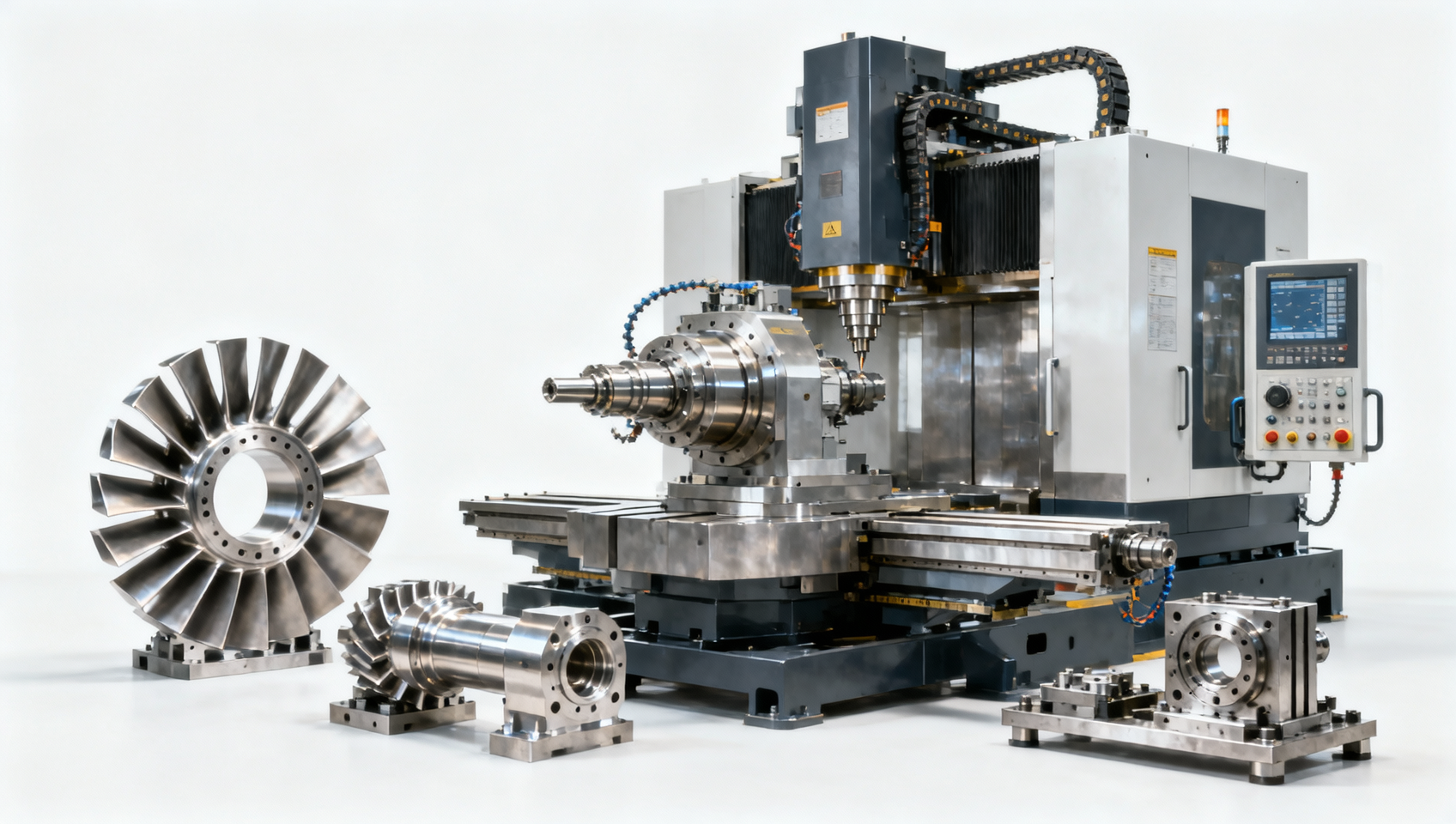
In aerospace manufacturing, a 5 Axis Machining Center fits aerospace parts only when it can consistently deliver tight tolerances, stable accuracy, and efficient machining of complex geometries in difficult materials such as titanium, aluminum, Inconel, and stainless alloys. For most buyers, engineers, and operators, the real question is not whether 5-axis technology is advanced, but whether a specific machine has the rigidity, thermal stability, spindle performance, control capability, and process support needed for aerospace production. In practice, the right choice depends on part size, material mix, tolerance level, batch volume, and the shop’s ability to run a reliable Multi-axis Machining Process for complex components.
For aerospace applications, the best machine is rarely the one with the most impressive brochure specifications. It is the one that matches the actual part family, supports an appropriate CNC Tooling System for titanium machining or a High-speed Machining Center for aluminum parts, and can maintain repeatability over long production cycles. This is what separates a machine that looks suitable from one that truly fits aerospace work.
What does “fit aerospace parts” actually mean in a 5 Axis Machining Center?
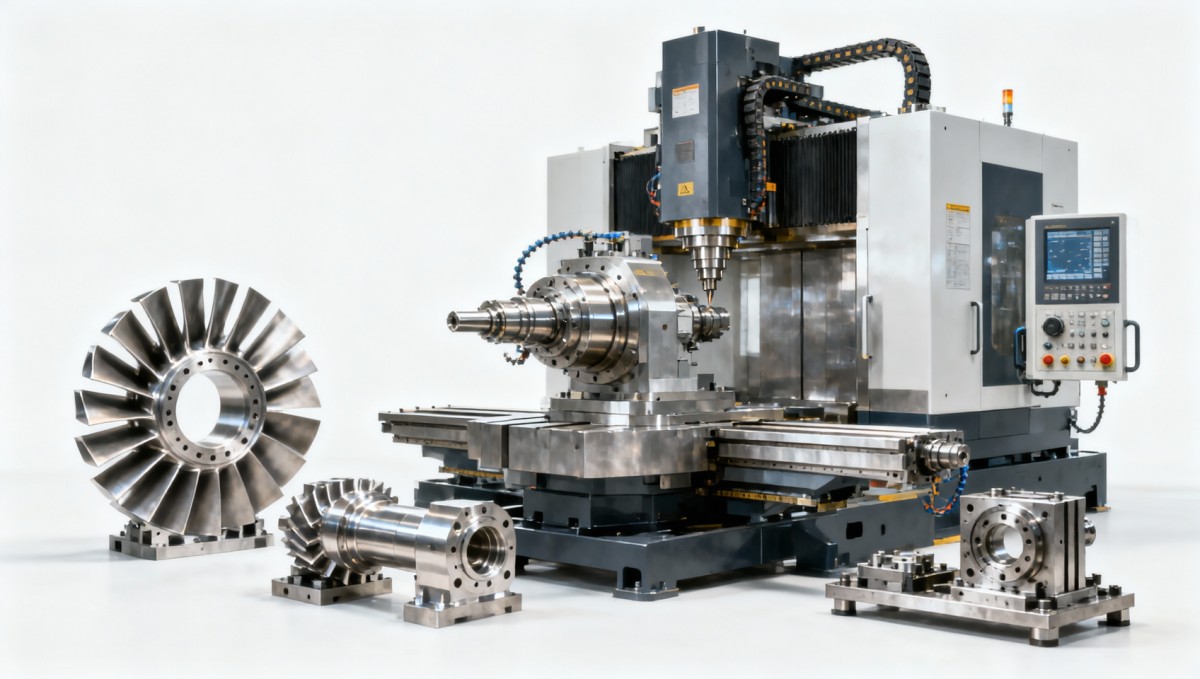
In aerospace manufacturing, “fit” means more than having five axes. A machine is suitable only if it supports the full set of requirements behind aerospace parts:
- Complex geometry capability: blisks, impellers, structural brackets, housings, turbine components, and thin-wall parts often require simultaneous multi-axis movement.
- High positional accuracy and repeatability: aerospace components must meet strict dimensional and surface quality requirements.
- Material adaptability: the machine must handle titanium, aluminum, nickel-based alloys, and composites with appropriate spindle, torque, and coolant strategies.
- Process stability: long cycle times and expensive raw materials leave little room for vibration, thermal drift, or tool failure.
- Traceable quality output: aerospace production often requires process consistency, documentation, and controlled machining conditions.
For users and procurement teams, this means the evaluation should focus on actual machining performance under aerospace conditions, not just axis count, travel range, or peak spindle speed.
Which machine characteristics matter most for aerospace parts?
A 5 Axis Machining Center for aerospace parts must combine structural stiffness, motion precision, spindle capability, and control intelligence. These are the factors that most directly affect production quality and cost.
1. Structural rigidity and vibration control
Aerospace parts often involve deep cavities, thin walls, interrupted cutting, and hard-to-machine alloys. If machine rigidity is insufficient, chatter increases, tool life drops, and part accuracy becomes unstable. A rigid machine structure, stable axis design, and strong damping behavior are essential, especially for titanium and nickel alloy machining.
2. Thermal stability
Thermal growth can seriously affect aerospace tolerances. A suitable machine should control heat from the spindle, axes, ball screws, and environment. Shops producing precision aerospace parts should pay close attention to thermal compensation, spindle cooling, and long-cycle dimensional stability.
3. Spindle performance matched to material
Material type changes what “good spindle performance” means:
- For titanium: high torque at lower to medium speeds is more important than ultra-high RPM.
- For aluminum: a High-speed Machining Center for aluminum parts benefits from higher spindle speed, fast acceleration, and efficient chip evacuation.
- For mixed aerospace work: a balance of torque, speed, and duty stability is often the better investment.
4. Axis accuracy and interpolation quality
Complex aerospace surfaces require smooth simultaneous motion. Poor interpolation creates faceting, inconsistent surface finish, and geometry errors. Control system quality, servo response, and kinematic accuracy matter as much as the mechanical structure itself.
5. Work envelope and table configuration
Aerospace parts vary widely, from small precision components to large structural parts. Buyers should confirm:
- Maximum part dimensions
- Fixture size and accessibility
- Trunnion versus swivel head configuration
- Collision risk during full 5-axis motion
A machine may be technically 5-axis capable yet still be a poor fit if the real part geometry, tool reach, or fixturing setup is compromised.
Why are aerospace materials so important when choosing a machine?
Material type is one of the most practical filters in machine selection. The same 5 Axis Machining Center may perform very differently on aluminum and titanium.
Titanium aerospace parts
Titanium creates high cutting forces, retains heat, and increases tool wear. To support a reliable CNC Tooling System for titanium machining, the machine should offer:
- High torque spindle output
- Strong machine rigidity
- Stable coolant delivery, often high-pressure
- Reliable chip evacuation
- Accurate tool monitoring and repeatable tool change performance
For titanium, aggressive spindle speed alone does not create productivity. Stability does.
Aluminum aerospace parts
Aluminum allows much higher cutting speeds, but aerospace aluminum parts often include thin walls, large pockets, and strict surface finish requirements. A High-speed Machining Center for aluminum parts should provide:
- High spindle speed and acceleration
- Fast rapid traverse and responsive axis movement
- Good chip control to avoid recutting
- Excellent contouring for thin-wall features
In aluminum work, speed matters more, but only if the machine can maintain shape accuracy and avoid vibration on lightweight geometries.
Nickel alloys and heat-resistant materials
These materials demand even more from spindle load capacity, thermal stability, and process control. If the shop plans to expand into turbine or engine-related parts, machine selection should leave enough performance margin for future production needs.
What role does the Multi-axis Machining Process play in aerospace success?
Even an excellent machine can underperform if the process is weak. Aerospace production depends on a stable Multi-axis Machining Process for complex components, where machine capability, tooling, CAM strategy, fixturing, and inspection all work together.
Key process elements include:
- CAM quality: optimized toolpaths reduce sudden direction changes, improve surface finish, and protect tools.
- Fixture design: aerospace parts are often thin, large, or difficult to support, so fixture stability directly affects accuracy.
- Tool selection: holder stiffness, tool balance, overhang control, and coating choice strongly influence multi-axis results.
- Collision prevention: 5-axis machining introduces more risk between spindle, tool holder, fixture, and part geometry.
- In-process verification: probing, tool measurement, and offset correction reduce scrap on high-value parts.
For operators and manufacturing engineers, this means machine selection should include software compatibility, probing options, post-processing support, and ease of setup—not just hardware specifications.
How can buyers judge whether a 5 Axis Machining Center is truly suitable?
Procurement teams and business decision-makers should use a practical evaluation framework instead of relying only on vendor claims.
Ask these questions before purchase:
- What exact aerospace parts will be produced in the next 12 to 36 months?
- What materials dominate the production mix?
- What are the required tolerances, surface finish targets, and inspection standards?
- Are cycle time reduction and setup reduction key business goals?
- Does the machine supplier have proven aerospace application experience?
- What training, service, postprocessor, and application support are available?
Request real proof, not generic samples
A serious buyer should ask for:
- Test cuts on similar aerospace materials
- Actual part case studies
- Accuracy and repeatability data under production conditions
- Spindle load and cycle performance records
- References from aerospace or high-precision users
This is especially important when the investment decision affects strategic production capacity, lead time commitments, and quality risk.
What common mistakes lead to poor machine fit?
Many machine purchases fail not because 5-axis technology is wrong, but because the machine is mismatched to real needs.
- Choosing by speed alone: a faster spindle does not guarantee better aerospace machining, especially for titanium.
- Ignoring fixture and tooling needs: insufficient allowance for tool length, holder clearance, or part access can limit usable 5-axis motion.
- Underestimating thermal drift: long aerospace cycles expose machine stability weaknesses.
- Buying excessive capability without process readiness: advanced hardware has limited value if CAM, tooling, and operator skill are not ready.
- Focusing only on purchase price: downtime, scrap, poor tool life, and weak service support often cost more than the initial machine premium.
For decision-makers, the real cost of a poor fit is not just lower productivity. It can include delayed customer qualification, unstable delivery, and reduced competitiveness in aerospace programs.
What does a well-matched aerospace 5-axis investment deliver?
When the machine is properly matched to aerospace parts, the business gains are substantial:
- Fewer setups and lower alignment error risk
- Better access to complex surfaces and deep features
- Improved surface finish and dimensional consistency
- Higher productivity on complex parts
- Better tool life through stable cutting conditions
- Greater flexibility for future aerospace contracts
For operators, this means easier process control and more stable production. For procurement teams, it means better lifecycle value. For management, it means a more credible path to quality assurance, cost control, and capacity growth in precision manufacturing.
Conclusion: how do you know a 5 Axis Machining Center fits aerospace parts?
A 5 Axis Machining Center fits aerospace parts when it can machine the required materials and geometries with reliable accuracy, stable repeatability, and economically sound productivity. The best choice is not defined by five axes alone, but by how well the machine supports aerospace tolerances, material demands, tooling systems, software integration, and long-term process stability.
If your applications involve titanium structures, lightweight aluminum components, or other complex aerospace parts, focus on the real fit between machine capability and production requirements. A strong Multi-axis Machining Process for complex components, a proven CNC Tooling System for titanium machining, and the right High-speed Machining Center for aluminum parts will do more for aerospace success than any headline specification alone.
NEXT ARTICLE
Recommended for You
 What Slows Down an Automation Line in Textile Production?Machine Tool Industry Editorial Team
 High Temperature Alloy Cutting Tools Wear Out for Hidden ReasonsCNC Machining Technology Center
 Automated Production Lines in Auto Manufacturing: Key BottlenecksMachine Tool Industry Editorial Team
 What Makes a 5 Axis Machining Center Fit Aerospace Parts?Machine Tool Industry Editorial Team
 Medical Equipment Machining Centers Need Accuracy Beyond SpecsMachine Tool Industry Editorial Team
 How to Compare CNC Tooling System Suppliers in GermanyGlobal Machine Tool Trade Research Center

Aris Katos
Future of Carbide Coatings
15+ years in precision manufacturing systems. Specialized in high-speed milling and aerospace grade alloy processing.
▶
What Makes a 5 Axis Machining Center Fit Aerospace Parts?Machine Tool Industry Editorial Team▶
Heavy duty machine tool: Where structural damping reveals itself only after months of operationMachine Tool Industry Editorial Team▶
Portable machine tool: Real-world limits of on-site machining accuracy vs. workshop benchmarksMachine Tool Industry Editorial Team▶
Compact machine tool: Can true footprint reduction coexist with rigidity for heavy cuts?Machine Tool Industry Editorial Team▶
CNC Production Scheduling Breaks Down With Mixed Batch SizesMachine Tool Industry Editorial Team
Mastering 5-Axis Workholding Strategies
Join our technical panel on Nov 15th to learn about reducing vibrations in thin-wall components.

Providing you with integrated sanding solutions
Before-sales and after-sales services
Comprehensive technical support