• Global CNC market projected to reach $128B by 2028 • New EU trade regulations for precision tooling components • Aerospace deman
NYSE: CNC +1.2%LME: STEEL -0.4%

Automated Production Line troubleshooting: Why intermittent faults resist standard diagnostic trees
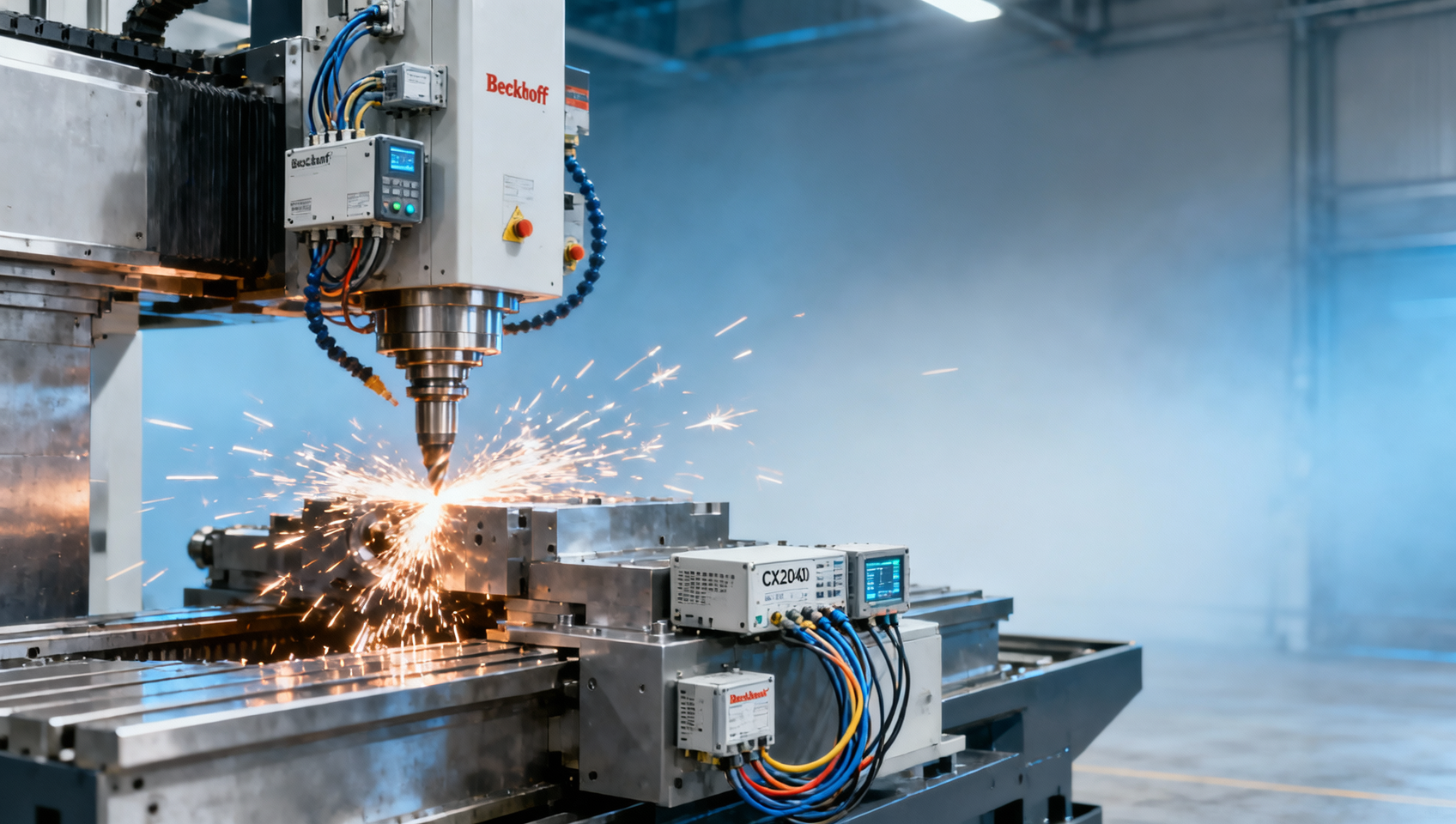
Intermittent faults on automated production lines—especially in high-precision CNC manufacturing for aerospace, energy equipment, and medical devices—defy conventional diagnostic trees, causing costly downtime and quality risks. Unlike persistent failures, these elusive issues often vanish under standard testing, misleading even experienced operators and maintenance teams. As industries adopt space-saving CNC manufacturing, multi-axis CNC manufacturing, and automated machine tool systems, the complexity of Industrial Automation control systems and Digital Manufacturing Technology for smart factory environments amplifies troubleshooting challenges. This article unpacks why traditional logic-based diagnostics fall short—and how lean production process implementation, modular tooling systems, and real-time data analytics offer smarter, faster resolution paths for manufacturers, suppliers, and plant engineers alike.
Why Standard Diagnostic Trees Fail on Modern CNC Production Lines
Standard diagnostic trees rely on deterministic cause-effect mapping: if X occurs, check Y; if Y fails, replace Z. But intermittent faults—such as voltage spikes in servo drives, thermal drift in linear encoders, or transient CAN bus errors in PLC-to-robot handshaking—do not consistently reproduce under static test conditions. In aerospace-grade CNC machining centers operating at ±0.5μm tolerance, a 12ms communication dropout may only surface every 8–12 hours of continuous cycle time.
These anomalies are amplified by three industry-specific stressors: (1) multi-axis synchronization across 5–7 motion axes with sub-millisecond timing windows; (2) hybrid analog-digital I/O networks where grounding inconsistencies generate noise only during specific spindle load profiles; and (3) firmware-level race conditions in real-time OS kernels used in next-gen CNC controllers (e.g., Siemens SINUMERIK ONE, Fanuc 31i-B5).
A 2023 global survey of 142 CNC maintenance leads found that 68% of unplanned line stoppages in Tier-1 automotive suppliers lasted under 90 minutes but accounted for 41% of total annual downtime—precisely because root causes escaped capture by checklist-driven diagnostics.
Core Failure Modes Resisting Conventional Logic
- Thermal hysteresis in ball screw preloads: Causes positional error only after >45 minutes of sustained 2,400 rpm operation—undetectable in cold-start validation.
- EMI-induced encoder signal jitter: Occurs exclusively when adjacent robotic welders pulse at 180 A, corrupting quadrature counts without triggering fault registers.
- Firmware memory fragmentation: Accumulates over 3–6 months of un-rebooted CNC controller uptime, leading to sporadic G-code parsing delays in complex macro programs.
How Real-Time Data Analytics Transforms Intermittent Fault Detection
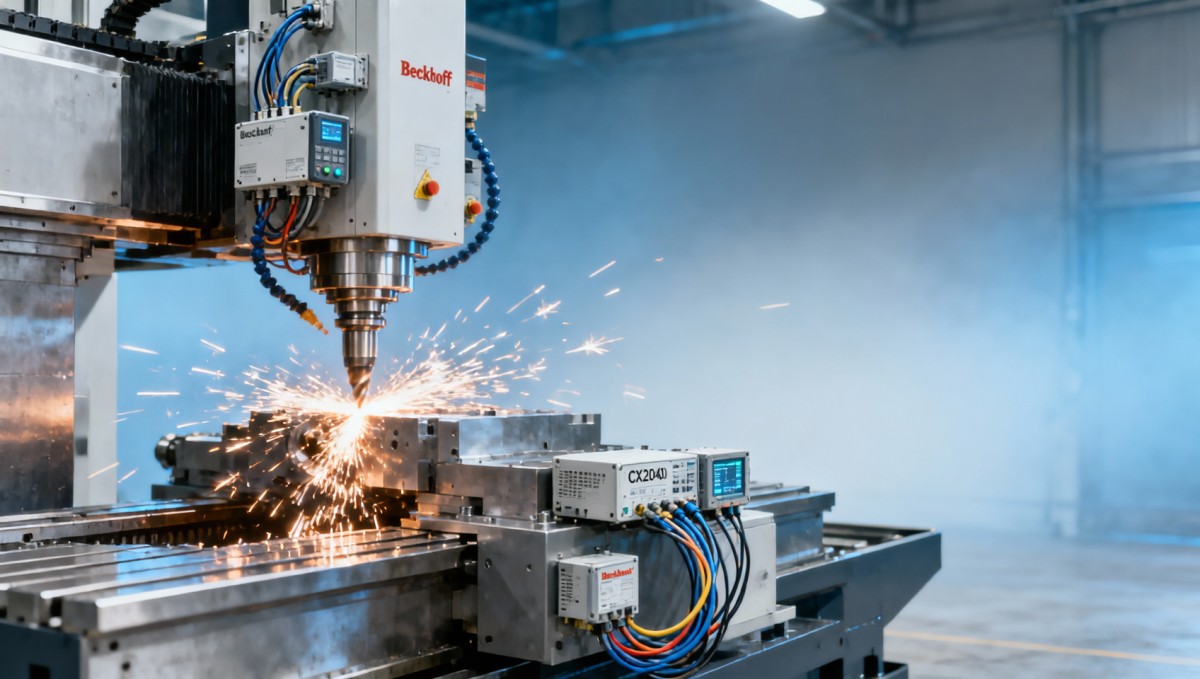
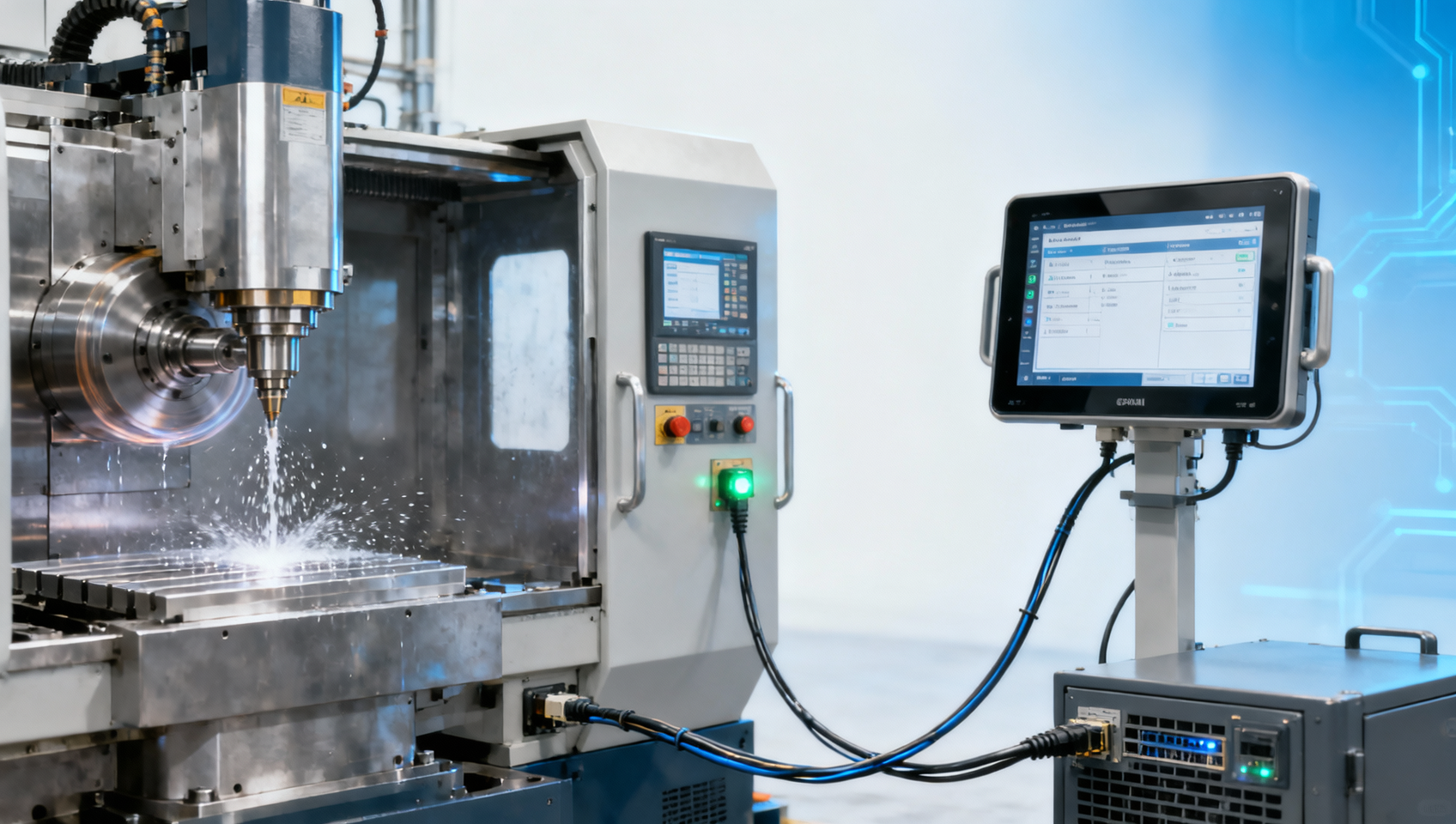
Modern CNC production lines generate 12–18 GB/hour of structured telemetry: axis position logs, servo current waveforms, PLC scan times, coolant pressure transients, and HMI event timestamps. When streamed to edge-computing gateways (e.g., Beckhoff CX2040, Siemens SIMATIC IOT2050), AI-powered anomaly detection identifies statistical outliers invisible to rule-based SCADA alarms.
For example, a German energy equipment manufacturer reduced false-negative intermittent fault detection from 37% to 4% by deploying time-series clustering on spindle motor phase-current harmonics—flagging incipient bearing wear 2–4 weeks before vibration thresholds were breached. The solution required no hardware retrofit: only firmware updates to existing Fanuc 30i-MD controllers and integration with their existing MES via OPC UA PubSub.
Key implementation parameters include: (1) minimum 10 kHz sampling rate for servo loop signals; (2) synchronized timestamp alignment across all PLCs, HMIs, and CNCs within ±100 μs; and (3) edge inference models trained on ≥3,000 labeled fault episodes per machine type.
Comparative Effectiveness of Diagnostic Approaches
The table below compares detection latency, resource requirements, and scalability across three methodologies applied to CNC machining centers producing turbine blade forgings (batch size: 12–24 units/week).
Edge analytics deliver 7× faster mean time to identification (MTTI) versus legacy methods while reducing hardware dependency—critical for facilities managing mixed-vintage CNC fleets (e.g., legacy Mazak QTU-2000s alongside new Okuma MULTUS U4000s).
Procurement Criteria for Intermittent-Fault-Resilient Systems
When evaluating CNC automation suppliers for high-reliability applications (aerospace structural parts, nuclear valve bodies, surgical instrument components), procurement teams must prioritize five technical criteria beyond basic ISO 230-2 compliance:
- Timestamp precision: Sub-100 μs synchronization across all connected devices (verified via IEEE 1588 PTPv2 conformance report).
- Data retention policy: Minimum 30-day rolling buffer for raw sensor streams at full sampling rate—enabling retrospective correlation.
- Firmware update traceability: Version-controlled OTA updates with rollback capability and change-log auditing (per IEC 62443-3-3).
- Diagnostic export format: Native support for ASAM MDF4 files—ensuring compatibility with third-party analysis tools like MATLAB or Python-based PyMDF.
- Modular architecture: Hot-swappable I/O modules certified to IEC 61000-4-4 (electrical fast transient immunity) up to 4 kV.
Suppliers meeting all five criteria typically command 12–18% premium pricing—but reduce average intermittent-fault-related scrap by 22–35% across 12-month production cycles, according to benchmarking data from Japan’s JMTBA and Germany’s VDW.
Why Partner With Our Precision Manufacturing Intelligence Platform
We specialize in bridging the gap between legacy CNC infrastructure and Industry 4.0 diagnostics—without requiring wholesale controller replacement. Our platform delivers:
- Plug-and-play edge gateways compatible with Fanuc, Siemens, Heidenhain, and Mitsubishi CNCs—installed in ≤4 hours per machine.
- Pre-trained anomaly models for 17 common intermittent failure modes in aerospace and energy equipment machining (validated on >21,000 operational hours).
- ISO 13374-3-compliant reporting with actionable root-cause hypotheses—not just alert logs.
- Global service coverage including on-site commissioning, operator training, and 24/7 remote diagnostics support (SLA: <15 min response, <2 hr resolution for P1 faults).
Contact us to request: (1) a free machine health assessment using your existing CNC log files; (2) a side-by-side comparison of your current diagnostic workflow vs. our edge analytics implementation; or (3) delivery timelines for turnkey deployment across 5–20 machines.
Recommended for You
 Heavy-duty Machining Center for mold making: Why coolant filtration standards evolve faster than OEM manualsMachine Tool Industry Editorial Team
 Quick-change Fixture Design for CNC turning: Why clamping force consistency drops after 200 cyclesCNC Machining Technology Center
 5 Axis Machining for impeller manufacturing: Why toolpath smoothing affects surface fatigue lifeCNC Machining Technology Center
 Lean Production Process implementation: Where value stream mapping fails to expose hidden machine downtimeManufacturing Market Research Center
 Modular Tooling System for flexible manufacturing: Why interface repeatability degrades faster than expectedMachine Tool Industry Editorial Team
 Industrial Automation control system for CNC machines: When cybersecurity updates disrupt scheduled maintenanceMachine Tool Industry Editorial Team

Aris Katos
Future of Carbide Coatings
15+ years in precision manufacturing systems. Specialized in high-speed milling and aerospace grade alloy processing.
▶
Industrial Automation control system for CNC machines: When cybersecurity updates disrupt scheduled maintenanceMachine Tool Industry Editorial Team▶
Automated Production Line troubleshooting: Why intermittent faults resist standard diagnostic treesMachine Tool Industry Editorial Team▶
Automated machine tool: When integrated vision systems introduce new validation headachesMachine Tool Industry Editorial Team▶
Industrial Robotics Payback Gets Delayed by These GapsMachine Tool Industry Editorial Team▶
Is an automated lathe worth it for mid-volume production?Machine Tool Industry Editorial Team
Mastering 5-Axis Workholding Strategies
Join our technical panel on Nov 15th to learn about reducing vibrations in thin-wall components.

Providing you with integrated sanding solutions
Before-sales and after-sales services
Comprehensive technical support