• Global CNC market projected to reach $128B by 2028 • New EU trade regulations for precision tooling components • Aerospace deman
NYSE: CNC +1.2%LME: STEEL -0.4%

Industrial Robotics Payback Gets Delayed by These Gaps
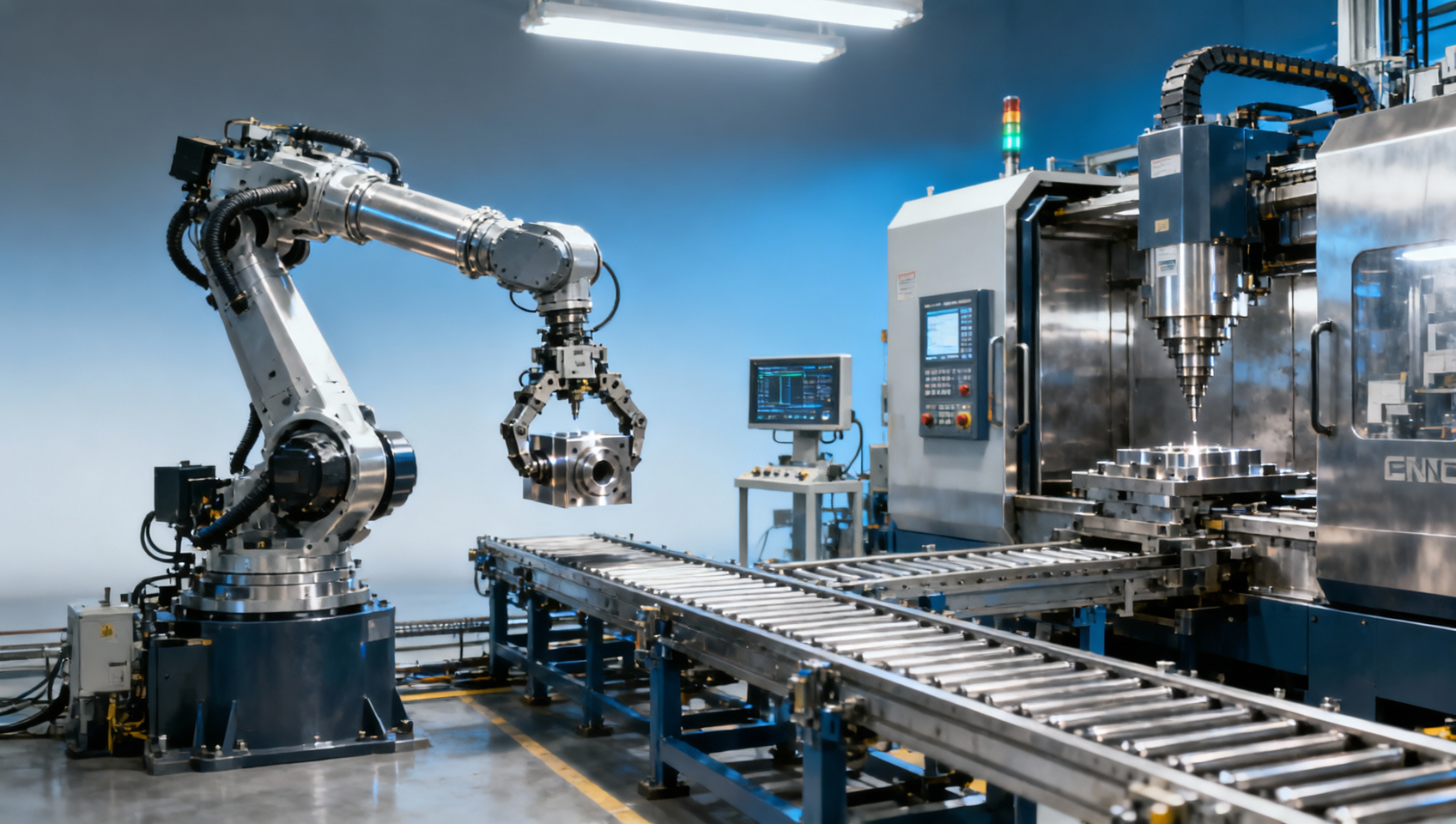
Industrial Robotics promise faster output and lower labor costs, but many manufacturers still struggle to achieve a clear ROI. In today’s Global Manufacturing and Machine Tool Market, gaps in CNC production, automated production line integration, CNC Programming, and production process planning can delay payback across metal machining, industrial CNC, and CNC metalworking operations.
Why industrial robotics payback is often delayed in CNC manufacturing
Industrial robotics usually enters a factory with a simple business case: reduce labor dependence, stabilize output, and support 24/7 production. In reality, payback does not depend on the robot alone. It depends on how well the robot fits the CNC machine tool process, the workpiece flow, the fixturing method, the part mix, and the operator support model.
For decision-makers in automotive, aerospace, energy equipment, and electronics production, the gap is rarely hardware capacity. A robot may be sized correctly for payloads such as 5kg–80kg and cycle times of 20–90 seconds, yet the production line still underperforms because upstream and downstream constraints were not resolved before installation.
In CNC metalworking, common delays come from three sources. First, inconsistent raw material and part tolerances create unstable gripping and loading. Second, CNC Programming and process planning are not optimized for robotic tending. Third, the automated production line lacks a clear data handoff between machine tools, fixtures, conveyors, inspection stations, and scheduling systems.
For information researchers and procurement teams, this means ROI analysis should move beyond robot price. A realistic review should include 4 core layers: machining process stability, integration complexity, labor redeployment, and maintenance readiness. When one of these layers is weak, payback can shift from the expected 12–24 months to a much longer cycle.
- Machine utilization remains low because manual loading was replaced, but tool change, chip handling, and part changeover were not improved.
- Unplanned downtime rises when grippers, fixtures, and part orientation systems are not matched to actual workpiece variation.
- Labor savings look strong on paper, but quality losses and scrap offset the expected return.
- The robot cell runs well in one shift, yet fails to sustain stable performance over 2–3 shifts without process discipline.
The hidden difference between automation purchase and automation readiness
Many factories buy industrial robotics as equipment, but payback is created by system readiness. A CNC cell is automation-ready only when part positioning, machine door timing, signal exchange, tool life management, and inspection loops are consistent enough for repetitive robotic handling. This is especially important for multi-axis machining systems and mixed-model production.
A useful screening method is to review the last 8–12 weeks of production data. If part variation, alarm frequency, re-clamping rate, or manual intervention remains high, the investment should first address process control. Otherwise, the robot simply automates instability, which makes the payback period look worse rather than better.
Which gaps most often reduce ROI in automated production lines
The most common gaps are operational, not theoretical. In global machine tool manufacturing, companies frequently focus on robot arm selection while underestimating the effect of fixtures, pallets, tool access, part traceability, and changeover time. For operators and plant engineers, these details decide whether the cell runs for 6 hours smoothly or stops every 40 minutes.
A robot tending project in CNC production should be reviewed as a complete flow: blank input, part identification, loading, clamping, machining, unloading, inspection, and finished-part transfer. If any step still depends on informal manual judgment, the automated production line will struggle to keep takt consistency.
The table below summarizes the gaps that most often delay industrial robotics payback in industrial CNC and CNC metalworking environments. It can be used by procurement teams, users, and executives as a practical evaluation tool before ordering new equipment or retrofitting an existing line.
The key lesson is that industrial robotics payback is a systems outcome. A machine tool supplier, integrator, and plant team need to align on signal logic, tooling, fixture repeatability, and operating rhythm before launch. If those items are confirmed during the planning stage, the line reaches stable output much faster.
Why CNC Programming matters more than many buyers expect
CNC Programming affects robot ROI in direct ways. A few extra seconds in spindle approach, probing, coolant purge, or door sequence can remove the benefit of robotic loading. On a line producing 400–800 parts per day, even a 5–8 second delay per cycle becomes a meaningful capacity loss over one month.
Programming should be reviewed together with robotic motion, not after integration. For example, a machining center may require a different toolpath order, clamp approach, or datum strategy when the workpiece is loaded automatically. This is especially true in high-precision machining of shaft components, discs, and structural parts.
Checklist for operators and engineers
- Measure real cycle time over at least 30 consecutive parts, not only the programmed machining time.
- Confirm whether door timing, chuck actuation, and chip evacuation are optimized for automated loading.
- Review how many manual touches still exist per batch, per pallet, or per shift.
- Check whether tool wear offsets and part inspection rules can be handled without stopping the robotic cell.
How to evaluate robot-cell payback before procurement
Procurement in the machine tool industry often starts with price comparison, but the stronger method is scenario comparison. Buyers should evaluate at least 3 options: manual loading with upgraded fixtures, semi-automatic tending, and full robot tending. The best option depends on part family stability, shift structure, and expected annual output, not only on labor rates.
For enterprise decision-makers, the practical question is not whether industrial robotics is advanced enough. The practical question is whether the target product line has enough repetition and process control to justify the integration work. A stable medium-volume line may achieve payback sooner than a high-mix line with frequent engineering changes.
Before issuing RFQs, it is useful to compare the investment path using the same production assumptions: shift count, part handling time, fixture replacement interval, and expected uptime. The following table provides a clear framework for payback-oriented procurement decisions in CNC production and automated production line planning.
This comparison helps buyers avoid a common mistake: purchasing a full automated production line for a process that still behaves like a job shop. If the production plan changes every 1–2 weeks, flexibility and setup discipline may matter more than maximum automation depth.
Five procurement questions that should be answered early
A sound procurement process should answer 5 questions before supplier selection. What is the real part mix? How stable is the fixture concept? What is the required unattended runtime, such as 2 hours, 4 hours, or a full shift? Which machine signals are already available? And what level of operator skill is realistic during startup and normal production?
- Define whether the target is labor reduction, output increase, quality consistency, or night-shift continuity. These goals do not always point to the same solution.
- Segment parts into 2–4 families based on geometry, clamping logic, and cycle time rather than customer name alone.
- Estimate integration scope, including guarding, chip management, pallet flow, and inspection feedback.
- Review operator training needs for setup, alarm reset, and preventive maintenance over the first 4–8 weeks.
- Confirm delivery expectations for design freeze, factory acceptance, installation, and production ramp-up.
Implementation gaps that appear after installation
Many projects look successful at FAT or initial commissioning, then slow down after handover. This usually happens because implementation is treated as equipment delivery instead of production transfer. The first 2–6 weeks after startup are critical for tuning robot motion, machine timing, fixture repeatability, and operator routines.
For users and operators, the biggest issues are practical. Alarms are not classified by priority. Recovery steps are too complex. Spare grippers or sensors are missing. CNC machine tool maintenance intervals are not synchronized with robot cell operation. As a result, minor stoppages accumulate and reduce the apparent ROI.
Factories that achieve faster payback usually standardize the first-stage implementation around a small number of control points. They track uptime, first-pass yield, cycle stability, intervention frequency, and mean time to recovery. Even a simple weekly review over 4–6 weeks can expose whether the problem is mechanical, programming-related, or procedural.
In precision manufacturing, line stability also depends on environmental and tooling discipline. Temperature drift, coolant contamination, chip buildup, and tool wear thresholds can all affect robotic loading success and machining accuracy. These issues become more visible when a process shifts from human compensation to automated repetition.
A practical 4-step rollout framework
A structured rollout reduces both commissioning friction and payback delay. The framework below is commonly useful in CNC lathes, machining centers, and multi-axis machining systems where robotics supports part tending, transfer, or handling.
- Baseline study: measure cycle time, stoppages, changeover, and quality variation on the current process for at least 2 typical product families.
- Integration planning: confirm interface points, guarding, pallet logic, inspection method, and maintenance access before mechanical installation.
- Ramp-up control: monitor the first 10–20 production runs with cross-functional review from programming, operations, maintenance, and quality teams.
- Stabilization: standardize alarms, spare parts, operator instructions, and preventive maintenance intervals for normal production.
Compliance and safety points buyers should not ignore
Even when the main goal is faster payback, safety and compliance cannot be treated as secondary. Industrial robotics cells in manufacturing environments commonly require attention to machine guarding, emergency stop logic, lockout procedures, and risk assessment. For international projects, buyers should ask early how local electrical, safety, and documentation requirements will be handled.
It is also wise to confirm what acceptance criteria will be used. A practical acceptance package may include 6 items: cycle time window, positioning repeatability, alarm recovery, safety interlock verification, sample-part quality confirmation, and operator training completion. Clear acceptance reduces disputes and helps the line enter stable production sooner.
FAQ: what buyers, users, and decision-makers usually ask
How do I know if my CNC production is ready for industrial robotics?
Start with repeatability. If the same part family runs with stable clamping, predictable cycle time, and limited manual correction over several batches, automation readiness is improving. If operators still make frequent judgment calls on part orientation, offsets, or clamp force, the process should be stabilized first. A 2–4 week production review often reveals readiness more clearly than a one-day audit.
Which scenario is more suitable for robot tending: high mix or high volume?
High volume with limited part variation is usually the easier path to faster payback. High-mix production can still justify industrial robotics, but it requires better fixture strategy, faster program switching, and stronger process planning. In many machine tool projects, grouping products into 3–5 part families is the best compromise between flexibility and ROI.
What should procurement focus on besides robot brand and price?
Focus on the full cell: end-of-arm tooling, fixture design, signal integration, guarding, operator interface, spare parts, and service response. Also confirm expected delivery stages such as design review, build, FAT, site installation, and ramp-up support. In many projects, weak integration support causes more delay than the robot hardware itself.
How long does an automated production line project typically take?
The timeline depends on complexity, but buyers should think in phases rather than one delivery date. A common structure is 2–4 weeks for requirement confirmation, several weeks for engineering and build, and additional time for FAT, installation, and ramp-up. Retrofit projects on existing CNC machine tools often need extra time if machine interfaces, space constraints, or legacy controls are involved.
Why work with a platform that understands CNC machining and global manufacturing
Industrial robotics payback improves when decisions are made with process context, not only product catalogs. A platform focused on global CNC machining, precision manufacturing, and machine tool market intelligence can help users compare solutions based on part type, production line logic, machining method, and regional supply conditions rather than generic automation claims.
For researchers, this means clearer access to industry news, technology insights, and market developments across China, Germany, Japan, South Korea, and other major manufacturing clusters. For procurement teams, it means better preparation on supplier communication, technical alignment, and cross-border sourcing expectations. For plant managers, it supports more grounded decisions on line upgrades, CNC Programming optimization, and integration timing.
If you are evaluating industrial robotics for CNC production, automated production line upgrades, or precision machining expansion, contact us for discussion on parameter confirmation, product selection, integration scope, delivery cycle, compliance concerns, sample-part feasibility, and quotation planning. A focused review of your part family, takt requirement, and machine tool setup can often identify the gaps that are delaying payback before capital is committed.
You can also reach out if you need support comparing manual, semi-automatic, and full industrial CNC solutions; checking whether your current process is automation-ready; or planning a phased investment path across one machine, one cell, or a broader flexible production line. Clear early decisions on process planning and integration detail are often what turn industrial robotics from a delayed promise into a practical return.
PREVIOUS ARTICLE
NEXT ARTICLE
Recommended for You
 Global Manufacturing Lead Times Improve but Not EverywhereGlobal Machine Tool Trade Research Center
 Machine Tool Market Inventory Pressure Is Building AgainGlobal Machine Tool Trade Research Center
 Metal Lathe vs CNC Milling for Low Volume Round PartsCNC Machining Technology Center
 CNC Cutting Gas Choice Affects More Than Edge FinishCNC Machining Technology Center
 CNC Metalworking Shops Face New Pressure on TraceabilityManufacturing Policy Research Center
 Automated Lathe Cycle Time Gains Can Hide Quality LossesCNC Machining Technology Center

Aris Katos
Future of Carbide Coatings
15+ years in precision manufacturing systems. Specialized in high-speed milling and aerospace grade alloy processing.
▶
Industrial Robotics Payback Gets Delayed by These GapsMachine Tool Industry Editorial Team▶
Is an automated lathe worth it for mid-volume production?Machine Tool Industry Editorial Team▶
Automated production looks efficient, but where do delays start?Machine Tool Industry Editorial Team▶
Automated production works best after these bottlenecks are fixedMachine Tool Industry Editorial Team▶
Why an Automated Production Line still stalls after commissioningMachine Tool Industry Editorial Team
Mastering 5-Axis Workholding Strategies
Join our technical panel on Nov 15th to learn about reducing vibrations in thin-wall components.

Providing you with integrated sanding solutions
Before-sales and after-sales services
Comprehensive technical support