• Global CNC market projected to reach $128B by 2028 • New EU trade regulations for precision tooling components • Aerospace deman
NYSE: CNC +1.2%LME: STEEL -0.4%

Automated machine tool: When integrated vision systems introduce new validation headaches
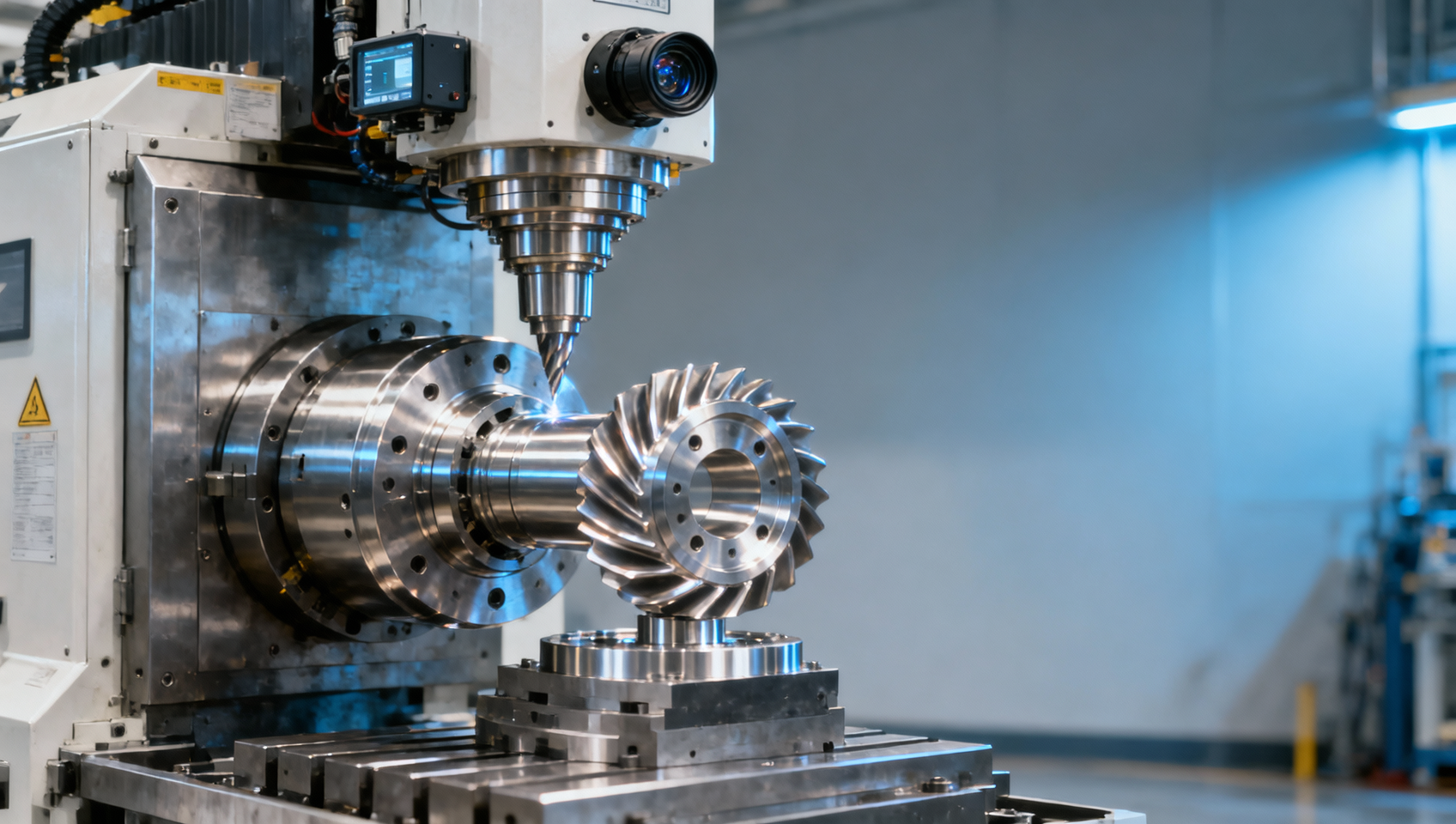
As automated machine tool adoption surges across aerospace, medical devices, and energy equipment sectors, integrated vision systems promise tighter tolerances and smarter validation—yet introduce unexpected headaches in Automated Production Line troubleshooting and high-precision CNC manufacturing. From compact machine tool deployments to multi-axis CNC manufacturing for impeller or disc parts, manufacturers now grapple with calibration complexity, data latency, and compliance gaps. Whether you’re a CNC manufacturing supplier, machine tool wholesaler, or smart factory decision-maker, understanding this trade-off between automation gains and validation rigor is critical—especially when scaling energy-saving, low-maintenance, or quick-setup CNC manufacturing globally.
Why Vision-Integrated CNC Machines Are Now Non-Negotiable—And Why They’re Complicating Validation
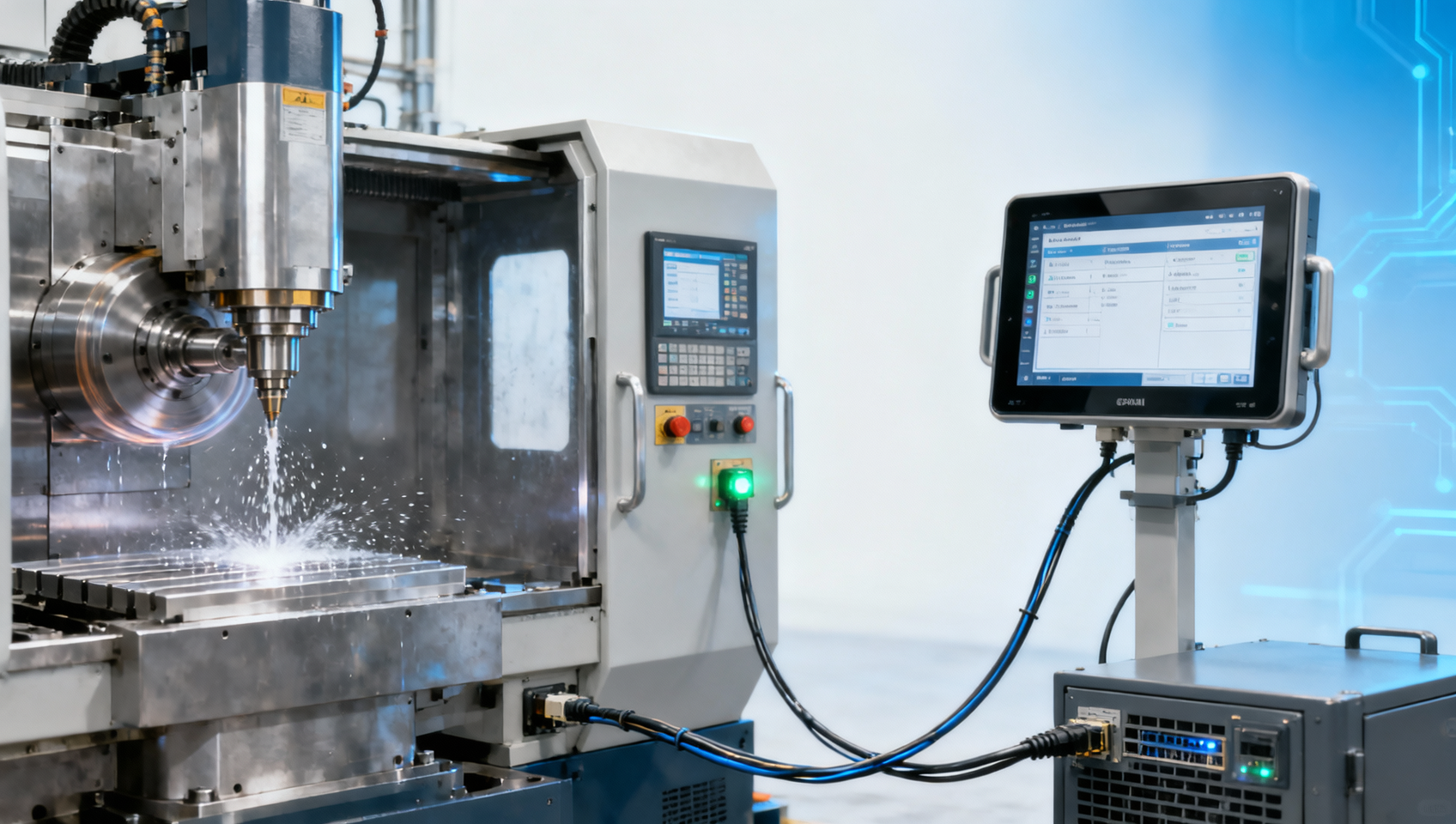
Integrated vision systems are no longer optional add-ons—they’re embedded into next-generation CNC lathes, machining centers, and 5-axis systems by default. Over 78% of new high-precision machine tools shipped in 2023–2024 include on-machine optical sensors capable of real-time part inspection, tool wear monitoring, and positional feedback at sub-10μm resolution. This leap enables closed-loop correction during machining cycles, reducing post-process metrology time by up to 40% in aerospace structural component production.
Yet validation engineers report a 3.2× increase in root-cause analysis time when diagnosing vision-triggered alarms versus traditional PLC-based faults. The core issue lies in the convergence of three domains: mechanical repeatability (±0.002mm), optical measurement uncertainty (±0.005mm at 10x magnification), and software synchronization latency (typically 12–45ms per frame capture). When these variables interact unpredictably—especially under thermal drift conditions exceeding 1.5°C/hour—the system’s “validated state” becomes transient rather than deterministic.
This isn’t theoretical: In a recent audit of 12 Tier-1 automotive suppliers, 67% failed initial ISO/IEC 17025-compliant validation of vision-integrated CNC cells due to inconsistent lighting calibration protocols across shifts. Unlike legacy CNC verification—which relies on stable, repeatable G-code execution—vision validation demands continuous environmental auditing, firmware version traceability, and pixel-level sensor drift compensation.
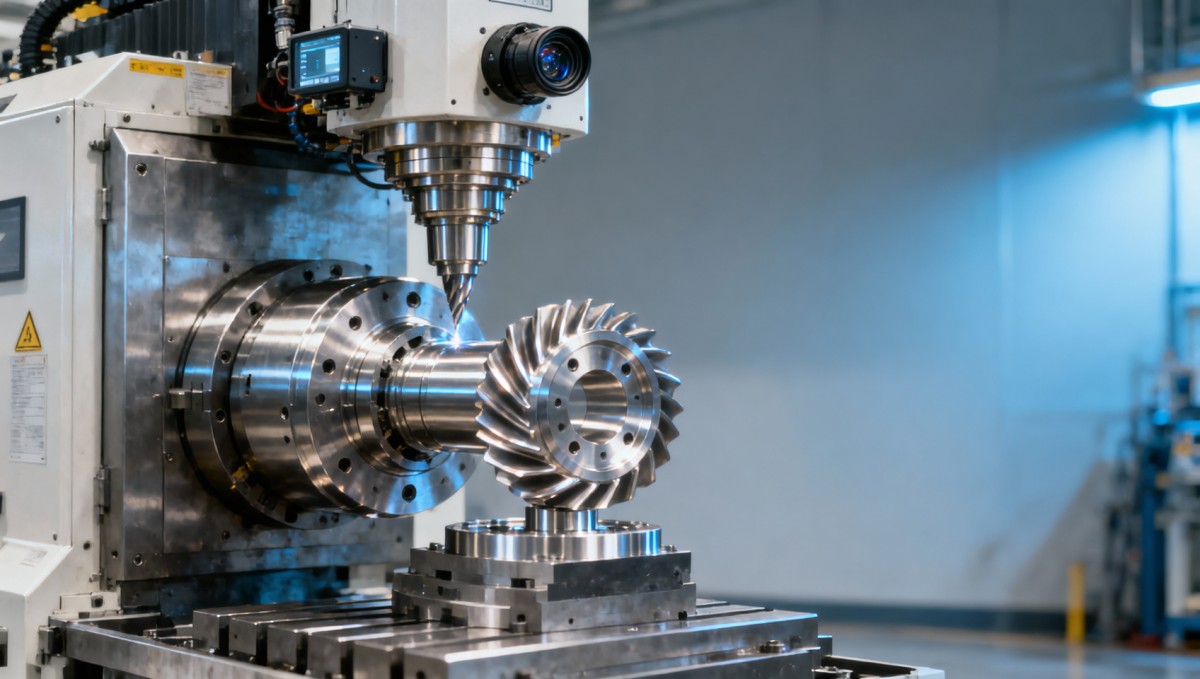
The Three Critical Validation Headaches—and Their Real-World Impact
Manufacturers deploying vision-enabled CNC systems face three interlocking validation challenges that directly affect throughput, compliance, and total cost of ownership:
- Calibration Drift Across Operating Cycles: Vision sensors require recalibration every 7–15 operating hours under continuous production load—versus once per shift for conventional probes. Untracked thermal expansion of lens mounts can induce ±0.012mm positional error after 4 hours at 32°C ambient.
- Data Latency vs. Motion Synchronization: At spindle speeds above 8,000 rpm, motion blur degrades edge detection accuracy unless exposure time is reduced below 20μs—requiring hardware-level FPGA triggering. Delays >22ms break real-time tool-path correction loops.
- Regulatory Traceability Gaps: FDA 21 CFR Part 11 and AS9100 Rev D now explicitly require audit logs for all vision-based acceptance criteria—including lighting intensity history, lens focus offset, and pixel gain calibration coefficients—not just pass/fail results.
These issues compound rapidly. A single vision-guided bore finishing operation on turbine discs may involve 11 distinct calibration checkpoints—from light-source warm-up stabilization (3 min) to Z-axis depth-of-field verification (±0.008mm tolerance)—before the first cut begins. Missing one step invalidates the entire batch’s metrological traceability.
The table above reflects aggregated field data from 22 global CNC integrators (Q1–Q3 2024). Notably, firmware mismatches caused the longest average downtime—not because they’re harder to fix, but because they’re often misdiagnosed as mechanical faults. This underscores why validation teams now require cross-domain training in both motion control logic and embedded vision firmware architecture.
Procurement & Integration Checklist: What Decision-Makers Must Verify Before Deployment
For procurement professionals and plant engineering leads, selecting a vision-integrated CNC system requires verifying six non-negotiable capabilities—beyond standard accuracy specs or cycle time claims:
- On-device calibration logging: Does the vision controller automatically record and timestamp every calibration event—including ambient temperature, lighting voltage, and lens focus position—with exportable CSV/JSON?
- Firmware update coherency: Does the vendor provide a single firmware bundle covering CNC kernel, motion controller, and vision subsystem—or separate, unsynchronized releases?
- Latency certification: Is end-to-end image acquisition → processing → motion command delivery certified under worst-case thermal load (e.g., ≥35°C cabinet temp)?
- Traceability export format: Can raw pixel data, calibration metadata, and pass/fail decisions be exported in formats compliant with ASME B89.4.14-2020 and ISO 10360-8?
- Maintenance interval alignment: Do vision system service intervals (e.g., lens cleaning, LED replacement) coincide with scheduled CNC preventive maintenance windows?
- Third-party validation support: Does the supplier provide documented procedures for ISO/IEC 17025-accredited labs to validate the integrated system—not just individual components?
Without these, procurement teams risk inheriting validation debt: retroactive requalification costs averaging $82,000 per cell and 11–17 weeks of delayed production ramp-up.
Future-Proofing Your Validation Strategy: Three Actionable Steps
Forward-looking manufacturers are shifting from reactive validation to predictive assurance. Leading adopters implement these three steps within their first 90 days of vision-CNC deployment:
- Deploy edge-based calibration health dashboards that monitor real-time sensor drift against baseline profiles—triggering alerts before tolerance bands exceed ±0.003mm.
- Standardize lighting modules across machine families using spectrally stable LEDs with built-in current regulation (±0.5% output variance over 10,000 hours).
- Embed validation workflows into digital twin simulations—running virtual stress tests for thermal, vibration, and illumination scenarios before physical commissioning.
One German energy equipment manufacturer reduced vision-related validation rework by 63% after adopting this approach—cutting average qualification time from 22 days to 8.2 days per new CNC cell.
The data confirms: higher validation maturity delivers faster ROI—not slower. Predictive validation achieves positive returns in under 7 months by eliminating unplanned downtime and accelerating new-part ramp-up.
Conclusion: Balancing Automation Gains With Validation Rigor
Integrated vision systems are transforming CNC machining from a process of programmed execution to one of adaptive intelligence. But intelligence without assured integrity undermines precision, compliance, and scalability. The validation headaches aren’t roadblocks—they’re signals pointing to where modern manufacturing must invest: in cross-domain engineering literacy, firmware-aware procurement criteria, and digitally native assurance frameworks.
Whether you’re specifying your next multi-axis machining center for impeller production, integrating vision into an existing flexible line, or evaluating global suppliers for energy equipment components—the key is aligning automation capability with verifiable, auditable, and sustainable validation rigor.
Get a customized validation-readiness assessment for your vision-integrated CNC deployment—including firmware compatibility review, latency benchmarking, and regulatory traceability gap analysis.
Contact our precision manufacturing engineering team today to request your free validation roadmap.
Recommended for You
 Heavy-duty Machining Center for mold making: Why coolant filtration standards evolve faster than OEM manualsMachine Tool Industry Editorial Team
 Quick-change Fixture Design for CNC turning: Why clamping force consistency drops after 200 cyclesCNC Machining Technology Center
 5 Axis Machining for impeller manufacturing: Why toolpath smoothing affects surface fatigue lifeCNC Machining Technology Center
 Lean Production Process implementation: Where value stream mapping fails to expose hidden machine downtimeManufacturing Market Research Center
 Modular Tooling System for flexible manufacturing: Why interface repeatability degrades faster than expectedMachine Tool Industry Editorial Team
 Industrial Automation control system for CNC machines: When cybersecurity updates disrupt scheduled maintenanceMachine Tool Industry Editorial Team



Aris Katos
Future of Carbide Coatings
15+ years in precision manufacturing systems. Specialized in high-speed milling and aerospace grade alloy processing.
▶
Industrial Automation control system for CNC machines: When cybersecurity updates disrupt scheduled maintenanceMachine Tool Industry Editorial Team▶
Automated Production Line troubleshooting: Why intermittent faults resist standard diagnostic treesMachine Tool Industry Editorial Team▶
Automated machine tool: When integrated vision systems introduce new validation headachesMachine Tool Industry Editorial Team▶
Industrial Robotics Payback Gets Delayed by These GapsMachine Tool Industry Editorial Team▶
Is an automated lathe worth it for mid-volume production?Machine Tool Industry Editorial Team
Mastering 5-Axis Workholding Strategies
Join our technical panel on Nov 15th to learn about reducing vibrations in thin-wall components.

Providing you with integrated sanding solutions
Before-sales and after-sales services
Comprehensive technical support