• Global CNC market projected to reach $128B by 2028 • New EU trade regulations for precision tooling components • Aerospace deman
NYSE: CNC +1.2%LME: STEEL -0.4%

Where vertical lathe performance falls short in real production
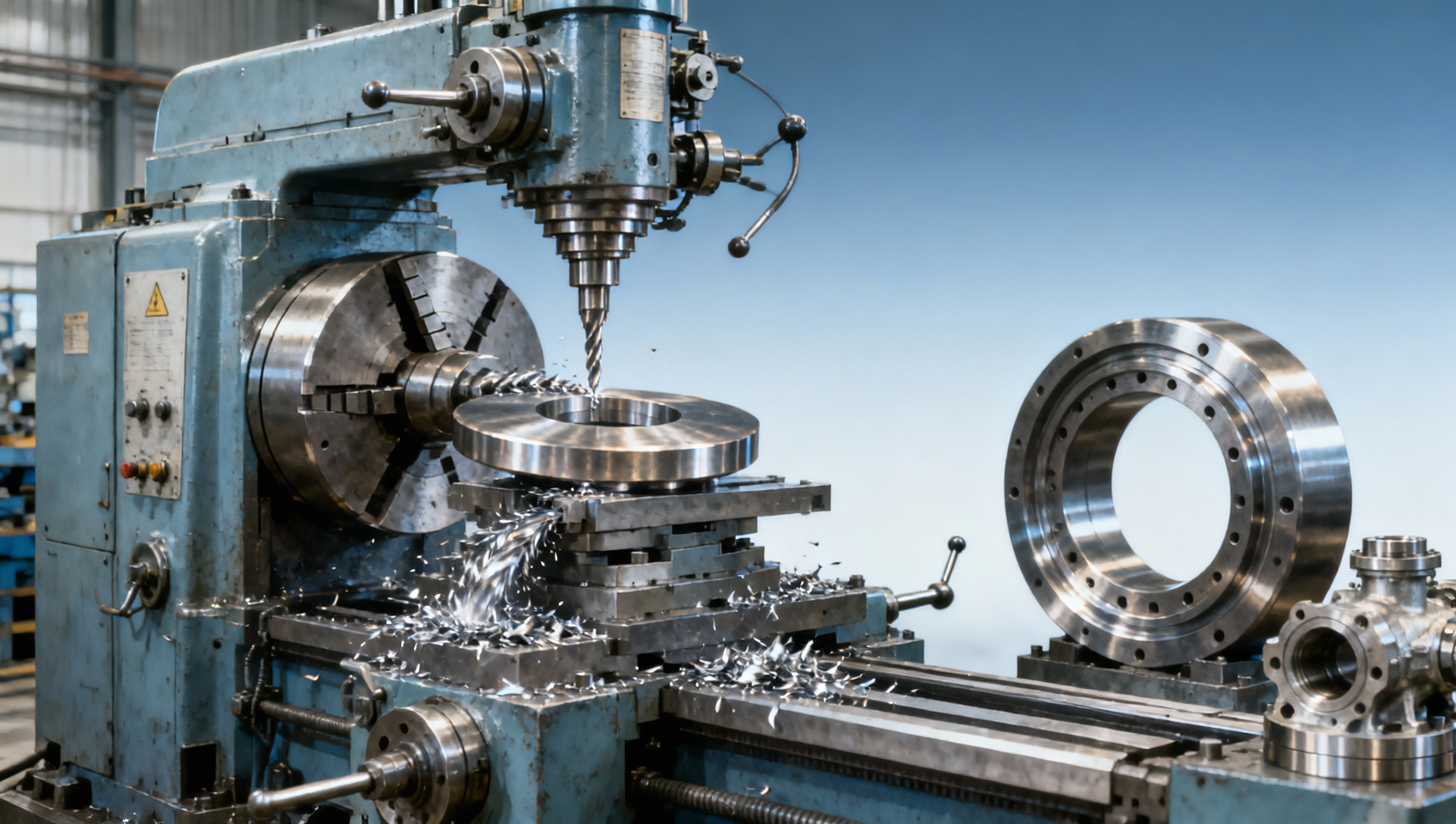
In real-world metal machining, a vertical lathe does not always deliver the flexibility, speed, or consistency many manufacturers expect. As industrial CNC, automated production, and CNC metalworking demands rise across the Manufacturing Industry, understanding where vertical lathe performance falls short helps operators, buyers, and decision-makers improve CNC production, control costs, and choose the right industrial lathe strategy.
For research-oriented readers, this topic matters because machine capability on paper often looks better than machine behavior on the shop floor. For operators, the issue is practical: setup time, chip evacuation, thermal drift, vibration, and tool access can affect every shift. For procurement teams and business leaders, the key question is whether a vertical lathe truly fits the part mix, output target, and automation plan over the next 3–5 years.
Vertical lathes remain valuable in many heavy-duty and large-diameter applications, especially for discs, rings, valve bodies, bearing housings, and short, heavy workpieces. However, real production exposes limitations that are not always obvious during vendor comparison. Those limits can reduce spindle utilization, raise cost per part by 8%–20%, or create bottlenecks when production shifts from low-mix machining to medium-volume or high-precision workflows.
Where vertical lathes struggle most on the production floor
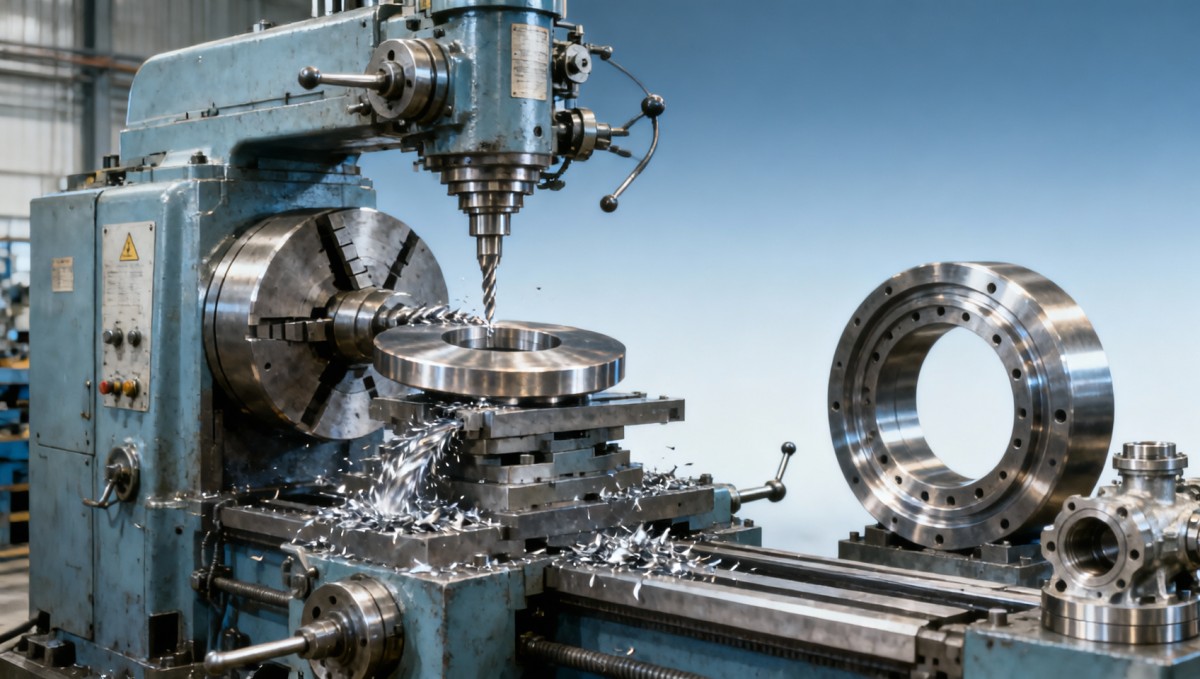
A vertical lathe is often selected for stability under heavy workpiece weight, but in actual CNC production its weak points appear when manufacturers ask one machine to do too many different jobs. Shops producing 20–50 part variants per month may find that the machine performs well on a narrow family of components but falls short when faced with frequent fixture changes, secondary milling needs, or tighter cycle-time targets.
The first common issue is limited flexibility. A vertical lathe is excellent for parts that naturally sit on a chuck or table under gravity, yet it becomes less efficient when parts require long overhangs, side access, or multiple off-center features. If a component needs turning, drilling, side milling, and angled machining in 2–3 setups, a turning center with live tooling or a multitasking machine may reduce total handling time more effectively.
The second issue is speed loss caused by setup complexity. In theory, loading large parts vertically can be convenient. In practice, aligning heavy workpieces, checking face runout, adjusting clamps, and verifying clearances may add 15–40 minutes per setup. For low-volume, high-weight parts this may be acceptable. For repeated medium-batch production, that lost time directly affects overall equipment effectiveness and labor cost.
The third issue is consistency under heat, chips, and vibration. During extended cuts, especially with cast iron, stainless steel, or alloy steel, heat accumulation can shift accuracy and reduce surface finish stability. Chip accumulation around the table or guarding can also interrupt automatic cycles. When tolerances tighten to ±0.01 mm to ±0.02 mm on critical faces, these real-world conditions matter far more than brochure specifications.
Typical weak points by operating condition
The following table shows where vertical lathe performance most often falls short in production environments that prioritize throughput, mixed-part capability, and repeatability.
The key takeaway is not that a vertical lathe is a poor machine category. It is that machine suitability narrows quickly when production demands include fast changeover, high automation, and mixed-feature components. That is why smart buyers compare total process capability, not just table diameter, swing, or spindle power.
Why advertised capacity does not always equal usable productivity
Machine tool buyers often focus on visible specifications such as maximum turning diameter, table load, ram travel, or spindle motor rating. These are important, but usable productivity depends on a wider set of production variables. A vertical lathe with a large table and 30 kW–55 kW spindle may still underperform if tool change time is slow, the fixture occupies too much working envelope, or the machine lacks sufficient axis integration for the real part geometry.
Another gap appears between peak cutting capacity and stable shift-long output. Heavy roughing for 20 minutes is not the same as maintaining precision over a 10-hour shift. Once thermal growth, coolant effectiveness, chip evacuation, and tool wear enter the picture, cycle consistency may decline. Operators then reduce feeds by 10%–15% to protect tools or finish quality, which cuts the practical productivity that procurement expected at purchase stage.
Automation planning also reveals hidden limits. A vertical lathe may technically support robotic loading, pallet transfer, or part handling, but integration costs rise when parts vary significantly in diameter, clamping surface, or center-of-gravity position. In these cases, one robot cell may require 2–4 gripper sets, extra infeed verification, and more safety logic than originally budgeted.
Decision-makers should therefore measure productivity through output stability, not only nominal specifications. Useful metrics include average setup time per batch, first-pass yield, unattended runtime, scrap rate, and changeover frequency per week. These indicators show whether the machine will support long-term manufacturing efficiency or simply satisfy a short equipment checklist.
Four metrics that reveal true production value
- Setup-to-cut ratio: If setup takes 25 minutes and cycle time is 18 minutes, the machine may be poorly matched for small-batch work.
- Repeatability after warm-up: Accuracy should be checked after 1 hour, 4 hours, and 8 hours, not only on the first trial part.
- Tooling efficiency: A machine with limited tool positions may force manual intervention or extra offsets in mixed-feature jobs.
- Automation readiness: Stable chip control and predictable loading geometry are essential for lights-out production beyond 6 hours.
Specification vs production reality
The table below helps buyers distinguish between machine specifications that look impressive and production factors that actually influence cost per part, throughput, and process reliability.
For many manufacturing companies, this comparison prevents an expensive mismatch. A machine that appears stronger on paper can still lose to a more balanced solution when viewed through setup efficiency, fixturing practicality, and automation compatibility.
Application scenarios where alternatives may outperform a vertical lathe
A vertical lathe is not the wrong answer for every job, but there are scenarios where another machine platform delivers better economics or process control. This is especially true in automotive, aerospace, energy equipment, and electronics-related precision manufacturing, where component variation and tolerance planning differ widely. Choosing the right industrial lathe strategy means matching the machine to the production system, not forcing every part family through one asset.
For shafts, long slender parts, or components needing sub-spindle operations, a horizontal CNC lathe usually offers stronger support and easier bar or chuck workflow. For complex housings and components with side features, a machining center or mill-turn system may reduce repositioning. For high-repeat disc parts in batches above 500 pieces per month, dedicated automation around a turning center may outperform a general-purpose vertical lathe in labor efficiency.
There is also a floor-space and logistics question. Large vertical lathes can be practical for heavy parts, but supporting cranes, fixtures, load staging, and safe operator access may consume more total footprint than expected. In facilities with limited internal transport paths or mixed product flow, the hidden cost of material handling becomes a real decision factor.
The most common mistake is assuming that a vertical layout automatically improves all heavy-part machining. In reality, workpiece geometry, feature distribution, tolerance stack-up, and annual volume all matter. A buyer should compare at least 3 options before final investment: vertical lathe, horizontal turning center, and integrated mill-turn or machining center path.
When other equipment may be the better choice
- If the part requires turning plus side drilling, milling, and angled features in one cycle, consider a multitasking machine to reduce 2–3 secondary setups.
- If the workpiece length is greater than 2–4 times its diameter, horizontal support may improve stability and simplify loading.
- If batch size changes every week and fixture turnover is frequent, choose a platform with faster setup logic and broader tooling flexibility.
- If the production goal includes 24/7 automation, prioritize chip flow, robot handling repeatability, and in-process probing compatibility.
Scenario-based comparison for buyers
This comparison table is useful for procurement teams evaluating which machine path better suits actual manufacturing requirements rather than general assumptions.
The practical conclusion is that vertical lathes should be chosen for clear-fit applications, not as a catch-all answer. Matching part geometry and production style to machine architecture is where cost savings and throughput gains actually begin.
How operators and buyers can reduce vertical lathe performance gaps
Even when a vertical lathe is already installed, performance gaps can often be reduced through process engineering rather than replacement alone. Many shops recover 5%–12% productivity by tightening fixture standards, optimizing tool paths, improving chip control, and separating roughing and finishing logic more carefully. This is especially useful for manufacturers that must extend the life of current assets before making a new capital investment.
The first step is to classify workpieces into stable families. Instead of treating every part as a unique job, group them by diameter range, clamping method, material, and machining sequence. For example, parts in the 400–700 mm diameter range with similar face-turning and bore operations can share base fixture logic, offset templates, and cutting data. This reduces changeover variability and operator-dependent decisions.
The second step is to address thermal and chip-related process drift. Shops should review coolant direction, chip conveyor timing, pause points, and warm-up routines. A controlled warm-up period of 20–30 minutes before precision work may improve dimensional repeatability. Likewise, routine inspection after every 10–20 parts on critical jobs can catch drift before it turns into a scrap batch.
The third step is procurement discipline for future investments. Buyers should request sample cycle studies, fixture assumptions, tool list logic, and acceptance conditions based on real parts, not generic demonstrations. If possible, a trial should include one roughing part, one finishing part, and one mixed-feature part from the intended production family.
Practical checklist for improvement and selection
- Standardize 3–5 fixture templates for recurring part families instead of building each setup from scratch.
- Track setup time, tool change time, scrap count, and machine stoppages weekly for at least 8 weeks.
- Review whether roughing and finishing should be split across separate machines when tolerance is below ±0.02 mm.
- Confirm chip evacuation performance during long-cycle cuts, not only during short showroom demos.
- Evaluate automation using actual part weights, center-of-gravity variation, and loading orientation limits.
FAQ for decision-makers and production teams
Below are common questions that arise when companies assess whether a vertical lathe is limiting performance or still fits the production plan.
How do I know if my vertical lathe is underperforming?
Look beyond spindle load and cycle time. Warning signs include setup taking more than 20%–30% of total job time, repeatability worsening after several hours, frequent manual chip clearing, and regular need for secondary setups. If these issues appear across multiple part families, the machine-process match may be weak.
Are vertical lathes unsuitable for automation?
Not at all. They can be integrated into automated production, especially for consistent heavy disc-type parts. The challenge is that automation complexity rises when the part mix becomes broad, fixtures differ significantly, or chip behavior is unpredictable during long unattended runs.
What should procurement ask before purchase?
Ask for realistic cycle assumptions, tooling capacity, fixture loading constraints, thermal control approach, and expected setup time by part type. Also request the planned acceptance method for dimensional stability after a full shift, not just a single test cut.
When is replacement better than optimization?
If the machine consistently needs 2 or more secondary operations per part, cannot maintain required tolerance during batch production, or blocks automation goals for the next 24–36 months, a process redesign or machine upgrade may offer better total return than repeated adjustments.
Vertical lathe performance falls short in real production when the machine is expected to handle part variation, automation pressure, and precision demands beyond its practical process window. The gap usually comes from setup burden, limited access for multi-feature parts, thermal inconsistency, and weaker productivity under mixed manufacturing conditions.
For operators, the path forward is better fixturing, disciplined process monitoring, and tighter control of heat and chip flow. For buyers and decision-makers, the better strategy is to compare machine architecture against real part families, automation plans, and 3–5 year production goals rather than relying only on nominal capacity. If you need help evaluating CNC production options, comparing industrial lathe strategies, or building a more efficient machining plan, contact us now to get a tailored solution and discuss the right equipment path for your manufacturing needs.
PREVIOUS ARTICLE
NEXT ARTICLE
Recommended for You
 Heavy-duty Machining Center for mold making: Why coolant filtration standards evolve faster than OEM manualsMachine Tool Industry Editorial Team
 Quick-change Fixture Design for CNC turning: Why clamping force consistency drops after 200 cyclesCNC Machining Technology Center
 5 Axis Machining for impeller manufacturing: Why toolpath smoothing affects surface fatigue lifeCNC Machining Technology Center
 Lean Production Process implementation: Where value stream mapping fails to expose hidden machine downtimeManufacturing Market Research Center
 Modular Tooling System for flexible manufacturing: Why interface repeatability degrades faster than expectedMachine Tool Industry Editorial Team
 Industrial Automation control system for CNC machines: When cybersecurity updates disrupt scheduled maintenanceMachine Tool Industry Editorial Team

Aris Katos
Future of Carbide Coatings
15+ years in precision manufacturing systems. Specialized in high-speed milling and aerospace grade alloy processing.
▶
Metal Lathe Accuracy Drifts After Warm Up for a ReasonMachine Tool Industry Editorial Team▶
Automated Lathe Bar Feeding Problems That Hurt UptimeMachine Tool Industry Editorial Team▶
A metal lathe can lose accuracy long before it failsMachine Tool Industry Editorial Team▶
Where vertical lathe performance falls short in real productionMachine Tool Industry Editorial Team▶
Automated lathe errors that often start with bar feedingMachine Tool Industry Editorial Team
Mastering 5-Axis Workholding Strategies
Join our technical panel on Nov 15th to learn about reducing vibrations in thin-wall components.

Providing you with integrated sanding solutions
Before-sales and after-sales services
Comprehensive technical support