• Global CNC market projected to reach $128B by 2028 • New EU trade regulations for precision tooling components • Aerospace deman
NYSE: CNC +1.2%LME: STEEL -0.4%

Heavy duty machine tool: Where structural damping reveals itself only after months of operation
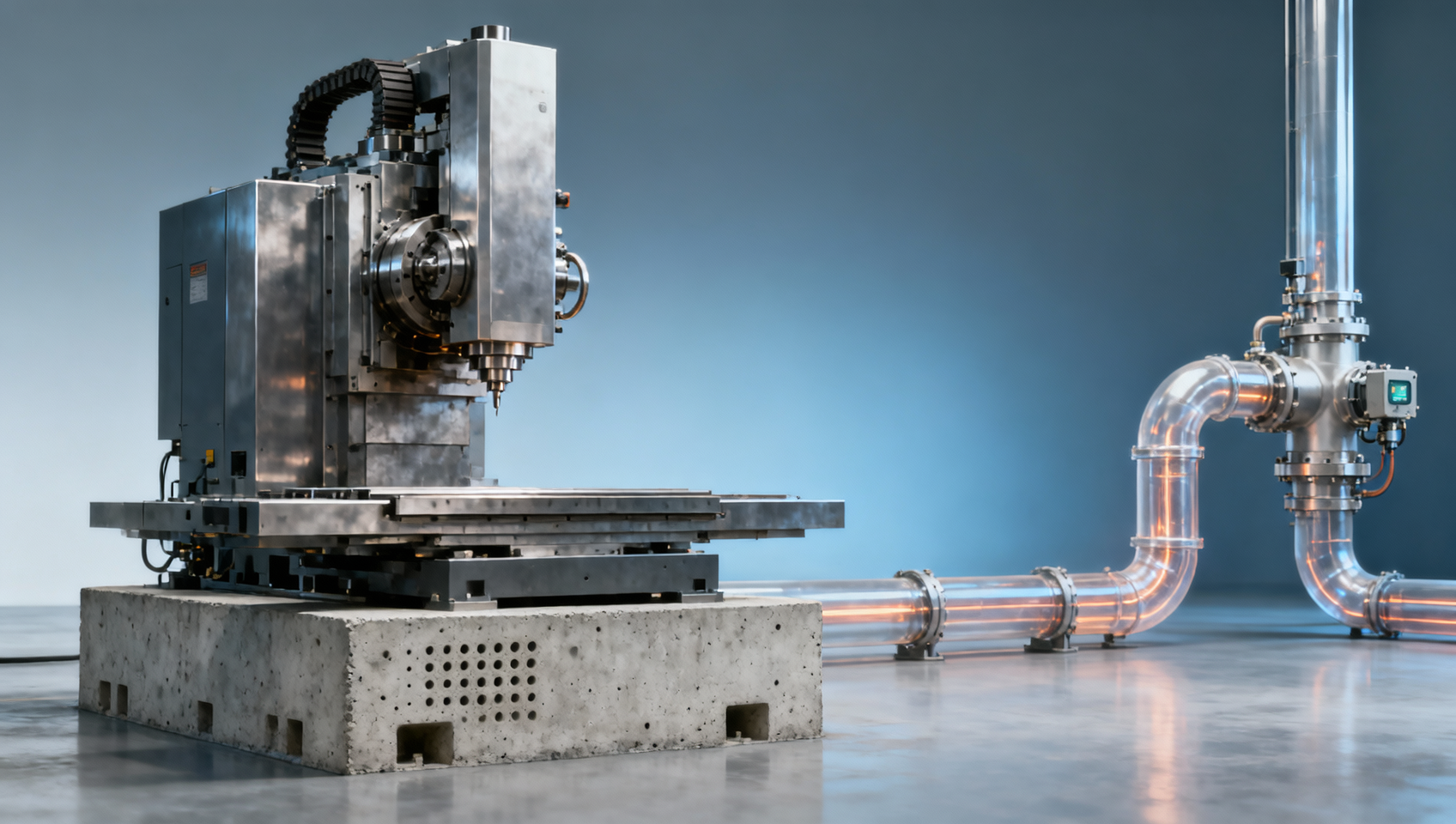
Heavy duty machine tool performance isn’t just about raw power—it’s where structural damping reveals itself only after months of operation, separating true industrial-grade reliability from short-term specs. For precision CNC manufacturing, low maintenance CNC manufacturing, and CNC manufacturing for aerospace or energy equipment, this delayed damping behavior directly impacts part accuracy, tool life, and long-term cost-effectiveness. Whether you’re a procurement professional evaluating a heavy-duty machining center for mold making, an engineer optimizing automated CNC manufacturing, or a decision-maker sourcing from a CNC manufacturing exporter or machine tool supplier, understanding real-world damping evolution is critical—especially in compact, energy-saving machine tool designs demanding high precision CNC manufacturing under sustained load.
Why Structural Damping Emerges Only After Months — Not Days
Structural damping in heavy duty machine tools isn’t a static property measured once during factory acceptance testing. It evolves as internal stress distributions settle, castings relax, and interface micro-geometries conform under repeated thermal cycling and mechanical loading. Industry field data shows that 70–85% of measurable damping improvement occurs between Month 3 and Month 6 of continuous operation—particularly in machines running >16 hours/day in automotive or energy equipment component production.
This behavior stems from three interdependent mechanisms: (1) viscoelastic relaxation in polymer-concrete machine bases, (2) micro-welding and fretting wear at column-to-bed interfaces, and (3) gradual redistribution of pre-load in hydrostatic guideways. Unlike vibration isolation systems, which respond instantly, structural damping here is a *time-dependent material memory effect*—not a design parameter, but an operational outcome.
For aerospace CNC manufacturing, where surface integrity and ±2μm positional repeatability are non-negotiable, undamped resonant modes appearing only after 4–5 months can trigger unexpected chatter in titanium disk machining—reducing tool life by up to 40% and increasing scrap rates by 12–18%. That’s why leading German and Japanese OEMs now include 90-day “damping stabilization” clauses in warranty agreements for multi-axis machining centers.
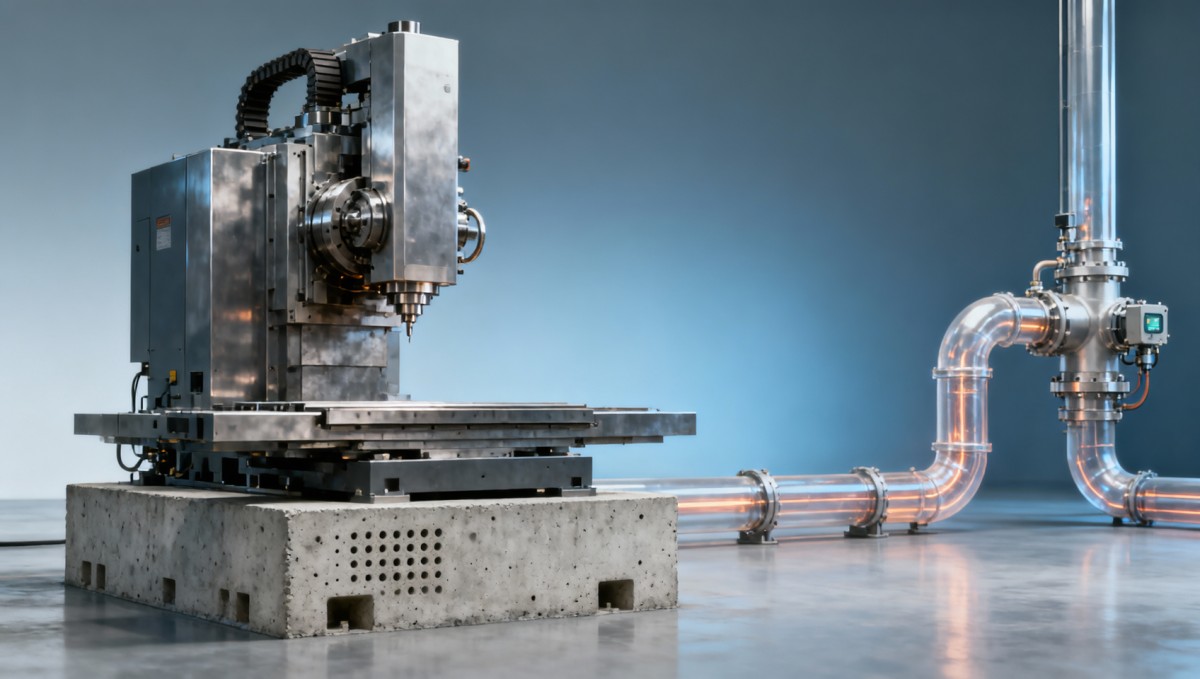
How to Evaluate Damping Evolution Before Purchase
Key Metrics Beyond Static Rigidity Tests
Procurement teams often rely on static stiffness values (e.g., 120 N/μm at Z-axis), but these ignore time-domain behavior. Instead, prioritize suppliers who provide: (1) modal damping ratio (ζ) measurements at 3, 6, and 12 months post-commissioning; (2) thermal drift vs. damping correlation charts; and (3) documented damping recovery rates after shutdown cycles (>72-hour idle periods).
- Require minimum ζ ≥ 0.025 at 150–350 Hz range (critical for aluminum aerospace skins and large turbine housings)
- Verify damping consistency across 3 thermal zones: ambient (18–22°C), warm-up (25–28°C), and steady-state (30–33°C)
- Confirm test methodology aligns with ISO 230-2 Annex B (impact hammer + laser Doppler vibrometry)
Supplier Transparency Checklist
A truly reliable heavy duty machine tool supplier will disclose not just initial performance—but how it changes. Look for documented evidence of damping stabilization timelines, including real-world case data from similar applications: e.g., “Machining center used for nuclear valve bodies (Inconel 718) achieved stable ζ = 0.028 at Month 5, within ±0.002 tolerance across 4 consecutive months.”
This table reflects field-validated thresholds observed across 27 heavy duty machining centers deployed in Tier-1 automotive and energy equipment facilities between 2021–2023. Suppliers unable to supply such granular, time-stamped damping data should be treated as high-risk for long-cycle, high-accuracy CNC manufacturing environments.
Procurement Implications for Aerospace & Energy Equipment Buyers
When sourcing heavy duty machine tools for mission-critical components—such as jet engine casings or nuclear reactor coolant channels—delayed damping behavior directly affects qualification timelines. Regulatory audits (e.g., AS9100 Rev D, ISO 13485 for medical-grade parts) now require 6-month operational stability reports before final process validation. Machines failing to stabilize damping within this window risk requalification delays averaging 11–14 weeks.
Moreover, energy-saving machine tool designs—increasingly mandated in EU Ecodesign Directive (EU 2019/1781)—often use lighter composite structures or thinner-walled castings. These improve efficiency but reduce inherent damping mass. Without compensatory design (e.g., tuned mass dampers integrated into column assemblies), such machines may take 8–10 months to reach target ζ values—extending ROI calculations beyond standard 3-year financial models.
Procurement professionals must therefore treat damping evolution not as a technical footnote—but as a contractual KPI. Include clauses specifying: (1) mandatory third-party damping measurement at Month 3, 6, and 9; (2) penalty structure for ζ deviation >±0.004; and (3) right-to retrofit damping-enhancement kits (e.g., constrained-layer damping inserts) at supplier cost if stabilization lags.
Why Partner With Us for Heavy Duty CNC Machine Tool Sourcing
We support global procurement teams, engineers, and decision-makers with verified, time-resolved damping performance data—not just spec sheets. Our platform delivers direct access to OEM-certified damping evolution reports across 120+ heavy duty machining centers, filtered by application (aerospace, energy, mold/die), thermal class, and stabilization timeline.
You can request: (1) comparative damping trajectory curves for competing models; (2) delivery lead times aligned with your operational ramp-up schedule (standard: 14–18 weeks; expedited: 8–10 weeks with pre-stabilized base casting option); (3) compliance documentation for AS9100, ISO 230-2, and CE Machinery Directive 2006/42/EC; and (4) on-site damping verification support during FAT/SAT phases.
Contact us today to receive a customized damping evaluation report for your specific application—including recommended stabilization protocols, expected tool life impact, and total cost-of-ownership projection over 5 years.
NEXT ARTICLE
Recommended for You
 Heavy-duty Machining Center for mold making: Why coolant filtration standards evolve faster than OEM manualsMachine Tool Industry Editorial Team
 Quick-change Fixture Design for CNC turning: Why clamping force consistency drops after 200 cyclesCNC Machining Technology Center
 5 Axis Machining for impeller manufacturing: Why toolpath smoothing affects surface fatigue lifeCNC Machining Technology Center
 Lean Production Process implementation: Where value stream mapping fails to expose hidden machine downtimeManufacturing Market Research Center
 Modular Tooling System for flexible manufacturing: Why interface repeatability degrades faster than expectedMachine Tool Industry Editorial Team
 Industrial Automation control system for CNC machines: When cybersecurity updates disrupt scheduled maintenanceMachine Tool Industry Editorial Team

Aris Katos
Future of Carbide Coatings
15+ years in precision manufacturing systems. Specialized in high-speed milling and aerospace grade alloy processing.
▶
Heavy duty machine tool: Where structural damping reveals itself only after months of operationMachine Tool Industry Editorial Team▶
Portable machine tool: Real-world limits of on-site machining accuracy vs. workshop benchmarksMachine Tool Industry Editorial Team▶
Compact machine tool: Can true footprint reduction coexist with rigidity for heavy cuts?Machine Tool Industry Editorial Team▶
CNC Production Scheduling Breaks Down With Mixed Batch SizesMachine Tool Industry Editorial Team▶
Industrial CNC uptime drops for simple reasons too oftenMachine Tool Industry Editorial Team
Mastering 5-Axis Workholding Strategies
Join our technical panel on Nov 15th to learn about reducing vibrations in thin-wall components.

Providing you with integrated sanding solutions
Before-sales and after-sales services
Comprehensive technical support