• Global CNC market projected to reach $128B by 2028 • New EU trade regulations for precision tooling components • Aerospace deman
NYSE: CNC +1.2%LME: STEEL -0.4%

CNC Production Scheduling Breaks Down With Mixed Batch Sizes
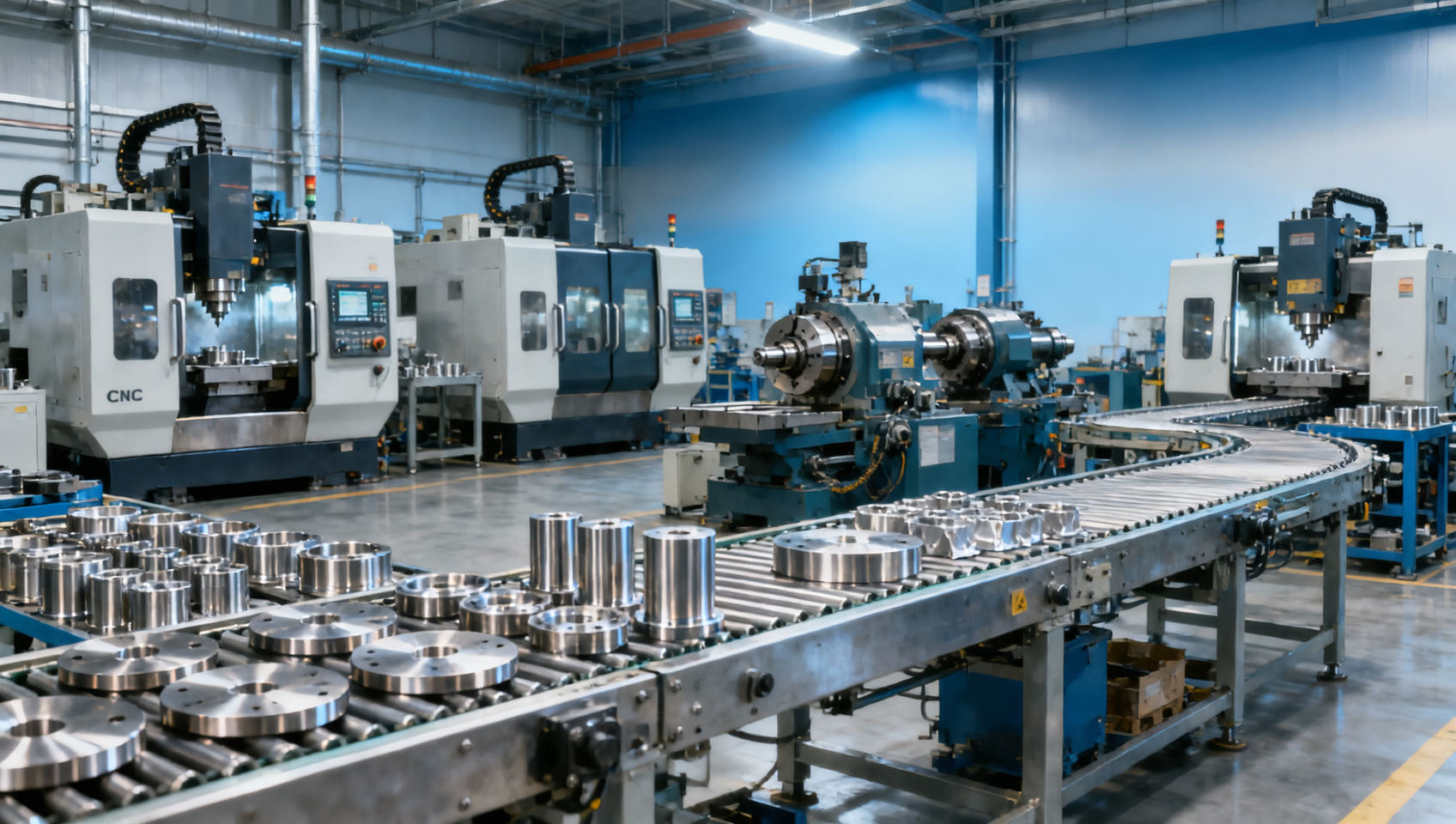
When CNC production faces mixed batch sizes, even advanced industrial CNC systems can struggle to balance efficiency, accuracy, and delivery speed. For manufacturers relying on CNC milling, automated lathe operations, and integrated automated production lines, poor scheduling can disrupt the entire production process. This article explores why metal machining workflows break down and how smarter planning supports stable, scalable automated production.
Why mixed batch sizes disrupt CNC production scheduling
In CNC machining, scheduling looks simple when orders are uniform. Problems start when one shop must run prototypes, repeat parts, and medium-volume production on the same week or even the same shift. A batch of 10 precision shafts, 300 aluminum housings, and 40 stainless discs may all require different tooling, setup logic, inspection steps, and cycle priorities. That mix creates friction across machine loading, labor planning, and delivery sequencing.
The core issue is that machine time is not the only scheduling variable. Setup time, fixture changes, program verification, tool wear, first-piece approval, and in-process quality checks all consume capacity. In many workshops, a job with a 12-minute cycle time may still lose profitability if it needs 90–150 minutes of setup. When planners ignore this ratio, CNC production scheduling breaks down even if the machine utilization rate appears high on paper.
Mixed batch sizes also create hidden queue instability. Small lots often demand urgent changeovers, while larger runs are delayed because planners keep inserting hot orders into the sequence. Over 1–2 weeks, this leads to a familiar pattern: excessive WIP, operators waiting for tooling, inspection bottlenecks, and missed dispatch dates. In automated production lines, the disruption can spread further because upstream and downstream operations lose synchronization.
For information researchers and decision-makers, this is not just a workshop issue. It affects quote accuracy, promised lead times, machine investment planning, and customer retention. For operators, the symptoms appear as constant job switching. For procurement teams, it appears as unstable supplier delivery. For managers, it shows up in overtime cost, lower OEE, and inconsistent on-time performance.
The 4 scheduling pressure points that matter most
- Setup-to-run imbalance: a short production run with long setup can consume more planning effort than a much larger order.
- Tooling and fixture conflicts: 3–5 jobs may compete for the same fixture family, preset tools, or probing routine in the same shift.
- Inspection dependency: high-accuracy parts often require first-article and periodic checks, slowing machine release and lot handoff.
- Priority changes from sales or supply chain: late material arrival or rush orders can overturn a carefully built CNC production schedule.
These pressure points are especially visible in automotive, aerospace support work, energy equipment machining, and electronics enclosure production, where part complexity and delivery cadence often vary within the same plant. As smart manufacturing expands, the challenge is not simply buying more machines. It is building a scheduling method that can absorb variability without damaging precision machining performance.
What actually changes between small, medium, and repeat batch production?
Not all batch sizes behave the same in CNC production. Small-batch jobs prioritize flexibility and engineering speed. Medium-batch jobs need balanced throughput. Repeat production rewards standardization, fixture optimization, and stable cycle time control. If planners apply one rule to all three, they usually sacrifice either responsiveness or machine efficiency. That is why scheduling must be matched to batch behavior, not just due date order.
In practical terms, a batch of 5–20 parts may justify manual intervention, quick program edits, and flexible setup sharing. A batch of 50–300 parts often benefits from dedicated fixture logic, tighter tool life planning, and grouped machine allocation. Once repeat demand becomes stable over several weeks or months, automated production lines and palletized machining centers become more valuable because setup time can be spread over larger output volumes.
The table below compares common scheduling demands across different production patterns. It helps procurement teams, plant managers, and process engineers identify where scheduling risk typically increases and what operating logic is better suited to each case.
The comparison shows why mixed batch sizes can undermine a single scheduling rule. A production plan that is efficient for 300 pieces may be wasteful for 12 pieces. Likewise, a workshop optimized only for urgent small lots may never achieve stable throughput on repeat orders. The most effective CNC scheduling systems classify work into at least 3 categories before sequencing machines, labor, tooling, and inspection resources.
Where different users feel the problem
For operators and supervisors
Operators face repeated setup interruptions, inconsistent work instructions, and pressure to recover lost hours. In shops with 2-shift or 3-shift operation, poor handover between teams can further reduce spindle time and increase setup errors.
For buyers and sourcing teams
Procurement teams often compare price per part but miss the impact of scheduling discipline on lead-time reliability. A supplier may quote competitively, yet fail when multiple part families compete for the same CNC milling and turning capacity.
For enterprise decision-makers
Executives must decide whether the real bottleneck is machine quantity, process planning, fixture standardization, or software visibility. In many cases, the answer is not more equipment but better coordination across programming, production, quality, and dispatch.
How to stabilize scheduling in CNC milling, turning, and automated production lines
A stable CNC production schedule starts with segmentation. Instead of mixing all jobs into one queue, shops should divide work by setup similarity, tolerance sensitivity, and delivery urgency. This is especially important when combining CNC milling, automated lathe operations, and secondary processes such as deburring, washing, marking, or assembly. A 4-step control logic is often more practical than a fully theoretical scheduling model.
First, group parts by machine family and tooling compatibility. Second, separate urgent prototype or engineering orders from routine production orders. Third, assign inspection windows in parallel with machine loading instead of after machining completion. Fourth, define a frozen schedule window, often 24–48 hours, during which only truly critical changes are allowed. These steps reduce shop-floor turbulence and improve on-time predictability.
Another effective method is to track three time layers instead of one. Planners should measure setup time, effective cutting time, and wait time. Many factories only monitor cutting time, which hides the true loss pattern. When shops record changeovers above 30 minutes, waiting time above 20 minutes, or inspection holds longer than one shift, they can pinpoint where schedule instability is being created.
Digital integration matters as well. CNC machine data, tool management, work order release, and quality checkpoints need to share the same production logic. Smart factory tools are most valuable when they connect planning decisions to actual machine availability, not when they simply display dashboards after delays have already occurred.
A practical scheduling checklist for mixed batch machining
- Create 3 job classes: urgent engineering lots, standard small batches, and stable repeat batches.
- Pre-confirm 5 key resources before release: machine, program, fixture, tool list, and inspection method.
- Set a changeover target by process family, such as under 30 minutes for repeat jobs and under 60 minutes for mixed jobs.
- Reserve protected capacity, often 10%–20%, for rush orders so they do not break the entire weekly sequence.
- Review delayed jobs every shift, not only every week, to prevent queue accumulation.
This kind of operating discipline is highly relevant in industries producing precision discs, structural components, shaft parts, and machined housings. These part families often share equipment but differ in clamping, tolerance control, and inspection rhythm. Without a structured scheduling method, even a modern machining center or multi-axis CNC system can become a reactive bottleneck rather than a productivity asset.
What should buyers and managers evaluate before choosing a CNC production solution?
When sourcing CNC capacity, equipment, or an automated production line, buyers should not focus only on spindle specifications or headline cycle time. The more important question is whether the system can remain stable under mixed batch sizes. That means checking scheduling visibility, changeover capability, fixture flexibility, digital traceability, and quality coordination. For B2B purchasing, these factors often determine whether a supplier can support growth without delivery disruption.
A good evaluation framework usually covers at least 5 dimensions: part complexity, batch variability, lead-time commitment, quality requirement, and expansion potential. For example, a plant producing 20–80 variants per month needs different planning support than one running 3 high-volume part numbers continuously. Similarly, a supplier serving aerospace support or energy equipment may need longer process validation than a general industrial parts producer.
The table below provides a practical procurement guide for assessing whether a CNC machining supplier, machine tool layout, or automation plan is suitable for mixed batch production. It is useful for procurement teams, factory planners, and enterprise decision-makers comparing multiple options.
This procurement view helps buyers avoid a common mistake: choosing a machine or supplier that looks strong in isolated performance but weak in mixed-flow management. In real production, a slightly slower cycle with stronger scheduling discipline may produce better delivery reliability than a faster machine in a chaotic planning environment.
Questions worth asking before purchase or project approval
- How many part families can be switched within one shift without major productivity loss?
- What is the usual lead-time window for standard orders versus urgent orders, such as 7–15 days versus 2–5 days?
- Which processes are integrated: milling, turning, probing, washing, assembly, or final inspection?
- Does the supplier or equipment plan support future digital integration with MES, ERP, or tool management systems?
For enterprises expanding in automotive components, electronics production, and energy equipment, the right CNC production solution should not only handle current order mix. It should also support higher automation, better traceability, and more reliable cross-border supply coordination as business volume grows.
Common misconceptions, operational risks, and FAQ
Mixed batch CNC scheduling often fails because teams act on assumptions that are only partly true. One assumption is that higher machine utilization always means better performance. Another is that automation automatically solves changeover loss. A third is that urgent orders are unavoidable and should always override the plan. In reality, each of these beliefs can increase instability if not managed with process discipline.
Operational risk usually grows in 3 stages. First, planning loses accuracy because setup and inspection are underestimated. Second, the workshop starts expediting jobs manually. Third, quality and delivery become reactive, forcing overtime or subcontracting. Recognizing these stages early is essential for manufacturers working with precision machining, multi-axis systems, and integrated automated production lines.
The FAQ below addresses common buyer and operator concerns. These questions are closely aligned with real search intent and practical decision-making in CNC machining, machine tool procurement, and production planning.
How do I know whether mixed batch sizes are the real cause of delivery delays?
Start by checking 4 indicators over 2–4 weeks: average setup duration, queue wait time before machining, number of schedule changes per shift, and percentage of jobs delayed at inspection. If these values rise when order variety increases, then mixed batch scheduling is likely a major root cause. Material shortages and machine breakdowns may still matter, but the schedule itself is already fragile.
Are automated production lines suitable for small and mixed CNC batches?
They can be, but only when part families share stable geometry, fixture logic, and loading conditions. Automation works best when repeat demand exists and setup can be standardized. If every job requires a different clamp, inspection path, or tool pack, a highly automated line may become less flexible than a well-managed machining cell. The right answer often lies in selective automation rather than full automation.
What standards or compliance topics should be considered?
Requirements vary by sector, but buyers commonly review drawing control, inspection traceability, calibration practice, material identification, and process documentation. In export-oriented manufacturing, shops may also need to align with customer-specific quality systems and common industrial documentation expectations. The key is not to assume that machine capability alone guarantees compliance readiness.
Is it better to outsource mixed small batches or invest in internal CNC capacity?
That depends on volume stability, engineering confidentiality, lead-time pressure, and available process control. If demand is irregular and below a predictable threshold, outsourcing may reduce fixed cost. If parts are recurring, quality-critical, or needed within short windows repeatedly, internal capacity or a long-term qualified supplier model may be safer. The decision should weigh total coordination cost, not only piece price.
Why choose us for CNC machining insight, sourcing support, and project planning
We focus on the global CNC machining and precision manufacturing industry, with attention to machine tools, automated production lines, precision parts processing, and international industrial trade. This allows us to support not only technical understanding, but also the practical link between scheduling strategy, equipment selection, supplier evaluation, and delivery planning. For companies facing mixed batch complexity, that connection is often more valuable than isolated product data.
If you are comparing CNC milling solutions, automated lathe capacity, machining centers, or flexible production line options, we can help structure the discussion around real decision points. That includes part-family analysis, batch pattern review, scheduling risk identification, and evaluation of whether a standard machine, modular cell, or higher-level automation concept is the better fit.
You can contact us for specific support on 6 practical topics: parameter confirmation, machine or line selection, expected lead-time range, customized production planning, documentation and compliance requirements, and quotation communication for global sourcing or partnership projects. If needed, discussions can also cover sample support logic, tooling assumptions, and phased implementation planning over 2–3 stages.
For manufacturers, buyers, and decision-makers dealing with unstable CNC production scheduling, the next step should be precise, not generic. Share your part type, batch range, tolerance level, target lead time, and current bottleneck. With those inputs, it becomes much easier to judge whether the issue is capacity, planning, tooling, automation fit, or supplier structure—and what solution is most realistic for stable growth.
PREVIOUS ARTICLE
NEXT ARTICLE
Recommended for You
 Global Manufacturing Lead Times Improve but Not EverywhereGlobal Machine Tool Trade Research Center
 Machine Tool Market Inventory Pressure Is Building AgainGlobal Machine Tool Trade Research Center
 Metal Lathe vs CNC Milling for Low Volume Round PartsCNC Machining Technology Center
 CNC Cutting Gas Choice Affects More Than Edge FinishCNC Machining Technology Center
 CNC Metalworking Shops Face New Pressure on TraceabilityManufacturing Policy Research Center
 Automated Lathe Cycle Time Gains Can Hide Quality LossesCNC Machining Technology Center

Aris Katos
Future of Carbide Coatings
15+ years in precision manufacturing systems. Specialized in high-speed milling and aerospace grade alloy processing.
▶
CNC Production Scheduling Breaks Down With Mixed Batch SizesMachine Tool Industry Editorial Team▶
Industrial CNC uptime drops for simple reasons too oftenMachine Tool Industry Editorial Team▶
When CNC industrial upgrades cut output instead of raising itMachine Tool Industry Editorial Team▶
Why CNC production planning breaks down during mixed batch runsMachine Tool Industry Editorial Team▶
CNC industrial machines that ship with embedded diagnostics—what’s actually working in practiceMachine Tool Industry Editorial Team
Mastering 5-Axis Workholding Strategies
Join our technical panel on Nov 15th to learn about reducing vibrations in thin-wall components.

Providing you with integrated sanding solutions
Before-sales and after-sales services
Comprehensive technical support