• Global CNC market projected to reach $128B by 2028 • New EU trade regulations for precision tooling components • Aerospace deman
NYSE: CNC +1.2%LME: STEEL -0.4%

Machine tool for aerospace: Why thermal expansion compensation requires real-time sensor fusion
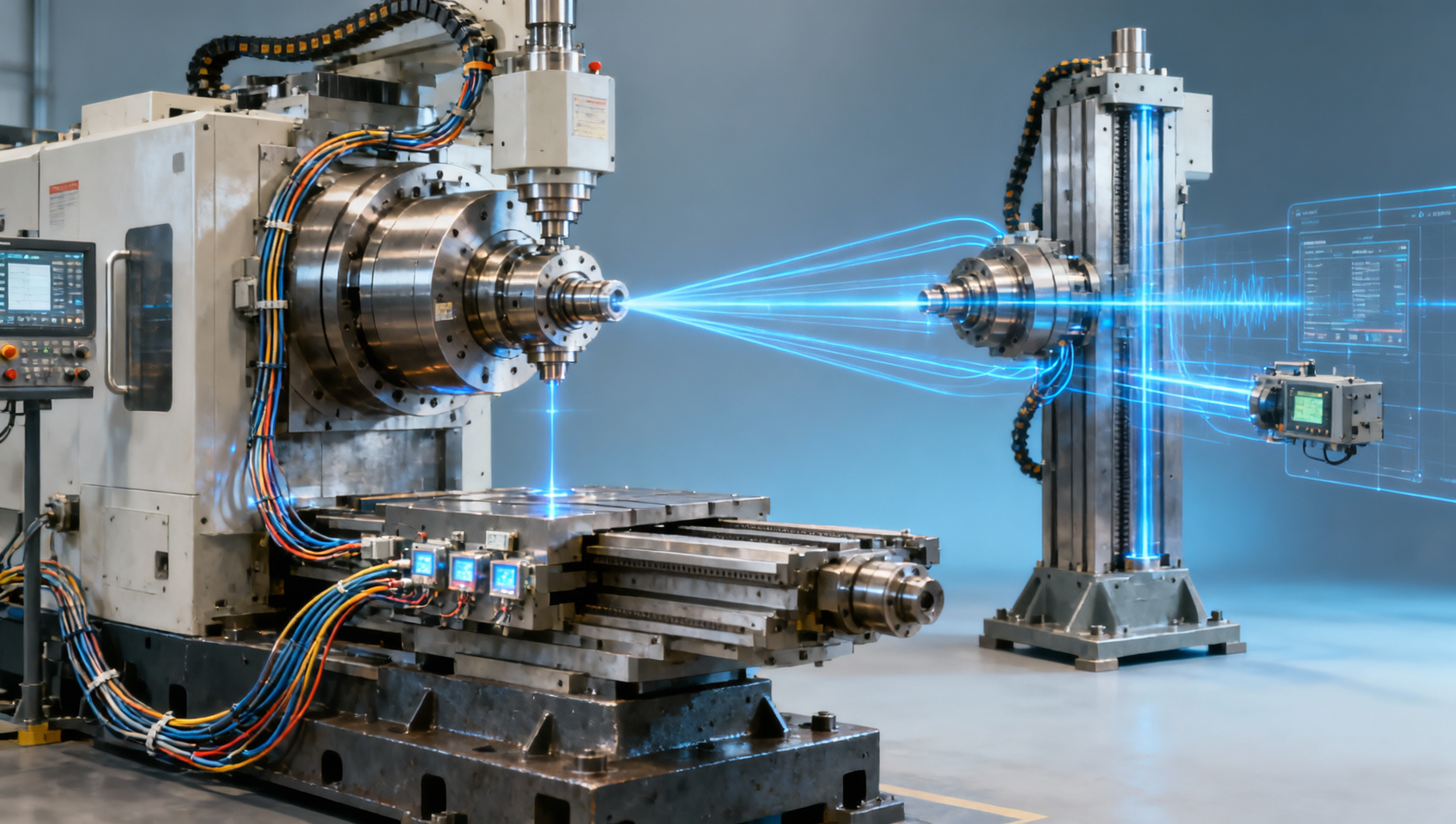
In aerospace-grade CNC manufacturing, even micron-level thermal drift can compromise the integrity of high-tolerance disc parts and critical structural components. That’s why real-time sensor fusion—integrating temperature, strain, and positional data—is no longer optional for machine tool for aerospace applications. As precision CNC manufacturing pushes toward tighter tolerances and higher-speed CNC manufacturing demands stability under dynamic loads, thermal expansion compensation becomes a cornerstone of automated CNC manufacturing and energy-saving machine tool design. For procurement professionals and engineering decision-makers seeking a reliable CNC manufacturing supplier or machine tool exporter, understanding this capability is key to selecting systems that deliver true high-precision CNC manufacturing—especially in compact machine tool and multi-axis machine tool configurations.
Why Thermal Expansion Matters Most in Aerospace CNC Machining
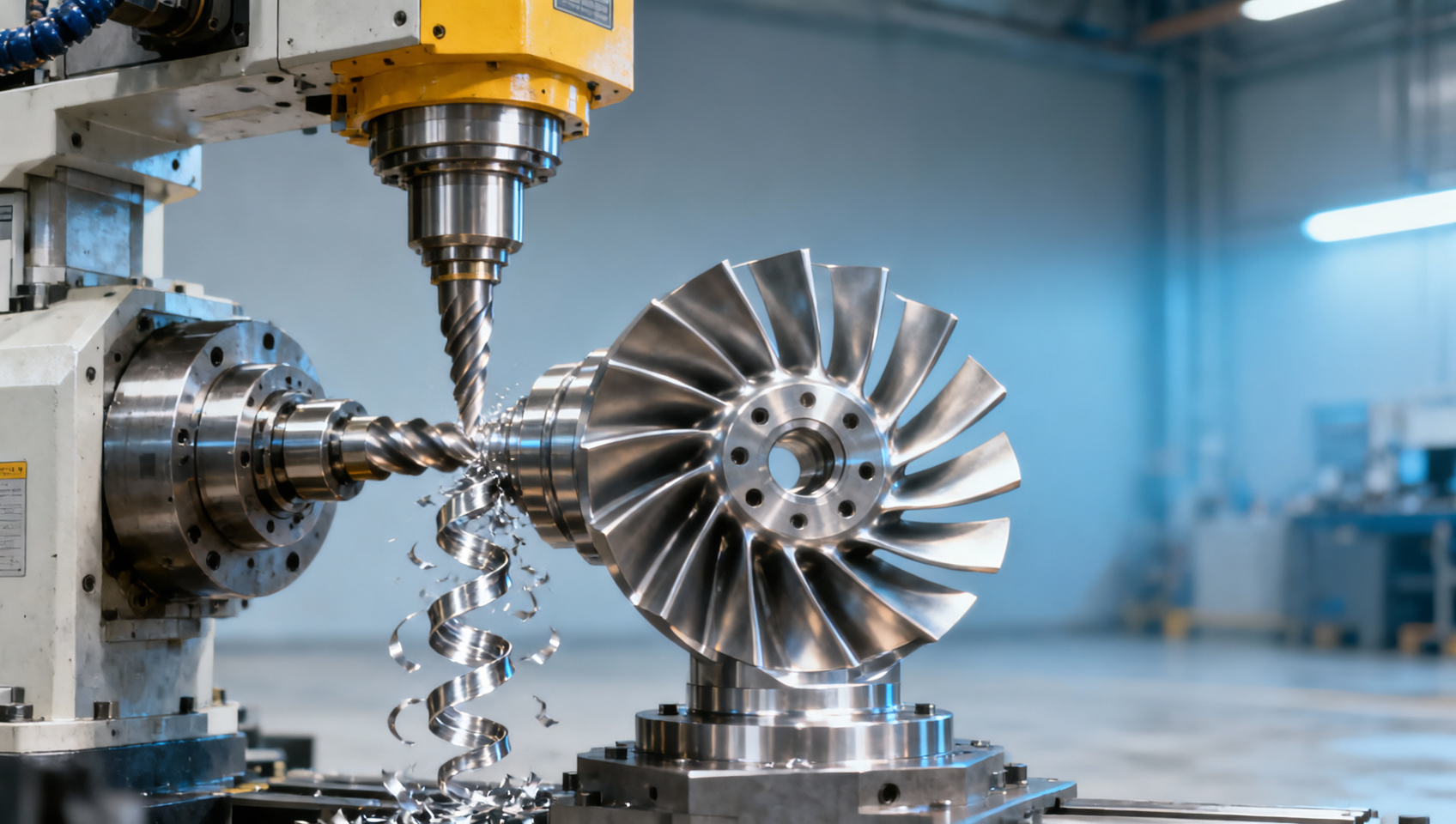
Aerospace components—such as turbine discs, wing spars, and engine casings—require dimensional stability within ±1.5 µm over 8-hour continuous machining cycles. Ambient temperature fluctuations of just 2°C can induce 8–12 µm linear expansion in a 1-meter cast iron machine bed. Without active compensation, such drift directly translates into geometric error in thin-walled structural parts.
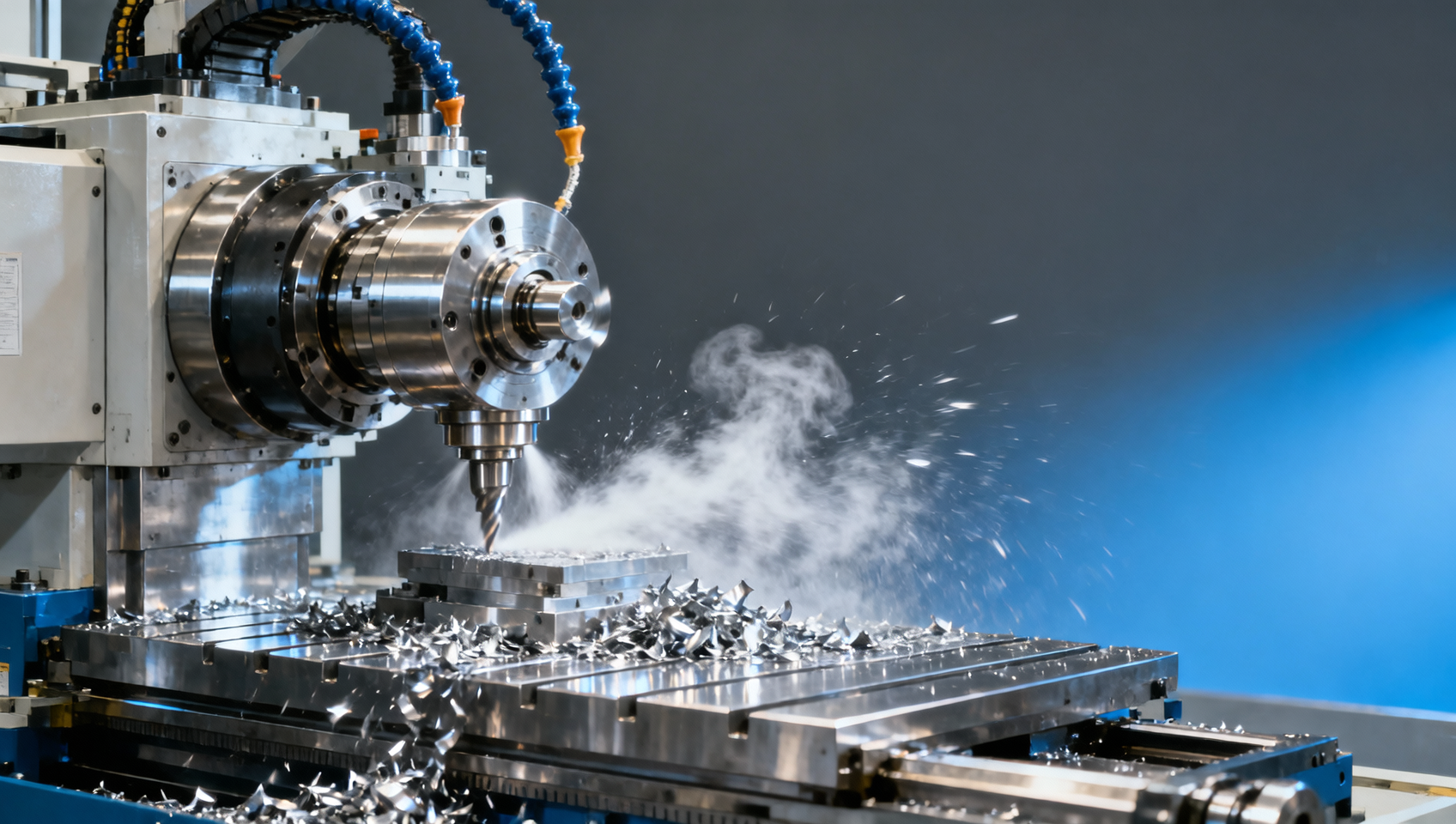
Conventional calibration-based compensation only addresses static thermal states. It fails under dynamic conditions: rapid spindle acceleration (up to 30,000 rpm), coolant flow changes, or ambient shifts during night-shift operations. Real-time sensor fusion closes this gap by continuously feeding live data from distributed sensors into adaptive control algorithms.
This isn’t theoretical: major Tier-1 aerospace suppliers report a 40–60% reduction in first-article rework when deploying fused-sensor thermal compensation across 5-axis machining centers. The payoff manifests not only in part yield but also in extended tool life—reducing insert wear by up to 22% through consistent cutting-force management.
How Real-Time Sensor Fusion Works: From Data to Compensation
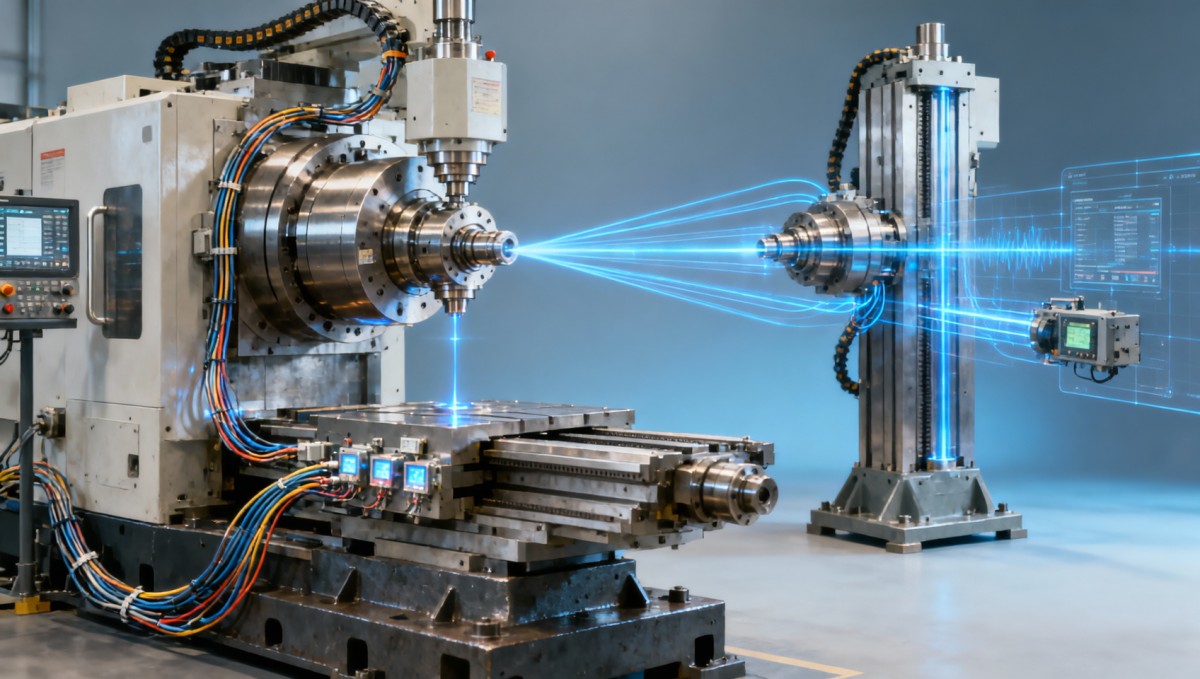
Real-time sensor fusion for thermal expansion compensation relies on three synchronized input layers:
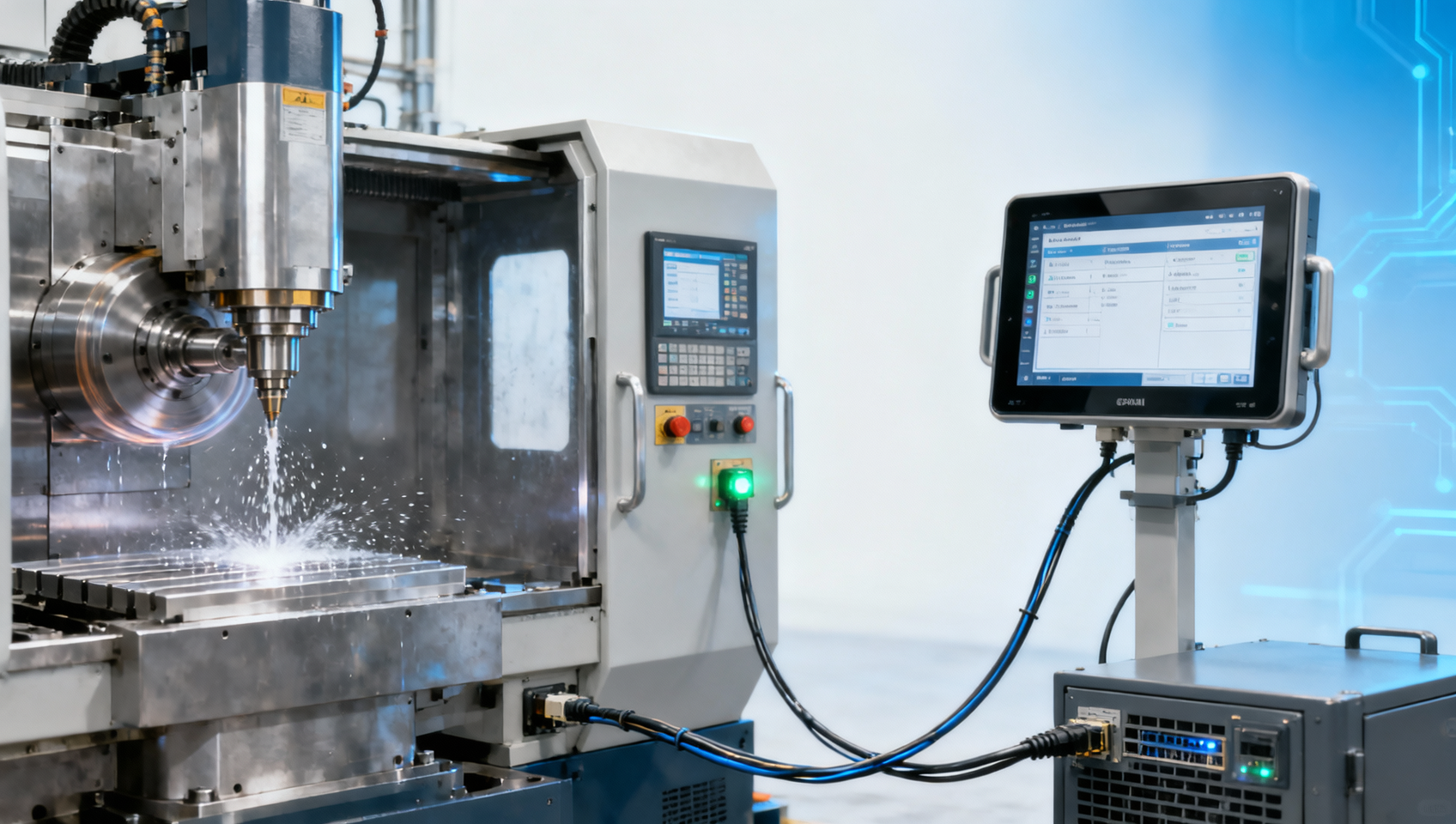
- Temperature sensors (PT100 or DS18B20) embedded at 7+ critical locations: column base, spindle housing, X/Y/Z guideways, and coolant reservoir
- Strain gauges mounted on structural beams to detect micro-deformations induced by thermal gradients
- High-resolution encoders (≤0.1 µm resolution) and laser interferometers tracking actual axis position vs. commanded position
These inputs feed into an onboard FPGA or industrial PC running Kalman-filtered estimation models. The system computes real-time thermal displacement vectors every 50–100 ms and adjusts servo loop setpoints accordingly—without interrupting motion or requiring operator intervention.
What to Evaluate When Procuring Aerospace-Grade Machine Tools
Procurement teams must move beyond catalog specs and verify integration depth. Key checkpoints include:
Vendors offering only “temperature-based offset tables” or post-process software corrections fall short of true real-time fusion. Always request live demonstration data logs showing simultaneous sensor streams and resulting axis correction values during a 30-minute thermal soak test.
Common Misconceptions That Impact Procurement Decisions
“All high-end CNC machines include full thermal compensation”
False. Only ~35% of 5-axis machining centers priced above $1.2M offer hardware-integrated sensor fusion. Many rely on external thermal modeling software with 2–4 hour setup time per job—and zero dynamic response.
“Coolant temperature control eliminates the need for sensor fusion”
Incomplete. Coolant temp stabilizes tooling—but does nothing for structural frame expansion, spindle bearing heat, or ambient air convection across large gantries. Full compensation requires multi-point sensing across all thermal domains.
“It’s only relevant for ultra-high-precision work”
Misleading. Even medium-tolerance structural parts (e.g., fuselage brackets with ±0.05 mm GD&T) experience cumulative drift across 200+ tool changes. Sensor fusion reduces total cycle time variability by 18–25%, improving line balancing in automated production lines.
Why Partner With a Supplier Specializing in Aerospace CNC Solutions
We support global aerospace manufacturers with turnkey thermal compensation integration—including factory acceptance testing (FAT) under ISO 230-3 thermal stability protocols. Our solutions are validated across 30+ machine platforms (DMG MORI, Makino, Haas, Doosan, and domestic OEMs), with documentation aligned to AS9100 Rev D and NADCAP requirements.
When you contact us, specify your use case: whether you’re evaluating a new multi-axis machine tool for titanium disc machining, retrofitting thermal compensation onto existing equipment, or validating compliance for FAA/EASA Part 21G certification. We’ll provide:
- Free thermal drift simulation using your part geometry and process parameters (typical turnaround: 3 business days)
- Side-by-side comparison of fused-sensor vs. conventional compensation performance on your actual workpiece material
- Delivery timelines aligned to your production ramp-up schedule—including pre-commissioning sensor calibration and operator training
Ready to validate thermal stability on your next aerospace component? Request your customized thermal compensation assessment today.
Recommended for You
 Heavy-duty Machining Center for mold making: Why coolant filtration standards evolve faster than OEM manualsMachine Tool Industry Editorial Team
 Quick-change Fixture Design for CNC turning: Why clamping force consistency drops after 200 cyclesCNC Machining Technology Center
 5 Axis Machining for impeller manufacturing: Why toolpath smoothing affects surface fatigue lifeCNC Machining Technology Center
 Lean Production Process implementation: Where value stream mapping fails to expose hidden machine downtimeManufacturing Market Research Center
 Modular Tooling System for flexible manufacturing: Why interface repeatability degrades faster than expectedMachine Tool Industry Editorial Team
 Industrial Automation control system for CNC machines: When cybersecurity updates disrupt scheduled maintenanceMachine Tool Industry Editorial Team

Aris Katos
Future of Carbide Coatings
15+ years in precision manufacturing systems. Specialized in high-speed milling and aerospace grade alloy processing.
▶
Heavy-duty Machining Center for mold making: Why coolant filtration standards evolve faster than OEM manualsMachine Tool Industry Editorial Team▶
High precision machine tool: Why air-bearing spindles demand more than just clean airMachine Tool Industry Editorial Team▶
Machine tool for automotive industry: Why dynamic rigidity matters more than static specsMachine Tool Industry Editorial Team▶
Machine tool for aerospace: Why thermal expansion compensation requires real-time sensor fusionMachine Tool Industry Editorial Team▶
Machine tool for electronics manufacturing: Why EMI shielding affects more than just signal integrityMachine Tool Industry Editorial Team
Mastering 5-Axis Workholding Strategies
Join our technical panel on Nov 15th to learn about reducing vibrations in thin-wall components.

Providing you with integrated sanding solutions
Before-sales and after-sales services
Comprehensive technical support