• Global CNC market projected to reach $128B by 2028 • New EU trade regulations for precision tooling components • Aerospace deman
NYSE: CNC +1.2%LME: STEEL -0.4%

High precision machine tool: Why air-bearing spindles demand more than just clean air
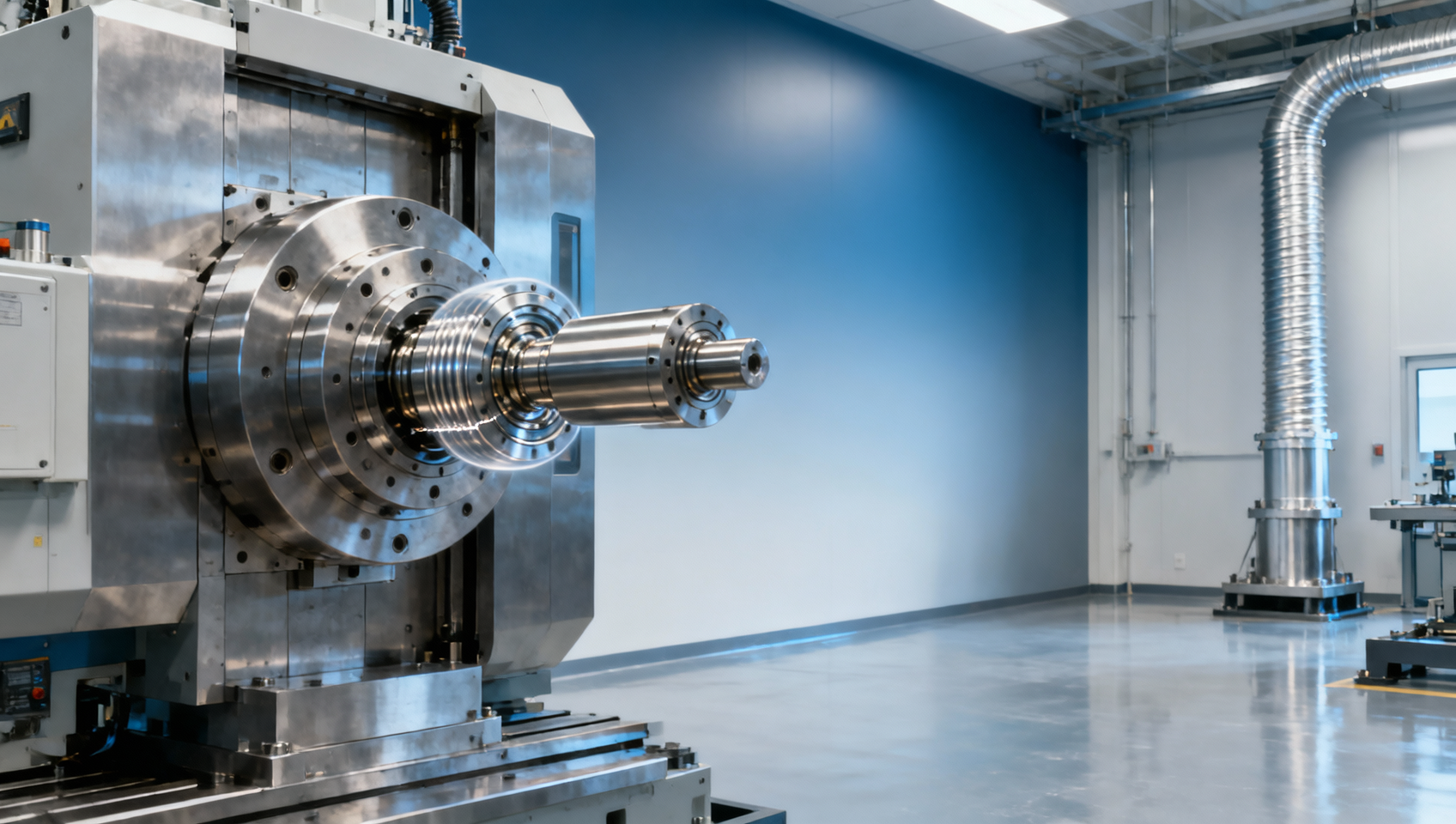
High precision machine tool performance hinges on more than just clean air—especially for air-bearing spindles, where micron-level stability demands rigorous environmental control, advanced thermal management, and vibration-isolated foundations. As industries like aerospace, medical device manufacturing, and energy equipment push for tighter tolerances and faster cycle times, demand surges for compact machine tool solutions, multi-axis CNC manufacturing, and low maintenance CNC manufacturing systems. Whether you're a procurement professional sourcing from a CNC manufacturing wholesaler, an engineer evaluating high-speed CNC manufacturing for aluminum alloys, or a decision-maker scaling automated production lines, understanding spindle physics is critical to achieving true high precision CNC manufacturing.
Why “Clean Air” Alone Is a Misleading Benchmark for Air-Bearing Spindles
Air-bearing spindles are widely deployed in ultra-precision machining centers, optical lens grinders, and semiconductor metrology platforms—where positional repeatability under ±50 nm is non-negotiable. Yet many procurement teams assume that meeting ISO 8573-1 Class 1 compressed air purity (≤0.1 µm particles, ≤0.01 mg/m³ oil, ≤−70°C dew point) guarantees optimal spindle behavior. In reality, air quality is only one of five interdependent environmental variables.
Thermal drift remains the dominant error source: a 0.1°C ambient fluctuation can induce >120 nm axial expansion in a 200 mm steel spindle housing. Vibration transmission—especially from floor-borne sources below 10 Hz—is equally disruptive, causing asynchronous runout that mimics bearing wear. Without integrated compensation, even Class 1 air cannot offset these physical effects.
Moreover, dynamic pressure stability matters more than static purity. Pneumatic supply must maintain ±0.5% pressure ripple across 0–500 Hz bandwidth to prevent aerodynamic instability in the 5–25 µm bearing gap. This requires active pressure regulation—not just filtration—and is rarely verified during factory acceptance testing (FAT).
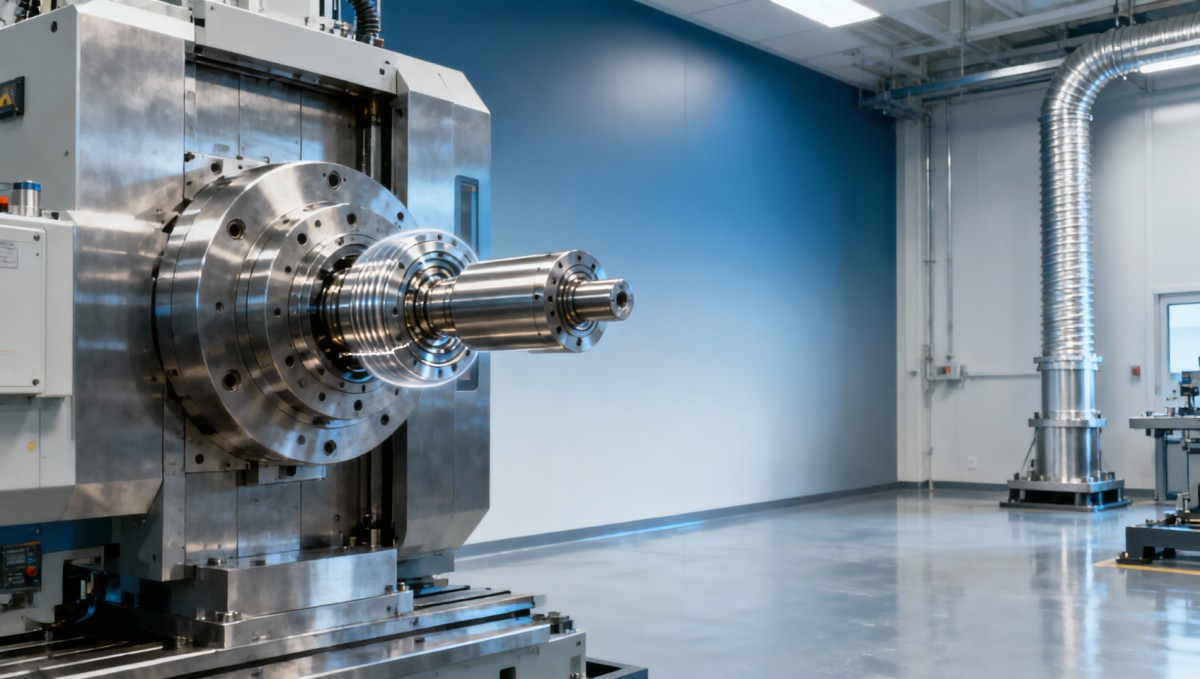
Five Critical Environmental Parameters Beyond Air Purity
- Ambient temperature stability: ±0.3°C over 24 hours (measured at spindle housing surface)
- Floor vibration velocity: ≤0.5 µm/s RMS between 2–100 Hz (per ISO 2372-1)
- Supply pressure ripple: ±0.5% peak-to-peak, 0–500 Hz bandwidth
- Relative humidity control: 45–55% RH to minimize electrostatic charge buildup on ceramic components
- Acoustic noise floor: ≤55 dB(A) at 1 m—excessive airborne sound couples into structural modes
How Aerospace & Medical Manufacturers Validate Real-World Spindle Readiness
Tier-1 aerospace suppliers and FDA-regulated medical device producers apply three-stage validation before commissioning air-bearing spindles. First, they perform 72-hour continuous thermal mapping using 12 embedded PT100 sensors across the spindle housing, base, and column—tracking gradients exceeding 0.05°C/hour as failure indicators. Second, they conduct modal analysis with laser Doppler vibrometry to identify resonance peaks within the 5–500 Hz operational envelope.
Third, they execute traceable process capability studies: machining 30 identical titanium alloy (Ti-6Al-4V) test parts under identical G-code, then measuring surface roughness (Ra), form deviation (PV), and bore concentricity—all referenced to NIST-traceable standards. Only when Cpk ≥ 1.67 across all metrics is the spindle cleared for production use.
This approach shifts focus from component-level specs to system-level performance—directly aligning with how end users in high-integrity sectors evaluate machine tool readiness. It also explains why lead times for certified air-bearing spindle installations typically extend to 12–16 weeks: 4 weeks for environmental audit, 3 weeks for foundation remediation, 3 weeks for calibration and validation, and 2 weeks for FAT documentation sign-off.
Procurement Checklist: 6 Non-Negotiables When Sourcing High-Precision Spindle Systems
For procurement professionals evaluating air-bearing spindle suppliers, technical brochures often obscure real-world integration risks. Prioritize vendors who transparently disclose the following six criteria—each tied to verifiable test reports or third-party certification:
- Dynamic pressure stability data across full operating speed range (e.g., 10k–120k rpm), not just static flow rates
- Thermal compensation algorithm details—including whether it uses real-time housing sensor feedback or fixed lookup tables
- Vibration isolation specification validated per ISO 10816-3 (not just “active damping” marketing language)
- Humidity control integration: standalone dehumidification vs. HVAC-coupled systems with dew-point monitoring
- Acoustic emission profile measured at 1 m distance, referenced to ISO 7779
- Factory acceptance test protocol including minimum 48-hour thermal soak and 30-part process capability study
Suppliers unable to provide documented evidence for ≥4 of these items should be deprioritized—even if their quoted price is 18–22% lower. Post-installation remediation costs for thermal/vibration issues routinely exceed 3× the original spindle investment.
Why Partner With Us for Your Next High-Precision Machine Tool Integration
We specialize in turnkey air-bearing spindle integration for global CNC machine tool OEMs and Tier-1 manufacturers across aerospace, medical devices, and energy equipment. Unlike general-purpose automation vendors, our engineering team includes former application engineers from leading spindle manufacturers—with hands-on experience validating systems per AS9100 Rev D, ISO 13485, and IEC 61508.
When you contact us, expect actionable support—not generic brochures. We’ll help you: confirm exact thermal and vibration boundary conditions for your facility; select between integrated vs. modular environmental control packages; define FAT acceptance criteria aligned with your internal quality gates; and schedule on-site validation using NIST-traceable metrology tools. Lead time for fully validated deployments starts at 10 weeks from signed PO.
Ready to move beyond “clean air” assumptions? Contact us today for a free spindle environment audit checklist, tailored to your current facility layout and target applications—including high-speed CNC manufacturing for aluminum alloys, compact multi-axis CNC manufacturing, or low-maintenance CNC manufacturing systems for unattended operation.
Recommended for You
 Heavy-duty Machining Center for mold making: Why coolant filtration standards evolve faster than OEM manualsMachine Tool Industry Editorial Team
 Quick-change Fixture Design for CNC turning: Why clamping force consistency drops after 200 cyclesCNC Machining Technology Center
 5 Axis Machining for impeller manufacturing: Why toolpath smoothing affects surface fatigue lifeCNC Machining Technology Center
 Lean Production Process implementation: Where value stream mapping fails to expose hidden machine downtimeManufacturing Market Research Center
 Modular Tooling System for flexible manufacturing: Why interface repeatability degrades faster than expectedMachine Tool Industry Editorial Team
 Industrial Automation control system for CNC machines: When cybersecurity updates disrupt scheduled maintenanceMachine Tool Industry Editorial Team

Aris Katos
Future of Carbide Coatings
15+ years in precision manufacturing systems. Specialized in high-speed milling and aerospace grade alloy processing.
▶
Heavy-duty Machining Center for mold making: Why coolant filtration standards evolve faster than OEM manualsMachine Tool Industry Editorial Team▶
High precision machine tool: Why air-bearing spindles demand more than just clean airMachine Tool Industry Editorial Team▶
Machine tool for automotive industry: Why dynamic rigidity matters more than static specsMachine Tool Industry Editorial Team▶
Machine tool for aerospace: Why thermal expansion compensation requires real-time sensor fusionMachine Tool Industry Editorial Team▶
Machine tool for electronics manufacturing: Why EMI shielding affects more than just signal integrityMachine Tool Industry Editorial Team
Mastering 5-Axis Workholding Strategies
Join our technical panel on Nov 15th to learn about reducing vibrations in thin-wall components.

Providing you with integrated sanding solutions
Before-sales and after-sales services
Comprehensive technical support