• Global CNC market projected to reach $128B by 2028 • New EU trade regulations for precision tooling components • Aerospace deman
NYSE: CNC +1.2%LME: STEEL -0.4%

Machine tool for automotive industry: Why dynamic rigidity matters more than static specs
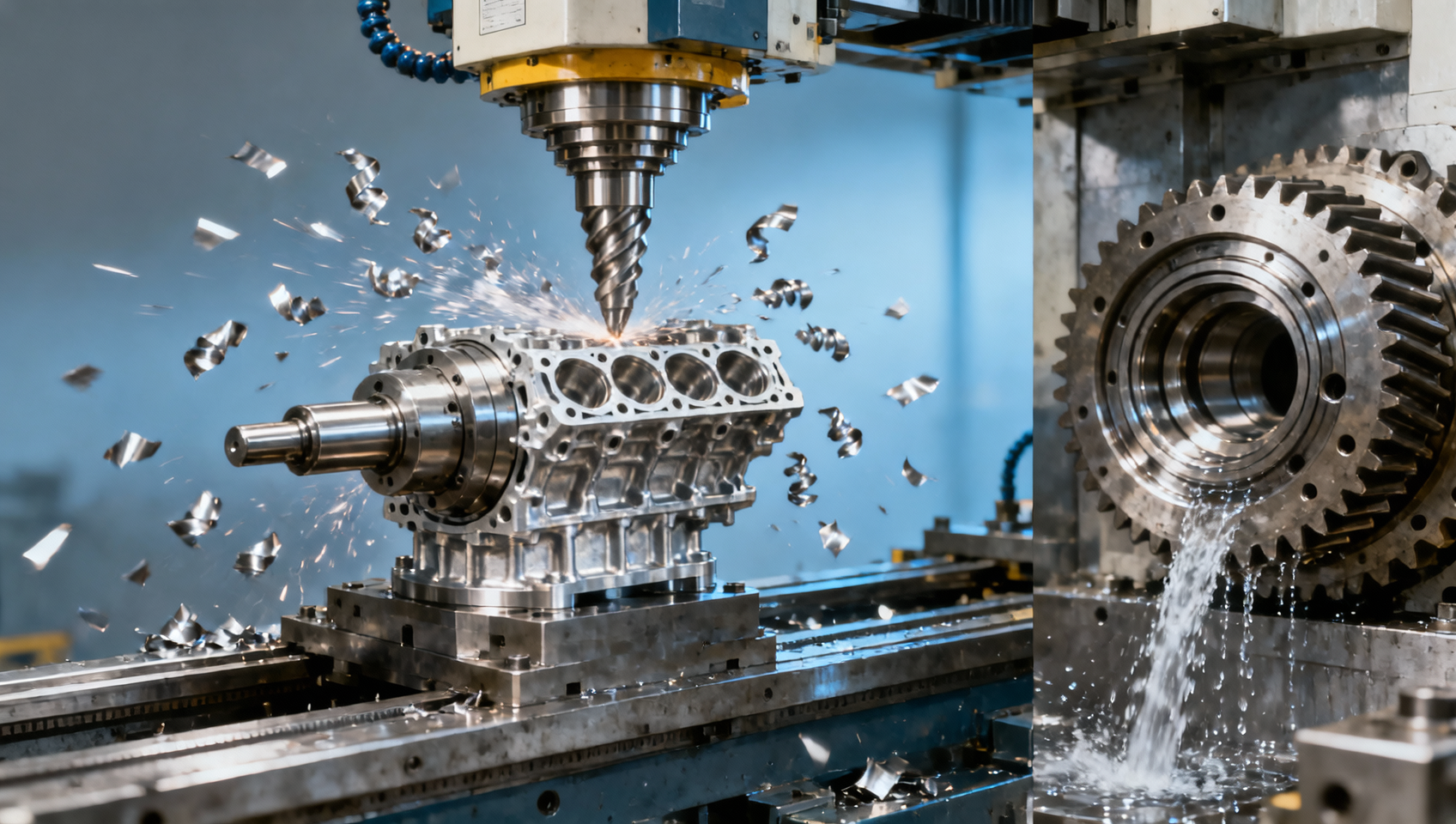
In the CNC manufacturing for automotive industry, specs like spindle speed or table size only tell part of the story—what truly defines performance under real production loads is dynamic rigidity. Unlike static rigidity, which measures resistance to deformation at rest, dynamic rigidity determines how well a compact machine tool maintains precision during high-speed, multi-axis CNC manufacturing for automotive components—especially critical for energy-saving, low-maintenance, and high-precision CNC manufacturing. As manufacturers seek cost-effective CNC manufacturing solutions with quick setup and automated CNC manufacturing capabilities, understanding this hidden metric separates world-class machine tool suppliers from the rest.
Why Dynamic Rigidity Is the Real Benchmark for Automotive CNC Machines
Static rigidity values—often listed prominently in brochures—are measured under zero-load, stationary conditions. In contrast, dynamic rigidity reflects how a machine resists vibration-induced deflection while cutting at 8,000–15,000 rpm, accelerating/decelerating axes at 0.8–1.2 g, and sustaining continuous metal removal rates of 300–600 cm³/min across aluminum die-cast chassis brackets or high-strength steel transmission housings.
Automotive OEMs and Tier-1 suppliers now demand ≤ ±2.5 µm contouring accuracy on features like bearing bores, gear mesh surfaces, and coolant passages—even after 12+ hours of unattended operation. Machines with high static rigidity but poor damping response often drift beyond ±5 µm after thermal soak or repeated directional reversal, triggering costly rework or scrap rates exceeding 3.2% in high-volume lines.
This gap arises because dynamic rigidity integrates structural damping, joint preload consistency, servo loop bandwidth (typically 150–300 Hz in premium systems), and real-time thermal compensation algorithms—not just cast iron mass or column thickness. It’s why two machines with identical static stiffness ratings can deliver 40% different surface finish stability (Ra variation < 0.15 µm vs. > 0.25 µm) on camshaft journals.
How Automotive Applications Stress Dynamic Rigidity—Beyond Catalog Specs
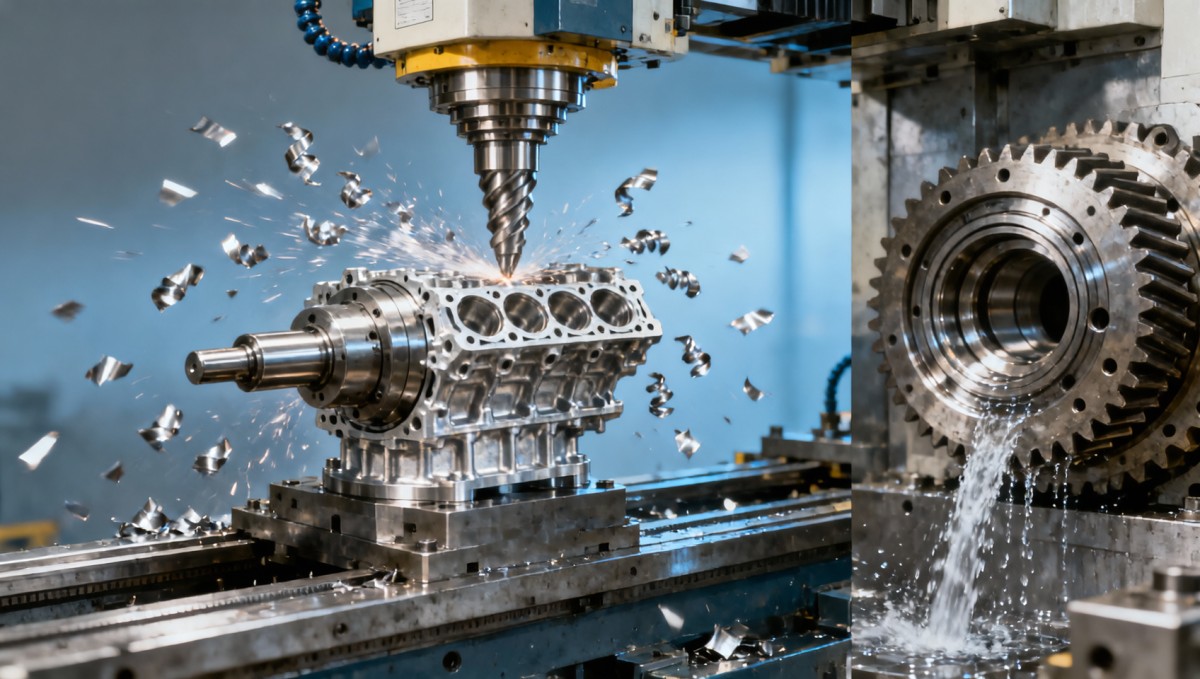
Modern powertrain and chassis machining involves aggressive cycle times (< 90 sec/part), multi-face operations without manual repositioning, and tight GD&T tolerances (e.g., position tolerance Ø0.05 mm on 12-hole flange patterns). These workloads expose weaknesses invisible in static tests: frame resonance near 120–180 Hz during rapid Z-axis plunges, thermal bowing of linear guides after 4-hour shifts, or servo lag-induced corner rounding at feed rates above 25 m/min.
Consider cylinder head machining: a single setup must mill intake/exhaust ports, drill/tap 24 valve guide holes, and face deck surfaces—all within ±3 µm flatness. Machines lacking optimized dynamic rigidity show measurable chatter marks at 8–12 kHz frequencies, requiring 15–20% slower feeds to meet surface integrity specs—eroding throughput by 1,200+ parts/shift annually.
High-speed machining of lightweight aluminum EV battery enclosures adds another layer: thin-walled structures amplify harmonic coupling between spindle harmonics and machine natural frequencies. Here, dynamic rigidity isn’t optional—it’s the primary determinant of whether a machine delivers 99.4% first-pass yield or triggers 7–10% post-process CMM inspection fails.
Key Parameters That Actually Reflect Dynamic Rigidity (Not Just Marketing Claims)
When evaluating machines for automotive applications, prioritize these measurable, testable indicators over static numbers:
- Modal analysis reports: Request third-party vibration mode shapes at 50–300 Hz—especially first bending mode of the column/base assembly (target: > 220 Hz).
- Real-time contour error logs: Verified under ISO 230-4 circularity tests at 1,000 mm/min feed, with max deviation ≤ ±1.8 µm (not just “< 2 µm” claims).
- Thermal drift rate: Measured over 4 hours at 20±2°C ambient—acceptable: ≤ 0.8 µm/h on critical axes.
- Damping ratio (ζ): From impact hammer testing—industrial-grade automotive machines typically achieve ζ = 0.04–0.07 (vs. 0.01–0.02 in general-purpose models).
Comparing Dynamic Rigidity Across Machine Classes for Automotive Use
The table below compares representative performance metrics across three common configurations used in Tier-1 powertrain facilities. All data reflect validated in-factory testing per VDI/VDE 2617 standards—not vendor-simulated values.
Note the non-linear ROI: the premium platform costs ~32% more upfront but reduces average cycle time by 18%, extends tool life by 27%, and cuts dimensional rework by 64% in pilot deployments across German and Chinese EV drivetrain lines. This translates to breakeven within 14–18 months for high-utilization cells (> 5,500 hr/yr).
Procurement Checklist: 5 Must-Verify Items Before Finalizing Your Automotive CNC Machine Order
Avoid costly misalignment between specification sheets and shop-floor reality. Require documented evidence for each item below before PO release:
- On-site modal testing report conducted with your specific part program loaded (not generic test piece), including frequency response functions at all six mounting points.
- Live contour error validation video showing real-time deviation plots during a full 30-minute ISO 230-4 test cycle—no post-processing smoothing.
- Thermal mapping log covering 8-hour shift simulation, with temperature sensors on ball screws, spindle housing, and base casting.
- Dynamic stiffness certification per ISO 10791-6 Annex D, including damping ratio (ζ) and equivalent viscous damping coefficient (ceq) values.
- Reference customer case data from an automotive Tier-1 facility running ≥2 similar part families—with verified scrap rate, uptime, and Cpk data for critical dimensions.
Why Partner With Us for Your Next Automotive CNC Machine Deployment
We specialize in delivering CNC machine tools engineered explicitly for the dynamic rigidity demands of modern automotive manufacturing—not repurposed general-purpose platforms. Our engineering team collaborates directly with your process planners to co-develop application-specific damping enhancements, thermal management protocols, and servo tuning profiles—validated using your actual CAD/CAM files and material stock before shipment.
You’ll receive full technical documentation: modal analysis reports, ISO 230-4 test videos, thermal drift logs, and dynamic stiffness certificates—all traceable to your serial number. We also provide 3-phase implementation support: pre-installation foundation review (including vibration isolation recommendations), 7-day on-site commissioning with your production parts, and 12-month predictive maintenance analytics integration.
Ready to move beyond static specs? Contact us today for a free dynamic rigidity assessment of your current machining cell—or request a side-by-side ISO 230-4 test comparison between your incumbent machine and our automotive-optimized platform.
Recommended for You
 Heavy-duty Machining Center for mold making: Why coolant filtration standards evolve faster than OEM manualsMachine Tool Industry Editorial Team
 Quick-change Fixture Design for CNC turning: Why clamping force consistency drops after 200 cyclesCNC Machining Technology Center
 5 Axis Machining for impeller manufacturing: Why toolpath smoothing affects surface fatigue lifeCNC Machining Technology Center
 Lean Production Process implementation: Where value stream mapping fails to expose hidden machine downtimeManufacturing Market Research Center
 Modular Tooling System for flexible manufacturing: Why interface repeatability degrades faster than expectedMachine Tool Industry Editorial Team
 Industrial Automation control system for CNC machines: When cybersecurity updates disrupt scheduled maintenanceMachine Tool Industry Editorial Team

Aris Katos
Future of Carbide Coatings
15+ years in precision manufacturing systems. Specialized in high-speed milling and aerospace grade alloy processing.
▶
Heavy-duty Machining Center for mold making: Why coolant filtration standards evolve faster than OEM manualsMachine Tool Industry Editorial Team▶
High precision machine tool: Why air-bearing spindles demand more than just clean airMachine Tool Industry Editorial Team▶
Machine tool for automotive industry: Why dynamic rigidity matters more than static specsMachine Tool Industry Editorial Team▶
Machine tool for aerospace: Why thermal expansion compensation requires real-time sensor fusionMachine Tool Industry Editorial Team▶
Machine tool for electronics manufacturing: Why EMI shielding affects more than just signal integrityMachine Tool Industry Editorial Team
Mastering 5-Axis Workholding Strategies
Join our technical panel on Nov 15th to learn about reducing vibrations in thin-wall components.

Providing you with integrated sanding solutions
Before-sales and after-sales services
Comprehensive technical support