• Global CNC market projected to reach $128B by 2028 • New EU trade regulations for precision tooling components • Aerospace deman
NYSE: CNC +1.2%LME: STEEL -0.4%

CNC Milling Capacity Gaps Can Hurt Small Batch Profitability
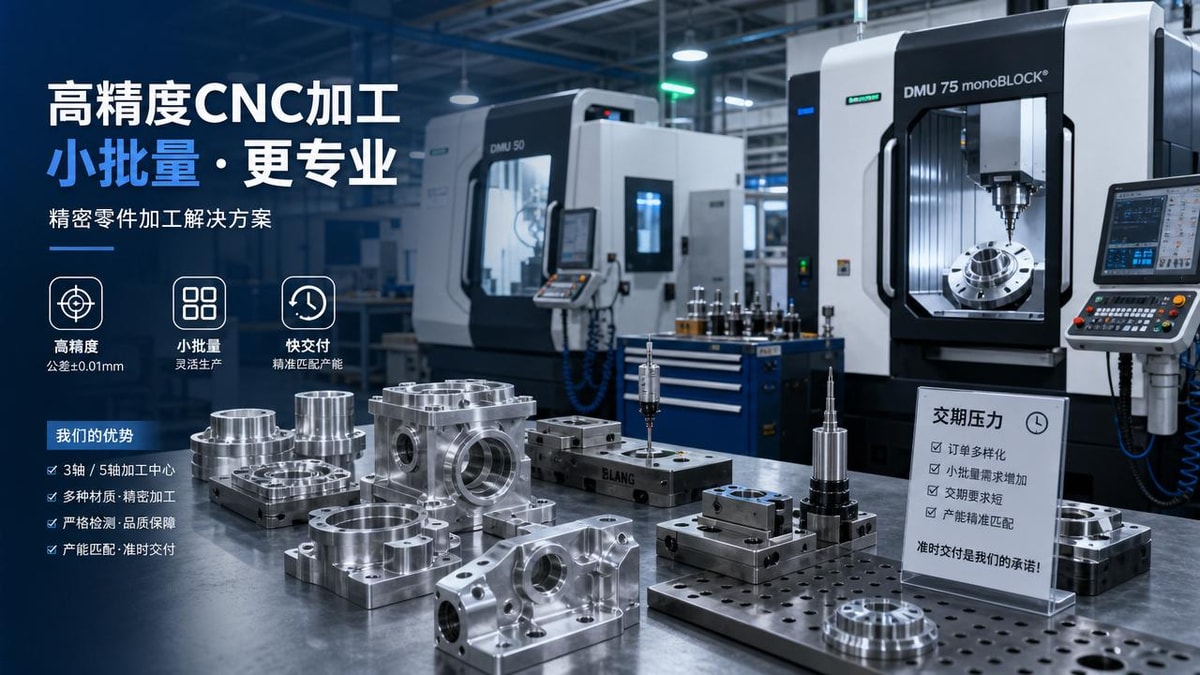
When CNC milling capacity falls short, small-batch manufacturing can quickly lose its profit edge through longer lead times, higher setup costs, and missed delivery commitments. For business evaluators, understanding where capacity gaps appear—and how they affect pricing, quality, and supplier reliability—is essential to making smarter sourcing and investment decisions in today’s precision manufacturing market.
Why a checklist approach works better for evaluating CNC milling capacity
For small-batch programs, CNC milling decisions often look simple at first: compare price, lead time, and part quality. In practice, profitability is shaped by a deeper set of constraints. A supplier may have advanced machines but poor scheduling discipline. Another may quote aggressively but rely on overloaded subcontractors. A third may deliver high precision but cannot absorb engineering changes or rush orders without disrupting other jobs.
That is why business evaluators should use a structured checklist instead of relying on surface-level supplier claims. A checklist helps identify whether CNC milling capacity is truly available, technically suitable, economically stable, and scalable for repeat small batches. It also makes comparisons across suppliers more objective, especially in industries where machining centers, fixtures, tooling, and programming resources are under pressure.
In the global precision manufacturing market, capacity gaps are not only caused by machine shortages. They also come from weak process planning, long setup times, tool management issues, inspection bottlenecks, and poor coordination between sales, production, and quality teams. Evaluators who check these factors early can reduce sourcing risk and improve margin protection.
Start with the first-pass checklist: what to confirm before comparing suppliers
Before reviewing quotations, confirm whether the CNC milling supplier matches the real production profile of the order. These first-pass checks save time and prevent false comparisons between vendors that are not equally capable.
- Confirm actual machine availability, not just installed machine count. Ten machining centers do not equal available capacity if most are committed to long-cycle contracts.
- Check part complexity against machine capability. Three-axis CNC milling may be enough for simple plates, but complex contours, angled features, or tight positional tolerances may require four-axis or five-axis resources.
- Review setup intensity. Small-batch work becomes unprofitable when setup hours are high relative to machining time.
- Verify programming support. CAM bottlenecks often delay production more than spindle hours do.
- Assess fixture readiness. If custom fixturing is required for every order, lead times and non-recurring costs will rise.
- Ask about inspection flow. A supplier with available CNC milling machines but overloaded CMM or in-process inspection capacity can still miss deadlines.
- Confirm material sourcing reliability, especially for aluminum grades, stainless steels, engineering plastics, and specialty alloys used in precision manufacturing.
For business evaluation teams, these checks create a baseline. If a supplier fails two or three of them, the quoted price may not represent stable execution capacity.
Core warning signs that CNC milling capacity gaps are hurting small-batch profitability
Capacity gaps do not always appear as obvious machine shortages. They usually emerge through commercial and operational symptoms. Spotting these warning signs early is critical when reviewing suppliers in automotive, aerospace support manufacturing, energy equipment, electronics, or mixed industrial applications.
- Lead times keep expanding on repeat orders. If the same part used to take two weeks and now takes four, the supplier may be overbooked or reassigning work to less suitable equipment.
- Setup charges are increasing faster than material or machining costs. This often signals inefficient scheduling or too many short runs competing for the same CNC milling assets.
- Quoted tolerances are accepted, but yield rates drop after production starts. This suggests a mismatch between theoretical machine capability and practical process control.
- Urgent jobs require premium pricing every time. Some rush fees are normal, but constant expediting premiums indicate fragile capacity planning.
- Engineering changes trigger major delivery disruption. Flexible small-batch suppliers should absorb reasonable revisions without collapsing the schedule.
- Weekend or night-shift production becomes standard for normal orders. This may point to hidden overload, operator shortages, or poor production balancing.
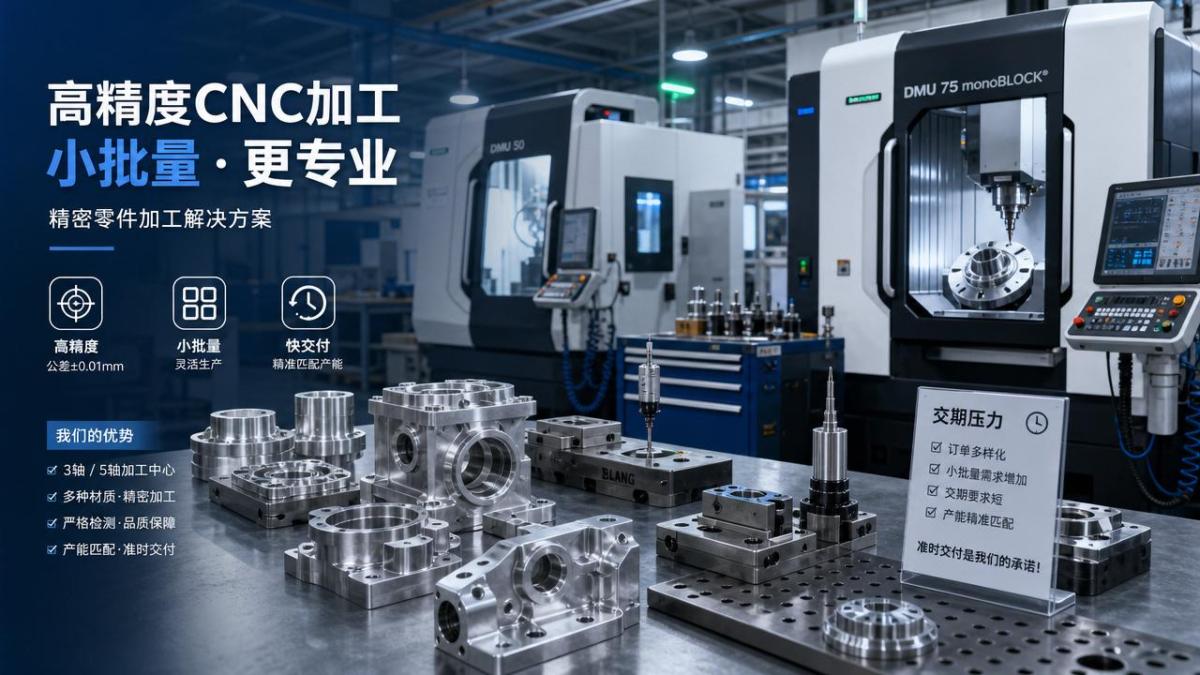
Use practical evaluation criteria: a business-focused CNC milling review table
When comparing suppliers or internal investment cases, use a scoring framework that connects CNC milling capability with profit impact. The point is not just technical competence, but cost stability and execution reliability for short production runs.
This table is especially useful in precision machining environments where the same supplier may serve both high-volume and low-volume programs. Small-batch buyers need to know whether their work will receive process attention or simply be squeezed between larger contracts.
What to check in different small-batch CNC milling scenarios
Prototype and validation runs
For prototype work, prioritize engineering response time, CAM agility, and first-article inspection capability. The main risk is not machine availability alone, but whether the supplier can translate changing design intent into stable machining processes without repeated delays.
Recurring low-volume production
For recurring orders, focus on setup repeatability, fixture retention, tooling standardization, and schedule consistency. In this scenario, CNC milling profitability depends on compressing non-cutting time and preserving process knowledge between batches.
High-mix industrial supply
Where many part numbers compete for the same machining resources, the key checks are sequencing discipline, ERP or MES support, and bottleneck management. A supplier can be technically strong but commercially weak if planning systems are not mature enough to manage frequent job changes.
Precision-critical applications
In aerospace support parts, electronics tooling, medical-adjacent hardware, or energy equipment components, evaluators should look beyond CNC milling speed. Thermal stability, tool wear control, datum strategy, and metrology capacity become central to total cost and delivery performance.
Common blind spots that evaluators often miss
Many sourcing reviews fail because they focus too heavily on quotation sheets. Below are the capacity-related blind spots most likely to distort profitability analysis.
- Ignoring indirect capacity: Tool crib management, maintenance support, deburring, surface treatment coordination, and final inspection all affect CNC milling throughput.
- Confusing utilization with efficiency: A heavily utilized shop may look productive, but overloaded systems usually create queue time and unstable delivery.
- Underestimating changeover loss: For small batches, the margin damage often comes from repeated setup and verification, not raw cutting time.
- Missing subcontract dependence: Some suppliers quote in-house CNC milling but quietly shift overflow work outside, increasing quality and schedule risk.
- Not testing responsiveness: Fast quotation does not guarantee fast production engineering or corrective action support.
- Assuming newer machines solve everything: Modern equipment helps, but operator skill, process standardization, and scheduling quality still determine output reliability.
Execution recommendations for stronger sourcing and investment decisions
If your role involves supplier approval, cost benchmarking, or capacity investment review, the most effective next step is to convert qualitative concerns into a repeatable evaluation process. That process should connect CNC milling capability to measurable business outcomes.
- Segment suppliers by small-batch suitability rather than general machining reputation. A strong volume producer may still be a poor fit for short-run CNC milling.
- Request evidence from recent comparable jobs, including setup time, actual lead time, first-pass yield, and revision handling performance.
- Model total cost using batch frequency, setup burden, inspection effort, and delivery risk—not just unit price.
- Audit bottlenecks beyond the machine tool itself, especially programming, fixturing, tooling changeovers, and final measurement.
- Establish escalation rules for repeat late delivery, tolerance drift, or recurring premium charges tied to capacity constraints.
- Where strategic demand is growing, compare outsourcing risk against selective internal investment in machining centers, automation, or digital scheduling tools.
These actions align with broader industry trends toward smart manufacturing, digital integration, and flexible production lines. In modern machine tool environments, capacity is no longer just a count of available spindles. It is a system-level capability built from machines, software, people, inspection, and workflow discipline.
FAQ: quick answers business evaluators often need
How do I know if a CNC milling quote is too low to be reliable?
Check whether the quote assumes unrealistic setup efficiency, low inspection effort, or unconfirmed machine availability. A low price without capacity transparency often leads to delays, quality escapes, or later surcharge requests.
Is capacity risk more important than machine sophistication?
For small-batch profitability, yes in many cases. Advanced CNC milling equipment matters, but stable scheduling, skilled programmers, fast setups, and reliable inspection often drive business performance more directly.
Should I favor a specialized shop or a larger diversified supplier?
It depends on order profile. Specialized shops may deliver stronger process focus for repeat CNC milling parts, while diversified suppliers may offer better surge coverage. The right choice comes from matching batch size, complexity, and response expectations.
Final action checklist before moving forward
Before approving a supplier, a sourcing plan, or a machine tool investment case, prioritize the questions that directly reveal whether CNC milling capacity supports profitable small-batch execution. Confirm actual open capacity, setup efficiency, programming responsiveness, inspection flow, and change-management discipline. Compare total cost across realistic scenarios, not ideal assumptions. Most importantly, ask for evidence from similar jobs rather than relying on general capability statements.
If further validation is needed, the most useful topics to discuss first are part complexity, tolerance bands, target batch frequency, material type, expected revisions, lead-time commitments, budget range, and whether future volumes may require automation or multi-axis expansion. These conversations will reveal much more about CNC milling fit, supplier reliability, and long-term profitability than a unit-price comparison alone.
PREVIOUS ARTICLE
NEXT ARTICLE
Recommended for You
 CNC Milling Capacity Gaps Can Hurt Small Batch ProfitabilityManufacturing Market Research Center
 Industrial Robotics Payback Is Changing in Mid-Size PlantsManufacturing Market Research Center
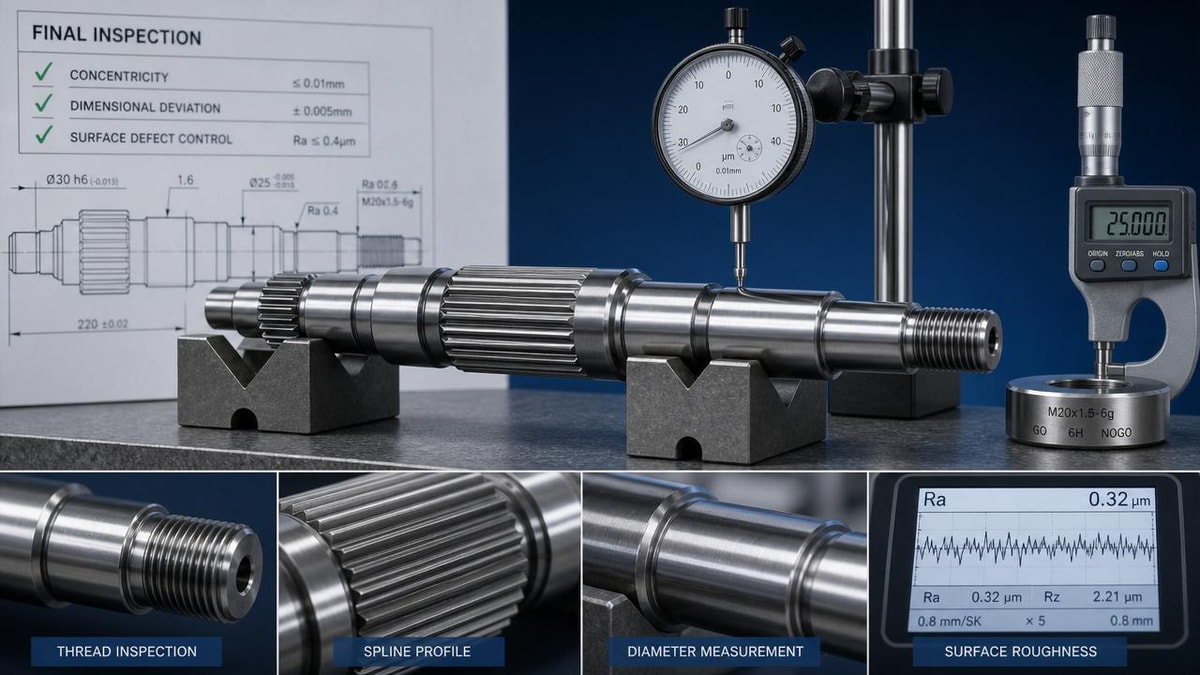
 Shaft Parts Machining Problems That Show Up at Final InspectionCNC Machining Technology Center
 Production Process Delays Usually Start Before Machining BeginsCNC Machining Technology Center
 Industrial Automation Projects Often Miss This Integration StepCNC Machining Technology Center
 CNC Metal Cutting Tool Wear Is Costing More Than You ThinkCNC Machining Technology Center



Aris Katos
Future of Carbide Coatings
15+ years in precision manufacturing systems. Specialized in high-speed milling and aerospace grade alloy processing.
▶
CNC Milling Capacity Gaps Can Hurt Small Batch ProfitabilityManufacturing Market Research Center▶
CNC industrial machines that fit low-space factory layoutsManufacturing Market Research Center▶
How CNC Industrial Machines Shape Capacity Planning DecisionsManufacturing Market Research Center▶
2026 China Cycle Shanghai: CNC E-Bike Frame Capacity Draws ODM FocusManufacturing Market Research Center▶
What to compare before choosing CNC production equipment in 2026Manufacturing Market Research Center
Mastering 5-Axis Workholding Strategies
Join our technical panel on Nov 15th to learn about reducing vibrations in thin-wall components.

Providing you with integrated sanding solutions
Before-sales and after-sales services
Comprehensive technical support