• Global CNC market projected to reach $128B by 2028 • New EU trade regulations for precision tooling components • Aerospace deman
NYSE: CNC +1.2%LME: STEEL -0.4%

How CNC Industrial Machines Shape Capacity Planning Decisions
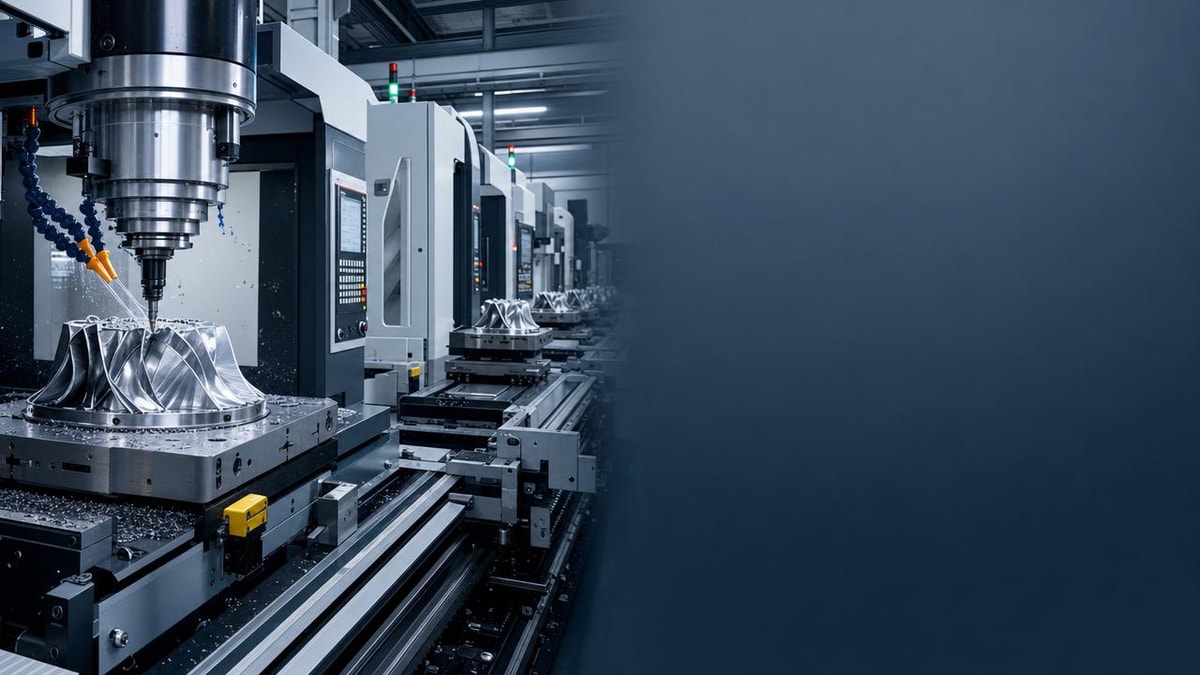
Capacity planning in modern manufacturing depends on more than demand forecasts alone. CNC industrial machines directly influence throughput, precision, labor efficiency, and production flexibility, making them a critical factor in strategic decision-making. For business leaders, understanding how machine capabilities shape capacity choices is essential to improving resource allocation, reducing bottlenecks, and supporting long-term growth in competitive industrial markets.
For enterprise decision-makers, the key point is straightforward: capacity is not just a volume question. It is a machine capability question, a scheduling question, and an investment question. The right CNC industrial machines can expand practical capacity without adding floor space or headcount, while the wrong equipment mix can lock a factory into delays, quality loss, and poor margins even when nominal capacity appears sufficient.
That is why capacity planning should not be treated as a separate exercise from equipment strategy. In real production environments, spindle utilization, setup time, part complexity, automation compatibility, tool life, maintenance intervals, and programming requirements all shape what a facility can actually deliver. Leaders who understand this relationship are better positioned to make disciplined decisions about expansion, outsourcing, capital spending, and production resilience.
What business leaders are really asking when they evaluate CNC industrial machines for capacity planning
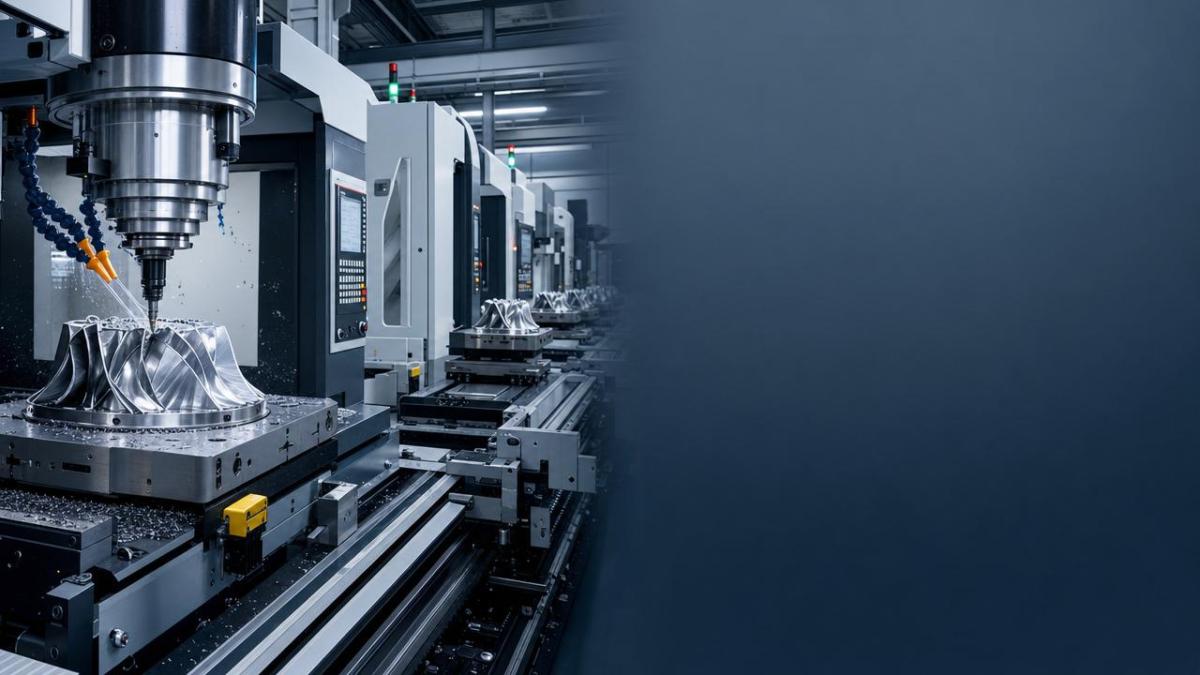
When executives search for how CNC industrial machines shape capacity planning decisions, they are usually not looking for a basic definition of CNC technology. They want to know how machine investments affect output, cost structure, lead time reliability, and growth options. In other words, they are evaluating whether equipment choices will support the business plan or create hidden operational constraints.
The most important questions tend to be practical. Can current machines support forecast demand without overtime becoming permanent? Will a new machining center reduce bottlenecks or simply shift them to another process? Is a multi-axis system worth the higher capital cost if it consolidates setups and reduces scrap? Should the company add more standard machines, invest in automation, or outsource overflow work?
These concerns reflect a broader reality in manufacturing. Theoretical capacity and effective capacity are often very different. A plant may appear to have enough installed machine hours, yet still miss delivery targets because cycle times are too long, changeovers are inefficient, tolerances require rework, or maintenance disrupts utilization. That gap is where CNC machine capability becomes central to planning decisions.
Why machine capability matters more than installed machine count
Many companies still make a common mistake in capacity planning: they focus too heavily on the number of machines rather than on the productive output those machines can generate across the actual product mix. Two factories with the same number of CNC machines can have very different effective capacities depending on part geometry, automation level, spindle performance, software integration, fixturing, and operator skill requirements.
A high-speed machining center with stable repeatability and fast tool change can process more parts per shift than several older machines with longer setups and inconsistent accuracy. Likewise, a five-axis machine may reduce total process steps by combining operations that would otherwise require multiple setups across separate assets. In that case, capacity expands not because the facility owns more machines, but because the process has become more efficient.
This is especially relevant for industries such as aerospace, automotive components, electronics housings, and energy equipment, where product complexity and quality standards are high. In these environments, CNC industrial machines do not merely support output. They define what production rates, tolerance levels, and delivery commitments are realistically achievable.
For decision-makers, this means capacity planning should begin with a capability audit. Review actual cycle times, setup durations, first-pass yield, scrap rates, unplanned downtime, and scheduling losses by machine family. That data often reveals that the limiting factor is not total equipment quantity, but the mismatch between machine capability and product requirements.
How CNC industrial machines influence throughput, precision, and production flexibility
Capacity planning works best when leaders understand the three dimensions most affected by CNC equipment decisions: throughput, precision, and flexibility. These dimensions are connected, and tradeoffs between them often determine whether an investment creates sustainable advantage.
Throughput is the most obvious factor. Faster spindles, optimized tool paths, automatic pallet changers, bar feeders, robotic loading, and in-machine probing can significantly increase parts produced per hour. However, throughput is not just about cutting speed. It also depends on how much non-cutting time can be eliminated. Machines that reduce setup, loading, alignment, or inspection delays often deliver a larger capacity gain than machines that only improve pure machining speed.
Precision also matters because unstable quality destroys usable capacity. If a machine produces parts quickly but generates rework or scrap, the business does not gain real output. High-precision CNC industrial machines support more predictable production planning because they improve first-pass yield and reduce quality-related interruptions. This is especially important when customer requirements are strict and penalties for missed specifications are high.
Flexibility is increasingly valuable in volatile markets. A machine that can switch efficiently between part types, handle shorter runs, or support engineering changes with minimal downtime gives the business more strategic room. Flexible CNC platforms can help manufacturers respond to demand shifts without building excessive buffer capacity. For decision-makers, that flexibility reduces both risk and idle asset exposure.
In practical terms, the best capacity planning decisions often come from balancing these three factors rather than maximizing only one. A machine that offers moderate speed, strong precision, and high adaptability may create more business value than a faster but narrower solution that struggles outside a limited production profile.
Where bottlenecks really come from in CNC-driven production environments
Executives often assume bottlenecks are caused by insufficient machine quantity, but that is only one possibility. In many CNC production settings, bottlenecks come from setup complexity, inconsistent workholding, programming delays, tool availability, preventive maintenance gaps, labor constraints, or secondary operations that cannot keep pace with machining output.
For example, a company may add another CNC lathe to increase capacity, only to find that inspection, deburring, or fixture preparation becomes the new limiting step. In another case, a plant may invest in advanced machining centers, but fail to capture the intended output because NC programming resources are overloaded and new jobs wait too long before release. Capacity planning must therefore consider the full production system rather than isolated machine purchase decisions.
This is why a bottleneck analysis should accompany every major CNC investment discussion. Leaders should identify the current constraint, estimate how machine changes would affect surrounding processes, and model whether the investment removes the root issue or simply relocates it. When this analysis is skipped, companies risk spending significant capital without achieving meaningful gains in lead time or output.
Data from machine monitoring systems, MES platforms, and shop-floor reporting can be especially useful here. Visibility into run time, idle time, alarm frequency, setup duration, and actual OEE helps management distinguish between true equipment shortages and losses caused by process discipline or support functions. Better data makes better capacity decisions.
How to evaluate ROI when adding, upgrading, or automating CNC capacity
For business leaders, capacity planning decisions must ultimately translate into financial outcomes. That makes ROI analysis essential. But evaluating CNC industrial machines only by purchase price is too narrow. The better question is how each option changes cost per part, delivery performance, labor dependency, quality consistency, and future scalability.
A useful ROI framework starts with baseline metrics: current output, overtime hours, outsourcing cost, scrap rate, setup time, machine utilization, and order backlog. Then compare scenarios. One scenario may involve adding another standard machine. Another may involve replacing older assets with a high-performance machining center. A third may involve adding automation to extend unattended production. Each option affects capacity in a different way.
In many cases, automation changes the economics more than adding standalone equipment. Robotic tending, pallet systems, and automated tool management can unlock more machine hours without proportional labor growth. For facilities facing labor shortages or night-shift inefficiencies, this can materially improve effective capacity and delivery reliability.
However, not every operation needs the most advanced solution. High-mix, low-volume environments may benefit more from flexible equipment and faster changeovers than from maximum automation. Conversely, repeat production with stable geometries may justify deeper investment in unattended machining and integrated material handling. The right answer depends on product mix, demand stability, and operational maturity.
Leaders should also include risk-adjusted factors in ROI calculations. These include training time, implementation disruption, maintenance support, spare parts availability, software compatibility, and the vendor’s service response. A machine that looks attractive in a capital budget can become a weak investment if ramp-up is slow or downtime support is unreliable.
When it makes sense to expand internal CNC capacity versus outsource production
One of the most important strategic choices in capacity planning is whether to invest in internal CNC industrial machines or use external machining partners to absorb demand. This is not only a cost decision. It is also a decision about control, lead time, intellectual property, responsiveness, and long-term capability building.
Internal expansion usually makes sense when the business has stable demand, quality requirements are stringent, the machining process is strategically important, or lead time responsiveness creates competitive value. Bringing more production in-house can improve schedule control, support design iteration, and reduce dependency on supplier capacity during market volatility.
Outsourcing may be the better short-term option when demand is uncertain, capital budgets are constrained, or the production requirement is too specialized to justify ownership. It can also serve as a transitional strategy while validating future volume before committing to equipment purchases.
The strongest decision frameworks compare these paths across multiple criteria: total landed cost, delivery reliability, quality risk, customer sensitivity, technical complexity, and expected demand duration. In some cases, a hybrid model is best. Core parts with strategic importance remain internal, while overflow or lower-complexity work is outsourced to maintain flexibility.
What matters most is avoiding a purely reactive approach. Capacity decisions made under delivery pressure often cost more and create long-term inefficiencies. Companies that proactively assess how CNC machine strategy aligns with market demand are better able to scale with discipline.
What smart capacity planning looks like in a digitally integrated manufacturing model
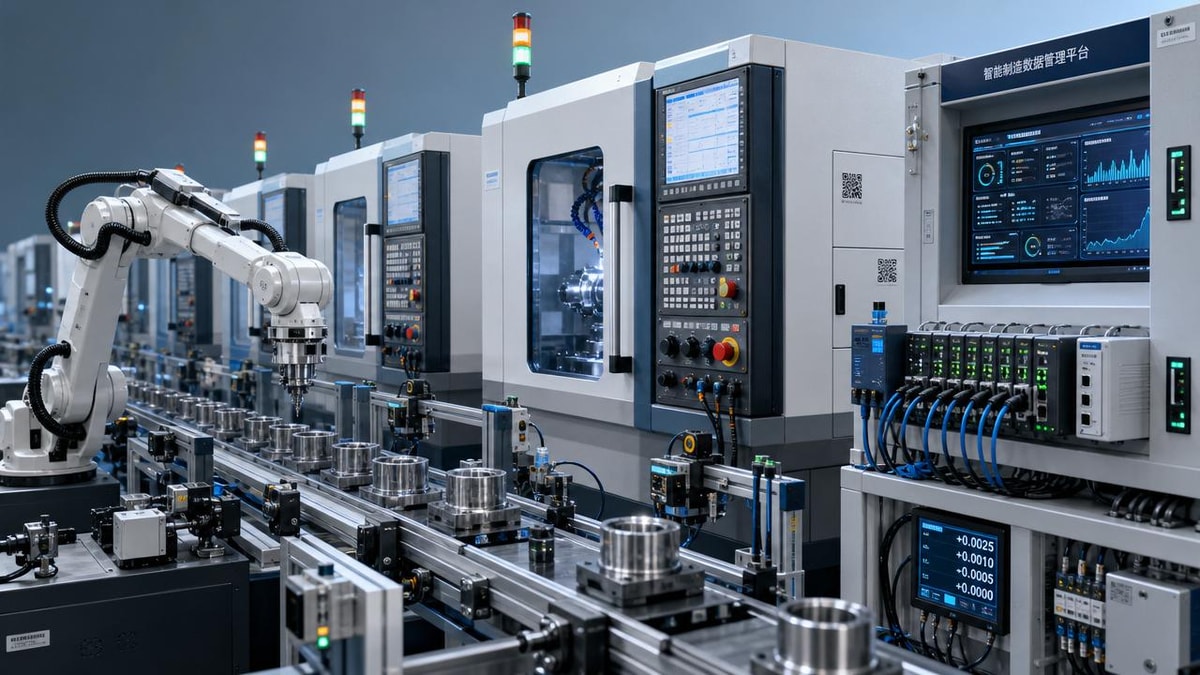
As manufacturing becomes more connected, capacity planning is shifting from periodic estimation to ongoing optimization. Modern CNC industrial machines increasingly generate production data that can be linked with ERP, MES, quality systems, and maintenance platforms. This creates a more accurate picture of available capacity and makes planning more responsive.
For enterprise leaders, the value of digital integration is not simply visibility. It is decision quality. With better data, management can forecast machine loading by product family, detect performance losses early, compare planned versus actual cycle times, and evaluate whether a new order can be absorbed without affecting delivery commitments. That reduces the guesswork often found in traditional capacity planning methods.
Digital tools also support scenario planning. A company can model what happens if a new customer program begins, if one machine family reaches saturation, or if a higher-mix production pattern increases setup frequency. Instead of relying on rough averages, planners can estimate how actual CNC behavior influences output and margin under different demand conditions.
Over time, this leads to a more resilient manufacturing model. Rather than treating capacity as a fixed number, the business manages it as a dynamic capability shaped by equipment, labor, software, and workflow design. That perspective is increasingly necessary in industries facing tighter delivery windows, greater customization, and continued margin pressure.
How decision-makers can turn CNC capacity analysis into better strategic action
The most effective companies do not look at CNC industrial machines as isolated capital assets. They evaluate them as levers of strategic capacity. That means every planning discussion should connect machine capability with business goals: revenue growth, customer responsiveness, quality performance, cost competitiveness, and operational resilience.
A practical starting point is to classify capacity needs into three categories. First, protective capacity needed to secure current delivery commitments. Second, efficiency capacity needed to reduce cost and improve margins. Third, growth capacity needed to support new products, customers, or regions. Different CNC investments may serve different categories, and clarity here improves capital allocation.
Next, management should identify which constraints are structural and which are operational. Structural constraints include machine capability gaps, insufficient automation, or poor process fit between equipment and product complexity. Operational constraints include scheduling discipline, tool management, preventive maintenance execution, and staffing patterns. Solving the right problem prevents overinvestment.
Finally, leaders should build review cycles around real production evidence. Capacity assumptions should be tested against actual machine performance, quality outcomes, and backlog behavior. This turns planning into an adaptive process rather than a one-time annual exercise.
In modern manufacturing, capacity planning is no longer just about how much demand may arrive. It is about whether the production system, especially its CNC industrial machines, can meet that demand profitably, predictably, and at the required quality level. Businesses that understand this link make sharper investment decisions, reduce bottlenecks more effectively, and build stronger foundations for long-term growth.
PREVIOUS ARTICLE
NEXT ARTICLE
Recommended for You
 Industrial Machining Equipment Lead Times Are Changing AgainManufacturing Market Research Center
 Where Industrial Robotics Adds Value Beyond Simple Labor SavingsMachine Tool Industry Editorial Team
 Shaft Parts Machining Problems That Show Up After Final InspectionCNC Machining Technology Center
 Production Process Variations That Quietly Raise Scrap RatesCNC Machining Technology Center
 Industrial Automation Projects Fail When Data Is Added Too LateCNC Machining Technology Center
 CNC Metal Cutting Quality Drops Often Start With ClampingMachine Tool Industry Editorial Team

Aris Katos
Future of Carbide Coatings
15+ years in precision manufacturing systems. Specialized in high-speed milling and aerospace grade alloy processing.
▶
How CNC Industrial Machines Shape Capacity Planning DecisionsManufacturing Market Research Center▶
2026 China Cycle Shanghai: CNC E-Bike Frame Capacity Draws ODM FocusManufacturing Market Research Center▶
What to compare before choosing CNC production equipment in 2026Manufacturing Market Research Center▶
When does industrial machining equipment become too costly to keep?Manufacturing Market Research Center▶
Industrial lathe capacity gaps that hurt job schedulingManufacturing Market Research Center
Mastering 5-Axis Workholding Strategies
Join our technical panel on Nov 15th to learn about reducing vibrations in thin-wall components.

Providing you with integrated sanding solutions
Before-sales and after-sales services
Comprehensive technical support