• Global CNC market projected to reach $128B by 2028 • New EU trade regulations for precision tooling components • Aerospace deman
NYSE: CNC +1.2%LME: STEEL -0.4%

Machine Tool Market Risks Buyers Should Watch
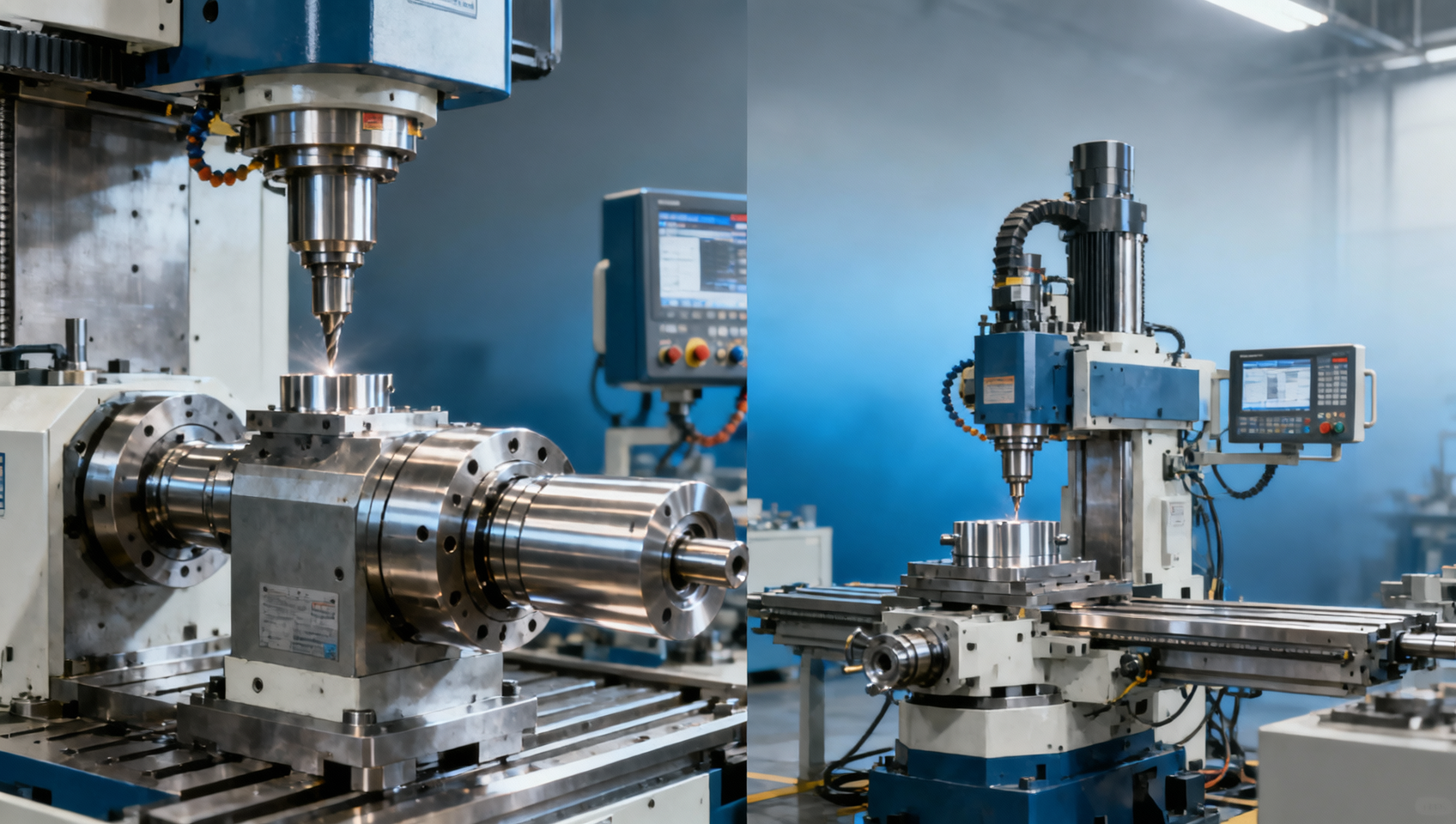
As the Machine Tool Market evolves under Global Manufacturing pressure, buyers must look beyond price and evaluate risks tied to industrial CNC performance, CNC metalworking compatibility, automated production demands, and long-term supply stability. From metal lathe and vertical lathe selection to CNC milling, CNC cutting, and Industrial Automation integration, informed decisions are essential for protecting the production process and securing lasting value in the Manufacturing Industry.
For researchers, plant operators, procurement teams, and commercial evaluators, machine tool buying decisions now involve more than comparing spindle speed or quoted delivery time. A machine that looks cost-effective in the first 30 days can create hidden losses over the next 3–5 years through poor accuracy retention, weak service support, unstable control systems, or mismatched automation interfaces.
In global CNC machining and precision manufacturing, risk management has become a core part of sourcing. Whether the project involves a CNC lathe, machining center, multi-axis machine, or automated production cell, buyers need a structured way to assess technical, operational, and commercial exposure before signing contracts or approving capital budgets.
Technical Performance Risks That Directly Affect Production
The first major risk in the machine tool market is technical underperformance. Buyers often focus on catalog specifications such as spindle power, travel range, or maximum workpiece diameter, but real production stability depends on a wider set of factors. In a high-mix shop or automated line, even a repeatability drift of 0.01–0.03 mm can affect downstream assembly, inspection yield, and tool consumption.
For CNC milling, CNC cutting, and turning operations, machine rigidity and thermal stability are especially important. A metal lathe processing long shafts, for example, may perform acceptably during a 20-minute test cut but show chatter, taper variation, or thermal growth after 4–6 hours of continuous operation. Buyers should ask for accuracy retention data under realistic duty cycles rather than relying only on initial acceptance readings.
Another technical risk comes from application mismatch. A vertical lathe selected for large-diameter parts may have sufficient table load capacity, yet the chucking method, chip evacuation layout, or tool magazine design may not suit the actual production process. In aerospace, energy equipment, and automotive manufacturing, compatibility between workpiece material, fixture design, and cutting strategy often determines whether the machine reaches targeted cycle time.
Control system integration is also critical. If the CNC platform cannot reliably communicate with probes, robotic loaders, MES software, or automated tool management, the machine may become an isolated asset instead of part of a smart factory workflow. In many projects, a 2–3 week installation delay comes not from mechanics, but from unresolved communication protocol and I/O configuration issues.
Key Technical Checks Before Purchase
A practical technical review should cover dynamic performance, not just brochure values. Buyers can use the following checkpoints to reduce machine tool risk in the early stage:
- Verify positioning accuracy and repeatability under loaded conditions, not only at idle or in a showroom test.
- Review spindle duty cycle, coolant strategy, and chip handling for 8–16 hour production shifts.
- Check whether the machine supports required axis interpolation, probe routines, and automation interfaces.
- Confirm material suitability for steel, aluminum, titanium, cast iron, or hardened parts as applicable.
- Ask for sample parts with tolerance bands similar to the actual production target, such as ±0.02 mm or better.
Typical Technical Risk Indicators
The table below helps buyers identify common warning signs when comparing machine tools from different suppliers. It is most useful during RFQ review, technical clarification, and pre-acceptance discussions.
The most important conclusion is that technical risk is rarely visible in the lowest quoted price. A machine tool that saves 8% on acquisition cost but loses 5% in monthly utilization can become significantly more expensive within 12–18 months of operation.
Supply Chain, Delivery, and After-Sales Risks in Global Sourcing
Global machine tool purchasing now spans multiple regions, including China, Germany, Japan, and South Korea, each with strong manufacturing capabilities and component ecosystems. However, international sourcing also introduces lead-time volatility, spare-parts dependency, and service coverage gaps. A quoted delivery window of 10–12 weeks can quickly turn into 16–24 weeks if key items such as CNC controls, ball screws, servo drives, or ATC components are delayed.
Buyers should also assess supplier depth, not only factory output. Some machine builders assemble strong final products but depend on a narrow base of external control, spindle, or hydraulic vendors. If one critical part becomes unavailable, after-sales response may slow from 48 hours to several weeks. This is especially risky for continuous production lines in automotive and electronics manufacturing where downtime costs can accumulate daily.
Spare-parts strategy is another overlooked factor. For a machining center or CNC lathe expected to run 6 days per week, wear items and failure-prone assemblies should be mapped in advance. Buyers should ask which components are stocked locally, which require overseas shipment, and what the standard replenishment cycle is. A 3-day service promise is far less meaningful if the replacement servo amplifier takes 21 days to arrive.
Training and commissioning support also affect operational risk. A machine tool may be installed on schedule, yet production can still lose 2–4 weeks if operators are not trained on parameter setting, tool offset logic, alarms, and preventive maintenance. Good after-sales support includes not only repair, but process stabilization during the first production batches.
Questions Procurement Teams Should Raise
To reduce sourcing uncertainty, procurement and technical teams should review delivery and support using a common checklist:
- What is the standard production lead time, and which parts have the longest replenishment cycle?
- Is local commissioning available within 3–7 days after machine arrival?
- Which spare parts are stocked regionally, and which must be imported?
- What is the guaranteed response time for remote diagnosis and on-site service?
- Can the supplier support preventive maintenance plans for the first 12 months?
Lead-Time and Service Risk Comparison
The following table offers a practical framework for evaluating supply stability and after-sales readiness across competing machine tool offers.
For buyers making multi-machine investments, service structure should be treated like part of the machine specification. Reliable support can protect OEE, shorten restart time, and reduce pressure on in-house maintenance teams.
Automation and Process Integration Risks Buyers Often Underestimate
As more factories move toward industrial automation, flexible production lines, and smart manufacturing, the value of a machine tool depends increasingly on how well it fits the broader production system. A CNC machine with good standalone performance may still become a weak link if robot loading, pallet exchange, in-process inspection, or digital reporting cannot be integrated efficiently.
One common mistake is assuming automation readiness based on marketing language alone. Buyers should verify the actual I/O capacity, controller openness, safety logic, and integration with barcode systems, tool life monitoring, and part traceability. In many production cells, the machine itself represents only 40%–60% of the operational value, while fixturing, software communication, and handling systems determine the rest.
Cycle-time planning also creates risk. A CNC milling machine may achieve a 6-minute cutting cycle in a test environment, but once loading, probing, deburring, and part confirmation are included, the true takt time may rise to 8–10 minutes. If the automation concept was sized around the shorter estimate, line balancing problems will follow. This matters particularly in automotive, electronics, and energy equipment production where synchronized flow is essential.
Data integration matters for commercial decision-makers as well. Without stable machine status reporting, alarm history, and maintenance records, it becomes difficult to measure utilization, justify future investments, or compare supplier performance. The machine tool market increasingly rewards equipment that can support both cutting performance and digital visibility.
How to Validate Automation Compatibility
Before approving an automated CNC project, teams should test compatibility across mechanics, controls, and workflow design. The following points can prevent costly redesign during installation:
- Confirm robot or gantry interface protocols and signal mapping before factory acceptance testing.
- Review fixture repeatability, part orientation logic, and misload prevention design.
- Include actual auxiliary time in takt calculation, not only pure cutting time.
- Check whether software supports alarm logging, remote access, and production data export.
- Plan at least 2 stages of commissioning: dry-run validation and live material trial.
Typical Integration Checkpoints
The table below can be used by engineering and procurement teams when comparing machine tools intended for industrial automation projects.
The key takeaway is simple: automation risk is not only about adding a robot. It is about ensuring the CNC machine, tooling, fixture, software, and production logic behave as one coordinated system.
Commercial, Contract, and Total Cost Risks in the Machine Tool Market
Commercial risk often appears after technical approval, when buyers compare quotations and payment terms. A lower upfront price may exclude essential items such as tool setters, coolant filtration, transformer requirements, software licenses, on-site training, installation supervision, or fixture interfaces. These omissions can change the total project cost by 10%–25%.
Warranty terms require close reading as well. Some offers present a 12-month warranty but exclude consumables, alignment work, travel cost, or electrical failures linked to local power conditions. Buyers should clarify what counts as standard coverage, what triggers chargeable service, and whether remote support is included during commissioning and post-acceptance stabilization.
Payment milestones should be tied to measurable deliverables. Instead of relying on shipment date alone, stronger contracts typically separate prepayment, factory acceptance, shipment, installation, and final acceptance. This structure protects both sides and gives buyers leverage if the machine does not meet agreed process capability or automation requirements.
Total cost of ownership should also include operating factors over at least 36 months. These include tool life, power consumption, maintenance hours, lubricant and coolant usage, downtime exposure, software support fees, and production loss caused by unstable performance. For business evaluators, this wider lens is often more useful than a simple capex comparison.
A Practical Cost Review Framework
A structured commercial review can prevent hidden cost escalation. Buyers should compare offers across at least the following dimensions:
- Machine base price and included standard accessories.
- Optional items required for actual production, such as probes, chip conveyors, and automation ports.
- Installation, commissioning, training, and travel-related service cost.
- Expected maintenance and spare-parts budget for 12, 24, and 36 months.
- Downtime risk cost based on the value of interrupted output.
Common Cost Elements Buyers Miss
The table below shows how visible and hidden cost items should be reviewed during machine tool sourcing and contract negotiation.
When buyers compare machine tool offers on a lifecycle basis rather than a quote-total basis, supplier differences become much clearer. In many cases, the better long-term option is the one with stronger process support and lower production disruption risk.
How Buyers Can Build a Safer Evaluation and Implementation Process
A disciplined buying process reduces machine tool market risk more effectively than any single specification check. For most B2B projects, a 5-step evaluation model works well: define process requirements, screen technical fit, validate supply and service, confirm commercial terms, and control commissioning. This approach helps align operators, engineers, purchasing teams, and management before capital is committed.
Start with application clarity. Buyers should define part family, material range, tolerance targets, batch size, expected shift pattern, and automation level. A CNC machine selected for aluminum prototypes at 1 shift per day may not be suitable for cast iron production at 2–3 shifts. Without this baseline, even a strong supplier comparison will remain incomplete.
Next, insist on process-based validation. Sample cutting, fixture review, cycle-time breakdown, and control-system demonstration can reveal weak points before shipment. If possible, acceptance should include at least 1 real or equivalent workpiece, not only standard test geometry. This is especially important for machining centers, multi-axis systems, and vertical lathes used on complex structural parts.
Finally, manage implementation as a structured launch rather than a delivery event. Installation, parameter optimization, operator training, first-batch support, and maintenance handover should all be scheduled. A machine tool reaches business value only when it consistently supports the production process, not when it merely arrives on the shop floor.
Suggested 5-Step Buyer Workflow
The following workflow is suitable for companies purchasing standalone CNC machines or integrated automated production cells:
- Define technical scope: materials, tolerances, workpiece size, annual volume, and target OEE.
- Shortlist 2–4 suppliers and compare machine structure, controls, and process support.
- Audit delivery plan, spare-parts readiness, and commissioning capability.
- Negotiate acceptance criteria, warranty boundaries, and payment milestones.
- Execute launch plan with training, trial production, and maintenance documentation.
FAQ for Buyers Evaluating Machine Tools
Several recurring questions appear in machine tool sourcing. Clear answers can help teams avoid delayed decisions and weak project preparation.
How long is a normal machine tool delivery cycle?
For standard CNC lathes or machining centers, a typical range is 8–16 weeks, but customized machines, multi-axis systems, or integrated automation projects may take 16–30 weeks. Buyers should separate machine build time from shipping, installation, and production ramp-up time.
What matters more: price or service coverage?
Both matter, but for operations running 5–6 days per week, service coverage often has greater long-term financial impact. If downtime lasts 3 days and interrupts high-value output, the loss can easily exceed the original price difference between two competing machine tools.
How can operators contribute to a better buying decision?
Operators should review HMI usability, setup access, tool change logic, alarm clarity, and maintenance reach points. These practical factors influence daily efficiency, error rates, and training time, especially during the first 30–90 days after installation.
When should automation be included from the start?
If annual volume is stable, labor availability is tight, or target takt time cannot be met manually, automation should be designed early. Retrofitting robot loading or digital communication later is usually more expensive and may require electrical or guarding changes.
The machine tool market offers strong opportunities for manufacturers pursuing precision, automation, and higher output, but the best buying decisions come from disciplined risk review. Technical fit, supply stability, automation readiness, and total lifecycle cost all shape whether a CNC investment supports long-term production goals.
For information researchers, operators, procurement teams, and business evaluators, a structured sourcing process can reduce costly surprises and improve equipment ROI over the next 3–5 years. If you are comparing CNC lathes, vertical lathes, machining centers, or integrated production solutions, now is the right time to assess requirements in detail.
Contact us to discuss your application, request a tailored evaluation framework, or explore more machine tool and precision manufacturing solutions built around your production process.
NEXT ARTICLE
Recommended for You
 How to Choose the Right Metal Machining ProcessCNC Machining Technology Center
 Metal Machining vs CNC Metalworking: What MattersCNC Machining Technology Center
 What Drives Cost in Industrial CNC ProjectsManufacturing Market Research Center
 Is Industrial CNC Worth Upgrading in 2026Machine Tool Industry Editorial Team
 How CNC Industrial Systems Improve Shop EfficiencyMachine Tool Industry Editorial Team
 CNC Industrial Setup Mistakes to Avoid FirstCNC Machining Technology Center

Aris Katos
Future of Carbide Coatings
15+ years in precision manufacturing systems. Specialized in high-speed milling and aerospace grade alloy processing.
▶
What Drives Cost in Industrial CNC ProjectsManufacturing Market Research Center▶
Where the Machine Tool Market Is Headed in 2026Manufacturing Market Research Center▶
Machine Tool Market Risks Buyers Should WatchManufacturing Market Research Center▶
AWE2026 Closes: AI-Driven Whole-Home Intelligence Fuels CNC Line ExportsManufacturing Market Research Center▶
Machine tool price: Why list pricing masks total cost of ownership over 5 yearsManufacturing Market Research Center
Mastering 5-Axis Workholding Strategies
Join our technical panel on Nov 15th to learn about reducing vibrations in thin-wall components.

Providing you with integrated sanding solutions
Before-sales and after-sales services
Comprehensive technical support