• Global CNC market projected to reach $128B by 2028 • New EU trade regulations for precision tooling components • Aerospace deman
NYSE: CNC +1.2%LME: STEEL -0.4%

What Drives Cost in Industrial CNC Projects
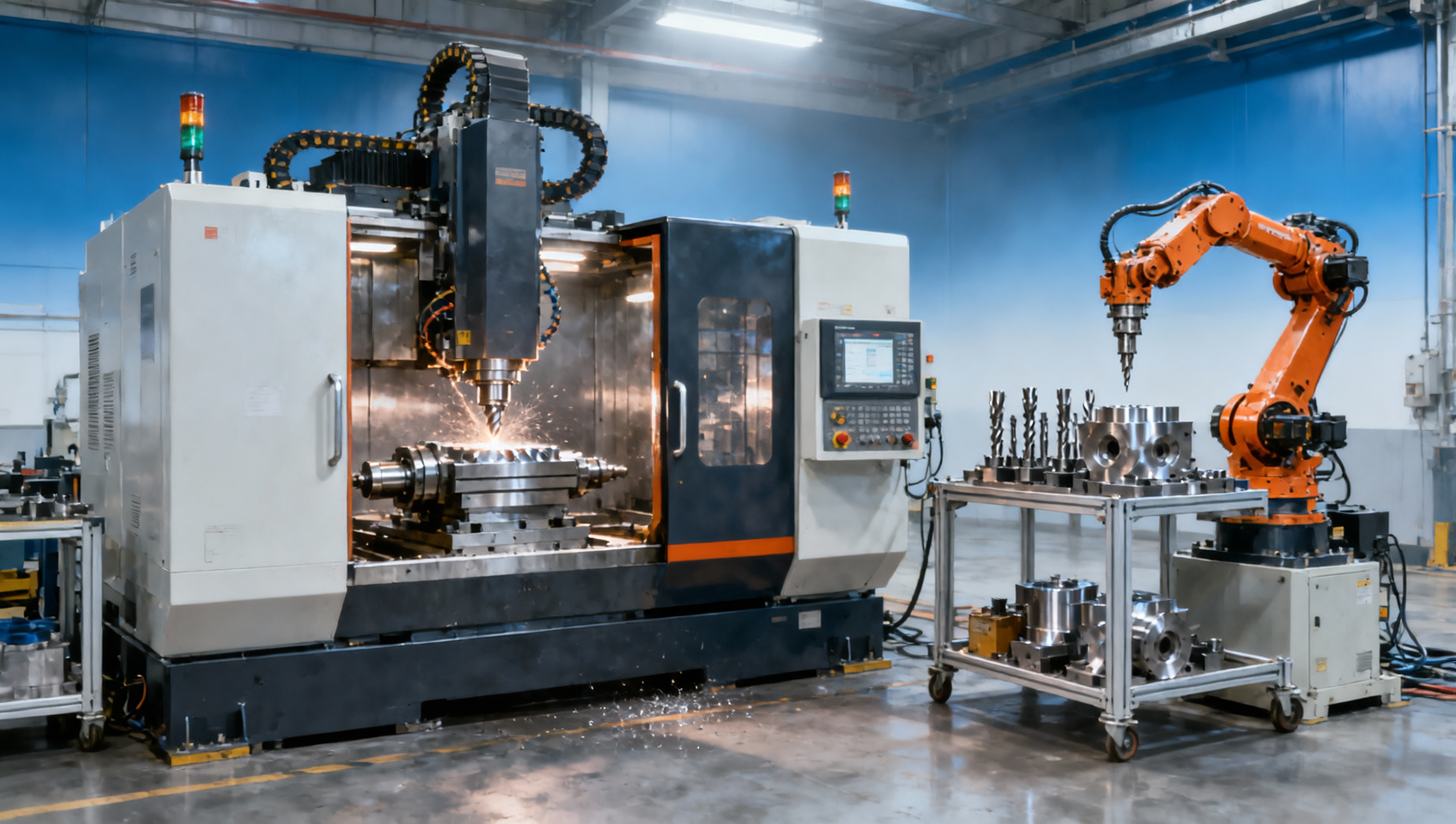
In industrial CNC projects, cost is shaped by far more than machine price alone. From metal machining complexity and CNC programming requirements to tooling, automated production line integration, and production process control, every decision affects budget and output. For buyers, operators, and market researchers in the Manufacturing Industry, understanding these cost drivers is essential to improving CNC production efficiency and long-term value.
Why CNC project cost is rarely defined by machine price alone
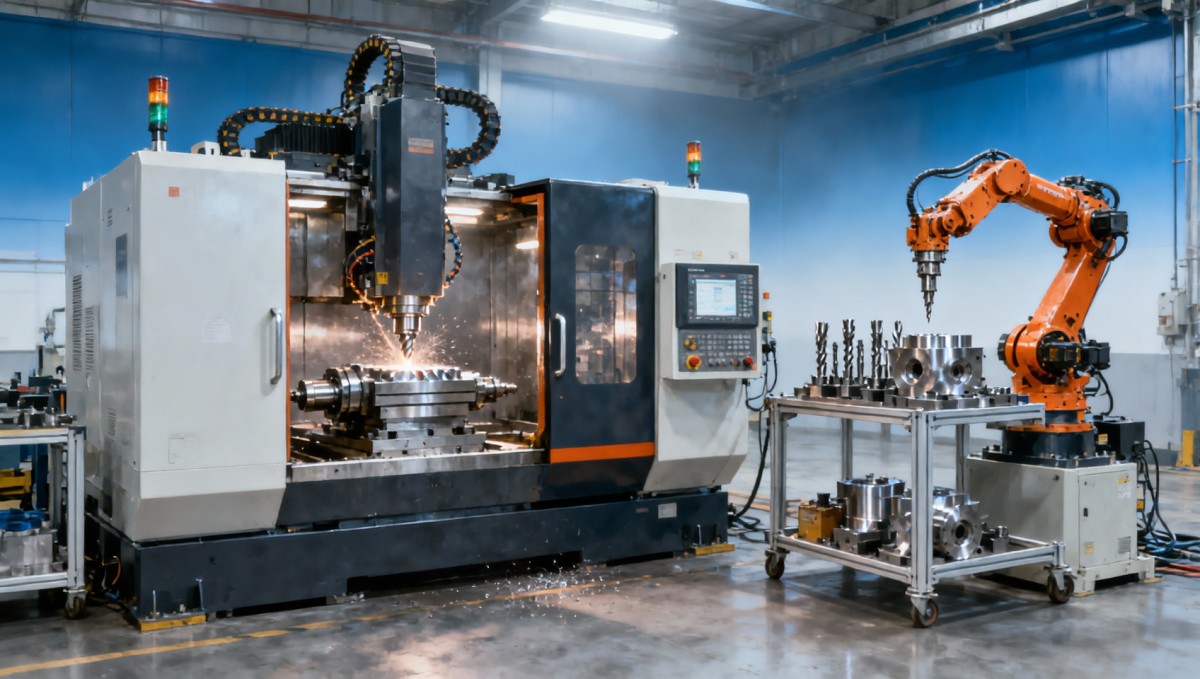
A CNC machine tool quotation often looks simple at first glance, yet the final industrial CNC project cost usually develops across 4 connected layers: equipment investment, process engineering, production support, and lifecycle operation. For procurement teams, the risk is not overpaying for one item, but underestimating the total cost of ownership across 12–36 months of actual use.
In modern manufacturing, the same part may be produced on a CNC lathe, a vertical machining center, or a multi-axis machining system, and each route changes setup time, tooling consumption, inspection effort, and scrap risk. A lower machine purchase price can still produce a higher project cost if the process requires more clamping steps, more manual intervention, or more downtime between batches.
This matters across automotive, aerospace, energy equipment, electronics, and general precision manufacturing. Some projects run in small batches of 20–100 parts for validation, while others move into medium or large production with weekly or monthly delivery schedules. The cost logic changes with volume, tolerance, material, and automation level, so buyers need a broader evaluation model.
For information researchers and business evaluators, a practical starting point is to separate direct and indirect cost factors instead of focusing only on unit machine price. That approach also supports better supplier comparison and more realistic ROI discussions.
The 5 cost layers that shape industrial CNC projects
- Machine platform cost: CNC lathe, machining center, multi-axis system, spindle power, axis travel, control system, and optional automation interfaces.
- Process development cost: CNC programming, fixture design, trial cutting, first article adjustment, and process validation before stable production starts.
- Tooling and consumables cost: cutting tools, inserts, holders, coolant, wear parts, and replacement frequency under different materials and cutting conditions.
- Integration cost: robotic loading, conveyors, probing, part traceability, data connection, and production line coordination with MES or factory systems.
- Operating cost: labor, preventive maintenance, energy use, scrap, quality inspection, spare parts, and production interruptions over time.
When these 5 layers are reviewed together, project stakeholders can identify where cost is fixed, where it is variable, and where design or process decisions can reduce waste before the first production batch is released.
Which technical and process factors increase CNC machining cost fastest?
The fastest cost escalators in CNC projects are usually not cosmetic options. They are technical conditions that slow cycle time, raise programming difficulty, or increase scrap exposure. In precision manufacturing, even a change from a standard tolerance band to a tighter requirement can trigger extra roughing and finishing passes, more tool changes, and more in-process inspection points.
Material is one of the first drivers. Aluminum, carbon steel, stainless steel, titanium alloys, and hardened materials behave very differently in metal machining. Harder or heat-resistant materials often require lower cutting speeds, more expensive inserts, and stricter thermal control. That directly affects spindle time, tool life, and operator intervention frequency.
Part geometry is another major cost driver. Deep cavities, thin walls, interrupted cuts, long shafts, or multi-face features typically demand additional fixtures or 4-axis to 5-axis machining strategies. A design that looks compact in CAD may still require 2–4 setup stages if the datum structure is not production-friendly. Every setup adds labor, alignment checks, and cumulative error risk.
Programming complexity should also be priced realistically. A simple turning part may require hours of programming and prove-out, while an intricate multi-axis part may need several rounds of simulation, collision review, and test cutting over 1–3 days. If a supplier quotes only machine hours but not engineering hours, the budget may look competitive but become unstable later.
Key cost drivers and their budget impact
The table below helps procurement teams and operators link technical requirements to likely cost pressure points in industrial CNC projects.
For many projects, these drivers interact rather than appear alone. A difficult material plus multi-axis geometry plus short delivery time can shift a quote more than any single hardware upgrade. That is why industrial CNC cost analysis must be process-based, not catalog-based.
What operators and engineers often see first
- Cycle time expands when tool engagement must be reduced to protect accuracy or surface quality.
- Setup time increases when fixtures must control deformation or maintain concentricity across multiple operations.
- Inspection workload grows when critical dimensions require in-process probing, offline CMM checks, or first article review.
- Scrap cost rises sharply during early batches if programming, fixture repeatability, and machine thermal behavior are not aligned.
These operational signals are especially useful for users and operators because they reveal where an apparently economical process starts losing efficiency on the shop floor.
How should buyers compare equipment, tooling, and automation cost?
Procurement decisions in industrial CNC projects are rarely limited to choosing one machine model. Buyers are comparing a complete manufacturing solution: machine platform, cutting tool system, workholding, automation readiness, software support, and service responsiveness. A low initial quote can become expensive if the machine lacks probing, chip control, or expansion interfaces needed within the next 6–18 months.
For purchasing teams, the most common mistake is comparing equipment on nominal specifications alone. Spindle power, travel, and axis count matter, but they should be matched with real production conditions: part family, batch size, changeover frequency, operator skill level, and expected utilization. A high-spec machine may be unnecessary for simple shafts, while a basic platform may limit growth for precision discs or complex structural parts.
Tooling and fixtures deserve equal attention because they often determine process stability. In repeated production, stable workholding can reduce setup variation across shifts, and a well-matched insert grade can extend tool life enough to improve cost per part. This is especially relevant in automated production lines where unplanned stoppages carry both labor and schedule penalties.
When automation is involved, buyers should ask whether they need a standalone CNC cell, a robot-assisted cell, or a flexible production unit. The price gap may be significant at the start, yet the labor and throughput difference becomes visible over continuous operation, especially in 2-shift or 3-shift planning.
A practical comparison framework for procurement
Use the following selection table to compare CNC project options beyond the machine list price.
This comparison is useful because it prevents false savings. If future expansion is likely, choosing an option that supports automation interfaces, tool management, and data capture may reduce the cost of the second investment cycle even if the first purchase is higher.
4 purchasing checks before requesting a final quote
- Confirm the real part mix: sample parts, annual demand, material grade, drawing revision level, and tolerance class.
- Check delivery assumptions: machine lead time, tooling preparation, fixture manufacturing, FAT or SAT needs, and installation window.
- Review after-sales scope: spare parts availability, service response, training duration, and remote support capability.
- Ask about scale-up readiness: automation compatibility, digital interface options, and whether the process can move from pilot to batch production smoothly.
For business evaluators, these 4 checks usually expose the most important hidden assumptions behind different CNC quotations.
What hidden costs appear during implementation, quality control, and compliance?
Many CNC project budgets look stable until implementation begins. At that stage, hidden costs often emerge in commissioning, training, process optimization, and quality documentation. A machine may be delivered on time, yet production output can still lag if the operator team needs 3–7 days of training or if the first article process reveals fixture repeatability problems.
Quality control is a frequent blind spot. Precision machining projects commonly require incoming material checks, in-process inspection, first article validation, and final dimensional review. If critical parts enter regulated or high-reliability sectors, the documentation burden increases further. Even without naming a specific certification, many suppliers must align with standard traceability, calibration control, and documented inspection routines.
Another cost category is downtime during ramp-up. In the first 2–4 weeks after installation, machine availability may be lower than planned due to parameter tuning, cycle optimization, and spare tooling adjustments. If management expects immediate output at nominal capacity, the business case becomes distorted. Realistic planning should include a ramp-up curve rather than a single start date.
For automated production line projects, integration is often the largest hidden variable. Robot teaching, part orientation verification, communication tests, and safety interlock validation all require coordination. Each subsystem may work alone, but the combined line still needs staged acceptance before stable production begins.
Typical hidden-cost checkpoints in CNC implementation
- Commissioning and prove-out: usually includes machine leveling, parameter setting, first program verification, and trial cuts across 1–3 part types.
- Training and handover: operators, maintenance staff, and process engineers may require separate sessions for daily use, alarm handling, and preventive care.
- Inspection readiness: gauges, probing routines, measuring fixtures, and calibration records may need to be prepared before customer approval.
- Spare parts planning: key wear items and critical service components should be identified early to avoid long stoppages during the first months.
These checkpoints are especially important for buyers with tight launch schedules, because the difference between equipment delivery and stable output can easily reach several working days or multiple weeks depending on complexity.
Risk signals that often point to later budget overruns
Watch for quotations that exclude fixture tuning, sample validation, software adaptation, or documentation scope. Also be cautious when service response, installation boundaries, or acceptance criteria are described too generally. In industrial CNC projects, vague scope usually becomes added cost later, especially when multiple suppliers share responsibility across machine tools, robotics, and production control systems.
A disciplined review of 6 items can reduce this risk: project scope, part drawings, sample quantity, acceptance method, line interface definition, and post-installation support window. These are simple review points, but they often determine whether a CNC project stays predictable after purchase.
How to control CNC project cost without sacrificing production efficiency
Cost control in CNC manufacturing does not mean selecting the cheapest machine or pushing feeds and speeds blindly. It means balancing precision, throughput, flexibility, and maintainability. The best projects usually improve cost per part by reducing unnecessary complexity at the design, process, and operating stages rather than by cutting visible budget items alone.
Start with design-for-manufacturing thinking. If a component can be machined in 1–2 setups instead of 3–4, the savings may appear in reduced handling, shorter cycle time, and lower alignment risk. If tolerances are tightened only where functional value exists, tool wear and inspection effort can also be kept under control. This is one of the most effective ways to control industrial CNC cost before purchasing begins.
Next, match automation level to production rhythm. A fully automated line is not always the correct answer. For unstable demand or many part changes, a semi-automated CNC cell may offer better return because changeover remains manageable. For stable demand with long runtimes, however, automation can reduce labor intensity and improve consistency over 8–16 hour operating windows.
Finally, track operating metrics that influence cost per part. These may include tool life by material, setup duration by part family, cycle stability, first-pass yield, and downtime causes. Even 3 core indicators reviewed weekly can reveal whether the project is improving or drifting away from its budget model.
Cost control actions with practical impact
- Standardize fixtures and tool holders where possible to reduce setup variation and spare inventory complexity.
- Use pilot batches to validate cycle time, surface quality, and scrap exposure before full-scale rollout.
- Review whether multi-axis machining truly reduces total operations or simply moves complexity into programming and prove-out.
- Build maintenance and consumable replacement into the budget from the first quarter instead of treating them as unexpected cost.
For operators and production managers, these actions are practical because they target controllable variables. For procurement teams, they also improve supplier discussions by shifting the conversation from price alone to repeatable manufacturing performance.
FAQ and next-step guidance for buyers, operators, and business evaluators
The final stage of CNC project planning is turning cost understanding into action. The questions below reflect common search intent from companies evaluating machine tools, automation upgrades, and precision manufacturing capacity.
How do I know whether a CNC quote is incomplete?
A quote is often incomplete if it lists the machine and basic accessories but does not clearly address programming, fixtures, tooling scope, trial parts, installation, training, and acceptance criteria. In larger projects, also confirm whether integration, electrical interface work, and quality documentation are included. If 5–6 scope items remain open, the quote may change later even when the base price looks attractive.
Which projects benefit most from automation in CNC production?
Automation usually has the strongest economic case when part families are stable, loading orientation is predictable, and production runs continue across long shifts or repeated weekly schedules. It is less straightforward when the factory handles frequent drawing changes, small experimental batches, or irregular fixturing. The decision should be based on changeover burden, labor availability, and target runtime rather than trend alone.
What should purchasing teams ask before selecting a CNC machine tool supplier?
Ask about part suitability, process assumptions, training scope, spare parts support, and realistic lead time. It is also worth confirming whether the supplier can support future upgrades such as probing, robotic handling, or digital production monitoring. A useful rule is to review at least 3 categories together: technical fit, service capability, and scale-up readiness.
What is a realistic implementation timeline for an industrial CNC project?
There is no universal timeline, but many projects move through 3 phases: preparation, installation, and ramp-up. Depending on complexity, each phase may take days or several weeks. The important point is to distinguish delivery date from stable production date. For planning purposes, buyers should ask suppliers to define both milestones separately.
Why choose us for CNC cost evaluation and project planning
We focus on the global CNC machining and precision manufacturing industry, with attention to machine tools, automated production lines, process engineering, and international market developments. That industry focus helps buyers, operators, and business evaluators compare not only equipment options, but also the cost logic behind tooling, integration, compliance, and long-term production efficiency.
If you are assessing a CNC project, you can contact us for practical support on machine configuration review, part-process matching, tooling and fixture direction, automation feasibility, lead time planning, sample evaluation, and quotation comparison. We can also help structure supplier discussions around technical scope, delivery milestones, inspection needs, and customization priorities so your investment decision is clearer before order placement.
For the fastest next step, prepare 4 items before reaching out: part drawings or photos, material information, expected batch size, and target delivery schedule. With those basics, discussions on product selection, custom solutions, certification-related requirements, and budget alignment become far more efficient.
PREVIOUS ARTICLE
NEXT ARTICLE
Recommended for You
 How to Choose the Right Metal Machining ProcessCNC Machining Technology Center
 Metal Machining vs CNC Metalworking: What MattersCNC Machining Technology Center
 What Drives Cost in Industrial CNC ProjectsManufacturing Market Research Center
 Is Industrial CNC Worth Upgrading in 2026Machine Tool Industry Editorial Team
 How CNC Industrial Systems Improve Shop EfficiencyMachine Tool Industry Editorial Team
 CNC Industrial Setup Mistakes to Avoid FirstCNC Machining Technology Center

Aris Katos
Future of Carbide Coatings
15+ years in precision manufacturing systems. Specialized in high-speed milling and aerospace grade alloy processing.
▶
What Drives Cost in Industrial CNC ProjectsManufacturing Market Research Center▶
Where the Machine Tool Market Is Headed in 2026Manufacturing Market Research Center▶
Machine Tool Market Risks Buyers Should WatchManufacturing Market Research Center▶
AWE2026 Closes: AI-Driven Whole-Home Intelligence Fuels CNC Line ExportsManufacturing Market Research Center▶
Machine tool price: Why list pricing masks total cost of ownership over 5 yearsManufacturing Market Research Center
Mastering 5-Axis Workholding Strategies
Join our technical panel on Nov 15th to learn about reducing vibrations in thin-wall components.

Providing you with integrated sanding solutions
Before-sales and after-sales services
Comprehensive technical support