• Global CNC market projected to reach $128B by 2028 • New EU trade regulations for precision tooling components • Aerospace deman
NYSE: CNC +1.2%LME: STEEL -0.4%

Where the Machine Tool Market Is Headed in 2026
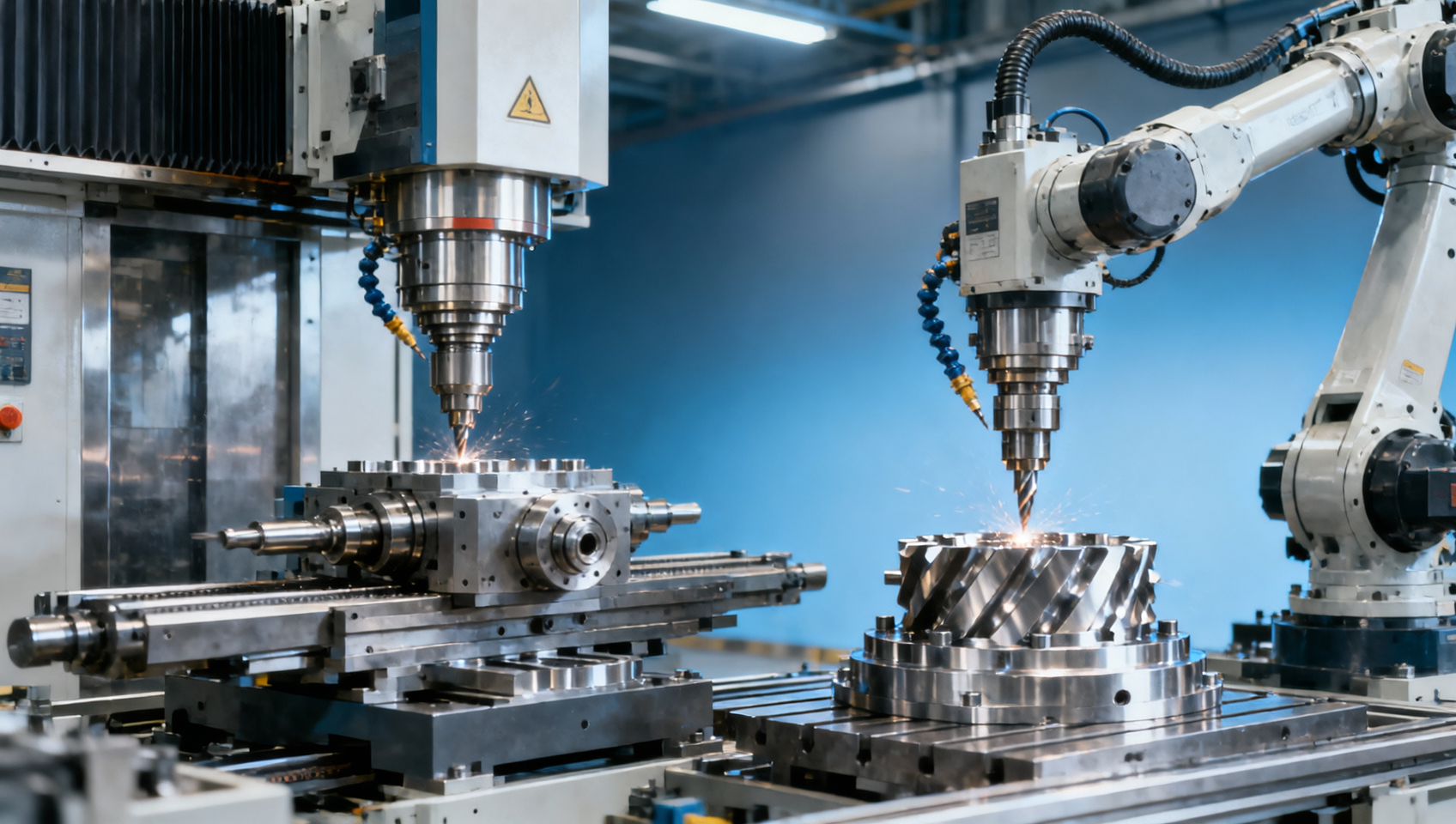
As the Machine Tool Market moves toward 2026, Global Manufacturing is being reshaped by industrial CNC, CNC milling, and automated production across the Manufacturing Industry. From metal machining and CNC cutting to Industrial Automation and Industrial Robotics, buyers, operators, and analysts are watching how smarter equipment, higher precision, and more connected production systems are redefining competitiveness worldwide.
What will define the machine tool market in 2026?
The machine tool market entering 2026 is not defined by one single growth factor. It is being shaped by a combination of precision demand, labor pressure, digital manufacturing, and supply chain diversification. For companies in automotive, aerospace, electronics, energy equipment, and general industrial production, CNC machine tools are no longer only capital assets. They are now productivity systems tied directly to throughput, traceability, and operating cost control.
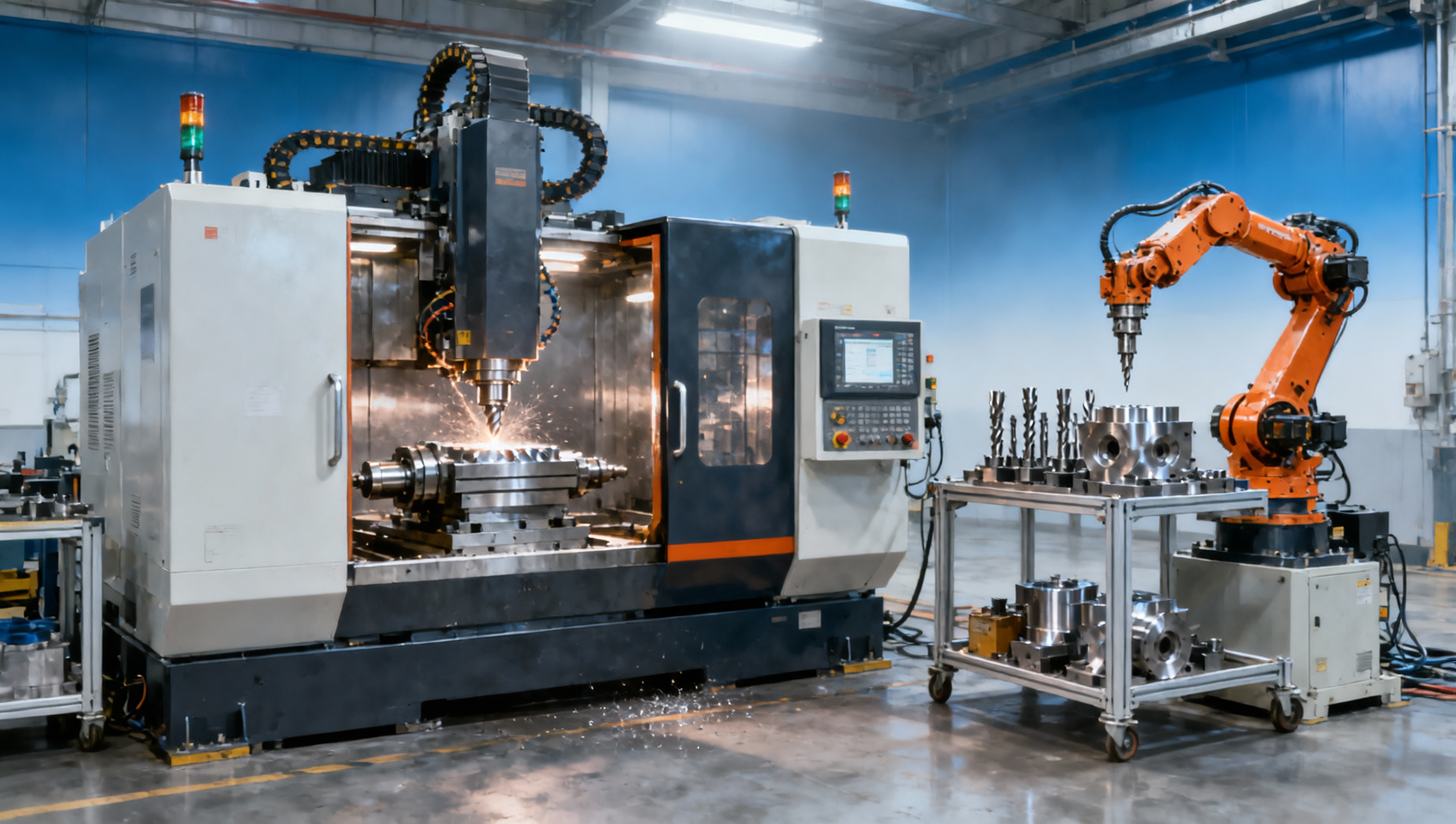
A clear market signal is the shift from standalone equipment toward integrated production cells. Buyers are asking whether a CNC lathe, machining center, or multi-axis machine can connect with tool management, fixtures, robotic loading, in-process inspection, and production monitoring. In many factories, the question for 2026 is not simply machine speed. It is whether the full process can run for 8–16 hours with less intervention while keeping dimensional consistency within the required tolerance range.
Another defining factor is regional sourcing strategy. China, Germany, Japan, and South Korea remain major machine tool clusters, but procurement teams are increasingly comparing suppliers by lead time, after-sales capability, spare parts response, and software openness. For business evaluators, this means total project risk matters almost as much as spindle power or axis travel. A machine tool investment now affects not only production output but also installation planning, operator training, and future line expansion.
The 2026 market is also becoming more segmented. High-mix, low-volume manufacturers need flexibility and rapid changeover. Medium-volume producers are focused on takt time and repeatability. Large-volume factories prioritize automation compatibility and lifecycle cost. This segmentation is important because the same CNC milling or CNC cutting solution does not fit every production goal, even within the same manufacturing industry.
The four demand drivers most buyers are tracking
- Higher precision requirements for structural parts, shafts, discs, housings, and complex surfaces, especially in industries where tolerance stability and surface finish affect assembly yield.
- Automation pressure caused by skilled labor shortages, rising labor cost, and the need to keep production running across 2-shift or 3-shift schedules.
- Digital integration needs, including machine connectivity, process data visibility, alarm analysis, and compatibility with smart factory systems.
- Procurement risk control, which includes delivery certainty, spare parts support, commissioning time, and whether future upgrades are practical.
For information researchers, these drivers help explain why market demand is moving beyond simple price comparison. For operators, they clarify why interface usability, setup logic, and maintenance access will carry more weight in real production conditions.
Which machine tool technologies are gaining momentum?
The strongest momentum is going to machine tools that reduce process steps and improve consistency. In practical terms, this means multi-axis machining, turning-milling integration, automatic tool measurement, pallet systems, robotic tending, and software that supports data-based process optimization. These technologies are not new by themselves, but adoption is broadening because manufacturers want measurable gains in setup reduction, unattended runtime, and process stability.
For example, 3-axis machining centers still hold value in standard milling tasks, but 4-axis and 5-axis systems are increasingly preferred for complex geometries and fewer re-clamping operations. Every removed setup can reduce positioning error, lower fixture complexity, and shorten cycle planning. In sectors such as aerospace parts, energy components, and precision electronics structures, that difference affects both scrap rate and delivery reliability.
CNC lathe demand is also evolving. Buyers are looking beyond basic turning capacity and focusing on live tooling, Y-axis capability, bar feeding, part catchers, and automatic loading. In many medium-batch applications, these configurations can turn a general lathe into a more flexible production platform. The real value is not only speed. It is the ability to combine turning, drilling, tapping, and light milling in one controlled process flow.
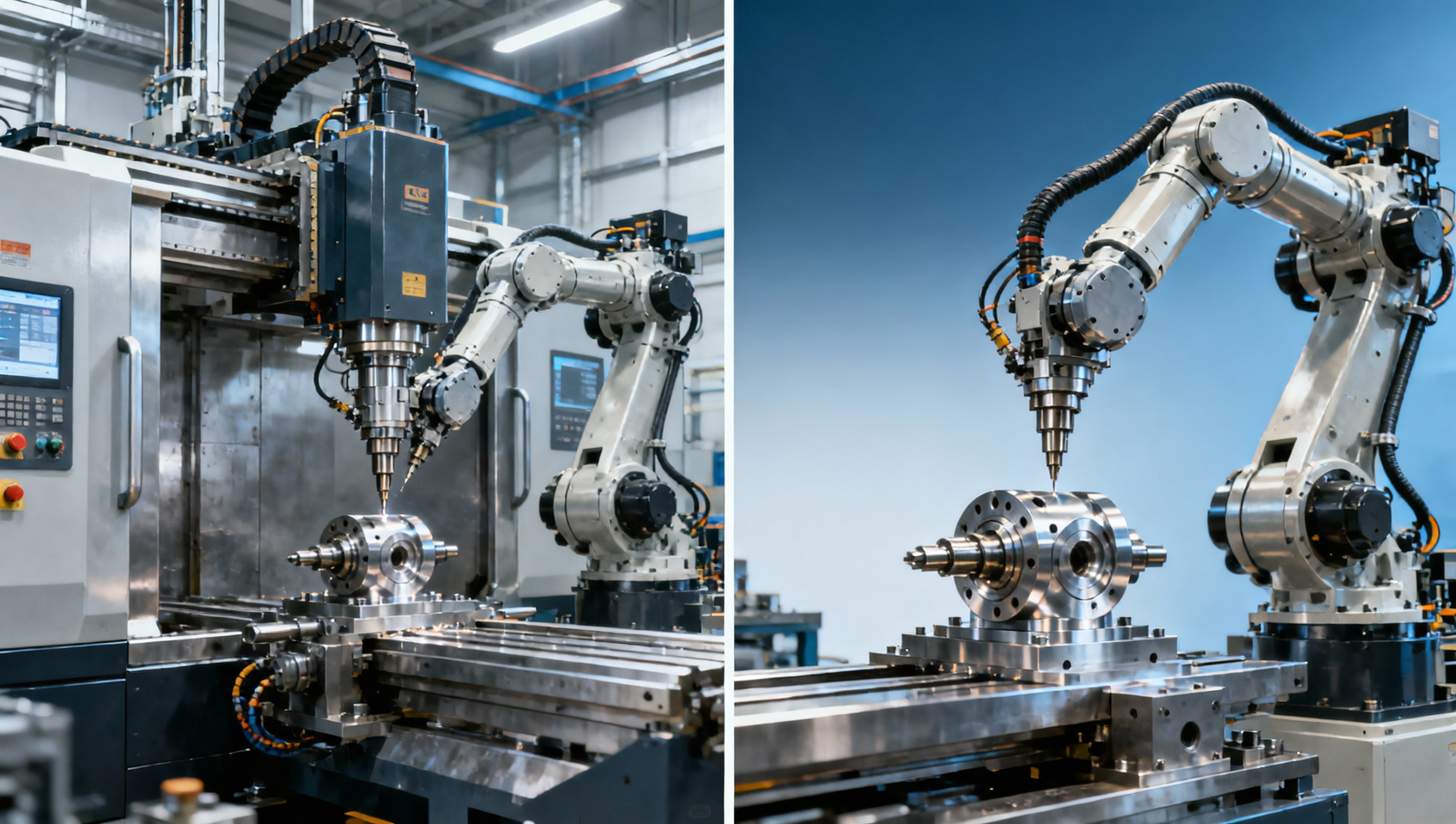
Industrial robotics and automated production lines will continue to support machine tool growth in 2026. This is especially true where part handling is repetitive, cycle time is predictable, and labor allocation is tight. A robotic loading cell may not suit every job shop, but for production windows of 6–24 months with recurring parts, the payback logic becomes stronger when uptime, staffing, and night-shift capacity are considered together.
Technology direction by production objective
The table below helps compare common machine tool directions against real production priorities. It is useful for procurement teams that need a clearer link between equipment configuration and factory goals rather than generic performance claims.
This comparison shows that market momentum is moving toward flexible, integrated configurations rather than isolated machines. It also highlights a common procurement mistake: buying for current drawings only, without checking whether the next 12–36 months of production will require more complex machining, automation, or data connectivity.
How should buyers evaluate machine tools for 2026 procurement?
For procurement personnel and business evaluators, the strongest buying approach in 2026 will be requirement-based evaluation. Start with part type, material, tolerance, annual volume, shift pattern, and expected changeover frequency. A machine that looks attractive on paper may still be a poor investment if it cannot support actual fixture logic, tool life targets, chip evacuation, or the operator skill level available on site.
A practical selection process usually has 4 steps: application analysis, configuration matching, process verification, and commercial review. Application analysis identifies whether the main workload involves shafts, plates, housings, or mixed parts. Configuration matching checks spindle range, axis count, tool magazine capacity, automation interface, and control system suitability. Process verification reviews cycle time assumptions, fixture plan, and tolerance strategy. Commercial review then compares lead time, service, installation scope, and spare parts access.
Lead time remains a critical buying factor. In the current machine tool market, standard equipment may require several weeks to a few months depending on configuration and export arrangements, while custom automation projects often require longer planning and commissioning windows. That is why buyers should ask not just for a shipment date, but also for the timelines for drawings confirmation, fixture preparation, pre-acceptance, on-site installation, and operator training.
Operators and technical users should be involved early, not only after purchasing. Their input helps identify interface complexity, tool replacement accessibility, coolant management, and maintenance clearance. In many plants, a machine with slightly lower theoretical capacity performs better over 12 months because it is easier to set up correctly and maintain consistently.
A practical procurement checklist
- Confirm the 3 core part families to be produced in the next 12–24 months, not only the current drawing set.
- Check 5 key technical items: axis configuration, spindle range, work envelope, tool capacity, and automation compatibility.
- Review 4 service topics: installation scope, operator training hours, spare parts response, and remote support capability.
- Evaluate 3 cost layers: initial equipment price, tooling and fixture cost, and yearly maintenance or downtime exposure.
Selection factors that deserve side-by-side comparison
The following table is designed for teams comparing machine tools across selection, cost, and implementation dimensions. It helps convert technical discussion into clearer purchasing decisions.
If a supplier can answer these dimensions clearly, the project is usually easier to validate internally. If answers stay vague around delivery stages, machine capability boundaries, or service scope, procurement risk rises even before installation starts.
Where will growth come from across real manufacturing scenarios?
Growth in the machine tool market will not come evenly from every segment. It will come from production environments where precision, automation, and process integration solve urgent business problems. In automotive and new energy supply chains, demand is tied to repeatability, throughput, and line balance. In aerospace and energy equipment, the focus is more on complex part geometry, material machinability, and dimensional control. In electronics and precision assemblies, compact parts and surface quality raise the value of stable CNC milling and micro-process consistency.
General manufacturing will also remain important because many medium-size factories are upgrading from conventional workflows to digital, semi-automated machining. These companies may not build full smart factories in one phase, but they often begin with one or two production islands. A typical path is to add a CNC machining center, then improve tooling and fixtures, then integrate robotic loading or production monitoring within 6–18 months if order stability justifies the next step.
From an application perspective, the strongest opportunity areas are parts that require a mix of accuracy, repeatability, and moderate to high volume. Examples include shafts, valve bodies, pump components, motor housings, flanges, connectors, and structural brackets. These are exactly the kinds of parts where reducing manual intervention and shortening setup time can improve both cost structure and delivery confidence.
Another source of growth is retrofit and line optimization. Not every factory will replace all assets. Some will keep proven machine tools and add automatic measurement, loading systems, data monitoring, or fixture improvements. For budget-limited buyers, this partial-upgrade path can provide a practical bridge between legacy production and smarter manufacturing without taking on the cost of a complete line rebuild.
Which users benefit most from 2026 machine tool upgrades?
- Factories running medium-batch production with recurring parts and pressure to extend machine utilization across 2 shifts or more.
- Manufacturers processing complex parts that currently require 2–4 setups and want to reduce handling errors.
- Procurement teams facing tight delivery windows and needing suppliers that can support configuration, training, and commissioning in one coordinated scope.
- Operators and production managers seeking easier tool management, more stable process control, and faster troubleshooting support.
This scenario view matters because machine tool investment decisions are rarely driven by technology alone. They are driven by business pressure: labor availability, scrap reduction, throughput stability, quality consistency, and future order visibility.
What risks, misconceptions, and compliance questions should not be ignored?
One common misconception is that buying a higher-spec machine automatically improves production results. In reality, performance depends on the full process chain: fixture rigidity, tool selection, coolant strategy, programming quality, operator discipline, and maintenance routines. A powerful machine tool can still produce unstable results if the surrounding process is not controlled with the same level of care.
Another risk is underestimating implementation complexity. Even when the equipment itself is standard, successful startup usually includes several linked stages such as site preparation, power and air checks, transportation planning, machine leveling, trial cutting, and training. If any one of these is delayed by 3–7 days, the overall production launch may slip much further than expected. That is why acceptance criteria should be discussed before shipment, not after arrival.
Compliance also deserves attention, especially in cross-border procurement. Requirements vary by region and end-use industry, but buyers commonly review electrical safety, documentation completeness, operating instructions, and equipment labeling. If the project is part of a larger production line, interface compatibility and on-site safety planning may matter as much as the machine itself. It is wise to clarify documentation needs early, especially when local installation or import procedures depend on them.
Finally, many companies focus too narrowly on purchase price and forget lifecycle exposure. Over a 3–5 year period, downtime, poor spare parts access, and frequent manual adjustment can cost more than the initial savings from a lower-priced machine. Business evaluators should therefore assess not just equipment cost, but the cost of instability, slow service response, and missed delivery commitments.
FAQ for buyers, users, and market researchers
How do I choose between a standard CNC machine and an automated cell?
Start with production stability and part repetition. If jobs change daily and batches are small, a standard CNC machine with flexible fixtures may be the better first step. If the same part family repeats for 6–12 months, cycle time is stable, and labor allocation is difficult, an automated cell becomes more attractive. The key is not automation for its own sake, but whether repeatability and runtime can justify the added integration effort.
What should operators care about before a new machine tool is installed?
Operators should review the control logic, tool change sequence, access for setup, chip and coolant handling, alarm visibility, and routine maintenance points. A short training session is not enough if the machine introduces new axis movements or automation interfaces. In many projects, 1–3 rounds of operator training and trial production are more realistic than a single handover event.
What delivery timeline is realistic for a machine tool project?
There is no universal timeline because configuration depth and export process vary. A more realistic approach is to ask for milestone visibility: technical confirmation, production scheduling, pre-dispatch inspection, shipping, site installation, and acceptance. For automated production projects, commissioning often requires additional time beyond base machine delivery, especially when robotics, fixtures, and sample parts must be validated together.
Is the lowest-priced machine tool usually the best procurement choice?
Not necessarily. A lower initial price can be reasonable if the application is simple and service support is clear. But if the project needs precision stability, future automation, or multi-shift use, a narrow price comparison is risky. Buyers should compare total value across machine capability, tooling strategy, implementation scope, spare parts support, and expected downtime exposure.
Why speak with us when planning for the 2026 machine tool market?
For teams tracking where the machine tool market is headed in 2026, the real challenge is turning market signals into workable equipment decisions. That requires more than product descriptions. It requires industry news, technology insight, application judgment, and a practical understanding of global CNC machining, precision manufacturing, and international supply considerations.
We focus on the global CNC machine tool and precision manufacturing sector, covering machine tools, automated production, industrial robotics, cutting applications, and cross-border market developments. This makes it easier for researchers, users, procurement teams, and business evaluators to compare options through an industry lens rather than through isolated specifications alone.
You can contact us to discuss concrete topics such as parameter confirmation, machine tool selection for shafts or structural parts, CNC milling or CNC cutting process matching, delivery cycle planning, automation integration direction, documentation and compliance concerns, sample-based evaluation, and quotation communication. If your project involves multi-axis machining, flexible production lines, or supplier comparison across regions, we can help structure the decision process more clearly.
If you are assessing a 2026 purchase or production upgrade, share your part type, material, batch range, tolerance expectations, and target timeline. With those 4 basic inputs, it becomes much easier to narrow the right machine tool path, identify likely risks, and build a procurement plan that supports both current output and future manufacturing growth.
PREVIOUS ARTICLE
NEXT ARTICLE
Recommended for You
 How to Choose the Right Metal Machining ProcessCNC Machining Technology Center
 Metal Machining vs CNC Metalworking: What MattersCNC Machining Technology Center
 What Drives Cost in Industrial CNC ProjectsManufacturing Market Research Center
 Is Industrial CNC Worth Upgrading in 2026Machine Tool Industry Editorial Team
 How CNC Industrial Systems Improve Shop EfficiencyMachine Tool Industry Editorial Team
 CNC Industrial Setup Mistakes to Avoid FirstCNC Machining Technology Center

Aris Katos
Future of Carbide Coatings
15+ years in precision manufacturing systems. Specialized in high-speed milling and aerospace grade alloy processing.
▶
What Drives Cost in Industrial CNC ProjectsManufacturing Market Research Center▶
Where the Machine Tool Market Is Headed in 2026Manufacturing Market Research Center▶
Machine Tool Market Risks Buyers Should WatchManufacturing Market Research Center▶
AWE2026 Closes: AI-Driven Whole-Home Intelligence Fuels CNC Line ExportsManufacturing Market Research Center▶
Machine tool price: Why list pricing masks total cost of ownership over 5 yearsManufacturing Market Research Center
Mastering 5-Axis Workholding Strategies
Join our technical panel on Nov 15th to learn about reducing vibrations in thin-wall components.

Providing you with integrated sanding solutions
Before-sales and after-sales services
Comprehensive technical support