• Global CNC market projected to reach $128B by 2028 • New EU trade regulations for precision tooling components • Aerospace deman
NYSE: CNC +1.2%LME: STEEL -0.4%

Is Industrial CNC Worth Upgrading in 2026
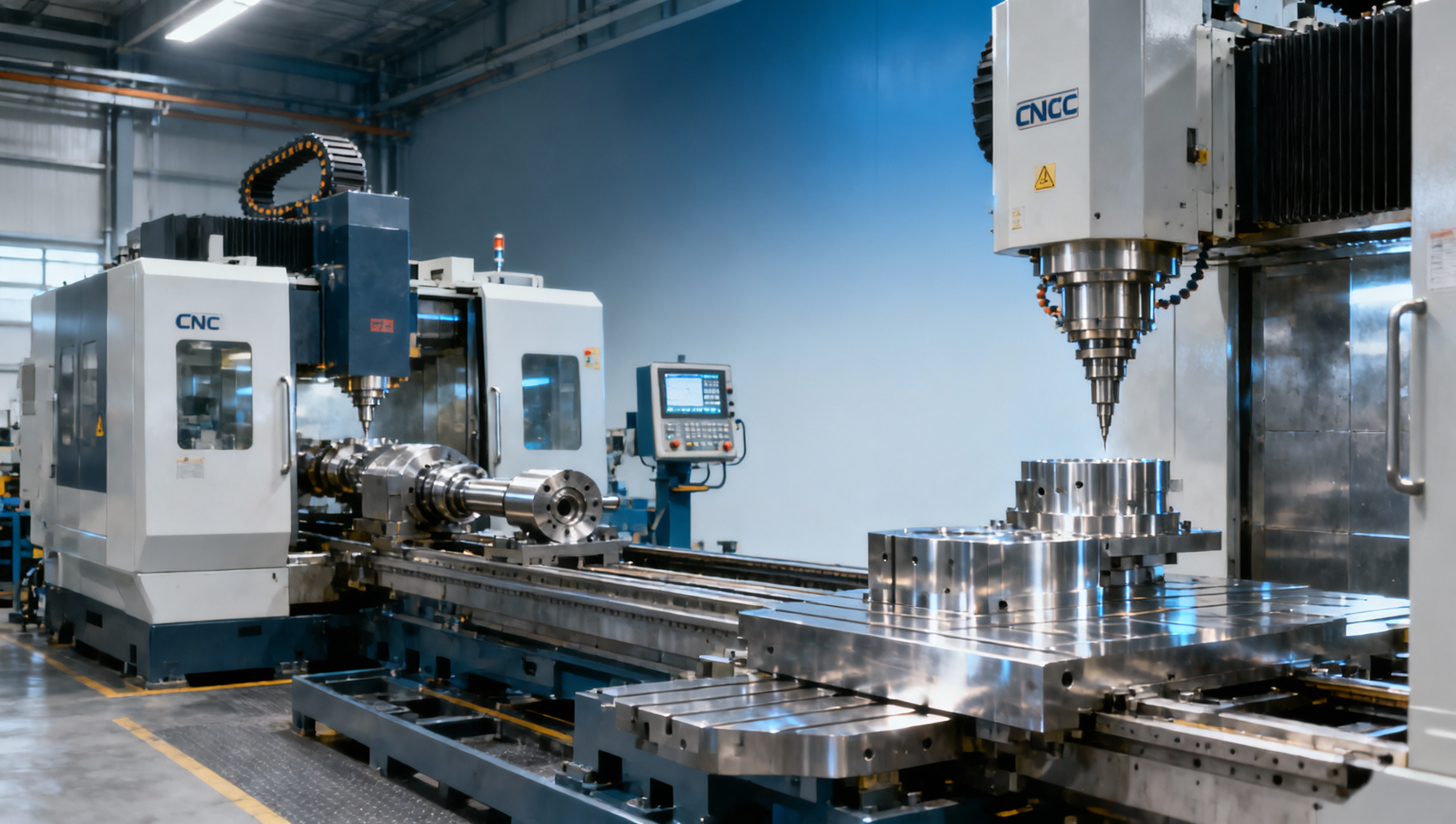
As Global Manufacturing moves toward smarter, faster, and more connected production, many companies are asking whether upgrading industrial CNC systems in 2026 is truly worth the investment. From metal machining and CNC milling to automated production lines and Industrial Automation, the answer depends on cost, productivity, precision, and long-term competitiveness in the evolving Machine Tool Market and Manufacturing Industry.
For researchers, machine operators, procurement teams, and business evaluators, the issue is no longer whether CNC technology is important. The real question is whether an existing industrial CNC platform can still meet tighter tolerances, shorter lead times, and growing requirements for digital integration over the next 3–5 years.
In many factories, older CNC lathes, machining centers, and multi-axis systems still run reliably, but hidden costs often rise year by year. Cycle times may be 8%–20% slower than newer systems, unplanned downtime may increase after 5–8 years of use, and data connectivity may be too limited for smart factory workflows. Those gaps directly affect throughput, scrap rates, and delivery performance.
A smart upgrade in 2026 is not always a full machine replacement. It may involve controller modernization, spindle and servo improvement, automation add-ons, probing systems, tool management, or software integration. The right path depends on production volume, part complexity, labor availability, and return-on-investment targets.
Why Industrial CNC Upgrades Are Back on the 2026 Investment Agenda
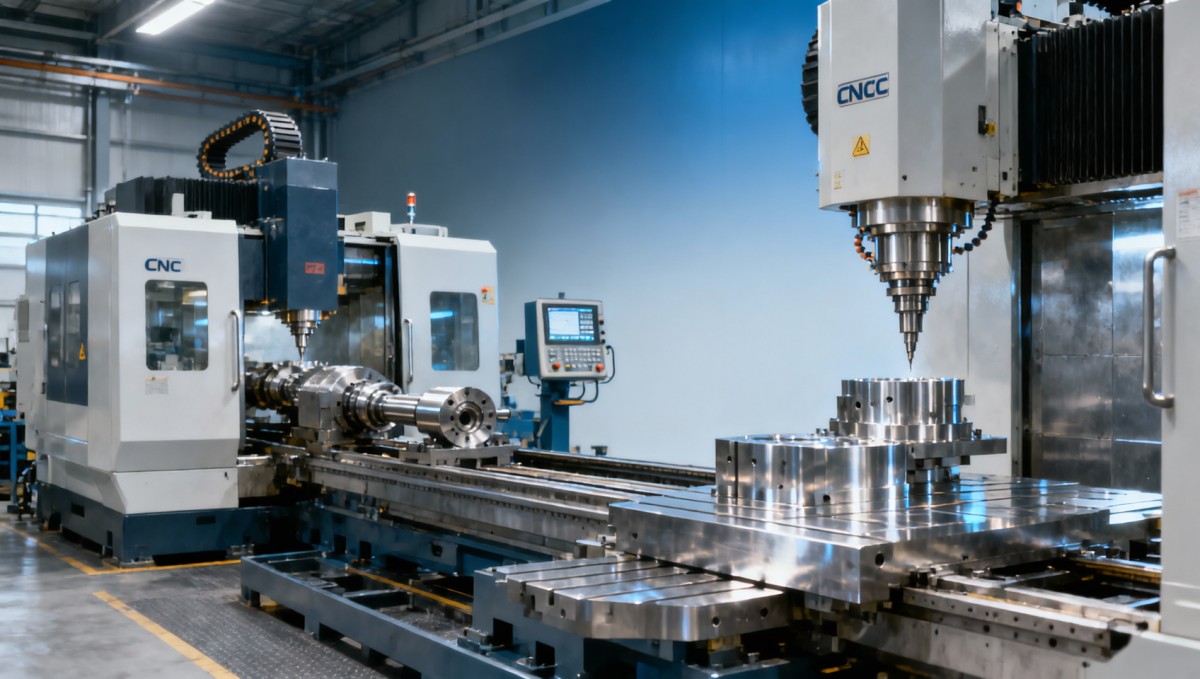
Industrial CNC upgrades are becoming a serious boardroom topic because manufacturing performance is now measured not only by output, but also by precision stability, machine connectivity, and flexibility. In sectors such as automotive, aerospace, energy equipment, and electronics, batch sizes are changing faster, while quality expectations are becoming stricter. A machine that was competitive in 2018 may be underperforming in 2026 even if it still produces acceptable parts.
Another driver is labor pressure. Skilled machinists and maintenance technicians are harder to recruit in many regions. Modern CNC systems reduce dependence on manual setup by using automatic tool measurement, predictive maintenance alerts, and operator guidance interfaces. Even a 10% reduction in setup time can create a significant annual capacity gain in a shop running 2 or 3 shifts.
Energy and maintenance costs also influence the decision. Older hydraulic units, motors, and coolant systems often consume more power and require more frequent service. If a machine experiences 4–6 hours of stoppage per month, the annual cost can exceed the visible maintenance budget because it also affects scheduling, overtime, and late delivery penalties.
The strategic factor is digital readiness. More manufacturers now want machine data for OEE tracking, quality traceability, remote diagnostics, and MES or ERP integration. If a CNC machine cannot exchange data reliably, it becomes a bottleneck in a smart factory environment, even when its mechanical structure is still usable.
2026 pressures pushing upgrade decisions
- Higher demand for repeatable tolerances such as ±0.01 mm to ±0.02 mm in precision parts manufacturing.
- Shorter delivery windows, often reduced from 3 weeks to 7–10 working days for urgent industrial orders.
- More mixed production, requiring faster changeovers and stronger multi-axis flexibility.
- Greater need for machine data, preventive service planning, and integration with automated production lines.
When staying with the current system may still work
Not every machine needs immediate upgrading. If utilization is below 50%, part geometry is simple, tolerances remain above ±0.05 mm, and spare parts are available within 48–72 hours, continuing with the existing machine may still be reasonable. However, this should be a documented decision based on measurable production data, not habit.
How to Judge Whether an Upgrade Is Economically Worth It
The most practical way to judge an industrial CNC upgrade is to compare total cost and output impact over a 24–36 month period. Purchase price alone is not enough. Procurement teams should look at cycle time improvement, scrap reduction, maintenance savings, labor efficiency, and the machine’s ability to support future product lines. A cheaper short-term choice may become the more expensive option after 18 months.
A useful threshold is payback time. Many manufacturers set an acceptable payback window of 12–30 months for retrofit projects and 24–48 months for full machine replacement. If the upgrade improves spindle uptime, cuts setup time, and reduces quality loss, the result may justify investment even before a full capacity expansion is needed.
For business evaluators, the hidden value is risk reduction. If a legacy controller fails and parts lead time for replacement electronics extends to 6–12 weeks, production disruption can become more costly than the planned upgrade itself. This is especially important for suppliers serving export markets or contractual delivery schedules.
The table below provides a practical framework for comparing keep-as-is, retrofit, and replacement decisions in the machine tool market.
This comparison shows that the best choice is not always the newest machine. In many workshops, a partial retrofit delivers 60%–80% of the productivity benefits at a lower capital burden, especially when the machine base, guideways, and spindle condition remain acceptable.
Core evaluation metrics for procurement teams
- Measure current OEE, downtime frequency, and average setup time over at least 8–12 weeks.
- Estimate output gain in parts per shift rather than relying on nominal spindle speed alone.
- Check spare parts availability, especially for control boards, drives, and servo systems.
- Calculate training time for operators, often 3–10 days depending on interface complexity.
- Review whether the machine can connect to existing MES, ERP, or quality traceability systems.
What to Upgrade First: Controls, Precision, Automation, or Connectivity
The answer depends on where the performance loss actually comes from. In some facilities, the biggest issue is mechanical wear and thermal stability. In others, the machine still cuts well, but setup is slow and data is isolated. Effective CNC modernization starts with a bottleneck analysis, not a generic component shopping list.
Controls and software are often the first upgrade target because they influence usability, programming speed, alarm diagnostics, and communication protocols. A newer controller can improve conversational programming, support tool life management, and enable remote service access. For mixed-model manufacturing, those features can save 15–25 minutes per changeover.
Precision-related upgrades matter when part tolerance, surface finish, or repeatability is slipping. This may involve spindle refurbishment, encoder replacement, ballscrew checks, axis calibration, probing, or coolant temperature control. If a machine drifts beyond tolerance after 2–3 hours of continuous operation, upgrading the control alone will not solve the production problem.
Automation and connectivity become more valuable when labor cost, unattended machining, and traceability are priorities. Robotic loading, pallet systems, tool monitoring, and machine data capture can extend productive hours per day without requiring a full lights-out operation from day one.
Priority areas and expected impact
The following table helps identify which upgrade area usually delivers the fastest operational return under different manufacturing conditions.
A common mistake is investing in automation before process stability is fixed. If tooling life is inconsistent or the machine cannot hold repeatability, adding robotic loading may only automate poor output. In most cases, the upgrade sequence should begin with accuracy and control reliability, then move toward automation and plant-level integration.
A practical upgrade sequence
- Step 1: Verify geometry, backlash, spindle condition, and thermal behavior.
- Step 2: Upgrade controller, interfaces, and alarm diagnostics if usability limits output.
- Step 3: Add probing, tool monitoring, or in-process measurement for quality stability.
- Step 4: Introduce automation after the base process achieves stable cycle and scrap performance.
- Step 5: Connect machine data to MES, ERP, or maintenance systems for long-term optimization.
Implementation Risks, Downtime Planning, and Common Upgrade Mistakes
Even when an industrial CNC upgrade is technically justified, poor implementation can damage ROI. The biggest risk is underestimating downtime. A simple connectivity or HMI improvement may take only 2–5 days, but a larger retrofit involving drives, spindle work, calibration, and validation can require 2–6 weeks depending on machine age and parts availability.
Another mistake is evaluating the project only from engineering or only from finance. Operators, programmers, maintenance staff, quality teams, and production planning should all be involved early. If the upgraded system requires a new post-processor, revised tooling strategy, or retraining across 3 shifts, that effort must be scheduled before launch rather than after problems appear.
Companies also sometimes ignore acceptance criteria. Before work starts, define measurable targets such as cycle time reduction, repeatability range, alarm frequency, connection protocols, and operator training completion. Without those benchmarks, a project can be declared finished while performance gains remain unclear.
Supply chain risk matters as well. In global machine tool markets, lead times for specific control components, drives, sensors, and high-precision mechanical parts may vary from 1 week to 12 weeks. Procurement teams should confirm replacement availability before shutdown planning begins.
Common upgrade risks and controls
- Undefined scope: Separate must-have functions from optional improvements before purchasing.
- Insufficient training: Plan 1–2 rounds of operator and maintenance instruction after commissioning.
- Weak validation: Run trial parts across multiple shifts, not just one daytime test cycle.
- Software mismatch: Confirm CAD/CAM, post-processing, and communication protocol compatibility.
- No spare strategy: Keep critical consumables and vulnerable electronic parts for the first 6–12 months.
Recommended implementation workflow
- Audit current machine condition, output, downtime, and digital compatibility.
- Create a 3-part budget covering hardware, installation, and production interruption.
- Schedule retrofit or replacement during low-load periods or planned maintenance windows.
- Validate first-article accuracy, repeated batch stability, and interface performance.
- Track ROI for 90–180 days using real production data instead of assumptions.
Which Companies Should Upgrade in 2026 and Which Should Wait
Upgrading industrial CNC systems in 2026 is usually worth serious consideration for companies facing at least 2 of these 4 conditions: frequent downtime, higher precision requirements, labor shortages, or digital integration pressure. This is especially true for suppliers producing medium-to-high value parts where a small improvement in repeatability or cycle time has a visible impact on gross margin.
Manufacturers in aerospace, automotive components, medical support machining, power equipment, and precision electronics often gain the most because they operate under stricter process control. If your parts require multi-axis positioning, complex contouring, or tight dimensional consistency over large batches, an older CNC platform can limit competitiveness more than expected.
By contrast, companies with low machine utilization, simple 2-axis work, long product life cycles, and ample service support may choose to delay a major investment. In that case, a limited refresh focused on preventive maintenance, tooling optimization, and basic connectivity may be enough for the next 12–24 months.
The key is alignment with business direction. If the plant plans to enter export manufacturing, increase automation, or move into higher-tolerance work in the next 1–3 years, waiting too long can create a capability gap that is harder and more expensive to close later.
FAQ for research, operations, and procurement teams
How do we know if retrofit is better than replacement?
If the machine structure remains mechanically sound, accuracy can be restored, and digital limitations are the main problem, retrofit often makes sense. If downtime is frequent, spare parts are scarce, and process capability remains unstable after maintenance, replacement is usually the safer long-term option.
What payback period is commonly acceptable?
For many B2B manufacturing investments, a 12–30 month payback is attractive for retrofit and 24–48 months is acceptable for new equipment, depending on utilization, financing terms, and production criticality.
How long does an upgrade project usually take?
Planning and technical assessment may take 1–3 weeks. Light modifications can be completed in under a week, while complex retrofits often need 2–6 weeks including validation, training, and resumed production checks.
What should operators focus on after an upgrade?
Operators should focus on new interface logic, alarm handling, tool offsets, probing cycles, and revised startup routines. The first 2–4 weeks after commissioning are critical for stabilizing actual production performance.
For most manufacturers, the real value of a 2026 CNC upgrade lies in matching machine capability with future production needs, not simply replacing old equipment for appearance or trend reasons. The strongest decisions are based on measurable output gaps, maintenance risk, precision demand, and digital readiness.
If your factory is balancing machining accuracy, automation goals, and cost control, a structured upgrade assessment can clarify whether partial modernization or full replacement is the better path. To review your current machine condition, production targets, and upgrade options, contact us to get a tailored solution, compare feasible configurations, and learn more about practical CNC and precision manufacturing strategies for 2026.
PREVIOUS ARTICLE
NEXT ARTICLE
Recommended for You
 How to Choose the Right Metal Machining ProcessCNC Machining Technology Center
 Metal Machining vs CNC Metalworking: What MattersCNC Machining Technology Center
 What Drives Cost in Industrial CNC ProjectsManufacturing Market Research Center
 Is Industrial CNC Worth Upgrading in 2026Machine Tool Industry Editorial Team
 How CNC Industrial Systems Improve Shop EfficiencyMachine Tool Industry Editorial Team
 CNC Industrial Setup Mistakes to Avoid FirstCNC Machining Technology Center

Aris Katos
Future of Carbide Coatings
15+ years in precision manufacturing systems. Specialized in high-speed milling and aerospace grade alloy processing.
▶
Is Industrial CNC Worth Upgrading in 2026Machine Tool Industry Editorial Team▶
Medical Equipment Machining Centers Need Accuracy Beyond SpecsMachine Tool Industry Editorial Team▶
Is a High-speed Machining Center Worth It for Aluminum Parts?Machine Tool Industry Editorial Team▶
Heavy-duty Machining Center for mold making: Why coolant filtration standards evolve faster than OEM manualsMachine Tool Industry Editorial Team▶
High precision machine tool: Why air-bearing spindles demand more than just clean airMachine Tool Industry Editorial Team
Mastering 5-Axis Workholding Strategies
Join our technical panel on Nov 15th to learn about reducing vibrations in thin-wall components.

Providing you with integrated sanding solutions
Before-sales and after-sales services
Comprehensive technical support