• Global CNC market projected to reach $128B by 2028 • New EU trade regulations for precision tooling components • Aerospace deman
NYSE: CNC +1.2%LME: STEEL -0.4%

Global Manufacturing Is Shifting Where Machine Demand Grows
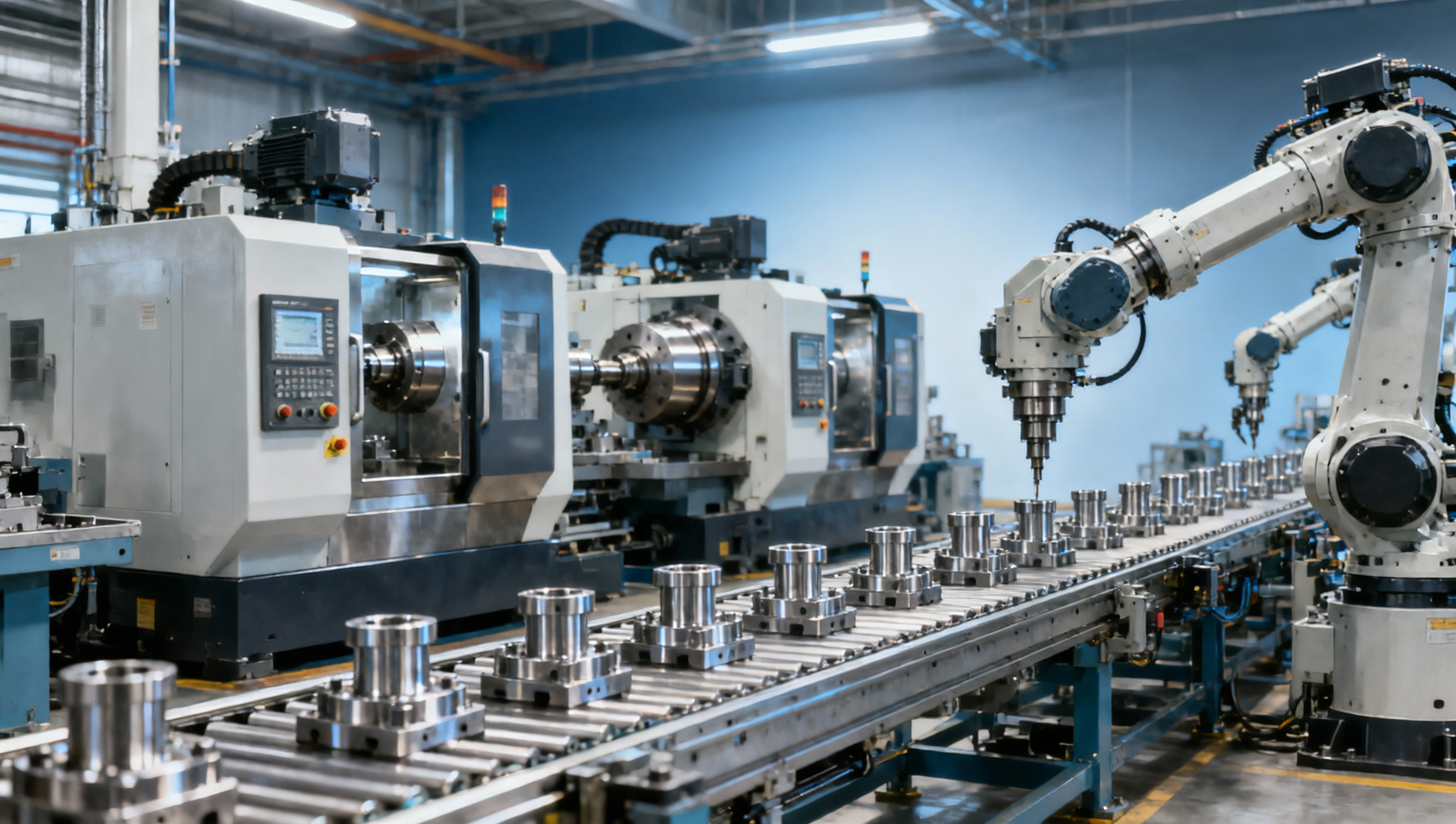
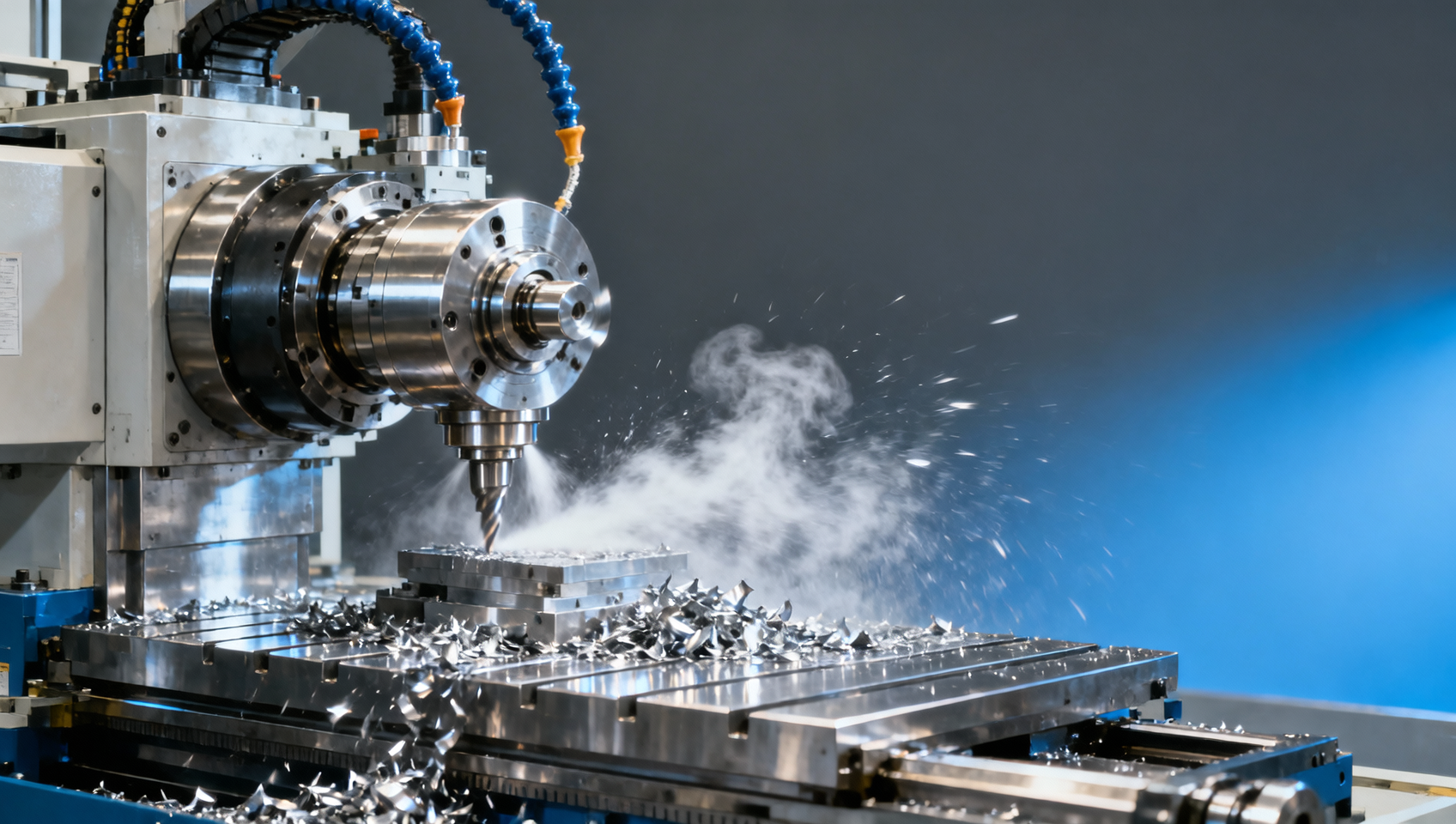
As Global Manufacturing shifts across regions, the Machine Tool Market is seeing new demand in metal machining, industrial CNC, and automated production. From CNC milling and CNC cutting to automated lathe systems and industrial robotics, the Manufacturing Industry is reshaping every production process. This article explores where growth is accelerating and what it means for buyers, operators, and decision-makers.
Why machine demand is moving with global manufacturing
Machine demand rarely shifts at random. It usually follows investment in factories, supplier relocation, labor cost changes, export strategy, and industrial policy. When production capacity moves from one region to another, demand for CNC machine tools, machining centers, industrial CNC systems, and automated production equipment moves with it. For information researchers and procurement teams, this means market growth is no longer concentrated in only one traditional manufacturing center.
Over the last 3–5 years, many manufacturers have adjusted sourcing and production footprints to improve resilience. Some are building secondary plants in Southeast Asia, India, Eastern Europe, Mexico, and selected Middle Eastern industrial zones. Others are upgrading existing factories in China, Germany, Japan, and South Korea with higher automation instead of simply expanding floor space. In both cases, the machine tool market grows, but the type of demand changes.
This distinction matters. A new factory in an emerging hub may first buy standard CNC lathes, vertical machining centers, tooling packages, fixtures, and basic automation for 1-shift or 2-shift production. A mature industrial cluster may instead invest in 5-axis machining, flexible cells, probing systems, robotic loading, and digital monitoring for cycle-time reduction and quality control. The demand signal is different even when both regions increase machine purchases.
For operators, the shift creates a practical challenge: machines must be easier to train, easier to maintain, and more tolerant of mixed part programs. For enterprise decision-makers, the question is broader. They need to know where capacity is growing, what machine categories are being prioritized, and how to balance capital spending, delivery risk, and long-term service support across multiple markets.
- New manufacturing locations usually increase demand for entry-to-mid level CNC capacity, fixture systems, and fast deployment support within 2–4 quarters.
- Upgraded mature factories typically increase demand for automation integration, precision machining, and digital production management over 12–24 months.
- Supply chain diversification often pushes buyers to compare not only machine price, but also after-sales response time, spare parts availability, and operator training resources.
What is driving the relocation of manufacturing capacity?
The first driver is cost structure. Rising wages, energy volatility, and logistics expenses can change the total manufacturing equation. The second driver is customer proximity. Automotive, electronics, energy equipment, and industrial component suppliers increasingly want production closer to end markets. The third driver is policy support, including industrial parks, tax incentives, and local content requirements that influence where metal machining and automated production lines are installed.
The fourth driver is technology readiness. Regions that can support stable power, industrial internet infrastructure, tooling supply, and maintenance talent are more likely to attract high-value precision manufacturing. Even when labor remains important, the competitive edge often comes from uptime, tolerance control, and delivery consistency rather than labor alone.
Where growth is accelerating in the machine tool market
The next question is not simply where factories are opening, but where machine demand is most actionable for suppliers, buyers, and planners. Different regions are entering growth cycles for different reasons. Some are adding basic capacity to support contract manufacturing. Others are building more advanced lines for aerospace, EV components, precision electronics, or energy equipment. Understanding this regional logic helps procurement teams avoid one-size-fits-all sourcing mistakes.
In many cases, machine demand grows in two stages. Stage 1 involves conventional machines, standard tooling, metrology basics, and semi-automated workholding. Stage 2 adds robotic handling, in-process inspection, software integration, and more specialized CNC milling or multi-axis machining capacity. The gap between the two stages may be as short as 6–12 months in fast-scaling plants, especially when export orders rise quickly.
The table below summarizes how regional manufacturing shifts often translate into different machine tool demand patterns. It is not a ranking. It is a practical planning tool for those comparing market opportunities, machine categories, and service expectations.
The main takeaway is clear: the machine tool market is not growing in a uniform way. Buyers need to match region type with machine type, service model, and production maturity. A factory that plans to double SKUs within 12 months should not buy only on spindle speed or table size. It should evaluate changeover time, training burden, and automation readiness from day one.
Which industries are creating the strongest pull?
Automotive remains a major driver, especially for EV components, housings, shafts, brake parts, and transmission-related metal machining. Electronics continues to support demand for high-speed machining, drilling, and compact precision systems. Aerospace and energy equipment push demand in a different direction, favoring accuracy, traceability, and complex part capability over pure volume.
General industrial manufacturing should not be underestimated. Pumps, valves, flanges, couplings, frames, and custom metal components create broad demand for CNC milling, CNC turning, and multi-process flexibility. This is often where buyers need the best balance between price, uptime, and future expansion.
Which machine solutions fit different production scenarios?
Not every factory needs the same machine architecture. A procurement mistake often happens when a buyer chooses based on a headline specification but ignores part mix, operator skill, setup frequency, and expected output. In practice, the most suitable CNC machine tool depends on at least 4 factors: material type, geometry complexity, batch size, and automation target.
For example, a supplier producing repetitive shaft parts may benefit most from CNC lathes or automated lathe systems with bar feeders and simple part handling. A workshop making plates, housings, and structural parts may need vertical or horizontal machining centers. A plant handling complex surfaces or multi-face parts may need 4-axis or 5-axis systems, even if the initial price is higher, because they reduce fixture changes and accumulated positioning error.
The comparison below helps operators, researchers, and decision-makers match machine types to realistic manufacturing conditions. It is especially useful when planning a new line, replacing older equipment, or deciding whether to automate a cell in phases.
The table shows why machine selection should start with production logic, not with brochure language. A plant that runs 20–50 part numbers per month usually needs flexibility more than maximum speed. A line producing one stable family of parts over 2 or 3 shifts may gain more from dedicated automation and lower manual intervention.
How operators and production managers should judge fit
Operators often see issues before procurement does. Tool life stability, access for maintenance, coolant management, and control system familiarity affect daily output. If a machine is difficult to program, sensitive to poor fixturing, or hard to clean between jobs, promised capacity may not convert into actual throughput.
A practical review should include 5 checkpoints: setup time, repeatability under continuous running, tooling compatibility, alarm handling, and service accessibility. Even a strong machine configuration can underperform if replacement parts take 2–6 weeks or if training support is not available during ramp-up.
Common scenario-based selection checklist
- For repetitive production, prioritize stable cycle time, chip evacuation, and predictable preventive maintenance intervals.
- For high-mix workshops, prioritize setup simplification, control interface usability, and fixture change efficiency.
- For precision parts, review thermal stability, probing options, and whether required tolerances can be held over long continuous runs.
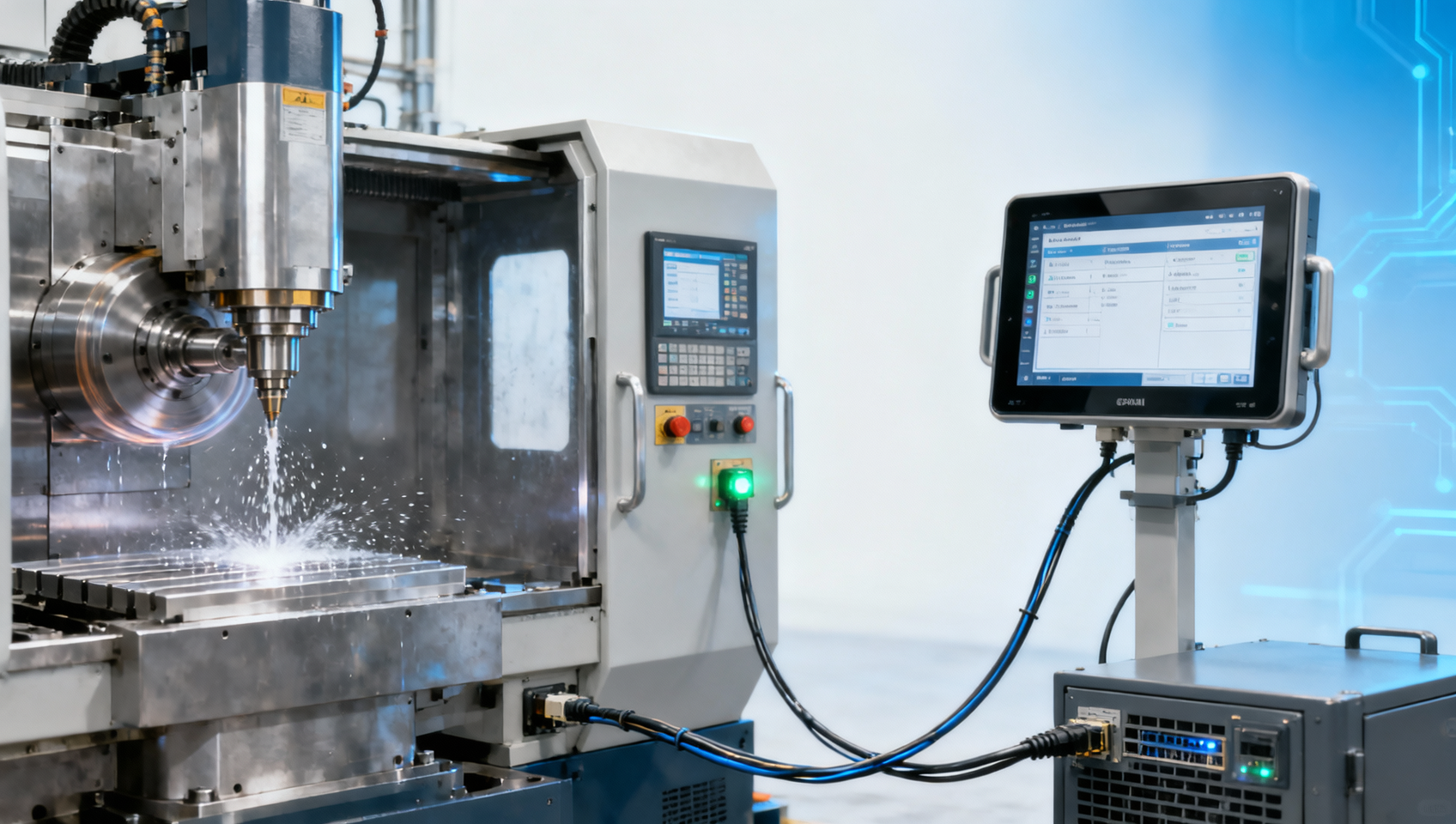
- For automation plans, confirm interface readiness for robots, sensors, pallet systems, and production data collection.
What should buyers evaluate before placing an order?
Machine procurement in the manufacturing industry is not only a price negotiation. It is a risk management exercise that affects output, quality, labor efficiency, and delivery performance for years. A lower purchase price may be attractive, but if commissioning takes longer, process capability is unstable, or after-sales support is slow, the total cost can rise quickly.
For most B2B buyers, evaluation should follow a structured path. Start with part drawings and target volumes. Then define the required process window, such as spindle range, axis travel, workholding concept, tooling method, and expected shift pattern. Only after that should the team compare machine brands or supplier quotations. This sequence reduces the chance of buying an oversized or underspecified solution.
A useful procurement review usually covers 6 items: process match, machine configuration, automation compatibility, delivery schedule, service support, and documentation. For many projects, standard lead time may range from 6–16 weeks depending on machine complexity, control options, tooling package, and local installation scope. Buyers with compressed timelines should confirm what is standard and what requires customization.
The table below can be used as a practical supplier evaluation sheet when reviewing CNC machine tools, production cells, or flexible manufacturing proposals.
This evaluation framework helps procurement teams compare proposals on more than purchase price. It also gives decision-makers a clearer basis for budget approval. In many manufacturing projects, a machine that reduces setup time by even 10–20 minutes per job can create meaningful annual savings in labor, capacity, and delivery stability.
Common buying mistakes that delay ROI
One common mistake is buying to the current drawing only. That can work for a single contract, but it often fails once product variants increase. Another mistake is underestimating tooling, fixture, and programming requirements. A machine tool may arrive on time, but if the process package is incomplete, commissioning can slip by several days or even multiple weeks.
A third mistake is treating service as a minor issue. In global manufacturing, regional support coverage matters. Buyers should confirm response expectations, remote diagnostics capability, and the availability of wear parts, sensors, and control components. Downtime risk should be discussed before purchase, not after installation.
How standards, implementation, and training affect project success
As machine demand grows across regions, implementation quality becomes just as important as machine specification. A CNC machine tool can be mechanically suitable but still perform poorly if installation conditions, training, and inspection routines are weak. For cross-border projects, this issue becomes more important because site conditions, operator experience, and compliance expectations can differ significantly.
In practical terms, buyers should review 3 implementation layers. The first is site readiness, including foundation condition, power supply stability, coolant planning, compressed air where needed, and material flow. The second is process readiness, including tooling lists, programs, fixtures, gauging, and first-article inspection planning. The third is people readiness, covering operator training, maintenance instruction, and escalation procedures.
Many manufacturing organizations use common quality and process control frameworks such as ISO-based systems for documentation, traceability, and inspection management. Requirements vary by sector, but aerospace, automotive, and export-oriented component manufacturing often expect stronger process discipline, controlled records, and more formal acceptance checkpoints. Buyers do not need to overcomplicate this, but they should align machine delivery with internal quality procedures from the start.
A realistic implementation plan often includes 4 stages: technical confirmation, factory acceptance, installation and commissioning, and production stabilization. Depending on machine complexity, the commissioning window may range from 3–10 days for a standard standalone machine and longer for a robotic cell or flexible production line. Operators should receive enough training to handle routine setup, alarm response, and daily maintenance before full release to production.
A practical implementation flow for CNC and automation projects
- Confirm part drawings, materials, tolerances, target cycle time, and output by shift before final machine configuration is locked.
- Review electrical, layout, and utility requirements at the site 2–4 weeks before delivery to reduce installation delays.
- Define acceptance content, including no-load checks, sample cutting, repeatability verification, and documentation handover.
- Plan training for operators, programmers, and maintenance staff separately, because their usage depth is different.
- Run a stabilization period with monitored output, scrap review, and preventive maintenance checks during the first production cycle.
What operators often need but procurement forgets
Operators usually need clear setup instructions, tooling references, backup parameter records, and fast troubleshooting contacts. Procurement teams often focus on the machine itself, while production teams need the supporting details that keep output steady. This is especially true when a plant is introducing industrial CNC capacity for the first time or hiring new staff during expansion.
Simple preparation can prevent expensive stops. For example, keeping critical wear items and standard consumables on site for the first 30–90 days can reduce avoidable downtime during ramp-up. This is not a luxury item. It is basic production insurance when machine demand is rising and output pressure is high.
FAQ: what buyers, users, and planners ask most often
How do I know whether to buy a standard CNC machine or an automated production cell?
Start with output pattern, labor availability, and changeover frequency. If your plant runs stable parts across 2 or 3 shifts and labor is tight, automation may justify itself faster. If your product mix changes weekly and volumes are moderate, a standard CNC machine with automation-ready interfaces may be a safer first step. Many companies phase in robotics after process stability is proven.
What delivery lead time is typical for machine tools?
Lead time depends on machine category, control system, options, and local installation requirements. A relatively standard machine may move in a 6–12 week window, while customized cells, multi-axis systems, or automation projects may require a longer schedule. Buyers should always separate manufacturing lead time, shipping time, and site commissioning time when planning a launch.
What should procurement focus on besides machine price?
Focus on total operating fit. That includes process capability, tooling package, fixture strategy, training scope, after-sales response, and spare parts planning. In many cases, these factors have more impact on ROI than the initial quotation gap. A lower-priced machine that creates repeated setup loss or longer downtime can cost more over a 12-month production period.
Are high-precision machines necessary for general industrial parts?
Not always. The right answer depends on tolerance, part value, and downstream assembly requirements. For many general industrial parts, the goal is stable repeatability and efficient throughput rather than the highest available precision level. Over-specifying a machine can increase capital cost and maintenance burden without improving business results.
Why work with a platform focused on global CNC machining and precision manufacturing
When global manufacturing shifts, decision quality depends on access to practical market insight, machine knowledge, and cross-border industry context. A specialized platform can help researchers understand where machine demand is growing, help users compare CNC milling, CNC cutting, and automated lathe systems, and help procurement teams evaluate suppliers with more confidence. For enterprise leaders, that means better alignment between investment timing and production strategy.
Our focus is the global CNC machining and precision manufacturing industry. That includes machine tool market developments, application insight across automotive, aerospace, energy equipment, electronics, and general industrial production, as well as practical guidance on automation, flexible production, and international sourcing. Instead of generic summaries, the goal is to support real buying and implementation decisions.
If you are comparing equipment, planning a factory upgrade, or evaluating a new regional supply chain, you can contact us for specific support. Typical discussion points include parameter confirmation, machine selection for parts and batch sizes, estimated delivery cycles, automation matching, fixture and tooling considerations, sample part feasibility, and documentation or compliance expectations for export-oriented production.
You can also reach out if your team needs a clearer decision path. We can help organize requirements into a practical shortlist covering 3–5 suitable machine options, key trade-offs, and implementation checkpoints. That makes quotation review more efficient and reduces the risk of buying a machine that looks right on paper but does not fit the production reality.
- Ask about machine parameters for turning, milling, multi-axis machining, or automated production cells.
- Request support on model selection based on material, part shape, output target, and shift pattern.
- Discuss delivery timing, installation planning, training needs, and spare parts preparation.
- Review customization options, tooling and fixture integration, and sample or trial evaluation paths.
- Clarify documentation, inspection expectations, and common compliance considerations for international projects.
As manufacturing capacity continues to move, the winners will not simply be those who buy more equipment. They will be the companies that choose the right machine tools, implement them well, and align them with long-term production goals. If that is your priority, this is the right time to start a focused conversation.
Recommended for You
 Heavy-duty Machining Center for mold making: Why coolant filtration standards evolve faster than OEM manualsMachine Tool Industry Editorial Team
 Quick-change Fixture Design for CNC turning: Why clamping force consistency drops after 200 cyclesCNC Machining Technology Center
 5 Axis Machining for impeller manufacturing: Why toolpath smoothing affects surface fatigue lifeCNC Machining Technology Center
 Lean Production Process implementation: Where value stream mapping fails to expose hidden machine downtimeManufacturing Market Research Center
 Modular Tooling System for flexible manufacturing: Why interface repeatability degrades faster than expectedMachine Tool Industry Editorial Team
 Industrial Automation control system for CNC machines: When cybersecurity updates disrupt scheduled maintenanceMachine Tool Industry Editorial Team

Aris Katos
Future of Carbide Coatings
15+ years in precision manufacturing systems. Specialized in high-speed milling and aerospace grade alloy processing.
▶
Digital Manufacturing Technology for smart factory: Where data latency breaks real-time control loopsManufacturing Market Research Center▶
Industrial Robotics Adoption Is Rising Beyond Automotive PlantsManufacturing Market Research Center▶
Automated Production Needs Flexibility More Than Speed NowManufacturing Market Research Center▶
Global Manufacturing Is Shifting Where Machine Demand GrowsManufacturing Market Research Center▶
Global Manufacturing in 2026 may favor regional over distant supplyManufacturing Market Research Center
Mastering 5-Axis Workholding Strategies
Join our technical panel on Nov 15th to learn about reducing vibrations in thin-wall components.

Providing you with integrated sanding solutions
Before-sales and after-sales services
Comprehensive technical support