• Global CNC market projected to reach $128B by 2028 • New EU trade regulations for precision tooling components • Aerospace deman
NYSE: CNC +1.2%LME: STEEL -0.4%

CNC manufacturing supplier: What audit evidence actually proves process control?
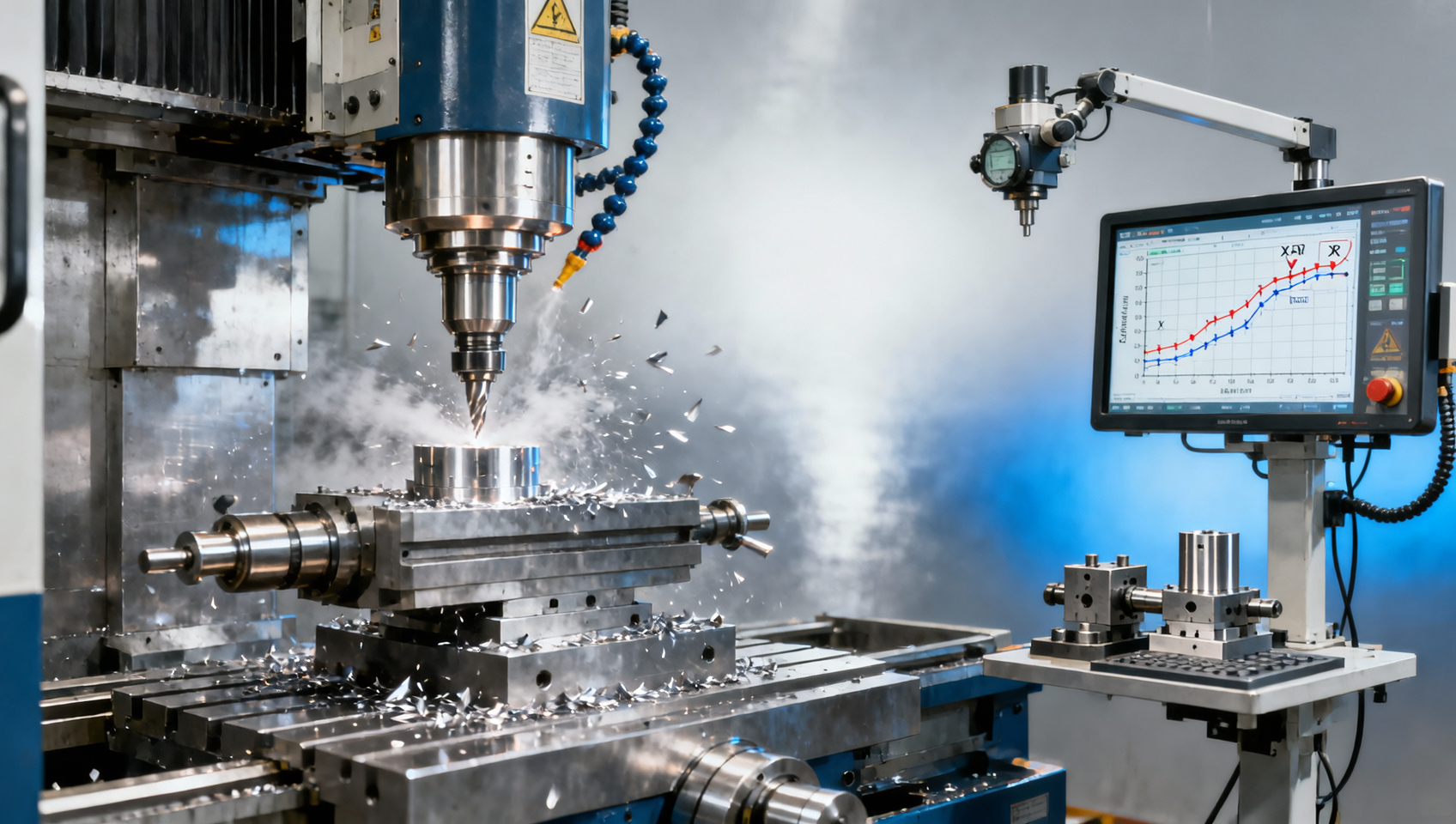
CNC manufacturing supplier: What audit evidence actually proves process control?
When evaluating a CNC manufacturing supplier—whether for aerospace, medical devices, energy equipment, or electronics—you need more than certifications: you need audit evidence that proves real process control. From high-precision CNC manufacturing and multi-axis CNC manufacturing to cost-effective, low-maintenance, and energy-saving CNC manufacturing solutions, verifiable documentation of capability matters. This includes traceable SPC data, first-article inspection reports, tooling validation records, and automated production line performance logs. Whether you're a procurement professional sourcing a CNC manufacturing wholesaler, an engineer validating quick-setup CNC manufacturing systems, or a decision-maker selecting a CNC manufacturing exporter, understanding what evidence actually demonstrates control separates compliant suppliers from true partners.
Short answer: Certifications don’t prove control — live, contextual, time-stamped process data does
If you’re auditing a CNC manufacturing supplier, your goal isn’t to check boxes—it’s to confirm that their processes consistently deliver parts within specification, shift after shift, lot after lot. ISO 9001 or AS9100 certificates tell you they *say* they have a system. But audit evidence that proves actual process control must show:
- What was measured (e.g., diameter, surface finish, positional tolerance on a 5-axis machined turbine blade),
- When and how often (e.g., every 15 minutes during high-volume run, with calibrated CMM),
- Who performed it and with what equipment (traceable operator ID + calibrated gage ID),
- How the data was used to act (e.g., SPC chart triggered an automatic tool offset adjustment at X̄ = 0.012 mm, preventing scrap).
This is the difference between “paper compliance” and operational reliability—especially critical when your part goes into flight-critical assemblies, implantable devices, or nuclear-grade components.
4 types of audit evidence that actually prove CNC process control (and why 3 common ones fall short)
Not all documentation carries equal weight. Below are the evidence categories ranked by predictive power—what they reveal about real-time stability, responsiveness, and repeatability:
✅ Tier 1: Time-synchronized SPC charts with documented reaction protocols
Look for control charts (X̄–R or I-MR) covering at least 25 consecutive subgroups, plotted from in-process measurements—not just final inspection. Crucially, each out-of-control point must be paired with a dated, signed “reaction log”: e.g., “Tool wear detected at subgroup #18 → replaced insert #T42-B; verified via post-change runout check.” Without this linkage, SPC is just decoration.
✅ Tier 2: First-article inspection (FAI) reports tied to specific machine, program, and setup
A valid FAI isn’t just a checklist. It must reference the exact CNC program revision (e.g., “MILL-7822_v3.1”), machine serial number (e.g., “DMG MORI NHX-6300 #A8821”), and fixture ID (e.g., “Modular Vise Set #FV-942”). Bonus credibility: embedded photos showing datum alignment and measurement setup. This proves the supplier can replicate the process—not just pass one-off checks.
✅ Tier 3: Tool life tracking with failure-mode correlation
Top-tier CNC suppliers log tool usage per pocket (not just per tool ID) and correlate failures to measurable outputs: e.g., “Insert #C3 in Pocket 2 showed 12% increase in Ra after 47 min → confirmed via surface profilometer; adjusted feed rate by -8% in next lot.” If their tooling logs only say “replaced at 60 min,” they’re guessing—not controlling.
❌ Why these 3 common documents *don’t* prove control (on their own)
- ISO/AS certification certificates: Show policy existence—not execution. No insight into whether SPC is run daily or once per quarter.
- Final inspection reports: Reveal outcome, not process behavior. A “pass” report hides whether variation was trending upward before final sampling.
- Equipment calibration certificates: Confirm accuracy of tools—not whether those tools are used correctly, frequently enough, or with traceable results.
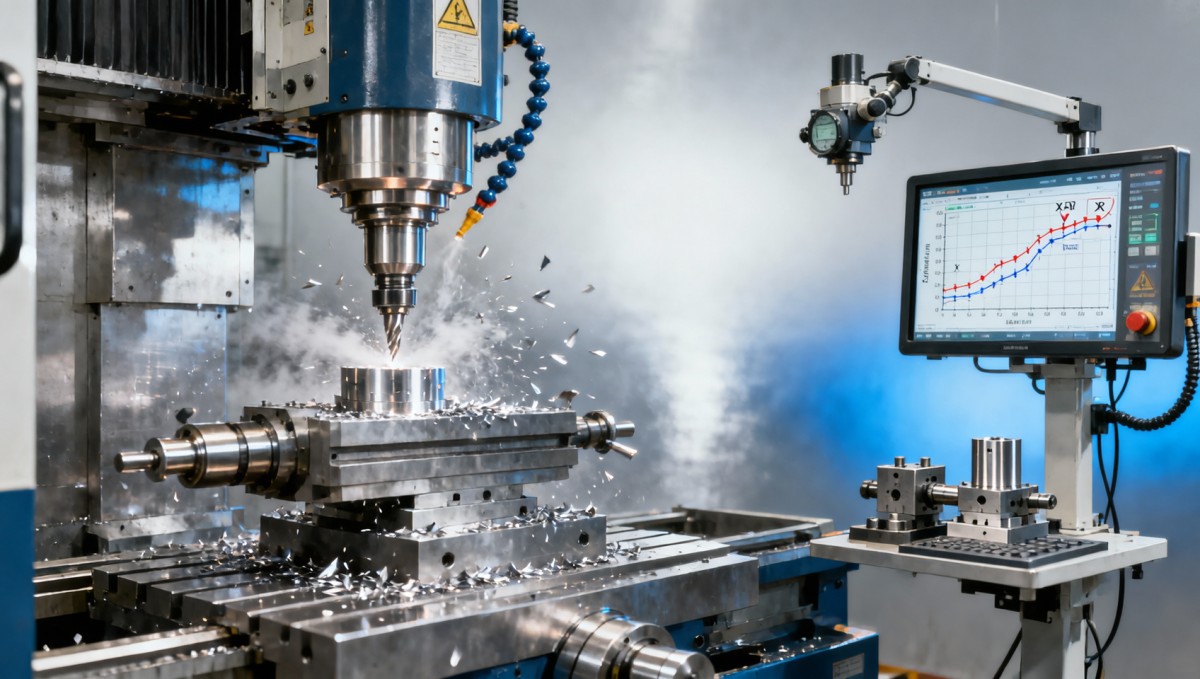
What your role determines which evidence to prioritize
Your job function changes where to focus—not what “good evidence” is, but what’s *actionable for your decisions*:
- Procurement professionals: Prioritize FAI traceability and tool-life discipline. These directly impact delivery consistency, rework risk, and total cost of ownership. Ask: “Can you share the FAI for the last three lots of Part #X-882—and show the corresponding SPC charts for the key diameter?”
- Engineers & operators: Drill into SPC reaction logs and G-code version control. You need confidence that the process won’t drift mid-run—and that program updates are validated, not just uploaded. Request sample SPC alerts + response timestamps from the last 30 days.
- Decision-makers (VPs, plant managers): Evaluate evidence integration: Are SPC alarms feeding MES dashboards? Is FAI data auto-linked to ERP work orders? Fragmented systems signal siloed control—real process control lives in connected, auditable workflows.
Red flags: When audit evidence looks convincing—but doesn’t prove control
Watch for these subtle inconsistencies during supplier evaluation:
- “Perfect” SPC charts with zero out-of-control points over 6 months → Likely retrospective editing or infrequent sampling.
- FAI reports stamped “approved” but missing measurement uncertainty values → Suggests gage R&R wasn’t performed—or failed, and was omitted.
- Tool logs showing identical life across all machines/part numbers → Indicates generic scheduling, not adaptive, part-specific control.
- SPC data pulled only from CMM—not in-machine probes or on-line sensors → Misses real-time thermal drift, chatter, or fixturing shift occurring *during* machining.
Bottom line: Process control isn’t proven by paperwork—it’s proven by patterns, responses, and traceability
A certified CNC manufacturing supplier may meet baseline requirements—but only evidence that shows *how variation is monitored, interpreted, and corrected in real time* confirms true process control. For aerospace buyers, that means fewer non-conformance reports and faster PPAP sign-offs. For medical device engineers, it means tighter lot-to-lot consistency for sterilizable components. For procurement leaders, it means predictable lead times and lower total cost of quality.
So before signing a contract or approving a new supplier: Don’t ask “Do you have ISO?” Ask instead: “Show me the last three SPC reactions for your most critical dimension—and walk me through how the correction was verified and sustained.” That conversation reveals more than any certificate ever could.
NEXT ARTICLE
Recommended for You
 Heavy-duty Machining Center for mold making: Why coolant filtration standards evolve faster than OEM manualsMachine Tool Industry Editorial Team
 Quick-change Fixture Design for CNC turning: Why clamping force consistency drops after 200 cyclesCNC Machining Technology Center
 5 Axis Machining for impeller manufacturing: Why toolpath smoothing affects surface fatigue lifeCNC Machining Technology Center
 Lean Production Process implementation: Where value stream mapping fails to expose hidden machine downtimeManufacturing Market Research Center
 Modular Tooling System for flexible manufacturing: Why interface repeatability degrades faster than expectedMachine Tool Industry Editorial Team
 Industrial Automation control system for CNC machines: When cybersecurity updates disrupt scheduled maintenanceMachine Tool Industry Editorial Team



Aris Katos
Future of Carbide Coatings
15+ years in precision manufacturing systems. Specialized in high-speed milling and aerospace grade alloy processing.
▶
CNC manufacturing supplier: What audit evidence actually proves process control?Manufacturing Market Research Center▶
What makes a CNC manufacturing wholesaler truly reliable for long-term supply?Manufacturing Market Research Center▶
Metal Machining Capacity Planning Gets Harder With Short RunsManufacturing Market Research Center▶
CNC production capacity looks strong, but delivery stays weakManufacturing Market Research Center▶
Guobang TCM Decoction Pieces Phase II Project Begins Construction: Boosting Standardized Production for Global MarketsManufacturing Market Research Center
Mastering 5-Axis Workholding Strategies
Join our technical panel on Nov 15th to learn about reducing vibrations in thin-wall components.

Providing you with integrated sanding solutions
Before-sales and after-sales services
Comprehensive technical support