• Global CNC market projected to reach $128B by 2028 • New EU trade regulations for precision tooling components • Aerospace deman
NYSE: CNC +1.2%LME: STEEL -0.4%

How to Identify a Reliable CNC Manufacturing Manufacturer
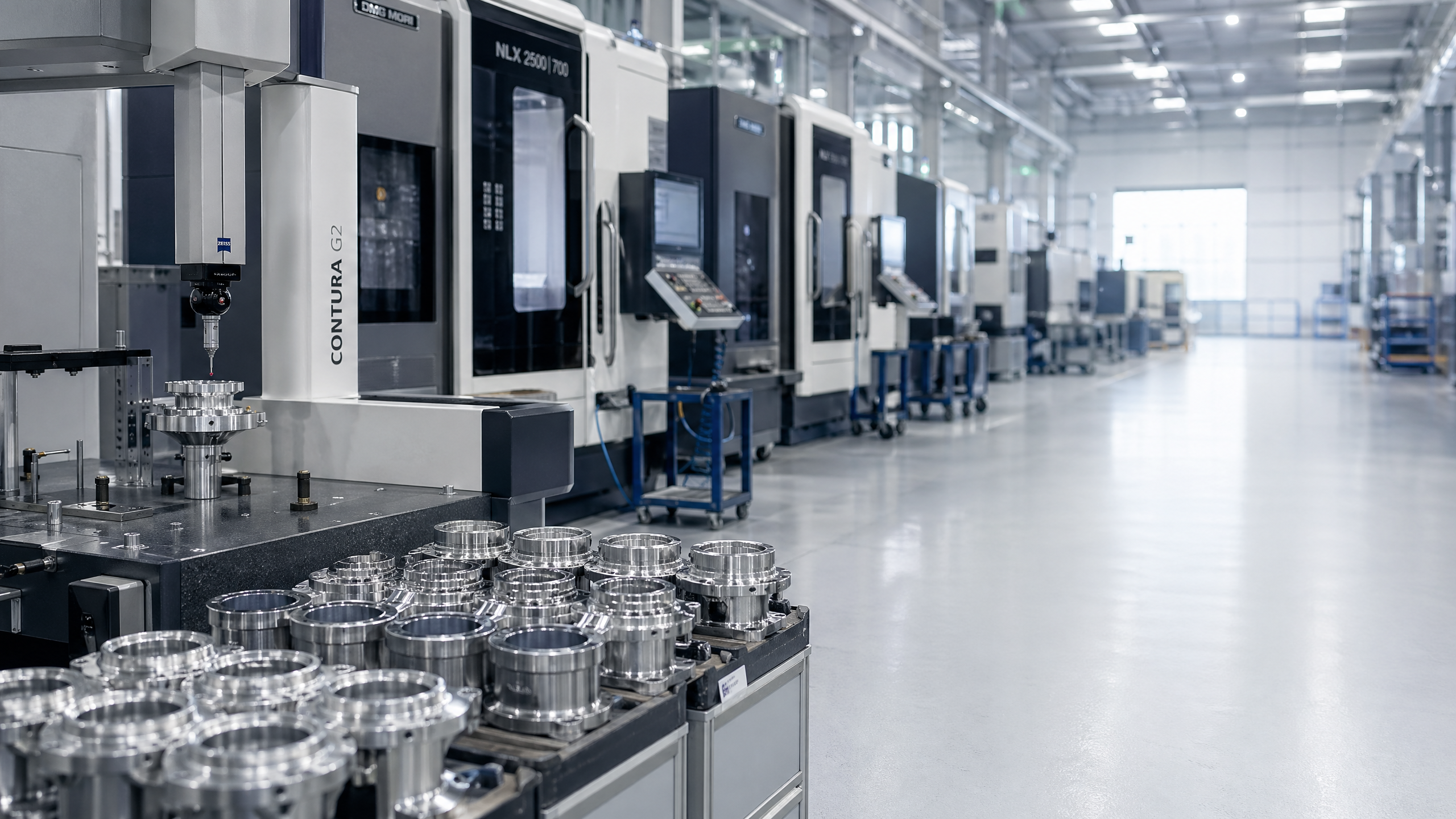
Finding a reliable CNC manufacturing manufacturer is critical for buyers seeking high precision CNC manufacturing, cost-effective production, and long-term performance. From aerospace and automotive to electronics and energy equipment, the right CNC manufacturing supplier or machine tool factory can improve quality, delivery speed, and operational efficiency. This guide explains how to evaluate precision CNC manufacturing capabilities, automation strength, and global sourcing reliability.
For researchers, operators, procurement teams, and commercial evaluators, the challenge is rarely about finding a supplier list. The real issue is identifying which CNC manufacturing manufacturer can repeatedly deliver tolerances, maintain process stability, communicate clearly, and support scale-up without creating hidden cost or quality risk.
In global precision manufacturing, lead time, traceability, machine utilization, tooling strategy, and after-sales support often matter as much as quoted unit price. A supplier that looks competitive at the RFQ stage may become expensive later if scrap rates rise above 3%, response times exceed 48 hours, or process capability cannot support batch consistency.
Define What “Reliable” Means in CNC Manufacturing
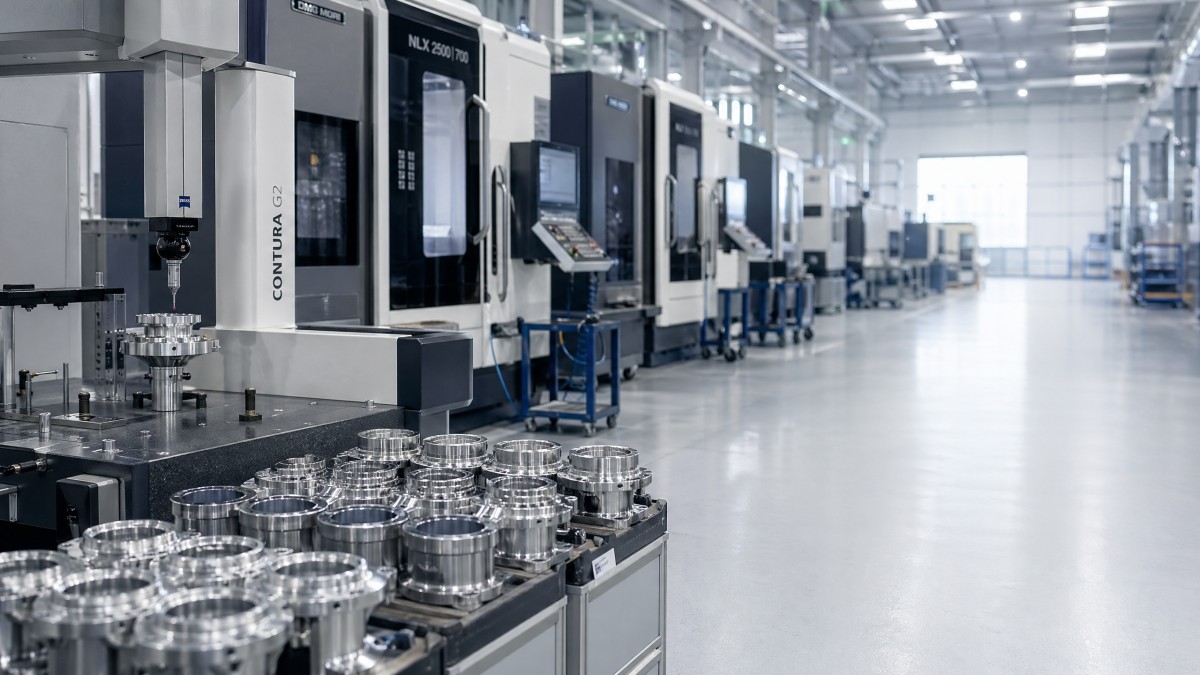
A reliable CNC manufacturing manufacturer is not simply a factory with modern machines. Reliability means the supplier can meet technical drawings, maintain dimensional consistency across 10 pieces or 10,000 pieces, and keep delivery performance within agreed windows such as 2–4 weeks for prototypes or 4–8 weeks for stable production orders.
For procurement personnel, reliability also includes commercial discipline. This covers quotation clarity, Incoterms understanding, change control, packaging standards, and responsiveness during engineering revisions. A strong supplier should be able to explain how material cost, machining hours, tooling wear, setup time, and inspection scope affect price.
For machine users and operators, reliability is visible in process execution. Typical signals include stable spindle performance, clear workholding plans, repeatable offset management, and documented inspection checkpoints. If a factory cannot explain how it controls burrs, surface finish, thermal deformation, or tool life, that is an early warning sign.
For business evaluators, reliability should be measured across four areas: technical capability, operational maturity, supply chain resilience, and service support. A supplier may be excellent at 3-axis machining but weak in multi-axis parts, or strong in prototypes but unable to support monthly demand above 2,000 units.
Core reliability indicators to check first
- Dimensional control capability, such as maintaining common tolerances of ±0.01 mm to ±0.05 mm depending on part type.
- On-time delivery performance across the last 3–6 months, especially for repeat orders and engineering changes.
- Inspection coverage, including first article inspection, in-process checks, and final outgoing quality control.
- Material traceability from raw stock to finished parts, particularly for aerospace, medical-adjacent, and energy equipment projects.
- Communication speed, ideally with technical feedback provided within 24–48 hours after drawing review.
The table below helps separate surface-level claims from practical evaluation points when screening a CNC manufacturing manufacturer.
If a factory can answer these questions with documented procedures rather than sales language, it is usually a stronger candidate. Reliable CNC manufacturing is built on repeatable systems, not only advanced equipment or low-cost pricing.
Assess Technical Capability Beyond the Machine List
Many buyers start with the machine list: CNC lathes, vertical machining centers, horizontal machining centers, 5-axis machines, grinders, and CMM equipment. That is useful, but machine quantity alone does not guarantee capability. The more important question is whether the manufacturer has experience producing your specific geometry, material grade, finish requirement, and batch volume.
A reliable CNC manufacturing manufacturer should be able to discuss practical constraints such as wall thickness, deep cavity accessibility, concentricity control, and fixturing strategy. For example, machining an aluminum housing with ±0.02 mm positional tolerance requires a very different process plan than producing a hardened steel shaft with Ra 0.8 surface finish.
Technical capability also includes material handling. Common projects involve aluminum, stainless steel, carbon steel, brass, copper, titanium, and engineering plastics. Each material behaves differently in cutting speed, chip evacuation, tool wear, and deformation. A qualified manufacturer should explain how it adapts feeds, speeds, coolant use, and inspection frequency for each category.
Do not overlook secondary processes. Deburring, heat treatment coordination, anodizing, plating, laser marking, and assembly can add 20%–40% to total project complexity. A supplier that manages these steps under controlled workflows often reduces logistics friction and quality variation compared with a fragmented multi-vendor route.
Questions that reveal real machining depth
- What is the largest and smallest part size routinely produced in this workshop?
- What tolerance range is typical for turning, milling, and multi-axis machining on comparable parts?
- How are fixtures designed for thin-wall, long-shaft, or complex freeform parts?
- Which dimensions are checked 100% and which are sampled by lot?
- How is process capability managed when monthly volume increases from 50 pieces to 5,000 pieces?
Typical capability ranges buyers often compare
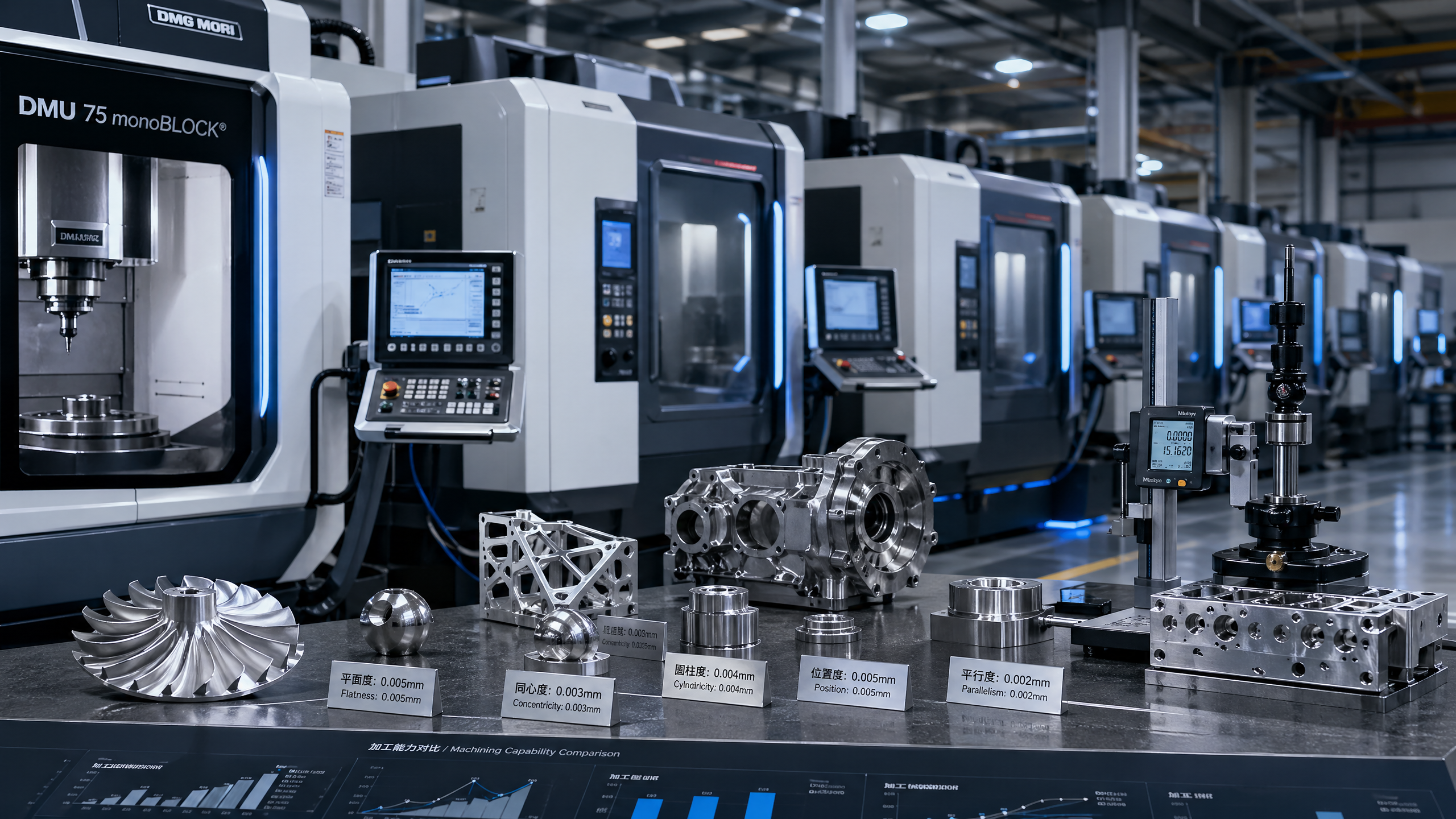
The ranges below are not universal standards, but they are useful reference points when discussing feasibility with a CNC manufacturing supplier.
A manufacturer that discusses these ranges transparently, and relates them to your drawings and application, is usually better prepared than one that simply says “no problem” to every request. Technical honesty is often a better predictor of project success than broad promises.
Review Quality Control, Documentation, and Process Stability
Quality in CNC manufacturing should be reviewed as a process, not only as a final inspection event. A reliable manufacturer controls incoming material, setup approval, tool offset verification, in-process measurement, final inspection, and shipment release. If one of these checkpoints is weak, even a capable machine shop can produce unstable results.
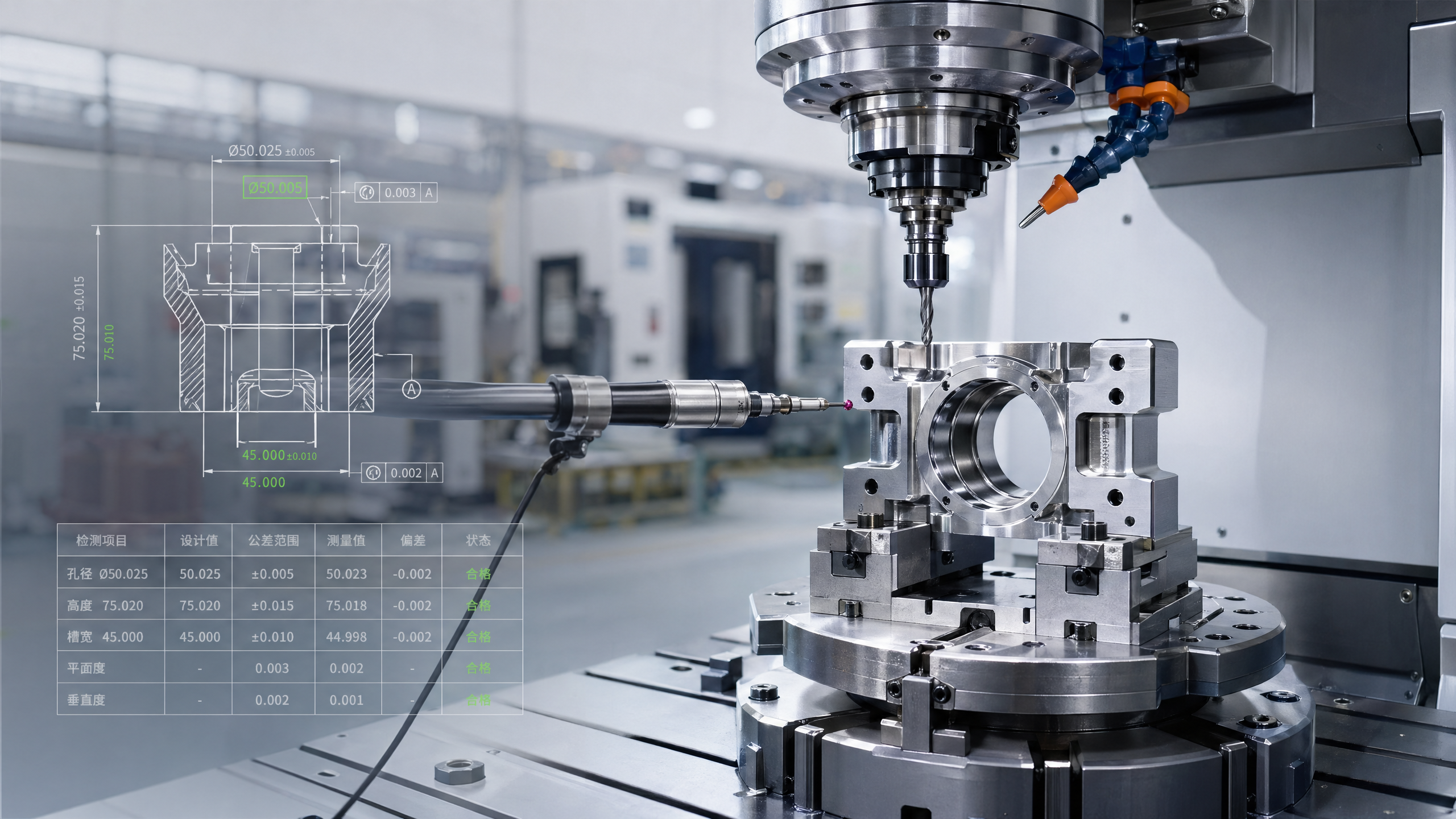
Ask how the factory handles first article inspection. For new parts, the first 1–5 pieces should verify dimensions, surface finish, burr condition, and critical functional features before full batch release. This is especially important for aerospace brackets, automotive shafts, electronic housings, and energy equipment connectors where downstream assembly errors are costly.
Documentation matters because it supports traceability and repeatability. A mature CNC manufacturing manufacturer should be able to provide material certificates when required, inspection records for key dimensions, drawing revision control, and nonconformance handling procedures. Without revision control, factories can easily run an outdated file, causing avoidable scrap or field failure.
Process stability is equally important. A supplier may pass one sample run yet struggle during volume production if tool wear, fixture repeatability, or operator variation are not managed. Buyers should ask what happens after every 50, 100, or 500 parts: Are offsets checked? Are tools replaced by cycle count? Are critical dimensions monitored by sample frequency?
A practical quality review checklist
- Incoming material verification against drawing and purchase order requirements.
- Setup sign-off before batch production starts.
- Defined sampling frequency for critical, major, and cosmetic dimensions.
- Control method for rework, segregation, and concession approval if nonconformance occurs.
- Packaging inspection to prevent transit damage for thin-wall or high-finish parts.
The following table shows how buyers can compare quality control maturity between suppliers during qualification.
In many sourcing projects, this quality discipline is what separates a low-risk manufacturing partner from a short-term machining vendor. Good documentation reduces dispute cost, shortens approval cycles, and supports smoother repeat orders.
Evaluate Capacity, Automation, and Supply Chain Reliability
A reliable CNC manufacturing manufacturer must not only make accurate parts, but also deliver them consistently when demand changes. Capacity should be reviewed in terms of machine count, shift structure, setup flexibility, fixture readiness, and operator depth. A factory with 20 machines on paper may still bottleneck if only 3 are suitable for your material or part size.
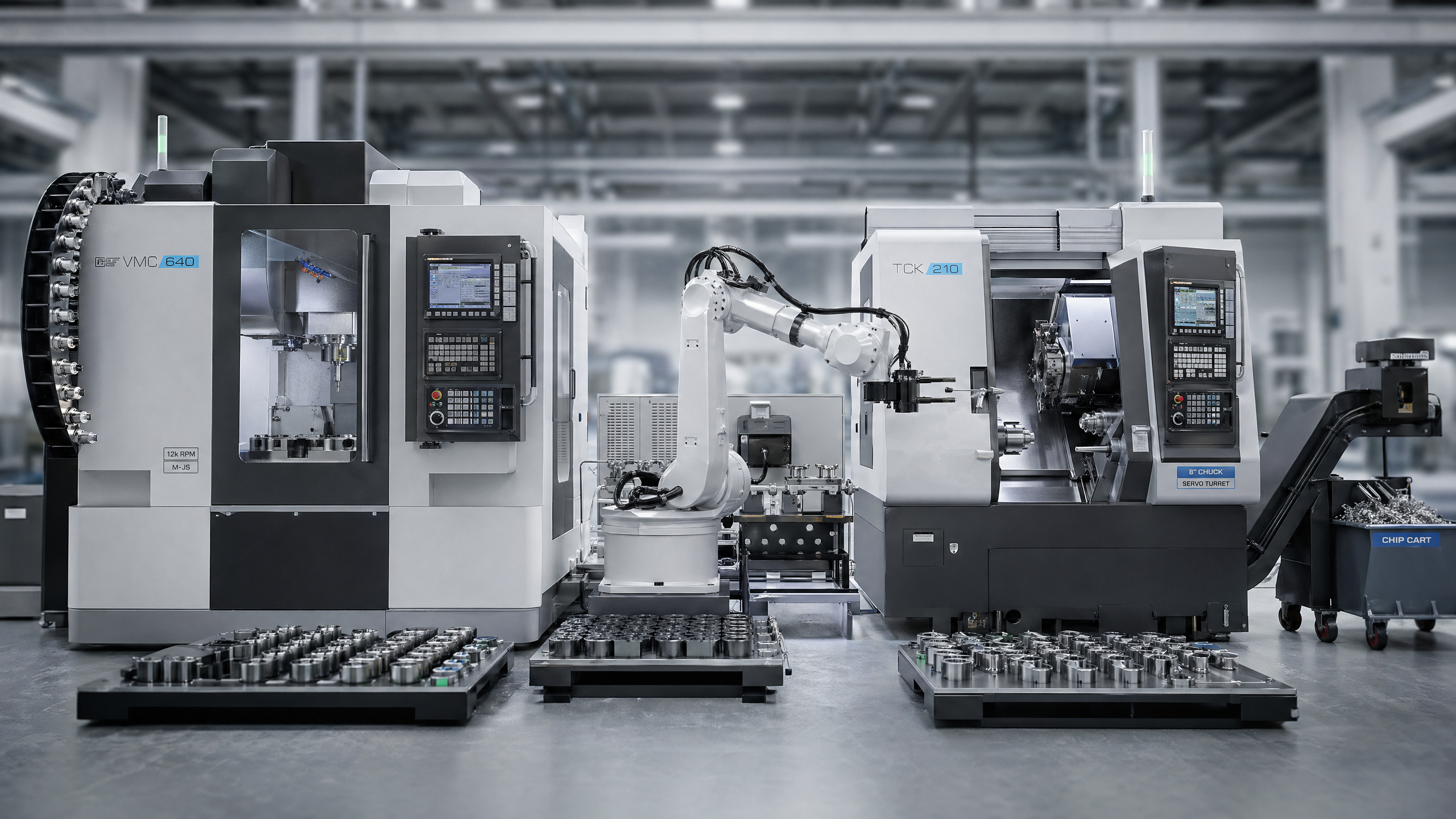
Automation is another strong indicator. Automated tool changers, pallet systems, bar feeders, robot loading, and digital scheduling can improve repeatability and reduce labor dependency. In medium-to-high volume production, automation often lowers changeover loss and stabilizes output across 2 or 3 shifts, especially for standard shaft, disc, and housing components.
Supply chain reliability should also be part of the evaluation. Ask where raw materials, cutting tools, fixtures, and outsourced finishing come from. If material replenishment takes 3–5 weeks and there is no safety stock policy for common grades, even a strong workshop can miss deadlines. The same applies to heat treatment or coating partners with unstable turnaround.
For international sourcing, logistics planning matters. Reliable suppliers can usually define export packaging methods, document lead time by transport mode, and estimate customs-related buffers. For example, air shipment may support urgent prototypes in 3–7 days, while sea freight for batch orders may require several additional weeks depending on destination and consolidation schedules.
Signs of scalable manufacturing readiness
- Capacity planning is based on machine hours, not only monthly sales targets.
- Critical tooling and fixtures are documented and reproducible for repeat orders.
- There is a backup plan for key processes such as turning, milling, grinding, or coating.
- Production status can be updated at agreed intervals, such as every 3 days or every week.
- Engineering change management is integrated with purchasing and shop-floor execution.
Common sourcing risks that affect delivery
Even technically capable CNC manufacturing suppliers can fail delivery if these risks are ignored:
- Single-source raw material dependence for alloys with long replenishment cycles.
- Outsourced finishing without stable scheduling or incoming inspection after return.
- Overloaded production plans during quarter-end or export rush periods.
- Weak packaging for polished, threaded, or high-precision mating surfaces.
- Limited English communication in technical clarification for cross-border projects.
A supplier with solid automation and planning discipline is often better equipped to support both prototype and batch production. This becomes especially important when annual demand rises, when product families expand, or when a buyer needs dual-source resilience across different regions.
Use a Structured Supplier Qualification Process Before You Commit
The safest way to identify a reliable CNC manufacturing manufacturer is to use a staged qualification process. This reduces decision bias and creates comparable data across suppliers. In most B2B sourcing programs, the process can be divided into 4 stages: initial screening, technical review, sample validation, and production approval.
At the screening stage, review capability statements, process coverage, target industries, and communication speed. During technical review, send drawings, tolerance notes, material requirements, annual volume forecasts, and packaging expectations. Compare how each supplier responds: strong manufacturers ask clarifying questions instead of quoting blindly.
Sample validation should test more than dimensions. Evaluate cosmetic quality, burr control, assembly fit, marking, packaging, and inspection reporting. If possible, test 2 or 3 suppliers on the same part family. Cost comparisons are more meaningful when process assumptions, finishing scope, and acceptance criteria are aligned.
Before full approval, confirm commercial and operational details: payment terms, MOQ, lead time commitment, revision handling, spare capacity, and complaint response timing. A practical benchmark is to request corrective-action feedback within 24–72 hours for urgent quality issues and shipment updates at predefined milestones.
Recommended 4-stage qualification flow
This structured method helps buyers avoid one of the most common sourcing mistakes: choosing the lowest quote before verifying process fit. In precision CNC manufacturing, the cheapest quote can become the highest total cost if approval cycles, rework, and delivery instability are not controlled.
FAQ for CNC supplier selection
How many suppliers should be compared in a serious RFQ?
For most industrial parts, 3 to 5 suppliers is a practical range. Fewer than 3 limits comparison quality, while more than 5 often slows the process without improving decision accuracy. The key is to compare suppliers with similar technical fit, not random quote volume.
What lead time is reasonable for sample parts?
For common materials and moderate complexity, sample lead time often falls between 7 and 15 working days. Complex multi-axis parts, special materials, or outsourced finishing may extend this to 3–4 weeks. Fast quoting is helpful, but realistic planning is more valuable than rushed commitments.
Should buyers prioritize local or overseas CNC manufacturing manufacturers?
That depends on volume, urgency, technical risk, and total landed cost. Local suppliers may reduce communication and logistics time, while overseas manufacturers may offer stronger scale or broader process ecosystems. The right choice is the one that balances quality, lead time, and supply continuity for your part family.
Choosing a reliable CNC manufacturing manufacturer requires more than checking equipment photos or comparing prices. Buyers should verify technical capability, process control, documentation discipline, automation readiness, and delivery resilience through a structured qualification process.
When the right supplier is selected, the benefits are measurable: fewer engineering delays, lower scrap exposure, more predictable lead times, and stronger support for both prototype development and stable production. This is especially important for industries that depend on precision components, repeatability, and international supply coordination.
If you are evaluating CNC manufacturing suppliers, planning a new sourcing project, or comparing machine tool production partners across regions, now is the right time to build a more disciplined assessment framework. Contact us to discuss your application, get a tailored sourcing checklist, or explore more CNC manufacturing solutions for your production goals.
PREVIOUS ARTICLE
Recommended for You
 How to Choose a Space-Saving CNC Manufacturing SetupCNC Machining Technology Center
![]() What to Check Before Using a CNC Manufacturing WholesalerGlobal Machine Tool Trade Research Center
What to Check Before Using a CNC Manufacturing WholesalerGlobal Machine Tool Trade Research Center Why Precision CNC Manufacturing Fails Tolerance GoalsCNC Machining Technology Center
 Is CNC Manufacturing for Energy Equipment Worth the CostManufacturing Market Research Center
![]() How Low Maintenance CNC Manufacturing Cuts DowntimeMachine Tool Industry Editorial Team
How Low Maintenance CNC Manufacturing Cuts DowntimeMachine Tool Industry Editorial Team How to Compare One CNC Manufacturing Factory to AnotherManufacturing Market Research Center


Aris Katos
Future of Carbide Coatings
15+ years in precision manufacturing systems. Specialized in high-speed milling and aerospace grade alloy processing.
▶
How to Compare One CNC Manufacturing Factory to AnotherManufacturing Market Research Center▶
How to Identify a Reliable CNC Manufacturing ManufacturerManufacturing Market Research Center▶
What Makes a CNC Manufacturing Supplier Easy to Work WithManufacturing Market Research Center▶
How to Audit a Machine Tool Factory Before OrderingManufacturing Market Research Center▶
Hengli Petrochemical Subsidiary Added to U.S. SDN ListManufacturing Market Research Center
Mastering 5-Axis Workholding Strategies
Join our technical panel on Nov 15th to learn about reducing vibrations in thin-wall components.

Providing you with integrated sanding solutions
Before-sales and after-sales services
Comprehensive technical support