• Global CNC market projected to reach $128B by 2028 • New EU trade regulations for precision tooling components • Aerospace deman
NYSE: CNC +1.2%LME: STEEL -0.4%

CNC Milling Feed Rate Choices That Ruin Corner Accuracy
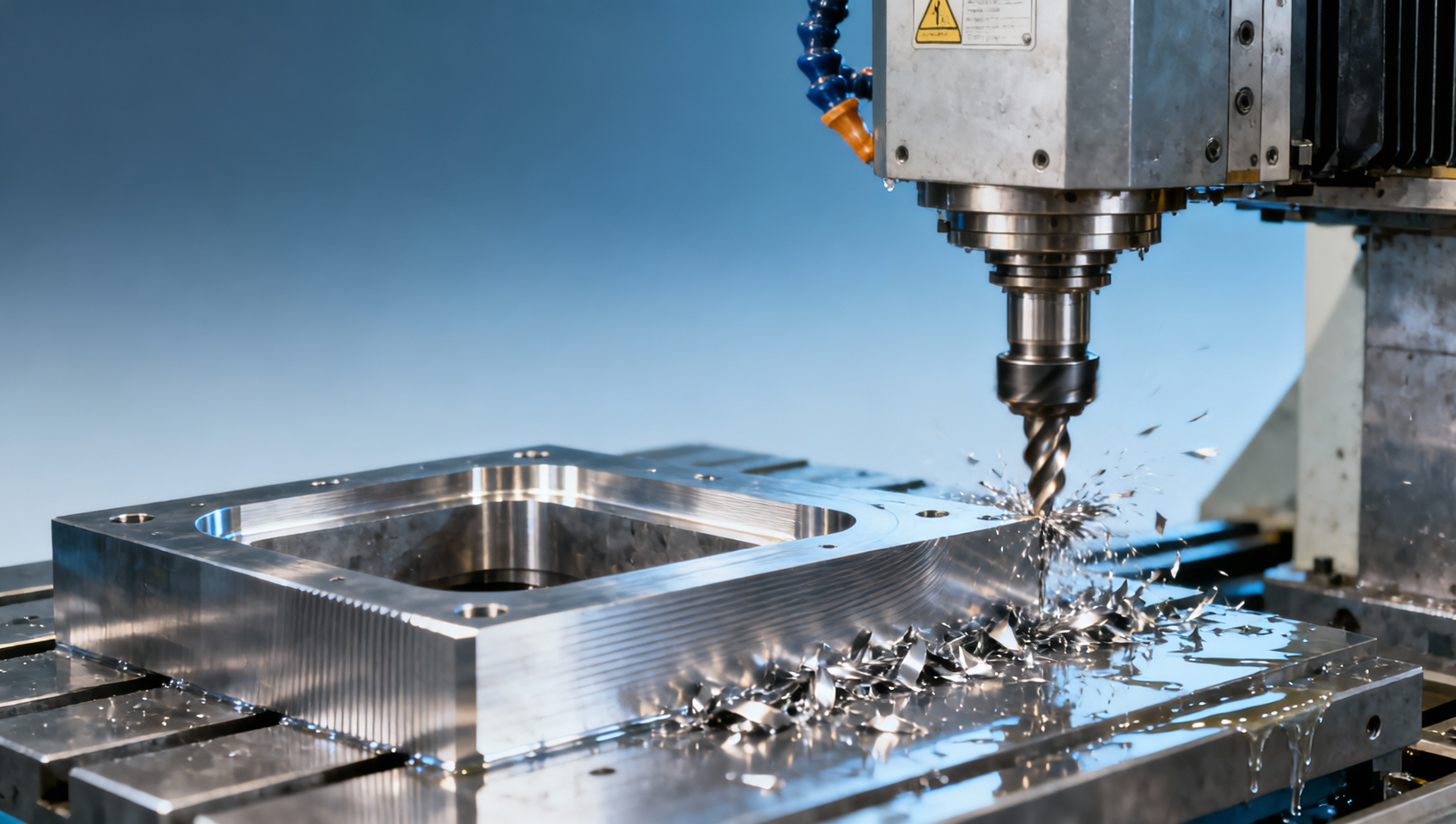
In CNC milling, the wrong feed rate can destroy corner accuracy, increase tool load, and undermine part quality across metal machining and CNC metalworking applications. For engineers, operators, buyers, and manufacturing leaders in the CNC industrial and Global Manufacturing sectors, understanding how feed choices affect precision, surface finish, and production process stability is essential to improving automated production and reducing costly errors.
Why feed rate becomes a corner accuracy problem in CNC milling
Many shops treat feed rate as a simple productivity lever. In reality, corner accuracy in CNC milling depends on how machine dynamics, tool engagement, part geometry, and control settings interact over very short distances. A feed rate that works well on a straight wall may become destructive when the toolpath enters a 90-degree corner, a tight radius, or a small internal pocket.
The main reason is effective chip load growth during directional change. As the cutter approaches a corner, radial engagement often increases from a light cut into a heavier arc of contact. If programmed feed remains unchanged, tool pressure rises, spindle load can spike within milliseconds, and the machine may either overshoot or slow unpredictably. On parts that require ±0.01 mm to ±0.05 mm corner tolerance, that instability quickly becomes visible.
This issue matters across automotive, aerospace, electronics, energy equipment, and general precision manufacturing. In global CNC machining environments, even a small corner error can trigger secondary finishing, fixture rework, or inspection rejection. For buyers and managers, the cost is not only scrap. It also includes cycle time loss, unstable throughput, and lower confidence in automated production planning.
Operators usually see the symptoms first: witness marks in corners, chatter at entry and exit, burrs on thin walls, corner rounding, or tool wear concentrated at one flute sector. Decision-makers tend to see the downstream effects 2–4 weeks later in quality reports, customer complaints, and missed delivery schedules. That gap is why feed rate strategy should be reviewed as a process variable, not just a line in the CNC program.
What actually changes when the tool enters a corner
Three things often change at once. First, the cutter engagement angle increases. Second, axis acceleration demand rises because the machine is changing direction. Third, chip evacuation becomes less consistent, especially in deeper pockets or with sticky alloys. If the programmed feed is too aggressive for any one of these three conditions, corner quality drops even when the machine is otherwise rigid and well maintained.
In practical terms, a machine may hold a stable feed on long linear paths but fail to maintain commanded velocity in small-radius regions. Controllers compensate differently depending on look-ahead, jerk limits, and smoothing settings. A high-end machining center with strong contour control can tolerate more aggressive settings than an older 3-axis platform, but neither machine can ignore excessive feed in a confined toolpath.
- Higher-than-needed feed rate increases cutting force at the exact location where the machine is least able to maintain ideal path accuracy.
- Insufficient feed reduction in corners often causes tool deflection, especially with small-diameter end mills, long overhangs, and thin-walled features.
- Excessively conservative feed can also hurt quality by promoting rubbing, heat buildup, and built-up edge in some stainless steels and aluminum alloys.
Which feed rate choices most often ruin corner precision
The most common mistake is applying one constant feed value to the entire contour. This approach may look simple in programming, but it ignores localized engagement changes. In roughing and semi-finishing, especially on internal corners smaller than 2× tool radius influence, uniform feed can create heavy force peaks. In finishing, it often leads to corner washout or dimensional drift that inspection catches at the final stage.
Another frequent problem is selecting feed from spindle power alone. Power matters, but it is not enough. A spindle with available horsepower does not guarantee contour accuracy. Servo response, machine damping, holder runout, and workholding stiffness are equally important. Procurement teams comparing machines should avoid judging corner performance by power and maximum rapid travel only; contour behavior under changing load is a more useful criterion.
A third mistake appears in CAM output when feed optimization is disabled or too generic. Some programs generate sharp internal moves without arc smoothing, corner slowdown, or engagement-based feed reduction. This is especially risky on small pockets, mold features, and components with multiple inside corners over a 50–200 mm machining area. The machine follows the code, but the code itself does not respect physical cutting conditions.
The table below summarizes several feed-related mistakes and the typical shop-floor consequences. It is useful for process engineers, line supervisors, and sourcing teams evaluating whether poor corner accuracy is caused by the machine, the toolpath, or the selected cutting parameters.
A useful takeaway is that bad corner accuracy is rarely caused by feed rate alone, but poor feed strategy is one of the fastest ways to trigger it. If the same part shows good straight-wall size control and poor corner control, feed behavior in directional changes should be audited before replacing tools or blaming fixture quality.
Four warning signs that feed is too aggressive
When the programmed feed is unsuitable, warning signs usually appear within the first 5–20 parts rather than after a full production run. Shops that monitor these early signals can prevent expensive lot-wide deviation.
- Corner witness lines become darker or rougher than the adjacent straight section.
- Tool wear concentrates near corner transitions instead of distributing evenly along the cutting edge.
- Machine load spikes during specific contour segments while average load still looks acceptable.
- Inspection shows repeated corner deviation with acceptable overall part size.
How to choose feed rates without sacrificing cycle time
A better approach is to separate straight-path productivity from corner-path stability. Instead of one universal feed number, use a feed strategy built around 3 zones: entry and exit, steady linear cutting, and corner transition. In many CNC metalworking programs, this zoning improves dimensional stability without a dramatic cycle-time penalty because the machine only slows where force and acceleration demand actually rise.
For process planning, start with chip load recommendations from the tool supplier, then reduce them according to machine rigidity, overhang, and workpiece support. As a practical shop rule, feed reduction in tight internal corners is often more important than reducing spindle speed. Slowing feed by a controlled percentage over a short toolpath segment usually protects accuracy better than lowering speed across the entire operation.
It is also important to distinguish roughing from finishing. Roughing may accept visible corner stock variation if enough finishing allowance remains. Finishing does not. On many precision parts, a finishing pass with stable stock allowance of about 0.1–0.3 mm per side behaves far more predictably than trying to finish directly from uneven rough stock. Buyers evaluating subcontractors should ask whether corner feed is managed separately in roughing and finishing programs.
The table below provides a practical decision framework. These are not universal feed values, because actual numbers depend on material, tool diameter, flute count, coating, coolant strategy, and machine condition. The value lies in understanding which variables should drive feed adjustment in high-accuracy corner milling.
For manufacturing leaders, this table highlights why quoting by machine type alone is risky. Two suppliers may both offer 3-axis or 5-axis milling, but their ability to hold corner quality under production feed conditions can differ greatly. Asking for process details often reveals the real capability.
A practical 4-step setup review
If a shop wants to improve corner accuracy without stopping production for a major process redesign, the following 4-step review is usually effective within 1–3 trial cycles.
- Separate roughing, semi-finishing, and finishing feeds rather than inheriting one number across all passes.
- Identify corner zones in CAM and apply engagement-based feed reduction only where radial contact rises.
- Check actual tool overhang, holder condition, and fixture support before reducing feed excessively.
- Measure 5–10 consecutive parts at the same corner locations to confirm repeatability, not just one acceptable sample.
When slower is not better
One common misconception is that reducing feed always improves corner accuracy. It does not. If feed falls below a healthy chip-forming threshold, the tool can rub instead of cut, especially in stainless steel, titanium alloys, and gummy aluminum grades. The result may be thermal growth, built-up edge, and surface tearing. Good corner control comes from controlled feed adaptation, not automatic feed reduction everywhere.
What buyers and decision-makers should evaluate before selecting a CNC milling supplier or machine
Corner accuracy is a process capability issue, so procurement should evaluate more than quoted tolerance. A supplier may advertise a tight tolerance range, but actual production consistency depends on toolpath control, setup discipline, machine condition, inspection method, and parameter management. For medium-volume and high-mix work, these factors can affect delivery reliability as much as machine size or spindle specification.
For machine procurement, decision-makers should ask how the control handles contouring in short-segment toolpaths, what look-ahead functions are available, and whether the machine maintains stable performance during continuous operation over 8–16 hour shifts. For subcontracting or production outsourcing, ask how corner feed is validated during process approval and what inspection points are checked on first-article and in-process samples.
In cross-border sourcing, this becomes even more important. Global manufacturing programs often involve different materials, different local tooling brands, and different operator habits. A supplier with clear process documentation can reduce trial-and-error during PPAP-like approval, pilot production, or engineering transfer. That transparency lowers the risk of hidden quality costs later.
The checklist below helps buyers compare CNC milling capability in a structured way. It is useful for RFQ reviews, supplier audits, and internal approval meetings where engineering, purchasing, and operations must align.
Five checks before approving a supplier or machine
- Confirm whether corner geometry is inspected separately from straight-wall dimensions, especially on parts with internal radii, pockets, and slot intersections.
- Ask whether the process uses feed optimization, smoothing, or high-speed contour functions rather than fixed feed on all segments.
- Review tooling policy, including holder type, overhang control, and replacement interval for finishing tools.
- Check whether pilot samples include 3–5 consecutive parts, not just one first-off part that may not represent stable production.
- Verify the expected lead time for process adjustment, sample revision, and mass-production release, which is often 7–15 days depending on complexity.
Relevant standards and process controls
Not every project requires formal certification, but buyers should still discuss process control in recognized industry terms. Drawings may reference ISO GPS tolerancing conventions, surface roughness requirements, GD&T interpretation, material traceability, or first-article inspection records. In regulated sectors such as aerospace or energy equipment, documentation depth tends to increase, and corner accuracy verification may become part of a broader process capability review.
For internal decision-making, it helps to group evaluation into 3 categories: machine and control capability, process engineering discipline, and inspection consistency. This makes vendor comparison more realistic than simply comparing quoted unit prices.
FAQ: common misunderstandings about CNC milling feed rate and corner quality
Does a higher feed rate always mean worse corner accuracy?
No. A higher feed rate on long, stable straight cuts may be completely acceptable if chip load, rigidity, and spindle speed are matched correctly. The real problem is uncontrolled feed through changing engagement zones. A well-optimized program can run aggressively on open paths and still protect corners by reducing feed only over short transitions. That is very different from saying high feed is always bad.
Can corner errors be fixed by slowing the spindle instead of changing feed?
Sometimes, but it is usually not the first lever to pull. Lower spindle speed changes surface speed and chip formation everywhere in the cut, while the problem may exist only in 5%–15% of the toolpath. If the issue appears only at corners, selective feed control is often the more precise solution. Spindle speed adjustments are more useful when heat, built-up edge, or coating failure is part of the root cause.
How can an operator tell whether the machine or the feed strategy is the main issue?
Start by comparing behavior across different parts and different corner geometries. If the same machine holds large-radius contours well but struggles on short, tight corners, feed strategy and path planning are likely major contributors. If errors appear on many contour types and worsen during long shifts, machine dynamics, backlash, thermal stability, or fixture rigidity may also be involved. A simple A/B trial with adjusted corner feed over 3–10 parts often reveals a lot.
What should a buyer ask when requesting quotations for precision milled parts?
Ask how the supplier manages internal corners, thin walls, and finishing allowance; whether they use separate roughing and finishing feeds; what sample lead time they need; and how they verify repeatability. Also ask whether the quoted price assumes standard tooling or custom tool investment. These details affect both part quality and total cost far more than many first-time buyers expect.
Why choose us for CNC process insight and sourcing support
We focus on the global CNC machining and precision manufacturing industry with attention to the issues that matter in real procurement and production: corner accuracy, process stability, machine capability, tooling compatibility, and delivery risk. Instead of treating feed rate as an isolated number, we help connect technical decisions to production outcomes across CNC industrial, metal machining, and automated production environments.
If you are comparing CNC milling suppliers, validating a new machining center, or troubleshooting corner inaccuracy in existing production, you can contact us for practical support around parameter confirmation, process review, supplier evaluation, sample planning, and quotation communication. We can also help structure discussions around material type, tolerance targets, expected batch size, and typical lead-time windows such as 1–2 weeks for sample preparation or 2–6 weeks for scaled production, depending on project complexity.
For buyers and engineering teams, useful consultation topics include 4 areas: feed strategy for corner-sensitive parts, machine and controller comparison, tooling and holder selection, and inspection checkpoints for first-article approval. For operators and production managers, we can help frame the key questions needed to reduce scrap, stabilize repeatability, and improve process transfer between factories or regions.
If you are preparing an RFQ or reviewing a current CNC milling problem, send the drawing requirements, material type, target tolerance, part quantity, and delivery expectations. That makes it possible to discuss suitable feed-related process options, realistic capability boundaries, sample support, and next-step quotation details with far less back-and-forth.
PREVIOUS ARTICLE
Recommended for You
 Global Manufacturing Lead Times Improve but Not EverywhereGlobal Machine Tool Trade Research Center
 Machine Tool Market Inventory Pressure Is Building AgainGlobal Machine Tool Trade Research Center
 Metal Lathe vs CNC Milling for Low Volume Round PartsCNC Machining Technology Center
 CNC Cutting Gas Choice Affects More Than Edge FinishCNC Machining Technology Center
 CNC Metalworking Shops Face New Pressure on TraceabilityManufacturing Policy Research Center
 Automated Lathe Cycle Time Gains Can Hide Quality LossesCNC Machining Technology Center




Aris Katos
Future of Carbide Coatings
15+ years in precision manufacturing systems. Specialized in high-speed milling and aerospace grade alloy processing.
▶
CNC Programming for Multi Axis Parts Where Errors BeginCNC Machining Technology Center▶
CNC Milling Feed Rate Choices That Ruin Corner AccuracyCNC Machining Technology Center▶
Metal machining costs keep rising. Where is the waste?CNC Machining Technology Center▶
Where CNC metalworking loses time between programming and cuttingCNC Machining Technology Center▶
CNC milling chatter is often a setup problem, not a spindle issueCNC Machining Technology Center
Mastering 5-Axis Workholding Strategies
Join our technical panel on Nov 15th to learn about reducing vibrations in thin-wall components.

Providing you with integrated sanding solutions
Before-sales and after-sales services
Comprehensive technical support