• Global CNC market projected to reach $128B by 2028 • New EU trade regulations for precision tooling components • Aerospace deman
NYSE: CNC +1.2%LME: STEEL -0.4%

CNC Programming for Multi Axis Parts Where Errors Begin
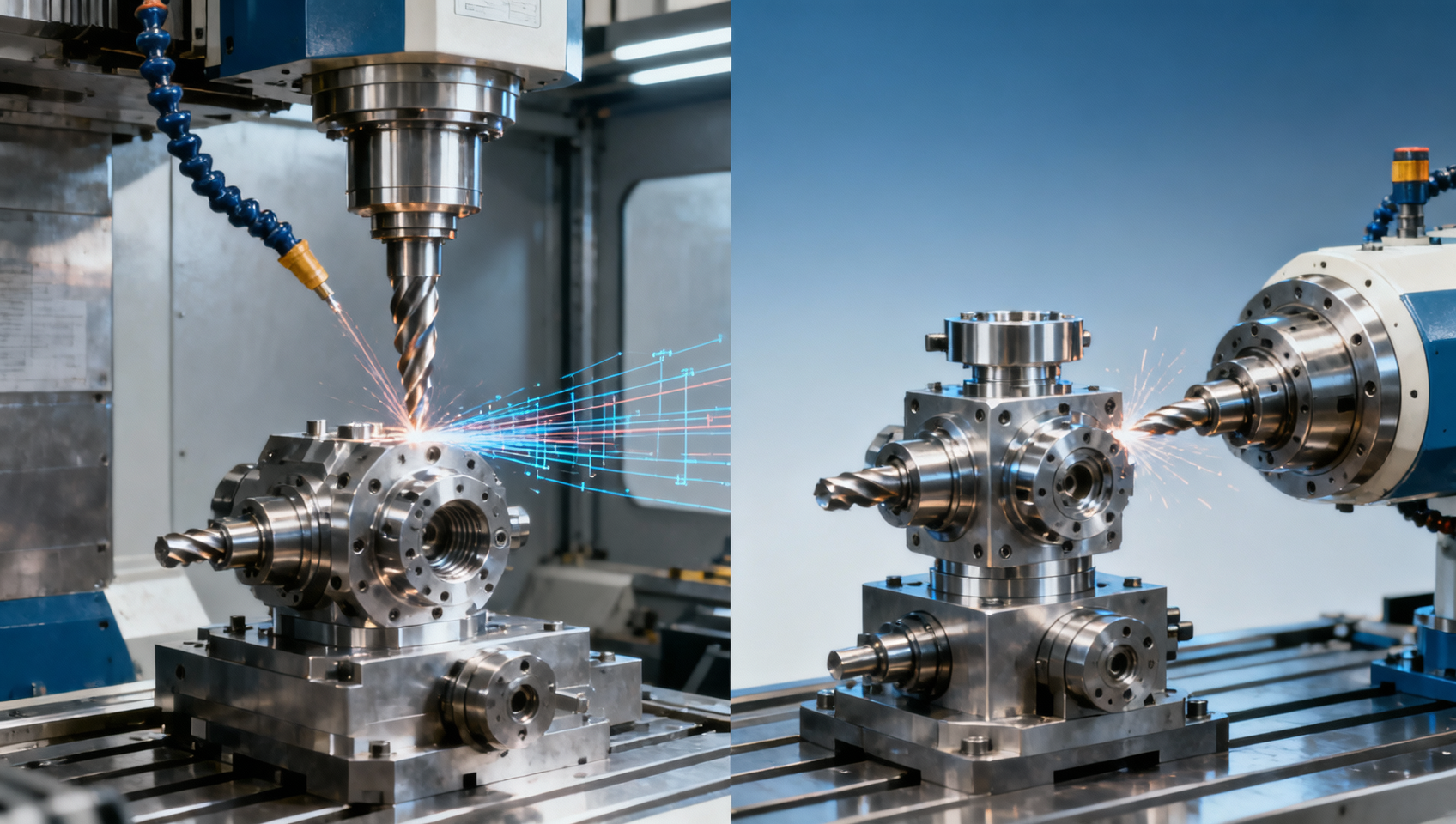
In CNC Programming for multi-axis parts, errors often begin long before the first cut—inside toolpaths, setups, and overlooked production process details. For professionals in metal machining, industrial CNC, and CNC milling, understanding these early risks is essential to improving CNC production quality, reducing waste, and supporting more reliable automated production in today’s Global Manufacturing environment.
Why do multi-axis CNC programming errors start so early?
In 4-axis and 5-axis machining, the visible defect on a finished part is often only the final symptom. The real problem usually starts upstream, during model preparation, datum planning, fixture design, post-processing, or cutting strategy selection. For operators, buyers, and production managers, this matters because a programming issue can quickly become a machine utilization problem, a scrap problem, and then a delivery problem.
Multi-axis parts are common in aerospace structures, turbine-related components, medical hardware, automotive prototypes, and complex energy equipment. These parts often include deep cavities, compound angles, undercuts, or tight blending surfaces. When one setup error shifts a work offset by even a small amount, the machine may still run smoothly for 20–40 minutes before the deviation becomes measurable, which makes early-stage prevention far more valuable than downstream correction.
In practical CNC programming, errors usually begin in 3 stages: digital definition, process planning, and machine execution. Digital definition covers CAD surface quality, tolerances, and stock assumptions. Process planning includes workholding, tool sequence, tool length control, and collision logic. Machine execution includes probing, offsets, spindle behavior, and thermal stability. If one stage is weak, the entire automated production chain becomes less predictable.
For global manufacturing teams, this is not only a shop-floor issue. It affects sourcing decisions, supplier qualification, production lead time, and cost control. A purchasing team comparing CNC machining vendors should therefore ask not only whether a supplier has 5-axis equipment, but also how that supplier prevents programming errors before setup release and first article inspection.
The most common early-stage error sources
- Incorrect datum strategy, especially when the program uses a model origin that does not match the actual fixture reference on the machine table.
- Toolpath selection that looks efficient in CAM software but creates poor tool contact, unstable chip load, or tool overreach in actual cutting.
- Post-processor mismatch, where rotary axis movement and machine kinematics behave differently from what the programmer expected.
- Fixture and clamp interference that is not fully simulated, especially in high-angle machining or long-reach finishing passes.
- Incomplete setup sheets, missing offset instructions, or unclear tool numbering during shift handover.
This is why advanced CNC production quality depends on more than software capability. It depends on coordination between programming, machining, inspection, and production planning. In complex part manufacturing, the earlier this coordination happens, the lower the risk of scrap, rework, and machine downtime.
Where do programming mistakes usually appear in the workflow?
A multi-axis machining workflow usually passes through 5 linked steps: part review, process planning, CAM programming, machine setup, and first article validation. Errors can appear in each step, but they do not carry equal cost. A geometry review issue found before programming may take 15–30 minutes to resolve. The same issue found after machining may lead to 1–2 full shifts of delay if the part is expensive or difficult to re-clamp.
For information researchers and enterprise decision-makers, mapping error points to workflow stages helps with supplier evaluation. For operators, it creates a practical checklist. For procurement teams, it reveals which vendors are likely to control risk effectively in low-volume, high-complexity manufacturing.
The table below summarizes common error points in multi-axis CNC programming, how they show up on the shop floor, and what teams should verify before release. This kind of review is especially useful when dealing with precision machine tools, automated production lines, or mixed-part batches.
A clear takeaway is that most CNC milling and multi-axis issues are process-linked rather than machine-linked. Even high-end equipment from strong manufacturing regions such as Germany, Japan, South Korea, or China cannot fully compensate for weak process control. That is why mature suppliers use workflow gates before releasing a program to production.
What should be reviewed before the first cut?
A 4-point release checklist
- Confirm that the CAD model, drawing revision, and stock definition are aligned across programming, setup, and inspection.
- Validate machine kinematics, post-processor behavior, and rotary axis limits in simulation rather than relying only on visual toolpath confidence.
- Review fixture access, clamp clearance, and probe path, especially for parts requiring 2–3 orientations in a single setup plan.
- Run a controlled prove-out sequence including dry run, single block, and offset verification before full-feed cutting.
These steps reduce both technical risk and commercial risk. When a supplier can explain this release logic clearly, buyers gain more confidence in delivery performance and part consistency.
How should buyers and production teams evaluate multi-axis CNC capability?
Many procurement decisions still focus too heavily on machine count, spindle speed, or quoted unit price. Those factors matter, but they do not explain how a supplier handles complex multi-axis parts with tight tolerances and frequent engineering changes. In practical sourcing, 3 categories deserve equal attention: programming discipline, process validation, and delivery reliability.
For low-volume precision work, the supplier’s engineering method can be more important than nominal machine specification. A shop with fewer machines but stronger CAM review, fixture planning, and inspection discipline may deliver more stable quality than a larger workshop with weak process standardization. This is particularly true for industrial CNC projects involving prototypes, pilot batches, or frequent part family changes.
The next table helps procurement teams compare suppliers using criteria that actually affect CNC production quality. It is suitable for RFQ review, supplier audits, and internal cross-functional decision meetings involving engineering and purchasing.
This evaluation approach is valuable across the broader precision manufacturing industry. Whether the project involves CNC lathes, machining centers, or multi-axis machining systems, supplier capability should be judged by process repeatability as much as by hardware level.
5 practical questions to ask before placing an order
- How do you define part datum, setup orientation, and inspection reference for complex surfaces or angled features?
- What is your standard prove-out sequence for a first-time 5-axis part: simulation, dry run, single block, probing, or first article only?
- How many setup changes are expected, and what fixture assumptions are built into the quotation?
- If engineering changes arrive within 24–72 hours before production, how is revision control managed?
- What inspection method is used for critical geometry: in-process probing, CMM verification, functional gauging, or a combination?
Questions like these separate a technically informed sourcing process from a price-only buying process. They also help enterprise decision-makers assess whether a supplier can support long-term digital manufacturing plans, not just one-time machining tasks.
What process controls reduce scrap, delay, and rework?
In multi-axis production, the most effective control measures are usually simple, repeatable, and enforced at the right point in the workflow. Shops do not need excessive paperwork, but they do need structured process discipline. A 4-step control system often works well: pre-program review, setup verification, controlled prove-out, and first article confirmation. When these 4 steps are linked, both operators and managers gain faster feedback before material loss becomes expensive.
Thermal variation, tool wear, and fixture repeatability also deserve attention. On precision parts, long cycle times of 30–90 minutes can expose the process to heat growth and tool performance drift. In such cases, stable offsets, in-process probing, and realistic cutter engagement strategies are not optional. They are part of reliable CNC production quality control.
Process controls must also fit production volume. A prototype workflow, a small-batch export order, and a recurring industrial part should not be managed in exactly the same way. The right control intensity depends on complexity, tolerance stack-up, material cost, and the consequence of part failure in use.
Recommended control priorities by production stage
From programming to validated output
- Before programming: confirm stock size range, clamping direction, part material condition, and whether any surfaces must remain untouched for reference transfer.
- Before setup: verify fixture contact points, tool holder reach, machine travel limits, and probing access for 3–5 critical features.
- During prove-out: reduce feed, monitor spindle load trend, inspect chips, and compare expected versus actual tool behavior on the first critical contour.
- After first article: review dimensional drift, surface finish consistency, and whether the cycle can safely move from cautious validation mode to repeatable production mode.
These actions help manufacturers support higher automation without losing control over part quality. In smart manufacturing environments, standardized checkpoints are what make digital integration useful on the shop floor rather than merely attractive in system diagrams.
Common misconceptions that create avoidable errors
One common misconception is that a more advanced machine automatically prevents programming errors. In reality, advanced machine kinematics increase capability, but they also increase the need for correct post-processing, collision logic, and offset discipline. Another misconception is that full simulation guarantees safe execution. Simulation is valuable, but it depends on accurate machine models, holder data, fixture geometry, and setup assumptions.
A third misconception is that the best solution is always full 5-axis simultaneous machining. Sometimes a 3+2 strategy provides better stability, easier inspection, and lower setup risk. The right choice depends on geometry, tolerance requirements, and batch size, not on a preference for the most technically impressive method.
How do standards, documentation, and communication affect reliability?
In global CNC machining and precision manufacturing, reliability is not built by programming alone. It also depends on documentation quality, revision traceability, and communication between technical and commercial teams. If a drawing note changes, a stock condition changes, or a finish requirement changes, every linked document must reflect that update. Even a 1-step disconnect between RFQ assumptions and shop-floor execution can create expensive mistakes.
Many buyers ask about standards and certifications because they want confidence in process control. While requirements vary by industry, common references may include drawing and GD&T interpretation standards, material traceability expectations, inspection record practices, and documented change control. The point is not to collect labels. The point is to ensure the supplier can maintain technical consistency across programming, machining, and inspection.
For cross-border projects, communication speed matters almost as much as machining skill. A supplier that can clarify 5 key items within 24 hours—revision level, datum plan, estimated lead time, inspection scope, and risk points—usually gives customers a more stable buying experience than one that only responds with a price table.
Documentation that supports better multi-axis outcomes
This documentation framework is especially helpful for companies operating flexible production lines, mixed-model manufacturing, or international sourcing programs. It improves traceability without slowing down practical execution.
FAQ for researchers, operators, and buyers
How do I know whether a part really needs 5-axis machining?
A part may need 5-axis machining when it includes compound angles, deep cavities, undercuts, or tight surface continuity that cannot be accessed efficiently in 3-axis or 3+2 setups. However, need should be judged by access, tolerance, and risk, not by appearance alone. In some cases, 3+2 machining offers a better balance of cost, setup stability, and inspection simplicity.
What is the usual lead-time impact when programming errors are found late?
If an error is found during part review or CAM preparation, correction may take less than half a day. If the same issue is found after setup or after first cutting, the delay can extend to 1–3 days depending on fixture changes, tool availability, inspection workload, and material replacement. On urgent export orders, this can affect both cost and shipping schedules.
What should operators monitor during first-piece prove-out?
Operators should focus on offset correctness, spindle load behavior, chip evacuation, unusual vibration, holder clearance, and the actual contact pattern on the first critical surfaces. For longer cycles, it is also useful to compare measured values after key operations rather than waiting until the entire part is finished.
What matters most in supplier communication for complex CNC projects?
The most important factors are technical clarity, response speed, and change visibility. A capable supplier should be able to discuss datum strategy, setup count, expected risks, inspection scope, and realistic delivery timing. This gives procurement and management teams a better basis for decision-making than price alone.
Why choose us for CNC machining insight and project support?
We focus on the global CNC machining and precision manufacturing industry, with attention to the real issues that affect machining quality, purchasing confidence, and production reliability. That includes machine tool trends, multi-axis machining process knowledge, supplier evaluation logic, and practical trade-related information for companies working across different markets and manufacturing regions.
For information researchers, we provide structured guidance that helps separate general claims from operationally useful facts. For operators and users, we highlight process risks that appear before cutting starts. For procurement professionals, we support better comparison of machining capability, delivery assumptions, and technical communication. For business decision-makers, we connect shop-floor details with cost, schedule, and sourcing strategy.
If you are reviewing a multi-axis part, comparing CNC suppliers, or planning a more reliable automated production workflow, you can contact us to discuss specific needs such as parameter confirmation, machining route assessment, setup strategy, lead-time expectations, drawing review, inspection scope, sample support, certification-related questions, or quotation communication. Clear technical discussion at the beginning usually saves far more time than problem-solving after production starts.
If your project involves complex shaft parts, precision discs, structural components, or other high-accuracy parts for automotive, aerospace, electronics, or energy equipment applications, reach out with your drawings, quantity range, tolerance focus, and target schedule. A more accurate conversation about process risk, supplier fit, and production feasibility starts there.
PREVIOUS ARTICLE
NEXT ARTICLE
Recommended for You
 Global Manufacturing Lead Times Improve but Not EverywhereGlobal Machine Tool Trade Research Center
 Machine Tool Market Inventory Pressure Is Building AgainGlobal Machine Tool Trade Research Center
 Metal Lathe vs CNC Milling for Low Volume Round PartsCNC Machining Technology Center
 CNC Cutting Gas Choice Affects More Than Edge FinishCNC Machining Technology Center
 CNC Metalworking Shops Face New Pressure on TraceabilityManufacturing Policy Research Center
 Automated Lathe Cycle Time Gains Can Hide Quality LossesCNC Machining Technology Center



Aris Katos
Future of Carbide Coatings
15+ years in precision manufacturing systems. Specialized in high-speed milling and aerospace grade alloy processing.
▶
CNC Programming for Multi Axis Parts Where Errors BeginCNC Machining Technology Center▶
CNC Milling Feed Rate Choices That Ruin Corner AccuracyCNC Machining Technology Center▶
Metal machining costs keep rising. Where is the waste?CNC Machining Technology Center▶
Where CNC metalworking loses time between programming and cuttingCNC Machining Technology Center▶
CNC milling chatter is often a setup problem, not a spindle issueCNC Machining Technology Center
Mastering 5-Axis Workholding Strategies
Join our technical panel on Nov 15th to learn about reducing vibrations in thin-wall components.

Providing you with integrated sanding solutions
Before-sales and after-sales services
Comprehensive technical support