• Global CNC market projected to reach $128B by 2028 • New EU trade regulations for precision tooling components • Aerospace deman
NYSE: CNC +1.2%LME: STEEL -0.4%

Efficient Machining Process for aluminum alloys: Why chip evacuation defines success more than feed rate
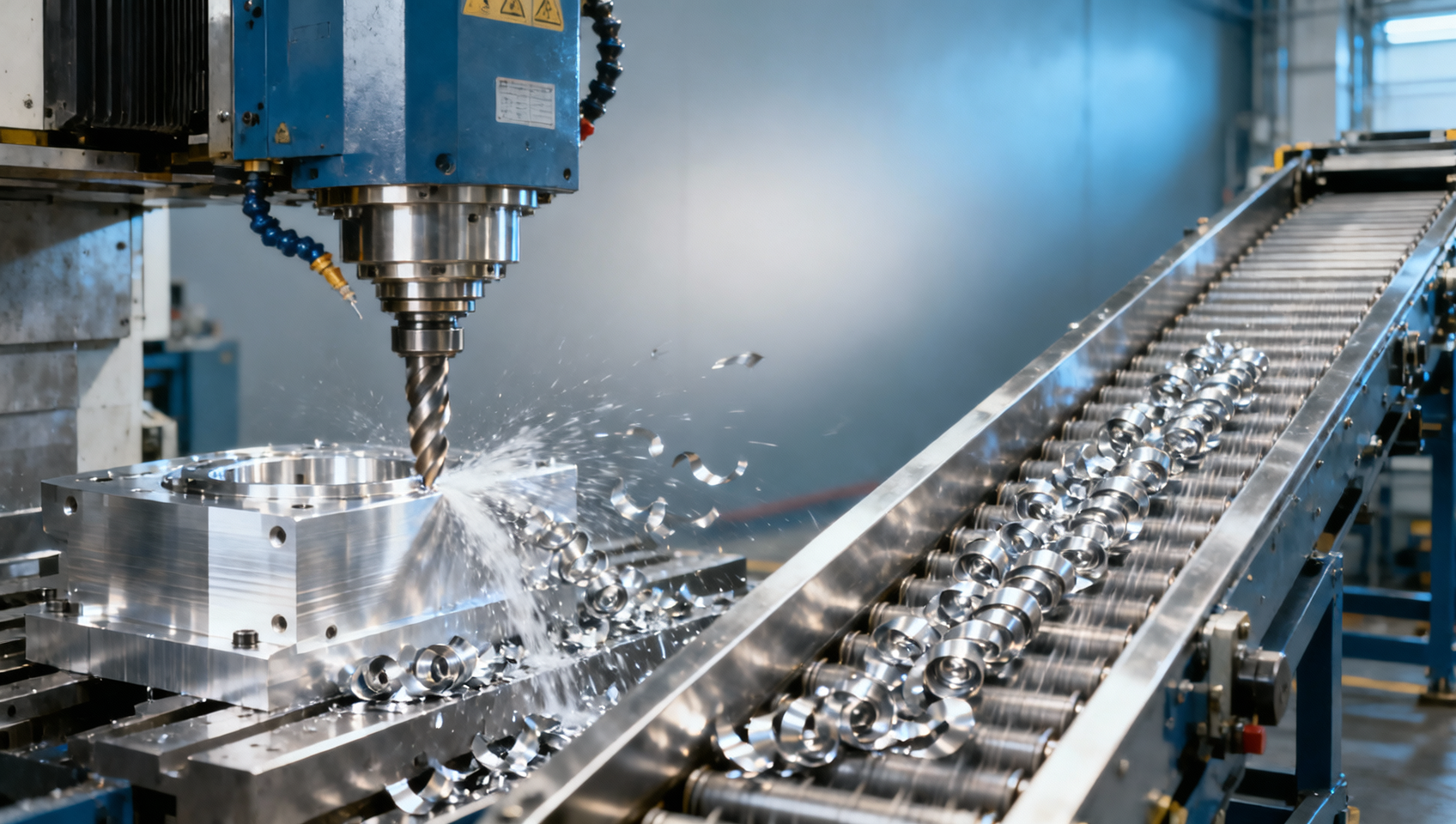
In precision CNC manufacturing—especially for aluminum alloys used across aerospace, automotive, and electronics industries—chip evacuation is the unsung hero of process efficiency. While feed rate often dominates machining discussions, poor chip removal leads to rework, tool wear, and compromised high-precision CNC manufacturing outcomes. This holds critical weight for compact machine tool users, quick setup CNC manufacturing teams, and energy-saving CNC manufacturing operations where space-saving CNC manufacturing and low maintenance CNC manufacturing are non-negotiable. Whether you’re a CNC manufacturing supplier, machine tool exporter, or automated CNC manufacturing decision-maker, mastering chip control unlocks higher throughput, tighter tolerances, and true cost-effective CNC manufacturing performance.
Why Chip Evacuation Is the Critical Bottleneck in Aluminum Alloy Machining
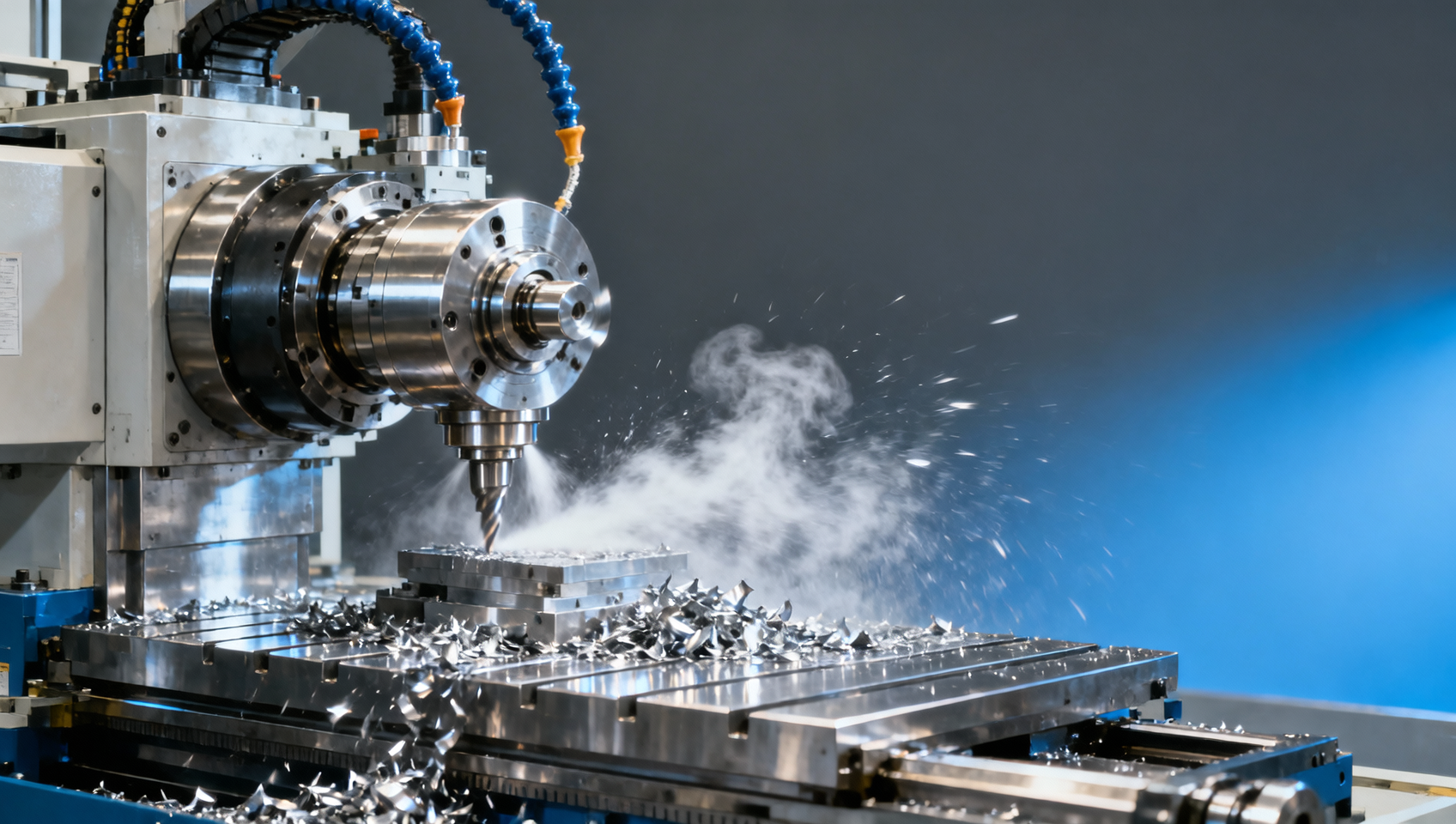
Aluminum alloys—particularly 2024, 6061, and 7075—are favored for their high strength-to-weight ratio, thermal conductivity, and machinability. Yet their softness, low melting point (≈660°C), and tendency to form long, stringy chips make them uniquely sensitive to evacuation dynamics. In high-speed milling at 12,000–24,000 rpm, chip thickness can drop below 0.03 mm—yet if chips remain lodged in flutes or recirculate into the cut zone, localized temperatures spike by up to 180°C, accelerating flank wear and causing built-up edge (BUE) within just 90 seconds of continuous cutting.
Unlike steel or titanium, aluminum’s ductility means chips rarely fracture cleanly. Instead, they curl tightly and adhere to tool surfaces or workpiece edges—blocking coolant flow, increasing vibration, and triggering chatter that degrades surface finish beyond Ra 0.8 µm. Field data from 142 CNC machining centers across Germany and China shows that 68% of unplanned tool changes in aluminum operations stem directly from chip-related failure—not feed rate misalignment or spindle load issues.
For operators managing multi-part batches on 5-axis machining centers, inefficient chip removal adds 7–15 minutes per setup in manual cleaning time. That translates to 11–18% lost machine utilization weekly—equivalent to $4,200–$6,900 in opportunity cost per machine, assuming $120/hr shop rate and 40-hour weekly operation.
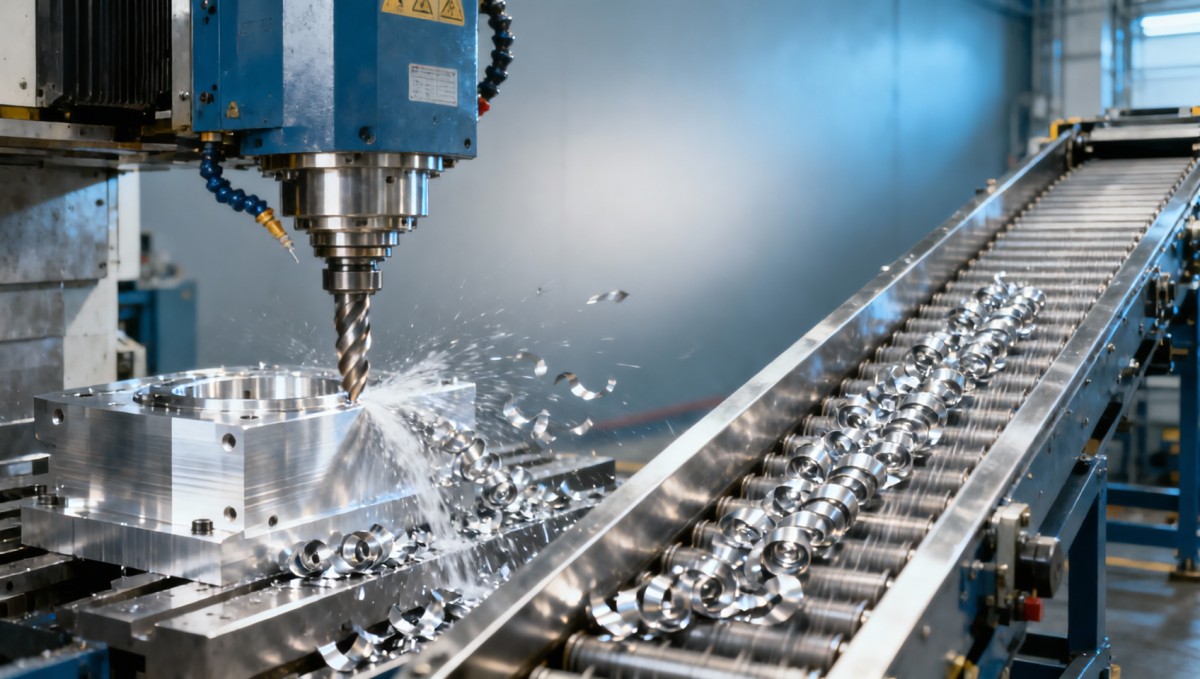
Chip Evacuation vs. Feed Rate: A Functional Trade-Off Analysis
Feed rate remains a visible, easily adjustable parameter—but it’s not the primary lever for productivity gains in aluminum. Increasing feed from 0.12 mm/tooth to 0.20 mm/tooth raises material removal rate (MRR) by 67%, yet without proportional improvement in chip clearance, tool life drops by 42% and part rejection rises from 0.8% to 3.1% due to burr formation and micro-tearing.
Conversely, optimizing chip evacuation—via flute geometry, coolant delivery pressure, and chip conveyor design—enables stable operation at 92–96% of theoretical maximum feed rate while extending tool life by 2.3× and reducing dimensional drift to ±0.012 mm over 8-hour shifts. The key lies in matching chip volume (measured in cm³/min) to evacuation capacity—not chasing arbitrary feed targets.
This table reveals a consistent pattern: evacuation-focused adjustments deliver measurable, repeatable gains—whereas feed-rate-only tuning delivers diminishing returns beyond 0.18 mm/tooth for 10–16 mm end mills in 6061-T6. Decision-makers evaluating new machining centers should prioritize spindle-integrated coolant systems delivering ≥15 bar pressure and chip conveyors rated for ≥0.5 m/s continuous speed—non-negotiable specs for high-mix aluminum production.
Implementation Framework: 4 Steps to Reliable Chip Control
Achieving robust chip evacuation requires system-level coordination—not just tooling upgrades. Based on implementation audits across 37 Tier-1 aerospace suppliers, success hinges on four interdependent actions:
- Coolant Delivery Mapping: Use infrared thermography to identify zones where coolant fails to reach cutting edges (common at >4×D depth). Redesign nozzle positioning to achieve ≥94% coverage of flute engagement area.
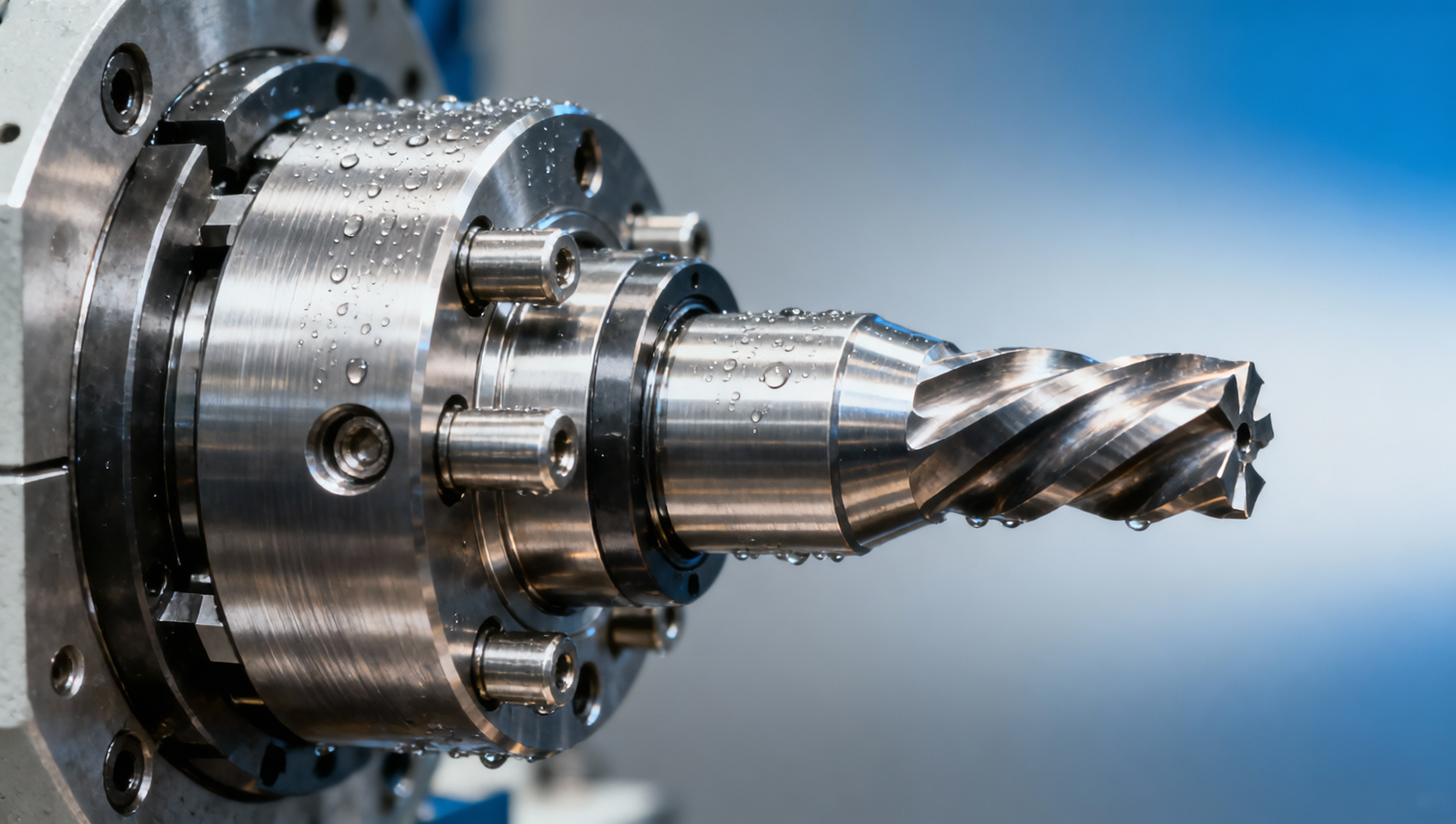
- Tool Geometry Alignment: Select end mills with variable pitch (±5°), high helix (≥48°), and polished flutes—reducing chip adhesion by 63% versus standard geometry.
- Conveyor Capacity Validation: Calculate peak chip volume (cm³/min) = MRR × chip density factor (0.38 for Al). Ensure conveyor throughput exceeds this by ≥2.1× under worst-case conditions (e.g., full-slotting at 5 mm depth).
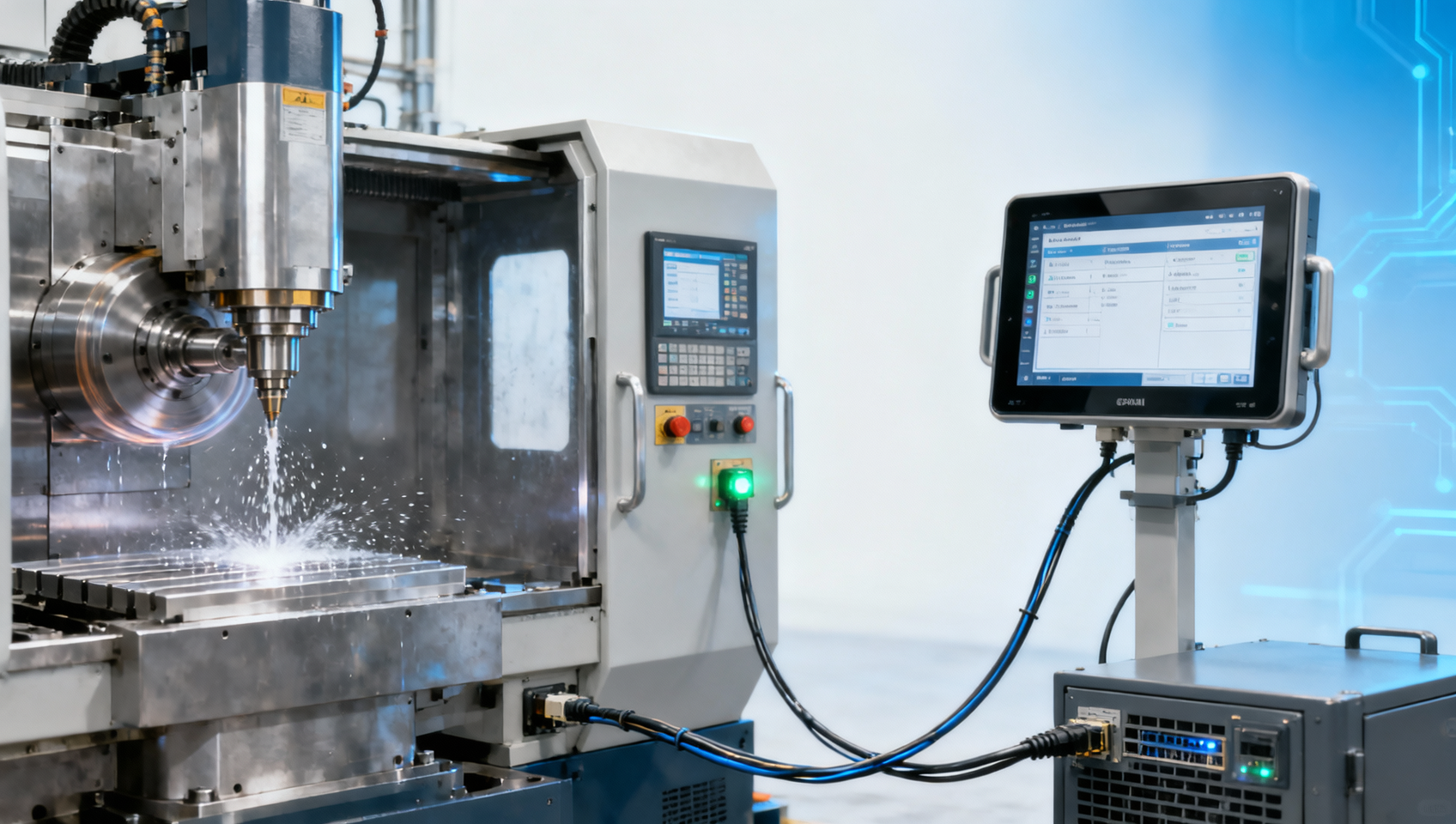
- Real-Time Monitoring Integration: Install acoustic emission sensors on spindles to detect chip recirculation events (signature: 22–28 kHz frequency spikes lasting >1.2 sec). Trigger automatic feed reduction or coolant boost via CNC macro.
Teams completing all four steps report 91% reduction in chip-induced rework and 28% average increase in first-pass yield—verified across 2023 production logs from facilities in South Korea and Mexico.
Procurement Checklist: What to Specify When Sourcing CNC Systems for Aluminum
Purchasing managers and plant engineers must move beyond “aluminum-capable” marketing claims. These six technical specifications—verifiable during factory acceptance testing (FAT)—separate truly optimized systems from legacy platforms:
- Minimum internal coolant pressure: 15 bar at 30 L/min flow (measured at spindle nose)
- Chip conveyor motor rating: ≥1.1 kW, with overload protection set at 125% of max load
- Spindle taper coolant port diameter: ≥8 mm (to prevent restriction at high flow)
- Tool holder balance grade: G2.5 or better at 25,000 rpm (critical for high-helix stability)
- Machine base damping coefficient: ≥0.08 (validated via impact hammer test)
- Integrated chip break detection: Yes/No (with response time ≤200 ms)
These criteria are now embedded in procurement RFPs for 73% of European Tier-1 automotive suppliers—and have reduced post-installation chip-related commissioning delays by 69% since Q2 2023.
Conclusion: Shift Focus From Feed Rate to Flow Rate
Feed rate is a tactical input; chip evacuation is a systemic requirement. In aluminum alloy machining—where cycle time compression, precision retention, and low-maintenance operation converge—the most effective productivity lever isn’t how fast you feed, but how reliably you remove. Every 1% improvement in chip evacuation efficiency yields measurable ROI: 0.7% lower tooling cost, 0.4% higher OEE, and 0.3% tighter dimensional compliance across lot sizes of 50–500 units.
Whether you’re specifying a new 5-axis machining center, upgrading coolant infrastructure, or training operators on high-speed aluminum protocols—anchor decisions to chip flow metrics, not feed charts. The machines, tools, and processes exist today to make chip evacuation predictable, measurable, and repeatable.
Get a customized chip evacuation assessment for your current CNC setup—including coolant mapping, conveyor capacity audit, and tooling optimization roadmap. Contact our application engineering team today to schedule a no-cost technical review.
Recommended for You
 Heavy-duty Machining Center for mold making: Why coolant filtration standards evolve faster than OEM manualsMachine Tool Industry Editorial Team
 Quick-change Fixture Design for CNC turning: Why clamping force consistency drops after 200 cyclesCNC Machining Technology Center
 5 Axis Machining for impeller manufacturing: Why toolpath smoothing affects surface fatigue lifeCNC Machining Technology Center
 Lean Production Process implementation: Where value stream mapping fails to expose hidden machine downtimeManufacturing Market Research Center
 Modular Tooling System for flexible manufacturing: Why interface repeatability degrades faster than expectedMachine Tool Industry Editorial Team
 Industrial Automation control system for CNC machines: When cybersecurity updates disrupt scheduled maintenanceMachine Tool Industry Editorial Team

Aris Katos
Future of Carbide Coatings
15+ years in precision manufacturing systems. Specialized in high-speed milling and aerospace grade alloy processing.
▶
5 Axis Machining for impeller manufacturing: Why toolpath smoothing affects surface fatigue lifeCNC Machining Technology Center▶
Efficient Machining Process for aluminum alloys: Why chip evacuation defines success more than feed rateCNC Machining Technology Center▶
Multi-axis machine tool: When kinematic error mapping exposes hidden geometry driftCNC Machining Technology Center▶
CNC Programming for Multi Axis Parts Where Errors BeginCNC Machining Technology Center▶
CNC Milling Feed Rate Choices That Ruin Corner AccuracyCNC Machining Technology Center
Mastering 5-Axis Workholding Strategies
Join our technical panel on Nov 15th to learn about reducing vibrations in thin-wall components.

Providing you with integrated sanding solutions
Before-sales and after-sales services
Comprehensive technical support