• Global CNC market projected to reach $128B by 2028 • New EU trade regulations for precision tooling components • Aerospace deman
NYSE: CNC +1.2%LME: STEEL -0.4%

Multi-axis machine tool: When kinematic error mapping exposes hidden geometry drift
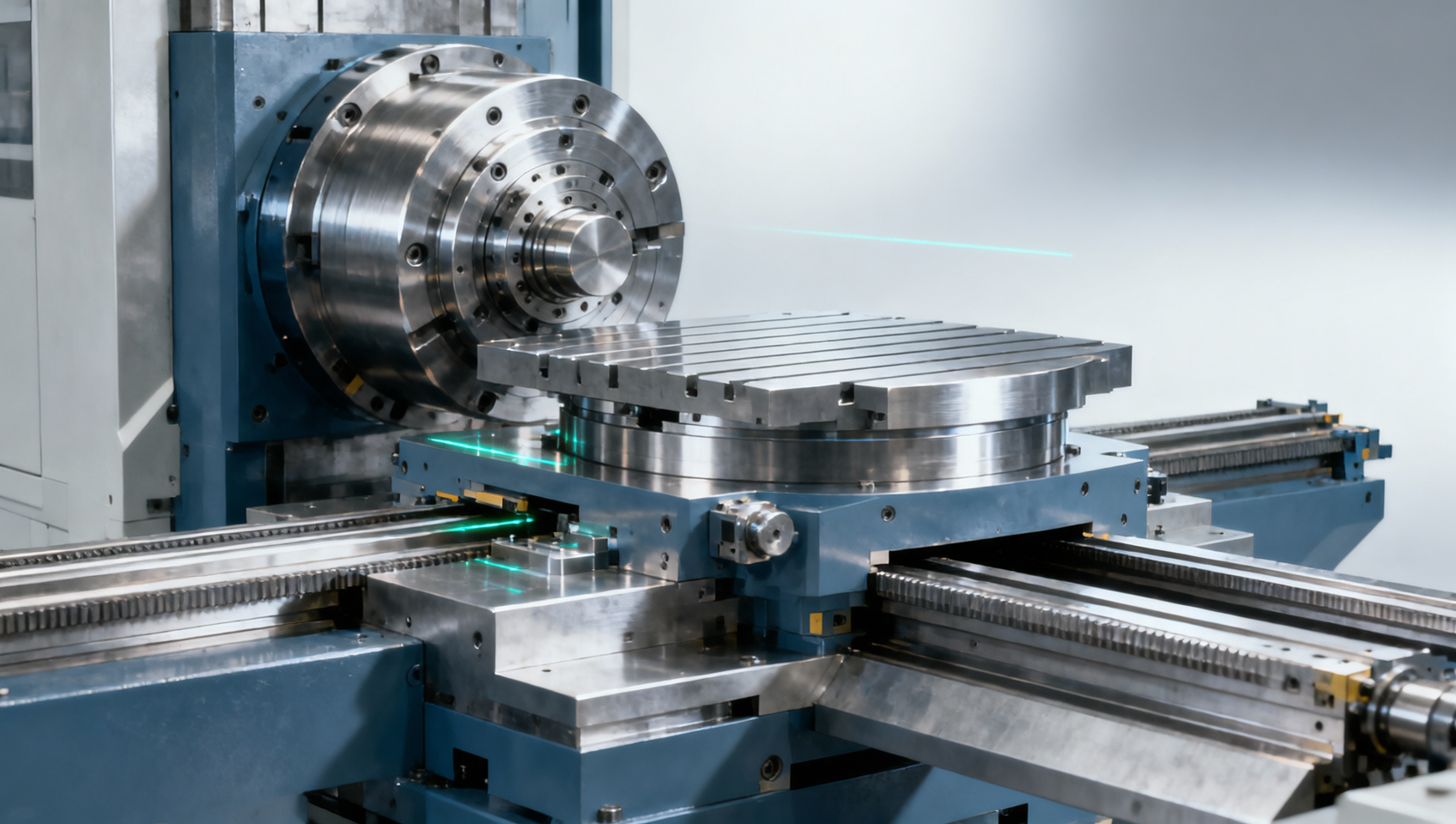
Multi-axis machine tool: When kinematic error mapping exposes hidden geometry drift
Multi-axis machine tools are at the heart of precision CNC manufacturing—enabling high-precision machining for aerospace, medical devices, energy equipment, and electronics. Yet even advanced systems suffer from hidden geometry drift, masked by kinematic errors that compromise accuracy over time. This article reveals how kinematic error mapping uncovers these subtle deviations—critical for compact machine tool design, low-maintenance CNC manufacturing, and high-precision multi-axis CNC manufacturing. Whether you're a procurement professional sourcing from a CNC manufacturing wholesaler, an engineer optimizing an automated production line, or a decision-maker evaluating a machine tool exporter, understanding this drift is key to ensuring space-saving, energy-saving, and cost-effective CNC manufacturing performance.
Why “hidden geometry drift” matters more than specs on paper
For procurement teams and plant decision-makers, machine tool datasheets often highlight positional accuracy (e.g., ±0.003 mm) or dynamic stiffness—but those numbers assume ideal kinematics. In reality, every multi-axis system (5-axis mills, turn-mills, robotic machining cells) accumulates geometric deviation as axes move in coupled motion. This isn’t wear or thermal drift—it’s inherent geometry drift caused by imperfect axis alignment, non-orthogonal joints, and cumulative linkage errors across the kinematic chain.
What makes it dangerous? It’s invisible during static calibration and rarely captured in ISO 230-2 tests. A part may pass CMM inspection at nominal position—but fail functional testing under load, or show inconsistent surface finish across complex contours. For aerospace suppliers or medical device manufacturers, that means scrapped titanium housings, rework delays, or late-stage design concessions.
How kinematic error mapping actually works—and why it’s not just another metrology buzzword
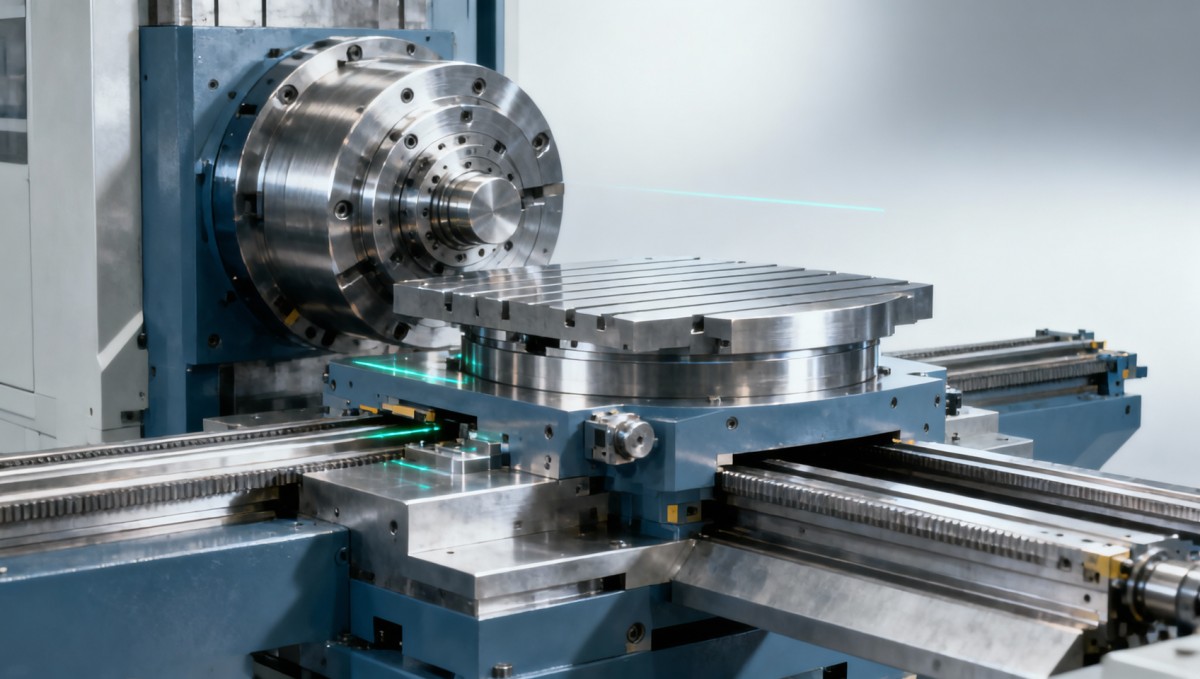
Kinematic error mapping is a model-based diagnostic method—not a one-time measurement, but a systematic reconstruction of the machine’s true spatial behavior. It combines laser tracker or ball-bar data with a forward kinematic model of the machine’s structure (e.g., serial, parallel, or hybrid architecture). Unlike traditional volumetric error compensation—which applies corrections only at measured points—kinematic mapping identifies *root causes*: e.g., a 7.2-arcsecond tilt in the B-axis rotary table mounting plane, or a 15-µm offset in the Z-axis linear scale origin relative to the kinematic reference frame.
This distinction is critical for users and engineers: it shifts focus from “how much correction do we need?” to “what mechanical or assembly issue must we address?” That insight directly informs maintenance planning, retrofit decisions, and supplier evaluation—especially when comparing machines from German OEMs vs. high-value Asian exporters where build consistency varies.
What this means for your role—right now
Procurement professionals: Don’t accept “ISO-compliant” claims without asking for kinematic error reports—including axis-specific residual maps and model validation against independent volumetric checks. Machines with documented, low-residual kinematic models (≤2 µm RMS across full work envelope) deliver better long-term ROI, especially when integrating into automated lines where repeatability > peak speed.
Operators & process engineers: Geometry drift manifests as increasing toolpath deviation on deep cavities or thin-walled features—even with fresh tooling and stable coolant. If you’re seeing rising scrap on parts requiring simultaneous 5-axis motion, request a kinematic audit before investing in new fixtures or CAM optimization.
Decision-makers & plant managers: Kinematic mapping isn’t just about accuracy—it’s a proxy for build quality and design maturity. Machines with transparent, well-documented kinematic models tend to have lower MTTR, longer calibration intervals, and smoother integration with digital twin platforms. When evaluating a new multi-axis platform or supplier, treat the availability and granularity of their kinematic model as a hard qualification criterion—not optional documentation.
The bottom line: Drift isn’t failure—it’s information waiting to be decoded
Hidden geometry drift isn’t evidence of poor machine quality—it’s the inevitable signature of real-world mechanics. But unlike thermal or wear-related errors, it’s highly diagnosable, quantifiable, and often correctable *without hardware replacement*. Kinematic error mapping transforms ambiguity into actionable engineering intelligence: guiding smarter procurement, reducing unplanned downtime, extending calibration cycles, and enabling tighter tolerances on next-gen parts. For global manufacturers balancing precision, productivity, and supply chain resilience, treating kinematics as a first-class engineering parameter—not just a spec footnote—is no longer optional. It’s how leading-edge shops stay competitive in aerospace, energy, and medical manufacturing today.
Recommended for You
 Heavy-duty Machining Center for mold making: Why coolant filtration standards evolve faster than OEM manualsMachine Tool Industry Editorial Team
 Quick-change Fixture Design for CNC turning: Why clamping force consistency drops after 200 cyclesCNC Machining Technology Center
 5 Axis Machining for impeller manufacturing: Why toolpath smoothing affects surface fatigue lifeCNC Machining Technology Center
 Lean Production Process implementation: Where value stream mapping fails to expose hidden machine downtimeManufacturing Market Research Center
 Modular Tooling System for flexible manufacturing: Why interface repeatability degrades faster than expectedMachine Tool Industry Editorial Team
 Industrial Automation control system for CNC machines: When cybersecurity updates disrupt scheduled maintenanceMachine Tool Industry Editorial Team

Aris Katos
Future of Carbide Coatings
15+ years in precision manufacturing systems. Specialized in high-speed milling and aerospace grade alloy processing.
▶
5 Axis Machining for impeller manufacturing: Why toolpath smoothing affects surface fatigue lifeCNC Machining Technology Center▶
Efficient Machining Process for aluminum alloys: Why chip evacuation defines success more than feed rateCNC Machining Technology Center▶
Multi-axis machine tool: When kinematic error mapping exposes hidden geometry driftCNC Machining Technology Center▶
CNC Programming for Multi Axis Parts Where Errors BeginCNC Machining Technology Center▶
CNC Milling Feed Rate Choices That Ruin Corner AccuracyCNC Machining Technology Center
Mastering 5-Axis Workholding Strategies
Join our technical panel on Nov 15th to learn about reducing vibrations in thin-wall components.

Providing you with integrated sanding solutions
Before-sales and after-sales services
Comprehensive technical support