• Global CNC market projected to reach $128B by 2028 • New EU trade regulations for precision tooling components • Aerospace deman
NYSE: CNC +1.2%LME: STEEL -0.4%

CNC Metalworking Tolerances That Raise Hidden Costs
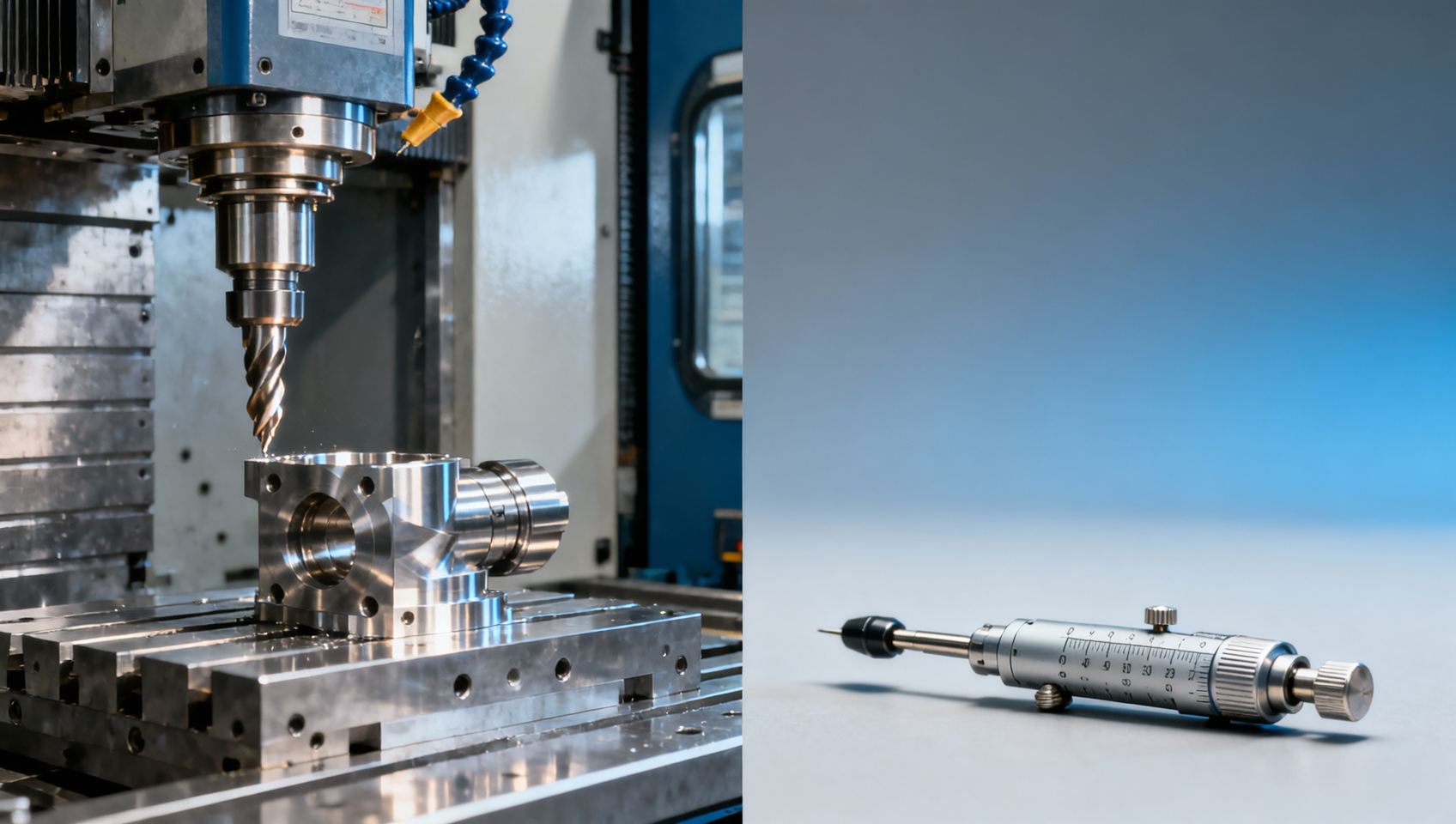
In metal machining, overly tight CNC metalworking tolerances often look like a quality advantage but can quietly drive up scrap, tooling wear, cycle time, and sourcing costs. For buyers, engineers, and shop managers in the CNC industrial and global manufacturing landscape, understanding how industrial CNC, CNC milling, CNC cutting, and automated production decisions affect the production process is essential to controlling hidden costs without sacrificing performance.
Why do tight CNC metalworking tolerances increase hidden costs?
A tighter tolerance does not only change a drawing note. It changes the entire machining strategy. In many CNC metalworking projects, moving from a general tolerance such as ±0.10 mm to a tighter band like ±0.02 mm can trigger slower feeds, additional finishing passes, stricter inspection routines, and more frequent tool offsets. That chain reaction often raises total manufacturing cost more than buyers expect at the quotation stage.
For operators, the issue appears on the shop floor as reduced process stability. A part that is easy to hold within tolerance for 20 pieces may become difficult over a batch of 500 pieces because thermal drift, fixture wear, spindle behavior, and material variation start to matter more. In automated production, those small shifts can reduce machine utilization and create more stoppages for in-process adjustment.
For procurement teams, hidden cost usually enters through the back door. A supplier may accept a print with very tight dimensional and geometric tolerances, but the final price reflects inspection labor, lower yield, and schedule risk. When multiple global manufacturing suppliers quote the same part, the gap between the lowest and highest quote can widen significantly simply because they assess tolerance risk differently.
For decision-makers, the practical question is not whether precision matters. It clearly does in aerospace, energy equipment, electronics production, and precision assemblies. The real question is whether every dimension needs the same control level. In many cases, only 2–4 critical features directly affect fit, sealing, balance, or performance, while the remaining features can follow standard shop capability without harming end use.
Where the hidden cost usually comes from
- Longer cycle time because roughing, semi-finishing, and finishing may require 3 stages instead of 1–2 stages.
- Higher scrap risk when process capability cannot consistently hold the requested tolerance over small, medium, and large batches.
- More expensive inspection due to CMM use, first article checks, gauge studies, and documented inspection records.
- Tooling and fixture upgrades, especially for thin-wall parts, long shafts, complex discs, and multi-axis machining work.
This is why cost control in CNC milling and CNC cutting should begin with tolerance review, not only with unit price comparison. A drawing that looks highly controlled can still be poorly optimized for production. When tolerances are aligned with actual function, manufacturers usually gain a better balance between precision, lead time, and repeatable output.
How tolerance choices affect the production process in real machining scenarios
Tolerance impact changes by process type. On a CNC lathe, concentricity, roundness, and diameter consistency often determine whether a shaft component runs smoothly in bearings or seals. On a machining center, positional tolerance, flatness, and perpendicularity can be more important for housing parts, mounting plates, and high-accuracy structural components. The hidden cost appears when the requested control level exceeds what the process naturally delivers.
Material selection also matters. Aluminum parts may machine quickly, but thin sections can move after clamping release. Stainless steel may hold geometry differently but can increase tool wear and heat generation. Hardened alloy steels often need slower cutting conditions and more rigid tooling setups. The same ±0.03 mm requirement can therefore cost very differently depending on whether the part is aluminum, carbon steel, stainless steel, or an aerospace-grade alloy.
Batch size changes the economics as well. In prototype work of 1–10 pieces, tight tolerances may be manageable because manual intervention is accepted. In repeat production of 100–1,000 pieces, labor-heavy correction becomes expensive. In automated production lines, the process must remain stable over extended runs, often across multiple shifts, which means the tolerance demand must match machine capability, fixture design, and inspection frequency.
A practical review should separate functional tolerances from inherited tolerances. Many drawings retain legacy values copied from older projects, even when the new design, assembly interface, or service condition does not require that same level of control. That is one reason global CNC sourcing teams increasingly ask suppliers for manufacturability feedback before freezing final tolerances.
Typical tolerance impact by process area
The table below shows how common tolerance decisions influence machining cost, process stability, and inspection effort in CNC metalworking. The values are presented as typical shop-level considerations rather than universal limits, because actual capability depends on machine condition, material, geometry, fixturing, and batch size.
The key takeaway is that hidden cost is rarely created by one number alone. It comes from the interaction of dimension, geometry, surface finish, part rigidity, material, lot size, and inspection method. In procurement review, that interaction should be discussed before the RFQ is released, especially when the part is intended for repeated sourcing across multiple countries or suppliers.
Three scenarios where over-tolerance is common
- Legacy parts transferred from manual machining to industrial CNC without revisiting whether all dimensions still need premium control.
- Assemblies where designers tighten all mating features instead of identifying the 1–3 true functional datums.
- Global sourcing projects where buyers use very tight tolerances to reduce perceived risk, but unintentionally reduce supplier options and increase lead time from 2–4 weeks to much longer windows.
In each of these scenarios, a manufacturability review can reduce waste without weakening performance. That is especially relevant in smart manufacturing environments where repeatability, digital traceability, and predictable capacity matter as much as nominal precision.
Which tolerances should stay tight, and which ones can be relaxed?
Not every feature should be treated equally. A cost-effective CNC metalworking strategy begins by classifying dimensions into critical, important, and general categories. Critical features are those that directly affect assembly, sealing, alignment, load transfer, rotational behavior, or safety margin. Important features support function but may allow a wider process window. General features mainly control shape, appearance, or non-critical envelope size.
For information researchers and engineers, this approach improves design clarity. For operators, it reduces unnecessary setup pressure. For purchasing teams, it makes quotation comparison more meaningful because suppliers are pricing the same functional intent rather than guessing which dimensions truly matter. For business leaders, it prevents over-engineering from consuming budget that could be better used on automation, fixturing, or quality control where it adds more value.
An effective review usually asks four questions. Does the feature locate another component? Does it influence motion, sealing, electrical contact, or heat transfer? Is it measured in production or only during PPAP, FAI, or sample validation? Can the requirement be achieved in one setup, or will it require multiple re-clamps or secondary grinding? These questions often reveal where tolerance can be widened safely.
Where international standards are used, teams should apply them with purpose rather than by default. General tolerancing frameworks such as ISO system practices or GD&T conventions can support clarity, but they do not replace function-based judgment. A simple, readable drawing with rational datums and fit-critical controls usually performs better in sourcing than a drawing overloaded with narrow bands on every dimension.
A practical decision matrix for buyers and engineers
The following comparison helps teams decide where tight tolerance is justified and where standard CNC process capability may be enough. It is especially useful during RFQ preparation, supplier onboarding, and cost-down reviews for parts made by CNC milling, turning, or multi-axis machining.
This matrix supports better decision-making across departments. It helps engineering protect performance, gives suppliers room to optimize the production process, and lets procurement avoid paying premium pricing on dimensions that do not create measurable business value.
Four checks before freezing a tolerance
- Confirm the functional reason for the number, not just the drawing history.
- Verify whether the part will be machined in 1 setup, 2 setups, or more, because re-clamping increases variation.
- Match the requirement to inspection capability, including handheld gauges, bore gauges, or CMM methods.
- Ask whether the same result could be achieved through design features such as clearance, datum simplification, or assembly adjustment.
These checks are simple, but they often uncover cost-saving opportunities early enough to protect both quality and delivery. In complex supply chains, that early review can be more valuable than later price negotiation.
What should procurement and operations evaluate before placing a CNC order?
Purchasing teams often compare CNC suppliers on unit price and promised lead time, but tolerance-driven cost requires a broader review. A low quote may hide risk if the supplier has not accounted for in-process control, fixture rigidity, inspection records, or yield loss. A higher quote may be justified if the part has demanding bores, positional tolerances, or surface finish requirements that need a more controlled process.
Operations teams should review whether the supplier’s process is suitable for the intended lot size. A machine shop that performs well on prototypes may struggle with 300-piece repeat orders if tool management, measurement discipline, or automation readiness is weak. Likewise, a high-volume supplier may not be the best choice for fast design iterations when engineering changes occur every 7–10 days.
In global manufacturing, communication quality is part of tolerance control. If the supplier asks detailed questions about datum structure, inspection points, critical-to-function features, and packaging sensitivity, that is usually a positive sign. If the supplier only confirms “can do” without discussing process assumptions, buyers should investigate further before relying on the quote.
A structured procurement review is especially important for automotive, aerospace support parts, electronics fixtures, energy equipment components, and precision assemblies where one rejected batch can disrupt downstream production. In these cases, the right supplier is not simply the one with the lowest machining rate, but the one with the best fit between process capability and part requirement.
Five procurement checkpoints that reduce tolerance-related surprises
- Request a tolerance review during quotation and ask which 3–5 features are cost-driving.
- Clarify whether inspection includes first article, in-process checks, final sampling, or full report on critical dimensions.
- Confirm lead time by stage, such as drawing review, sample production, mass production, and final shipment.
- Check whether material certificates, traceability, or special packaging are required for precision parts.
- Review alternatives such as tolerance relaxation, process change, or batch-size adjustment before approving premium pricing.
Typical RFQ evaluation structure
The table below provides a practical RFQ review model for CNC industrial sourcing teams. It combines cost, process, and delivery considerations so buyers can compare suppliers on more than surface-level pricing.
When teams use this structure, procurement becomes less reactive. Instead of discovering tolerance problems after sampling, they can identify cost drivers before the PO is issued. That improves supply reliability and gives better leverage in technical negotiation.
Common misconceptions, FAQ, and practical next steps
Many organizations still assume that tighter CNC metalworking tolerances always mean better quality. In reality, better quality means fitness for use, repeatability in the intended process window, and cost control across the full production lifecycle. A part that is technically precise but slow to produce, difficult to inspect, and prone to scrap may not be the best business solution.
This matters even more as the machine tool industry moves toward higher automation, digital integration, and international supply coordination. Smart factories, flexible production lines, and industrial robots depend on predictable, stable production process design. Overly aggressive tolerances can work against that goal if they are not tied to true functional need.
The good news is that most hidden costs can be reduced without compromising performance. The right path usually includes an engineering review, a supplier capability discussion, and a sourcing plan that distinguishes between prototype learning, pilot validation, and full production release. In many projects, that 3-step approach reduces both technical risk and commercial friction.
Below are several frequently asked questions that reflect common search intent from engineers, operators, buyers, and decision-makers working with CNC milling, CNC cutting, and precision machining suppliers.
How do I know if a tolerance is unnecessarily tight?
Start by checking whether the feature directly affects assembly, motion, sealing, electrical contact, or safety. If not, ask whether a wider band would still meet functional needs. Also compare the tolerance with the planned process: 1 setup parts usually hold consistency more easily than parts requiring 2–3 re-clamps. If inspection cost or rework risk rises sharply while product performance does not improve, the tolerance may be tighter than necessary.
What lead time impact should buyers expect from tighter tolerances?
Lead time impact varies by geometry, material, and batch size, but tighter requirements usually add time in at least 3 areas: process planning, machining, and inspection. Prototype parts may absorb that increase more easily. For repeat orders, especially 50–500 pieces, tighter tolerance can create a larger queue if the supplier needs dedicated inspection equipment or more stable machine allocation.
Is it better to tighten dimensional tolerance or use GD&T controls?
It depends on function. In many assemblies, a thoughtful GD&T approach is more effective because it controls the relationship that truly matters, such as position, flatness, or perpendicularity, rather than forcing every related linear dimension to be extremely tight. However, GD&T should be applied carefully and with clear datum logic, otherwise it can increase confusion and inspection burden instead of reducing it.
What should operators monitor when running tight-tolerance CNC parts?
Operators should watch tool wear, thermal drift, clamping consistency, offset stability, and chip evacuation. On long runs, checking the first few parts is not enough. A control plan may require sampling every 30 minutes, each tool life interval, or at defined piece counts depending on the feature risk. Stable process control is often more important than chasing one perfect first part.
Why choose us for CNC tolerance review and sourcing support?
We focus on the global CNC machining and precision manufacturing industry, with attention to the real issues that affect buyers, engineers, operators, and business leaders: manufacturability, cost control, supplier comparison, lead time planning, and technical communication across international markets. That perspective is valuable when tolerance decisions influence not only machining quality but also sourcing efficiency and long-term production stability.
If you are reviewing a new part, re-quoting an existing component, or trying to reduce hidden costs in industrial CNC production, you can contact us for targeted support. We can help structure discussions around parameter confirmation, tolerance prioritization, process selection, sample planning, expected delivery windows such as 2–4 weeks for standard jobs, and technical points that often change supplier pricing.
You can also reach out if you need guidance on CNC milling versus turning feasibility, inspection expectations for critical dimensions, drawing optimization before RFQ, batch-size strategy, packaging concerns for precision parts, or coordination with suppliers in major manufacturing regions such as China, Germany, Japan, and South Korea. Clear input at the start usually prevents costly corrections later.
For the fastest discussion, prepare your part drawing, material requirement, annual quantity, critical dimensions, target lead time, and any special inspection or certification requests. With that information, the next conversation can move quickly from general questions to practical solutions, including product selection, custom machining plans, sample support, delivery assessment, and quotation communication.
Recommended for You
 Heavy-duty Machining Center for mold making: Why coolant filtration standards evolve faster than OEM manualsMachine Tool Industry Editorial Team
 Quick-change Fixture Design for CNC turning: Why clamping force consistency drops after 200 cyclesCNC Machining Technology Center
 5 Axis Machining for impeller manufacturing: Why toolpath smoothing affects surface fatigue lifeCNC Machining Technology Center
 Lean Production Process implementation: Where value stream mapping fails to expose hidden machine downtimeManufacturing Market Research Center
 Modular Tooling System for flexible manufacturing: Why interface repeatability degrades faster than expectedMachine Tool Industry Editorial Team
 Industrial Automation control system for CNC machines: When cybersecurity updates disrupt scheduled maintenanceMachine Tool Industry Editorial Team


Aris Katos
Future of Carbide Coatings
15+ years in precision manufacturing systems. Specialized in high-speed milling and aerospace grade alloy processing.
▶
High-tolerance Disc Parts for aerospace applications: Why runout control begins at blank handlingCNC Machining Technology Center▶
CNC Metalworking Tolerances That Raise Hidden CostsCNC Machining Technology Center▶
What slows metal machining even when machines look busy?CNC Machining Technology Center▶
CNC metalworking jobs fail tolerance checks for hidden reasonsCNC Machining Technology Center▶
Why CNC milling cycle time stays high after process changesCNC Machining Technology Center
Mastering 5-Axis Workholding Strategies
Join our technical panel on Nov 15th to learn about reducing vibrations in thin-wall components.

Providing you with integrated sanding solutions
Before-sales and after-sales services
Comprehensive technical support