• Global CNC market projected to reach $128B by 2028 • New EU trade regulations for precision tooling components • Aerospace deman
NYSE: CNC +1.2%LME: STEEL -0.4%

Shaft Parts Machining Errors That Affect Concentricity
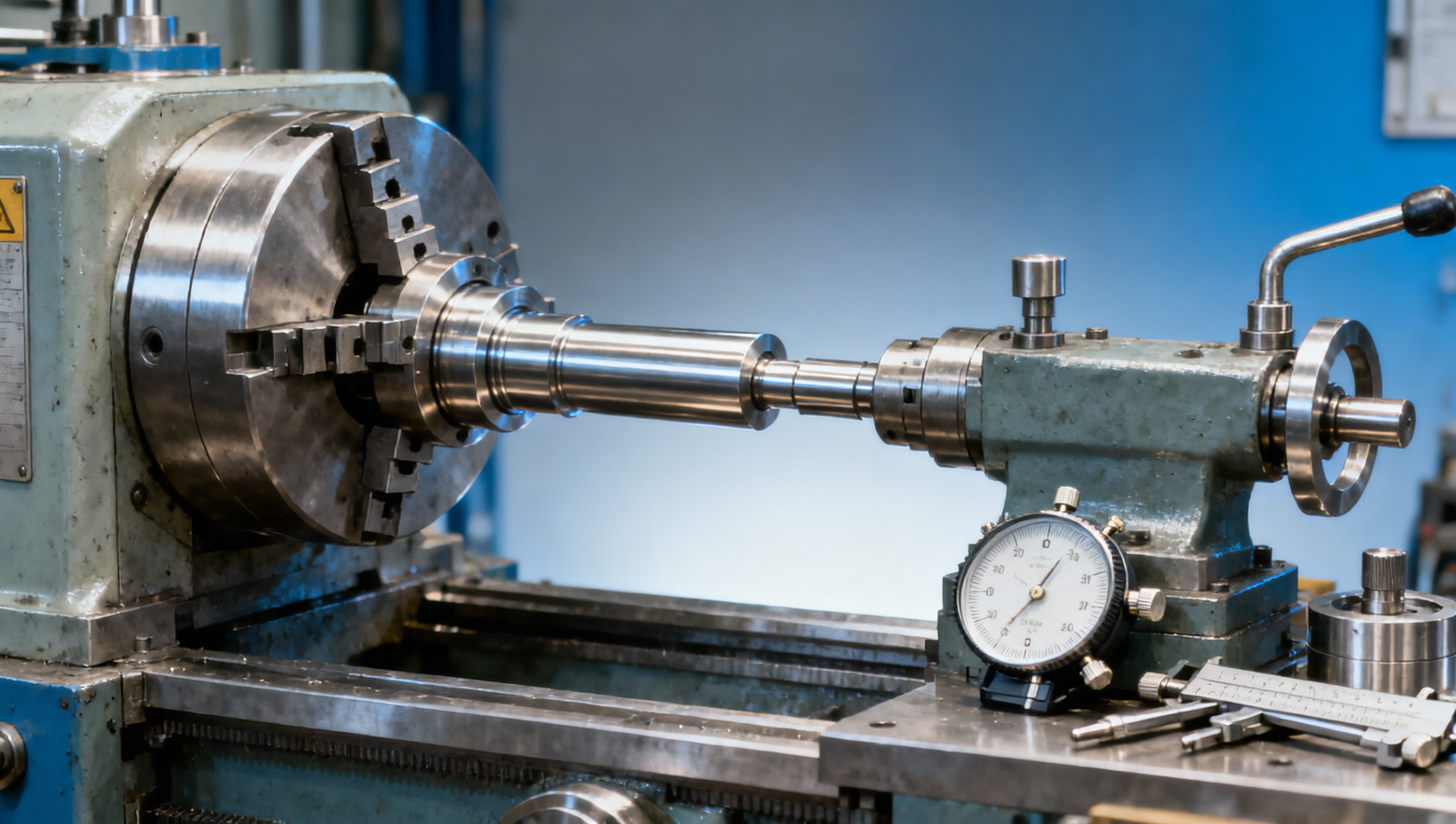
In metal machining and CNC industrial production, even small shaft parts machining errors can seriously affect concentricity, surface quality, and assembly performance. From automated lathe setup to CNC cutting, tooling, fixturing, and production process control, every detail matters. This article explores how industrial CNC and CNC metalworking operations can reduce deviation, improve accuracy, and support more reliable automated production.
Why shaft concentricity problems start long before final inspection
In precision manufacturing, concentricity is not only a drawing requirement. It directly affects rotating balance, bearing fit, seal performance, vibration level, and service life. For shaft parts used in automotive systems, energy equipment, electronics production, or automated assembly lines, a small offset between datum surfaces and machined diameters can create cumulative deviation across the entire product chain.
Many workshops focus on the final turning pass, but shaft parts machining errors usually begin earlier, often in 3 key stages: raw material preparation, first clamping, and process route design. If the center hole is unstable, the blank is bent, or the machine datum is inconsistent, later CNC cutting can only mask the problem rather than remove it.
For operators, the practical issue is repeatability during 8-hour to 12-hour production shifts. For procurement teams, the issue is whether a supplier can maintain concentricity not only on a sample but across small batch, medium batch, and large batch output. For decision-makers, the concern is the total manufacturing cost created by scrap, rework, delayed assembly, and field risk.
A reliable CNC machining strategy treats concentricity as a system result. It depends on machine spindle condition, chuck or collet accuracy, tool wear control, fixture rigidity, thermal stability, and inspection method. In many industrial CNC environments, the acceptable working range for shop temperature control is often kept around 20°C to 26°C to reduce thermal drift during precision shaft machining.
What concentricity errors usually influence in real production
- Unstable bearing seating, causing uneven load distribution and early wear in rotating systems.
- Poor alignment during automated assembly, especially when shafts connect with sleeves, gears, pulleys, or precision discs.
- Increased runout and vibration, which can reduce product reliability in high-speed or continuous-duty equipment.
- Higher inspection failure rates, resulting in added cycle time, sorting cost, and production scheduling pressure.
Which machining errors most often affect concentricity in shaft parts?
The most common shaft parts machining errors are not always dramatic. In many CNC metalworking operations, a combination of small issues creates measurable runout. These include incorrect blank centering, inconsistent clamping force, spindle wear, poor center hole quality, tailstock misalignment, tool deflection, and process switching between different machines without a stable datum transfer plan.
Long and slender shafts are especially sensitive. When the length-to-diameter ratio reaches 8:1, 10:1, or higher, cutting force and support rigidity become major factors. Even when the machine tool itself is accurate, improper support with centers, steady rests, or follow rests can produce taper, chatter, and eccentricity that later appear as concentricity failure.
Another common mistake is assuming that one-time setup accuracy guarantees stable output. In practice, tool wear may change cutting behavior after 30 pieces, 80 pieces, or one full shift, depending on material, insert grade, coolant condition, and spindle load. Without periodic offset checks, the process gradually drifts out of tolerance.
The table below summarizes typical error sources, how they affect concentricity, and what production teams should verify during CNC shaft machining.
This comparison shows why concentricity cannot be controlled by inspection alone. The real solution is to identify which variable shifts the rotational centerline and then lock that variable through setup discipline, tooling selection, and in-process verification.
High-risk process conditions that deserve extra control
Single-chuck turning of long shafts
This setup is fast, but it increases the risk of bending and radial displacement. It is more suitable for short shafts or roughing operations than for tight concentricity requirements.
Secondary operations after heat treatment
If heat treatment distortion is not measured before finish machining, the final reference system may already be compromised. A re-centering step is often necessary for moderate to high precision parts.
Repeated re-clamping across multiple machines
Every transfer adds risk. If two to four process stages use different datums, geometric stacking error becomes difficult to predict and harder to correct economically.
How can operators and engineers reduce concentricity deviation on the shop floor?
Effective control starts with a stable process route. For shaft parts, one of the most practical methods is to establish a reliable reference early, then preserve it through roughing, semi-finishing, heat treatment if required, and final finishing. In many cases, center-hole based machining remains a preferred method because it improves axis consistency across multiple turning steps.
Machine condition also matters. Before running precision CNC shaft production, operators should verify spindle runout, tailstock alignment, and clamping repeatability. These checks do not need to be complex, but they should be routine. In a controlled production line, 5 key checks before startup can prevent hours of downstream troubleshooting and assembly rejection.
Tooling strategy should match shaft geometry. A long overhang boring or turning setup may save fixture changes, but it often sacrifices rigidity. For difficult materials or long slender shafts, smaller depth of cut, optimized feed rates, and support devices are usually more effective than trying to remove material aggressively in a single pass.
For automated production, consistency is more important than peak theoretical speed. A stable cycle at 90 seconds with low variation is often more valuable than a 75-second cycle that drifts after 50 parts. This is especially true for suppliers serving automotive, aerospace support chains, energy components, and precision electronics housings where assembly compatibility is critical.
A practical 4-step control routine for CNC shaft machining
- Check incoming blanks for straightness, allowance, and end-face quality before first clamping.
- Confirm spindle, chuck, collet, and tailstock condition at the start of each shift or when changing setups.
- Use in-process measurement at planned intervals, such as first piece, every 20 to 50 pieces, and after tool change.
- Review rejected parts by tracing the exact process stage where axis deviation first appeared.
Parameter and process recommendations by shaft condition
Different shaft types need different control priorities. The table below helps users and process engineers align machining method with actual part risk.
For many manufacturers, this type of parameter-based planning is where significant quality gains are made. It converts concentricity from a reactive inspection issue into a controlled production variable.
What should buyers and decision-makers evaluate when sourcing shaft machining services?
When sourcing CNC shaft machining, price per piece is only one factor. Buyers should evaluate whether the supplier can maintain axis consistency across process stages, lot sizes, and delivery schedules. A low initial quote can become expensive if the parts cause assembly delay, repeated quality claims, or unstable performance in the field.
For procurement teams, three practical questions are useful. First, what datum strategy does the supplier use for shaft parts with multiple diameters or bearing seats? Second, how often is in-process verification performed during batch production? Third, can the supplier support traceable inspection records for critical dimensions, runout, and related geometric tolerances when required?
Decision-makers should also look at delivery compatibility. In industrial supply chains, a common lead time for standard machined shaft parts may range from 7 to 15 working days for moderate quantities, while customized multi-process parts may require 2 to 4 weeks depending on heat treatment, grinding, coating, and final inspection requirements.
The supplier’s production mix matters as well. Workshops built only for rough turning may struggle with concentricity-sensitive parts. By contrast, suppliers with coordinated CNC lathes, machining centers, multi-axis systems, fixturing capability, and disciplined inspection processes are usually better suited for higher precision and more stable batch output.
A buyer’s checklist for concentricity-sensitive shaft parts
- Confirm whether the drawing identifies the true functional datum or only nominal dimensions.
- Ask which process stages are completed in one setup and which require re-clamping.
- Verify whether the supplier can support turning only, or turning plus grinding, heat treatment, and final inspection.
- Request sample inspection logic, not only sample parts, especially for recurring or long-term orders.
How standards and documentation support purchasing confidence
Drawing clarity
Clear geometric tolerance definitions reduce disputes between customer expectations and machining execution. If concentricity, runout, coaxial relation, or datum sequence is unclear, the risk of mismatch increases.
Inspection records
For critical industrial applications, first-article records, process inspection logs, and final measurement reports can support supplier qualification and reduce quality escalation during launch.
Process capability discussion
Instead of asking only for the lowest price, buyers benefit from discussing machine type, fixture method, batch size fit, and quality checkpoints. This often reveals whether the supplier truly understands concentricity-sensitive manufacturing.
Common misconceptions, risk warnings, and FAQ for CNC shaft machining
A frequent misconception is that better machine accuracy alone solves concentricity problems. In reality, a high-end CNC lathe cannot compensate for poor blank quality, weak process planning, or incorrect measurement practice. Concentricity is achieved when the entire manufacturing chain is aligned, from material entry to final inspection and assembly fit verification.
Another misunderstanding is that concentricity and diameter tolerance are the same. A shaft can meet diameter limits and still fail in function if the machined surfaces do not share the same rotational axis. This is why users should not judge shaft quality by micrometer readings alone.
For companies managing automated production, one hidden risk is delayed feedback. If inspection only occurs at the end of a batch of 100 or 300 pieces, one setup drift can create a large amount of nonconforming inventory. Process checkpoints should therefore be planned according to part complexity, machine stability, and risk level.
The FAQ below addresses the questions most often raised by researchers, machine users, procurement teams, and manufacturing managers evaluating shaft parts machining quality.
How do I know whether a shaft part needs special concentricity control?
If the shaft supports bearings, seals, gears, pulleys, couplings, or high-speed rotation, concentricity deserves special attention. The same is true when the part has multiple precision diameters, several re-clamping stages, or must fit automated assembly equipment. In such cases, process planning should identify the functional axis before production starts.
What is usually more important: tighter tolerance or better process stability?
For ongoing batch production, process stability is usually the stronger priority. A supplier that can repeatedly hold the required range through disciplined setup, support, and inspection is often more valuable than a supplier that achieves one very tight sample result but cannot repeat it consistently over 50, 200, or 500 parts.
Which inspection methods are commonly used for concentricity-related control?
Common methods include dial indicator checks on centers or V-blocks, runout measurement at specified functional diameters, and coordinated dimensional inspection based on the drawing datum system. The suitable method depends on part geometry, tolerance level, and whether the requirement is a shop-floor control point or a final quality record.
Can lower-cost machining still work for non-critical shafts?
Yes, if the application is not highly sensitive to rotation accuracy, sealing, or bearing load. However, even for cost-driven projects, basic controls such as stable clamping, blank inspection, and periodic runout checks remain important. Reducing unnecessary precision is reasonable; removing essential process discipline is not.
Why work with a CNC machining platform that understands both production and sourcing?
In the global machine tool and precision manufacturing sector, shaft parts are rarely isolated components. They belong to wider production systems involving CNC lathes, machining centers, automation cells, fixturing, cutting tools, inspection planning, and delivery coordination. That is why technical communication and sourcing coordination should move together rather than separately.
A professional industry platform can help users compare machining routes, assess supplier suitability, and clarify realistic expectations before purchase. This is especially valuable when your project includes custom shaft geometry, multiple process steps, demanding assembly requirements, or international sourcing questions across regions such as China, Germany, Japan, and South Korea.
If you are evaluating shaft parts machining errors that affect concentricity, we can support practical discussions around 6 key topics: drawing review, datum planning, machining method selection, batch production stability, delivery timing, and inspection documentation. This makes early-stage decisions faster and reduces avoidable rework later.
Contact us to discuss part parameters, concentricity-related machining risks, suitable CNC production routes, sample support options, standard lead-time ranges, and quotation details. Whether you are researching a new project, optimizing an existing shaft component, or comparing suppliers for precision manufacturing, a focused technical conversation can help you make a more reliable decision.
Recommended for You
 Heavy-duty Machining Center for mold making: Why coolant filtration standards evolve faster than OEM manualsMachine Tool Industry Editorial Team
 Quick-change Fixture Design for CNC turning: Why clamping force consistency drops after 200 cyclesCNC Machining Technology Center
 5 Axis Machining for impeller manufacturing: Why toolpath smoothing affects surface fatigue lifeCNC Machining Technology Center
 Lean Production Process implementation: Where value stream mapping fails to expose hidden machine downtimeManufacturing Market Research Center
 Modular Tooling System for flexible manufacturing: Why interface repeatability degrades faster than expectedMachine Tool Industry Editorial Team
 Industrial Automation control system for CNC machines: When cybersecurity updates disrupt scheduled maintenanceMachine Tool Industry Editorial Team

Aris Katos
Future of Carbide Coatings
15+ years in precision manufacturing systems. Specialized in high-speed milling and aerospace grade alloy processing.
▶
High-tolerance Disc Parts for aerospace applications: Why runout control begins at blank handlingCNC Machining Technology Center▶
Precision CNC manufacturing: When micron-level tolerance demands more than just machine specsCNC Machining Technology Center▶
Shaft Parts Machining Errors That Affect ConcentricityCNC Machining Technology Center▶
Production Process Variations That Trigger Repeat ReworkCNC Machining Technology Center▶
CNC Metalworking Tolerances That Raise Hidden CostsCNC Machining Technology Center
Mastering 5-Axis Workholding Strategies
Join our technical panel on Nov 15th to learn about reducing vibrations in thin-wall components.

Providing you with integrated sanding solutions
Before-sales and after-sales services
Comprehensive technical support