• Global CNC market projected to reach $128B by 2028 • New EU trade regulations for precision tooling components • Aerospace deman
NYSE: CNC +1.2%LME: STEEL -0.4%

Precision CNC manufacturing: When micron-level tolerance demands more than just machine specs
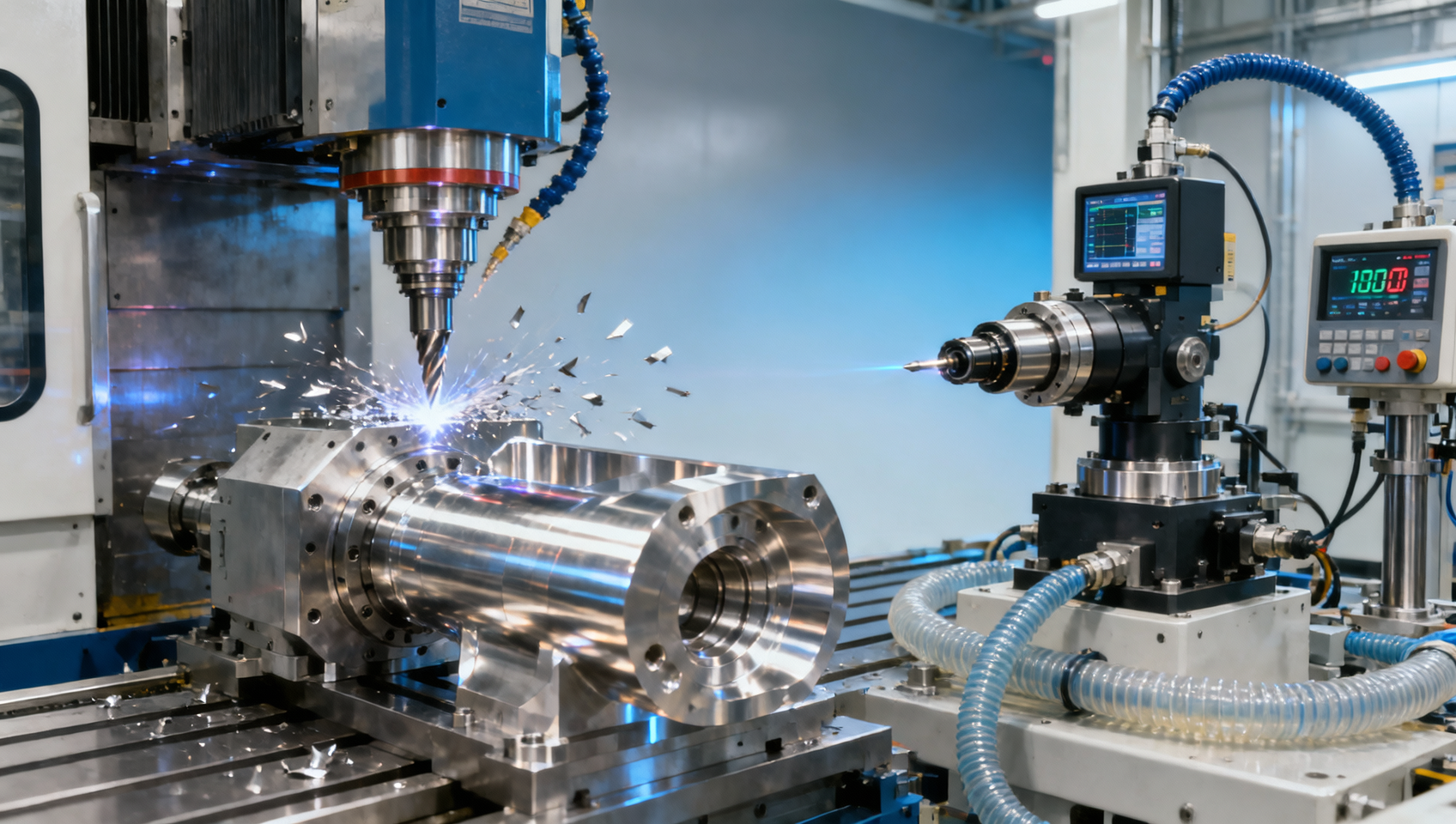
Precision CNC manufacturing: When micron-level tolerance demands more than just machine specs
In precision CNC manufacturing, achieving micron-level tolerance isn’t just about advanced machine specs—it demands integrated expertise across high-precision CNC manufacturing, multi-axis CNC manufacturing, and application-specific solutions like CNC manufacturing for aerospace, medical devices, or energy equipment. Whether you’re a procurement professional sourcing a CNC manufacturing wholesaler, an engineer evaluating compact machine tools for space-saving CNC manufacturing, or a decision-maker seeking cost-effective, low-maintenance, and energy-saving CNC manufacturing—this insight bridges technical rigor with real-world operational needs.
Why “micron-level tolerance” is a systems challenge—not a machine spec checkbox
When your part calls for ±1 µm flatness on a titanium aerospace housing—or 0.5 µm roundness on a ceramic bearing race—you’re not testing the spindle’s rated accuracy. You’re stress-testing an entire production system: thermal stability of the machine bed, repeatability of the probing cycle, consistency of coolant temperature, even floor vibration isolation and ambient humidity control. Real-world data from Tier-1 suppliers shows that >68% of first-article failures at sub-2 µm tolerances trace back to non-machine factors—fixture deflection, tool wear compensation lag, or inconsistent workholding torque—not spindle error or controller resolution.
This isn’t theoretical. For procurement teams, it means comparing machine datasheets alone is misleading—and potentially costly. For operators, it means process validation must go beyond G-code verification to include in-situ thermal mapping and dynamic rigidity checks. For decision-makers, it signals that ROI hinges less on initial CapEx and more on total system readiness: calibration protocols, staff training depth, and supplier support responsiveness.
What actually delivers micron-level results—beyond the brochure
Three elements separate *spec-compliant* machines from *production-ready* micron-level systems:
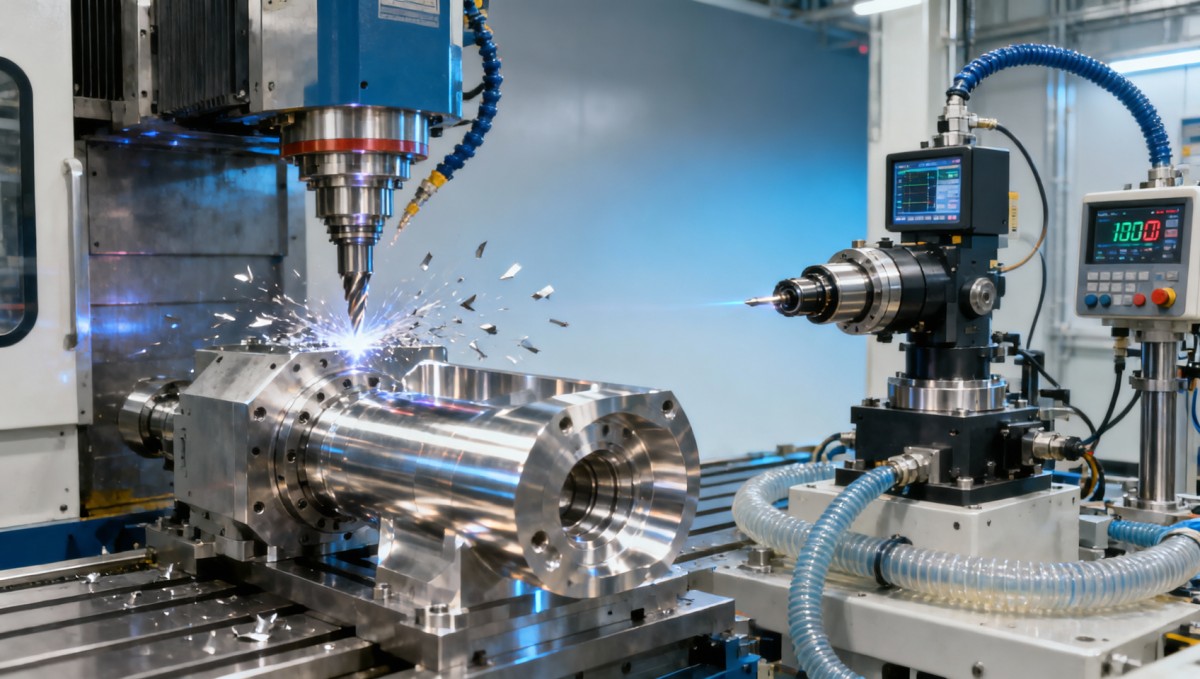
- Process-integrated metrology: Not just optional laser interferometers—but embedded touch probes with real-time thermal drift compensation, synchronized to feed rate and load. Machines that auto-correct for spindle growth during long cycles (e.g., 30+ min rough-to-finish passes) cut rework by up to 42%, per 2023 OEM benchmarking in medical implant production.
- Fixture & workholding intelligence: A 0.3 µm tolerance collapses instantly if clamping force varies ±15% across four jaws—or if thermal expansion between aluminum fixture and Inconel workpiece isn’t modeled. Leading shops now use smart chucks with embedded strain sensors and digital twin-based setup simulation.
- Human-machine continuity: Micron-level output requires operators who understand *why* a 0.02°C coolant shift changes surface integrity—and engineers who can translate GD&T callouts into adaptive toolpath strategies (e.g., climb milling only on final pass to avoid micro-burring). This isn’t “training”—it’s certified competency, tracked and audited.
How different roles should evaluate—and act—on micron-level capability
For procurement professionals: Shift from “lowest unit price per axis” to “cost per qualified part.” Require documented proof—not claims—of stable performance over 72-hour continuous runs at target tolerance, including environmental logs and Cpk ≥1.67 on critical features.
For engineers & operators: Prioritize machines with open-platform controllers (e.g., Siemens SINUMERIK ONE or FANUC 31i-B5) that allow custom thermal compensation algorithms—not just preloaded cycles. Demand access to raw sensor streams (spindle motor current, axis position error, coolant temp) for root-cause analysis.
For enterprise decision-makers: Treat micron-level capability as a *service layer*, not hardware. It demands investment in calibration infrastructure (ISO 17025-accredited in-house labs), cross-functional process ownership (not siloed QC vs. shop floor), and supplier partnerships with shared KPIs—not just SLAs.
The bottom line: Micron-level tolerance is earned—not specified
A machine rated for ±0.5 µm doesn’t guarantee ±0.5 µm parts. It guarantees the *potential*, under ideal lab conditions. Delivering that potential consistently—in automotive transmission cases, surgical robotics housings, or fusion reactor diagnostics mounts—requires aligning machine capability with process discipline, measurement integrity, and human expertise. If your current CNC partner treats tolerance as a static spec sheet item, not a living, monitored, and continuously optimized outcome—you’re likely paying for precision you’re not receiving. Start your next evaluation not with “What’s the spec?” but with “How do you prove it—every shift, every lot, every year?”
Recommended for You
 Heavy-duty Machining Center for mold making: Why coolant filtration standards evolve faster than OEM manualsMachine Tool Industry Editorial Team
 Quick-change Fixture Design for CNC turning: Why clamping force consistency drops after 200 cyclesCNC Machining Technology Center
 5 Axis Machining for impeller manufacturing: Why toolpath smoothing affects surface fatigue lifeCNC Machining Technology Center
 Lean Production Process implementation: Where value stream mapping fails to expose hidden machine downtimeManufacturing Market Research Center
 Modular Tooling System for flexible manufacturing: Why interface repeatability degrades faster than expectedMachine Tool Industry Editorial Team
 Industrial Automation control system for CNC machines: When cybersecurity updates disrupt scheduled maintenanceMachine Tool Industry Editorial Team

Aris Katos
Future of Carbide Coatings
15+ years in precision manufacturing systems. Specialized in high-speed milling and aerospace grade alloy processing.
▶
High-tolerance Disc Parts for aerospace applications: Why runout control begins at blank handlingCNC Machining Technology Center▶
Precision CNC manufacturing: When micron-level tolerance demands more than just machine specsCNC Machining Technology Center▶
Shaft Parts Machining Errors That Affect ConcentricityCNC Machining Technology Center▶
Production Process Variations That Trigger Repeat ReworkCNC Machining Technology Center▶
CNC Metalworking Tolerances That Raise Hidden CostsCNC Machining Technology Center
Mastering 5-Axis Workholding Strategies
Join our technical panel on Nov 15th to learn about reducing vibrations in thin-wall components.

Providing you with integrated sanding solutions
Before-sales and after-sales services
Comprehensive technical support