• Global CNC market projected to reach $128B by 2028 • New EU trade regulations for precision tooling components • Aerospace deman
NYSE: CNC +1.2%LME: STEEL -0.4%

How CNC Manufacturing for Electronics Helps Reduce Defects
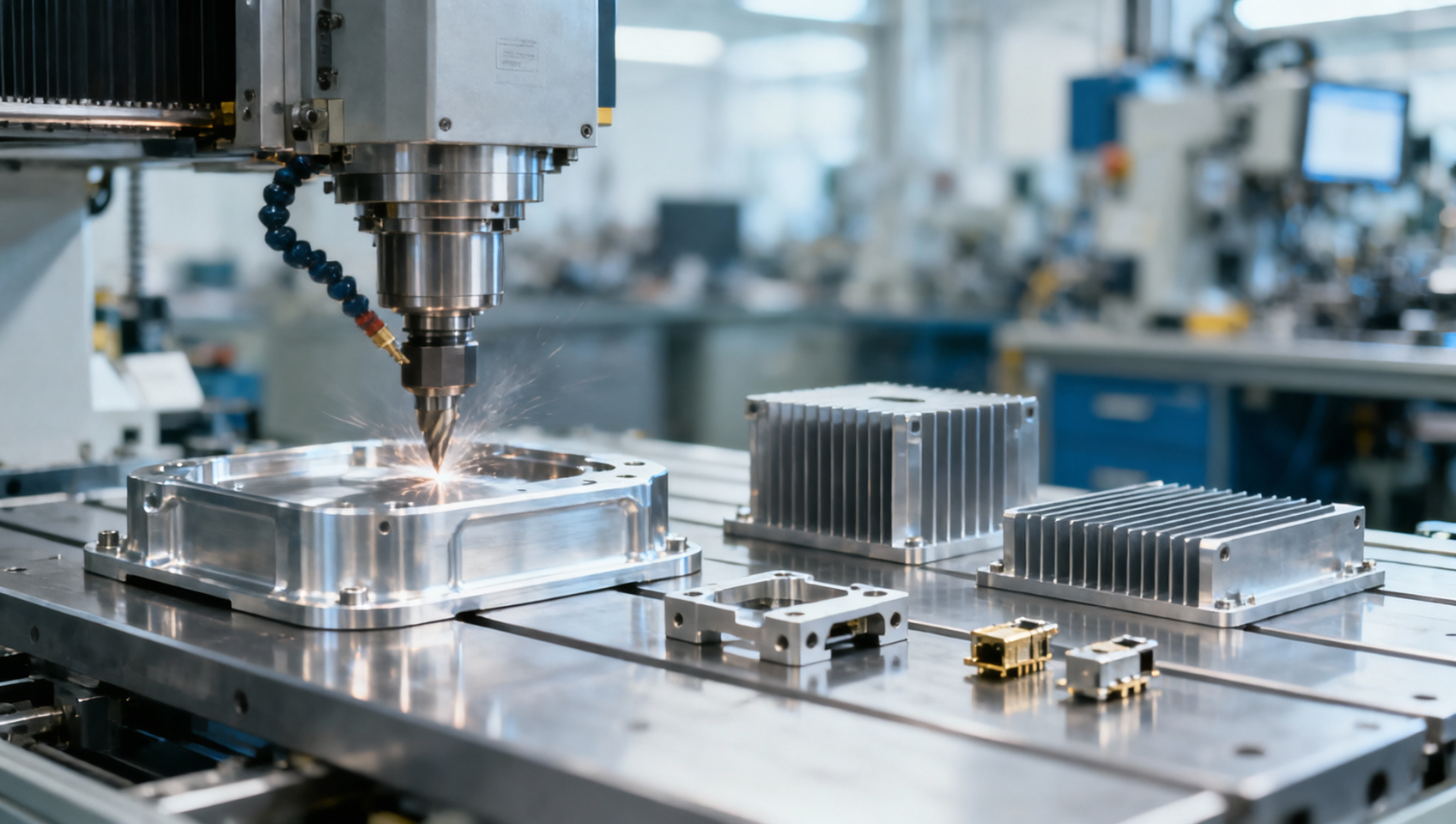
In electronics manufacturing, defects often come from tiny dimensional errors, inconsistent handling, tool wear, vibration, misalignment, and variation between batches. CNC manufacturing for electronics helps reduce these problems by delivering repeatable accuracy, tighter process control, and better integration with inspection and automation. For buyers, engineers, operators, and decision-makers, the key takeaway is simple: CNC does not eliminate defects automatically, but when paired with the right machine capability, process setup, and quality controls, it can significantly lower scrap rates, improve yield, and make production more predictable.
Why defect reduction matters so much in electronics production
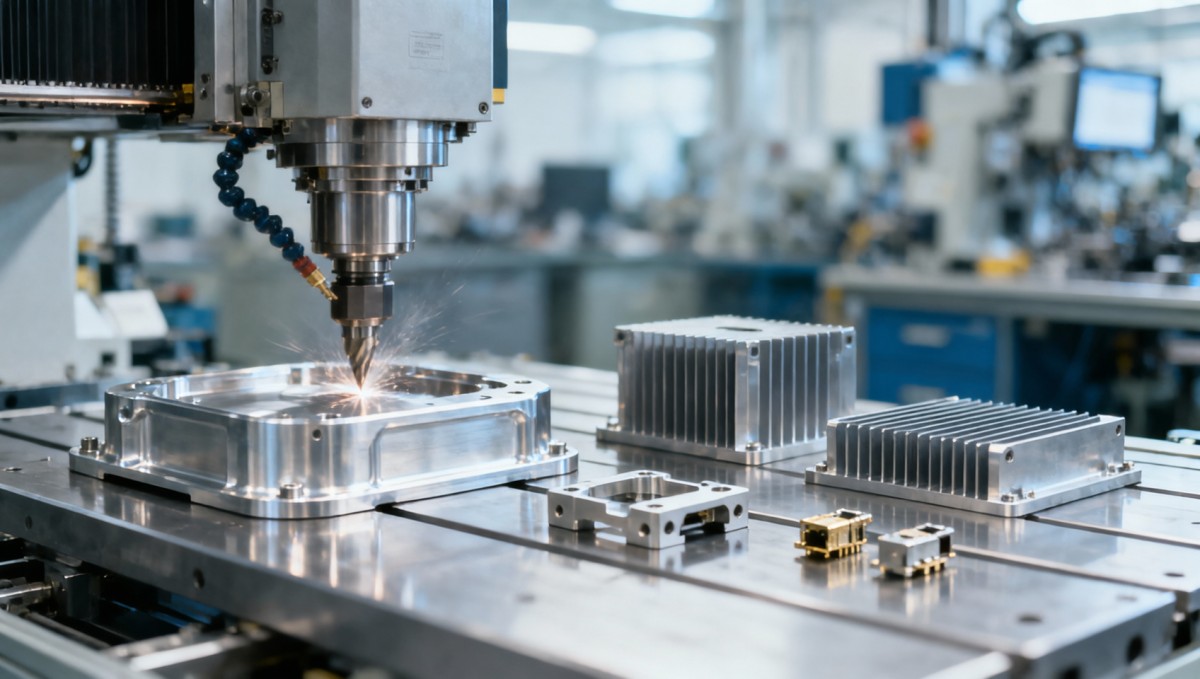
Electronics components and housings are less forgiving than many general industrial parts. Tolerances are often tight, materials may be thin or delicate, and even minor deviations can create downstream failures in assembly, thermal management, shielding, connector fit, or product reliability.
In practical terms, one defect in an electronic enclosure, heat sink, connector block, shielding part, or precision mounting plate can lead to:
- Assembly misalignment
- Poor contact or unstable electrical performance
- Heat dissipation problems
- Cosmetic rejection for consumer-facing devices
- Higher rework and scrap costs
- Delayed delivery and warranty risk
This is why manufacturers increasingly rely on high precision CNC manufacturing and automated CNC manufacturing to stabilize production quality. In electronics, lower defect rates are not just about workmanship. They directly affect yield, cost, delivery reliability, and brand reputation.
How CNC manufacturing for electronics reduces defects at the source
The biggest advantage of CNC manufacturing for electronics is that it reduces variation at the source of production. Instead of depending heavily on manual positioning, operator judgment, or loosely controlled machining steps, CNC systems use programmed toolpaths, fixed parameters, and repeatable motion control.
This helps reduce defects in several important ways:
1. Better dimensional accuracy
Electronics parts often include small slots, mounting points, pockets, threads, and surfaces that must align precisely with boards, connectors, covers, or thermal components. CNC machining centers and multi-axis machining systems can hold tighter tolerances than conventional manual methods, reducing errors caused by inconsistent cutting or setup.
2. Improved repeatability across batches
Repeatability matters as much as one-time accuracy. A part that is correct once but inconsistent across hundreds or thousands of pieces still creates quality problems. CNC manufacturing factory environments use stored programs, calibrated fixtures, and standardized tooling to produce parts with far less variation between runs.
3. Less human error
Manual processes increase the chance of incorrect positioning, measurement mistakes, and uneven handling. Automated CNC manufacturing reduces dependence on manual intervention during cutting operations, which helps lower defect risks, especially in higher-volume electronics production.
4. Stable machining of complex geometries
Electronics components are becoming smaller, denser, and more structurally complex. Multi-axis CNC manufacturing allows manufacturers to machine multiple faces and intricate shapes in fewer setups. Fewer setups typically mean fewer repositioning errors, better consistency, and less cumulative deviation.
5. Cleaner surface quality
Surface finish can affect not only appearance but also sealing, thermal contact, and component fit. Properly configured CNC machines help produce more consistent finishes, reducing burrs, chatter marks, and surface irregularities that often lead to assembly or performance issues.
Which types of defects CNC machining can help reduce in electronics applications
For many readers, the most useful question is not whether CNC improves quality in theory, but what kinds of real defects it can reduce. In electronics manufacturing, CNC machining is especially effective against the following issues:
- Hole position errors: Important for mounting, connector alignment, and board integration
- Flatness and parallelism problems: Critical for contact surfaces, shielding covers, and heat sink assembly
- Burr formation: A major concern in precision parts that require safe assembly and clean finishing
- Dimension drift: Often caused by tool wear, thermal instability, or inconsistent setup
- Poor thread quality: Affects fastening reliability in small electronic enclosures and assemblies
- Surface finish inconsistency: Impacts cosmetic quality and functional contact areas
- Misalignment from multiple setups: Reduced through multi-axis machining and fixture optimization
This is especially relevant for aluminum housings, copper components, heat sinks, precision brackets, RF shielding parts, panels, and structural elements used in communication devices, industrial controls, medical electronics, and consumer products.
What actually determines whether CNC will lower defects in your factory
Not every CNC process automatically delivers low-defect production. The machine is only one part of the result. Buyers and managers evaluating a compact machine tool, precision machine tool, or full CNC production line should look beyond specifications alone.
The real defect-reduction outcome depends on several factors:
Machine capability
Machine rigidity, spindle stability, thermal control, axis accuracy, and vibration resistance all affect part quality. A lower-cost machine may be sufficient for simple parts, but electronics applications with small features and tight tolerances often require more stable equipment.
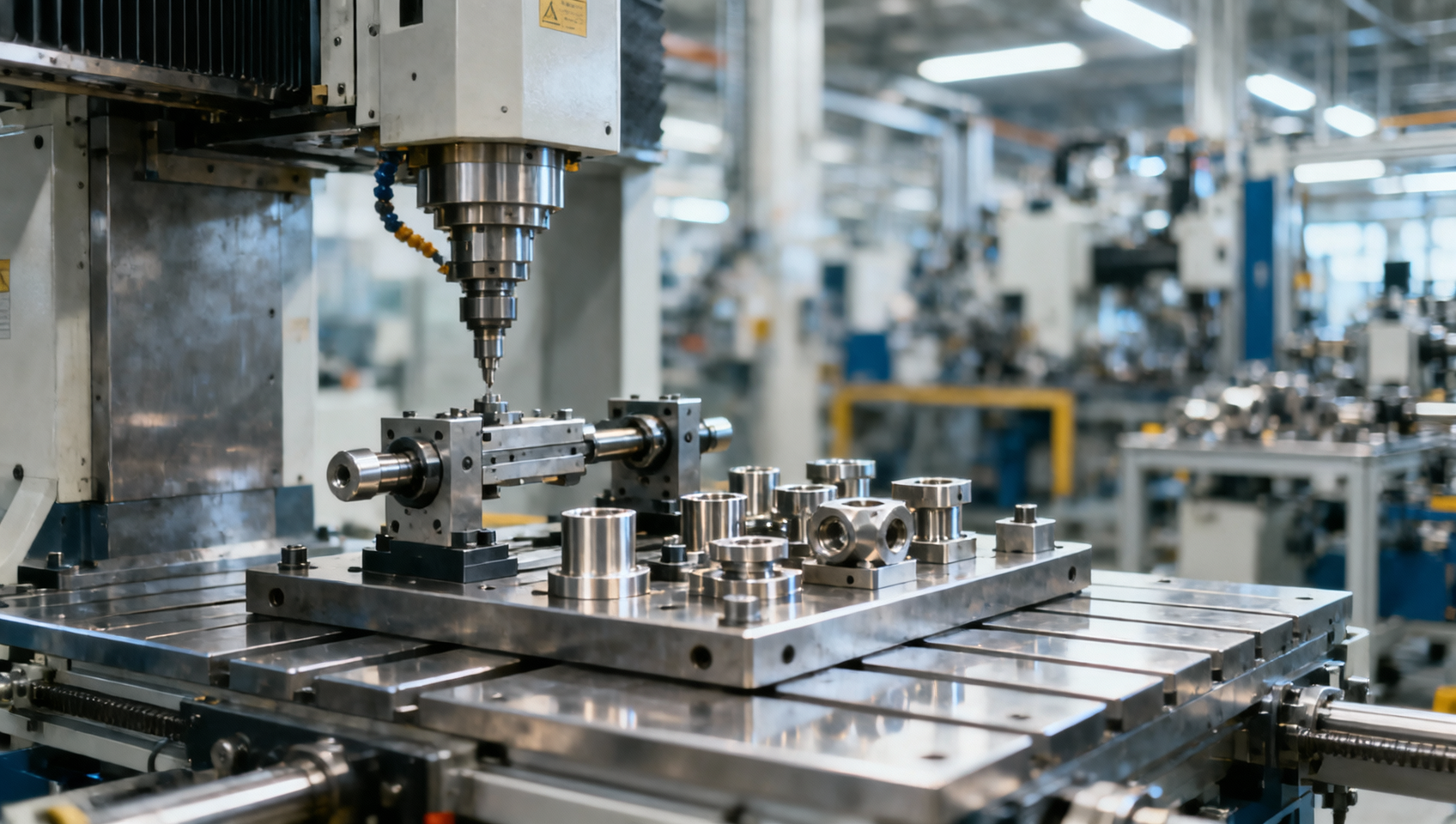
Fixturing and clamping
Weak or poorly designed fixtures can cause movement, deformation, or inconsistent datum positioning. In electronics machining, proper fixtures are essential because many parts are thin-walled, lightweight, or prone to distortion.
Tooling strategy
Cutting tools, tool path planning, feeds, speeds, and tool life management strongly influence burrs, finish quality, and dimensional consistency. Even a high-end CNC machine can produce defects if tooling is poorly matched to the material or geometry.
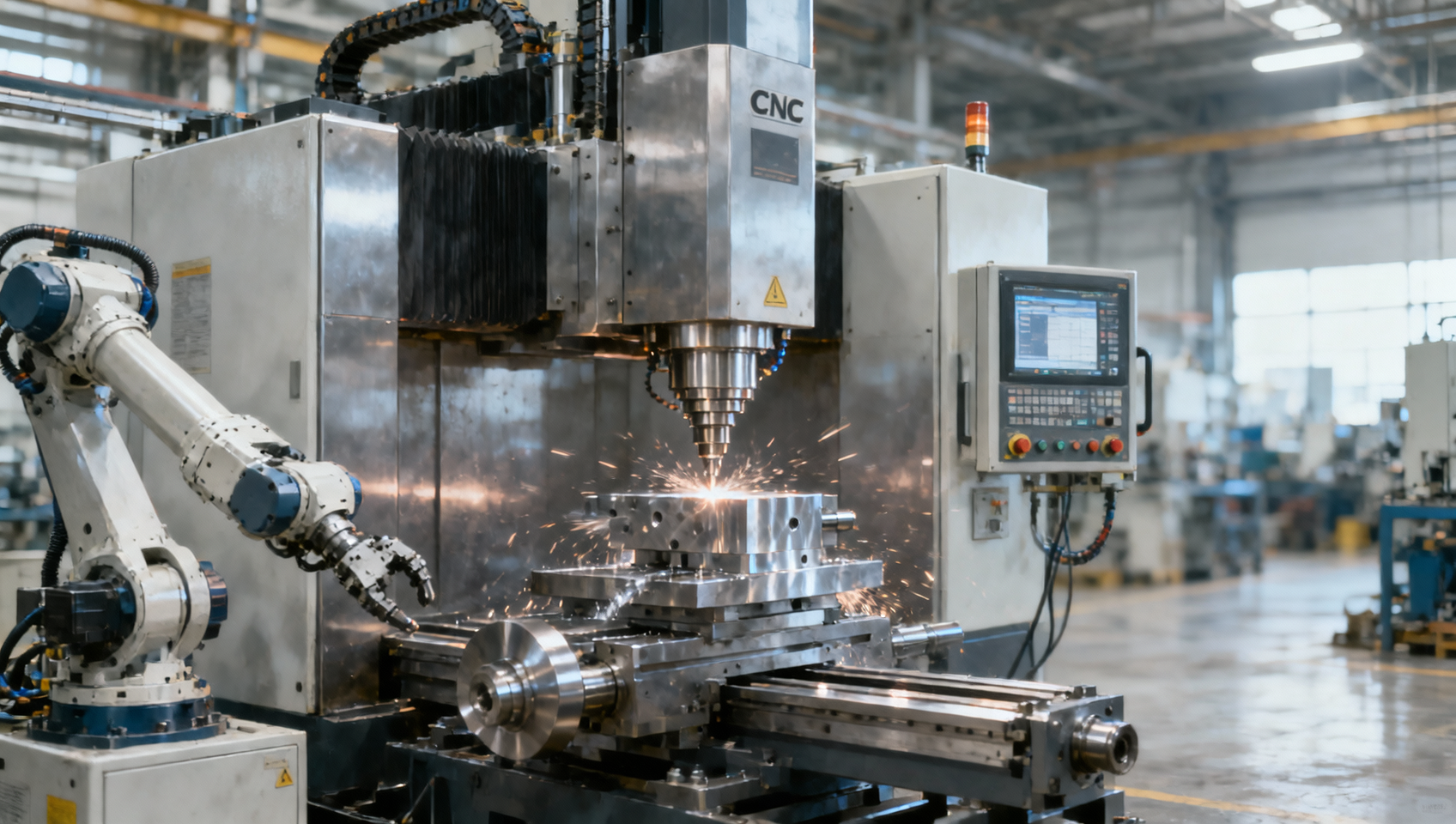
Automation level
Automated loading, in-process probing, and integrated inspection reduce handling variation and improve process discipline. This is one reason automated CNC manufacturing is increasingly attractive for electronics suppliers with stable high-volume orders.
Process monitoring and inspection
To reduce defects reliably, manufacturers need feedback loops. Tool wear monitoring, probing systems, first-article inspection, and statistical process control help catch variation before it becomes expensive scrap.
Operator and programming quality
CNC reduces human error, but it still depends on skilled setup, programming, and process validation. A good machine without good process engineering may still struggle with recurring defects.
Why multi-axis CNC manufacturing is especially useful for electronics parts
Many electronics products require compact, lightweight, and geometrically complex metal parts. Multi-axis CNC manufacturing is valuable because it can machine several surfaces in one setup or a reduced number of setups.
This creates several defect-reduction advantages:
- Lower repositioning error
- Better feature-to-feature accuracy
- Improved consistency in angled or contoured surfaces
- Reduced handling damage on delicate parts
- Shorter cycle times with fewer transfer steps
For procurement teams and decision-makers, this matters because fewer setups often mean both lower defect risk and better throughput. In a competitive environment where yield and delivery speed matter, multi-axis systems can support both quality and operational efficiency.
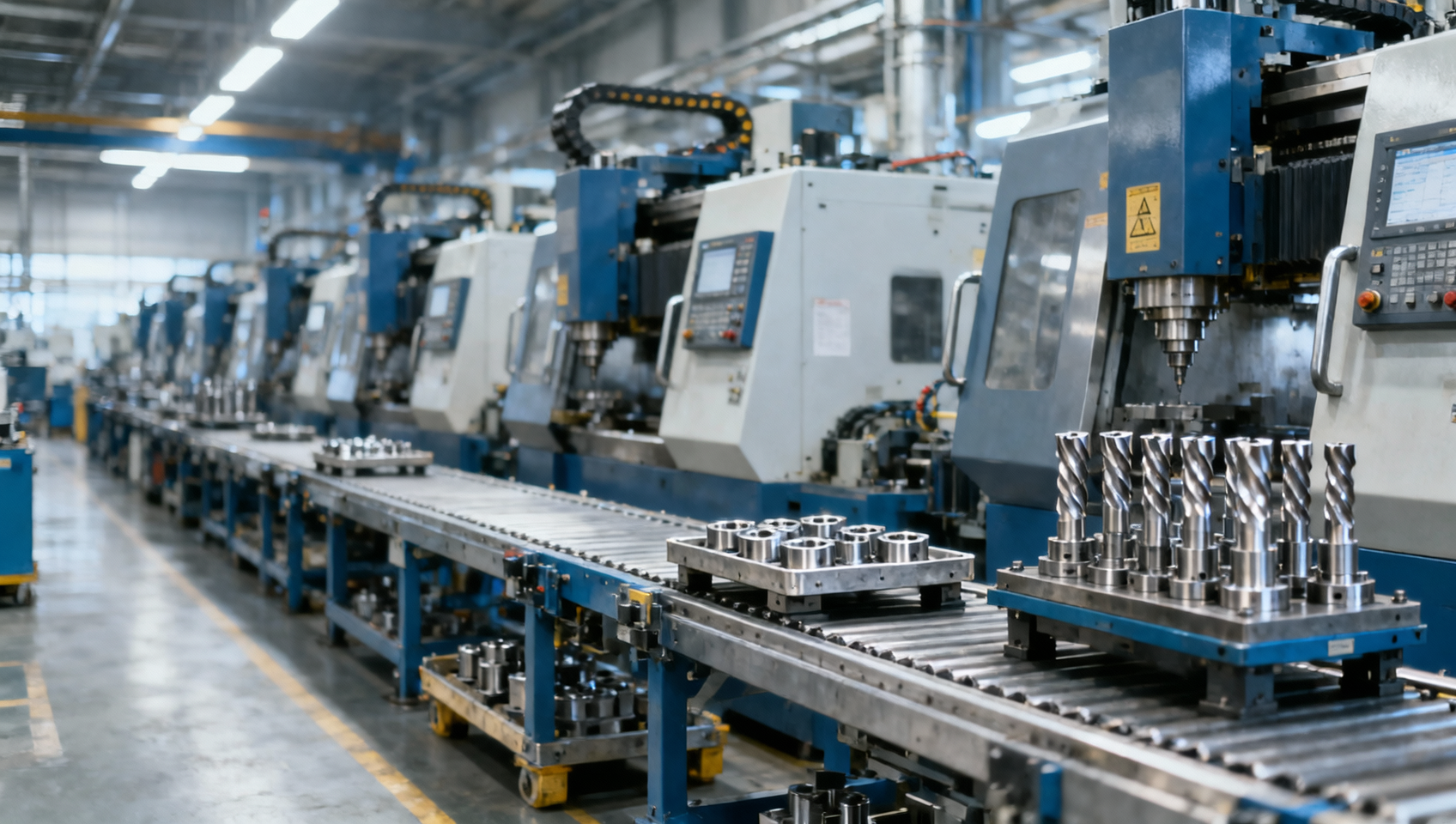
How automated CNC manufacturing improves consistency in high-volume electronics production
When production volume increases, defect reduction depends not only on precision but also on consistency over time. This is where automated CNC manufacturing provides strong value.
Automation supports lower defect rates by:
- Standardizing loading and unloading
- Reducing variation between operators and shifts
- Supporting unattended or lights-out machining with stable controls
- Integrating inspection and compensation functions
- Reducing part handling damage
For companies producing electronic enclosures, heat sinks, terminal components, or support structures at scale, automation can improve first-pass yield and reduce labor-related inconsistency. It also helps management better predict output quality and delivery performance.
What buyers and decision-makers should evaluate before investing
If your goal is to reduce defects through CNC manufacturing for electronics, the buying decision should focus on total quality capability rather than machine price alone.
Key evaluation points include:
- Target tolerances: Can the machine and process reliably achieve the actual tolerance requirements of your electronics parts?
- Part complexity: Do you need 3-axis, 4-axis, or multi-axis CNC manufacturing?
- Material range: Aluminum, copper, stainless steel, and engineering plastics behave differently in machining
- Batch size: High-volume work may justify more automation and integrated inspection
- Quality system: Does the supplier or factory have process control, traceability, and defect-prevention methods in place?
- Tooling and fixture support: Can the process be optimized for your specific parts?
- Energy and operating cost: Energy-saving machine tool systems may reduce operating expenses in long-term production
For procurement professionals, one useful question is: “How does this supplier prove process stability over repeat orders?” The answer should involve inspection records, Cp/Cpk or similar process indicators where applicable, fixture consistency, and clear corrective action procedures.
Common misconceptions about CNC and defect reduction
There are a few common misunderstandings that can lead to poor decisions:
- “A more expensive machine always means fewer defects.” Not necessarily. Process engineering, fixturing, and quality control are just as important.
- “Automation alone solves quality issues.” Automation reduces variation, but unstable tooling or poor programming can still create recurring defects.
- “CNC is only about precision.” In electronics, CNC also helps with repeatability, surface quality, throughput, and traceable process control.
- “If the first sample is good, mass production will be fine.” Real defect reduction depends on sustained stability across batches, shifts, and tool life cycles.
Understanding these points helps both technical teams and management make better sourcing and investment decisions.
How to judge whether a CNC supplier or internal process is truly defect-focused
If you are comparing suppliers or improving your own CNC manufacturing factory operations, look for signs of a mature defect-reduction approach:
- Documented setup standards
- In-process inspection routines
- Tool wear monitoring and replacement rules
- Stable fixturing solutions for thin or complex parts
- Experience with electronics-grade tolerances and finishes
- Capability for multi-axis machining where needed
- Data-driven corrective action when defects appear
The strongest suppliers are usually able to explain not just what machines they own, but how their overall process prevents recurring defects and supports consistent quality at scale.
Conclusion: CNC helps reduce defects when precision, process control, and application fit come together
How CNC manufacturing for electronics helps reduce defects is ultimately a question of controlled repeatability. High precision CNC manufacturing reduces dimensional errors. Automated CNC manufacturing lowers human variation. Multi-axis CNC manufacturing minimizes setup-related defects on complex parts. Together, these capabilities help electronics producers improve yield, reduce scrap, and deliver more reliable products.
For operators, the value lies in stable processes and easier quality control. For buyers, it is better consistency and lower supplier risk. For business decision-makers, it is stronger production efficiency, fewer quality losses, and a more predictable return on manufacturing investment.
The most effective approach is not simply choosing CNC, but choosing the right CNC capability, process design, and quality system for the specific electronics application. That is where real defect reduction happens.
PREVIOUS ARTICLE
Recommended for You
 How to Choose a Heavy-Duty Machining Center for Mold MakingMachine Tool Industry Editorial Team
 How Quick-Change Fixture Design Cuts CNC Turning Setup TimeCNC Machining Technology Center
 Why 5 Axis Machining Is Ideal for Impeller ManufacturingCNC Machining Technology Center
 How to Start Lean Production Without Disrupting OutputManufacturing Market Research Center
 When a Modular Tooling System Improves Flexible ManufacturingMachine Tool Industry Editorial Team
 How CNC Machine Control Systems Improve Automation StabilityMachine Tool Industry Editorial Team

Aris Katos
Future of Carbide Coatings
15+ years in precision manufacturing systems. Specialized in high-speed milling and aerospace grade alloy processing.
▶
What High-Tolerance Disc Parts Require in Aerospace MachiningCNC Machining Technology Center▶
How to Improve Machining Efficiency for Aluminum AlloysCNC Machining Technology Center▶
How CNC Manufacturing for Electronics Helps Reduce DefectsCNC Machining Technology Center▶
Why Precision CNC Manufacturing Fails Tolerance GoalsCNC Machining Technology Center▶
Why Electronics Parts Need Specialized CNC ManufacturingCNC Machining Technology Center
Mastering 5-Axis Workholding Strategies
Join our technical panel on Nov 15th to learn about reducing vibrations in thin-wall components.

Providing you with integrated sanding solutions
Before-sales and after-sales services
Comprehensive technical support