• Global CNC market projected to reach $128B by 2028 • New EU trade regulations for precision tooling components • Aerospace deman
NYSE: CNC +1.2%LME: STEEL -0.4%

How to Improve Machining Efficiency for Aluminum Alloys
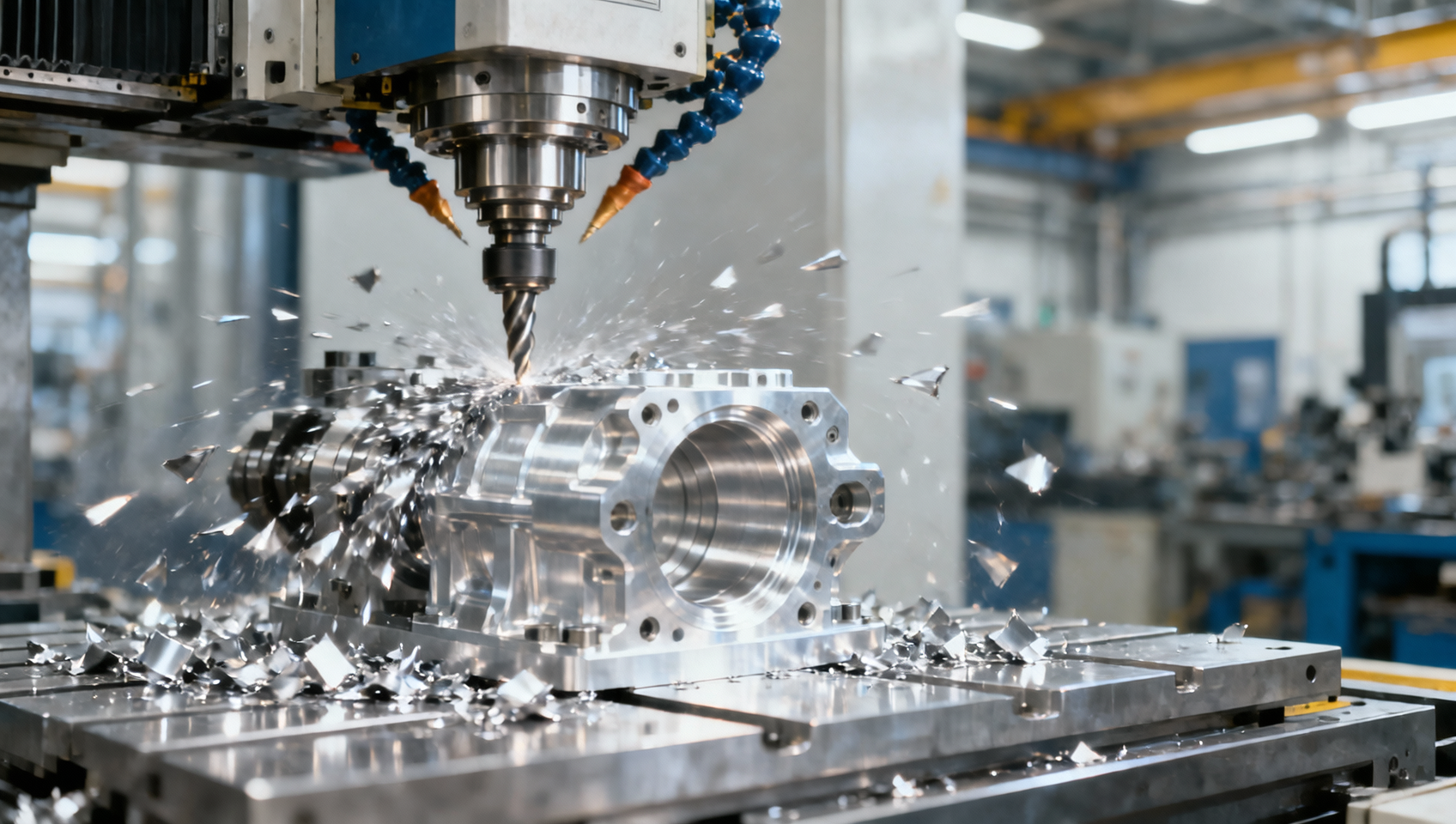
Improving machining efficiency for aluminum alloys requires the right balance of high-speed CNC manufacturing, high precision machine tool performance, and an efficient machining process for aluminum alloys. For buyers, operators, and manufacturing decision-makers, this guide explains how precision CNC manufacturing, quick setup CNC manufacturing, and multi-axis machine tool solutions can reduce cycle time, improve surface quality, and support cost-effective CNC manufacturing across aerospace, automotive, electronics, and energy equipment applications.
Aluminum alloys are widely used because they combine low weight, good corrosion resistance, and strong machinability. Yet many workshops still struggle with unstable chip evacuation, built-up edge, poor dimensional consistency, and unnecessary downtime between setups. In a competitive CNC machine tool market, efficiency is not just about cutting faster. It depends on the full system: spindle capability, tooling geometry, workholding, programming strategy, coolant control, and operator discipline.
For research-oriented readers, this article provides a practical framework for evaluating aluminum machining performance. For operators, it highlights process settings and shop-floor risks. For procurement teams and decision-makers, it outlines how machine configuration, automation level, and service support affect output, cost per part, and long-term production stability.
Understand What Limits Aluminum Machining Efficiency
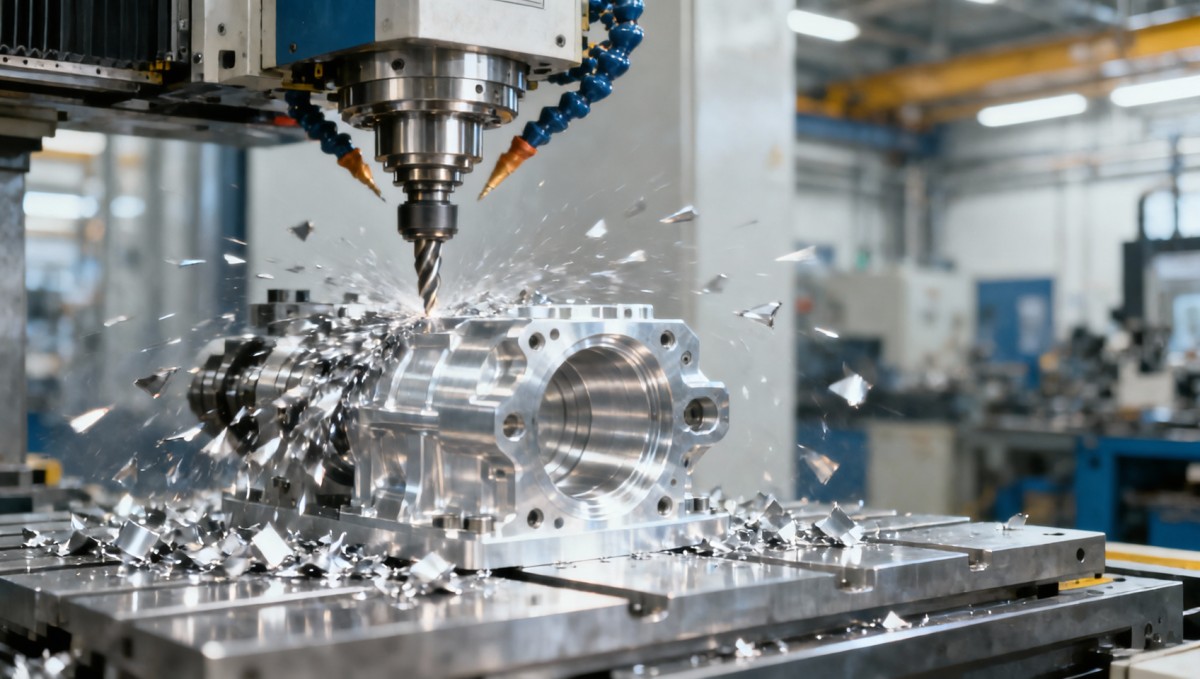
Aluminum is often considered easy to cut, but efficiency losses usually come from process mismatch rather than material difficulty. In many factories, the biggest losses are not in pure cutting time. They appear in 10–25 minute setup delays, frequent tool changes, secondary deburring, and rework caused by chatter or burr formation. If these hidden losses are not measured, even a high-speed CNC machine may deliver lower overall productivity than expected.
Different aluminum grades behave differently under cutting loads. Wrought alloys used in aerospace structural parts may require tighter dimensional control, while die-cast alloys for electronics housings can create abrasive wear due to silicon content. A process that works well for 6061 may not be ideal for 7075 or high-silicon cast aluminum. That is why machining efficiency must be evaluated by alloy type, part geometry, tolerance band, and batch size rather than by one universal feed and speed rule.
Another common limitation is machine-tool mismatch. Shops sometimes use general-purpose machining centers with insufficient spindle acceleration, weak chip flushing, or limited look-ahead control for complex toolpaths. On thin-wall aluminum parts, this can lead to vibration marks and geometry drift. On high-volume components, even a 3–5 second delay in tool change or pallet loading can significantly affect daily throughput when repeated across 300 to 800 parts per shift.
Key Bottlenecks to Identify First
Before investing in new equipment or tools, manufacturers should identify where the process actually slows down. In practice, four bottlenecks account for most efficiency gaps in aluminum machining. These should be reviewed over at least 2 to 3 production cycles so decisions are based on repeatable data rather than one trial run.
- Cycle time imbalance between roughing, semi-finishing, and finishing operations.
- Tool life instability caused by chip welding, heat concentration, or wrong coating selection.
- Setup inefficiency linked to fixture changes, datum alignment, and program verification.
- Quality losses from burrs, deformation, and inconsistent coolant or air blast delivery.
Once these issues are visible, manufacturers can connect machining efficiency to measurable targets such as spindle uptime above 75%, setup reduction by 20%–40%, scrap rate below 2%, or surface roughness within Ra 0.8–1.6 μm for visible parts. This gives operators and management a shared basis for process improvement.
Choose Machine Tool and Tooling Configurations That Match Aluminum Production
High machining efficiency for aluminum alloys starts with the right machine-tool platform. In many B2B production environments, the best results come from machining centers designed for high spindle speed, responsive feed systems, and reliable thermal stability. For example, spindle ranges of 12,000–24,000 rpm are common for aluminum-intensive operations, while rapid traverse rates above 36 m/min help reduce non-cutting time in medium to large batch production.
Machine structure also matters. Aluminum parts are often produced at high feed rates, so acceleration, servo response, and control smoothness can be more important than pure machine mass. For complex housings, multi-axis machine tools can eliminate 2 to 4 separate fixtures by machining multiple faces in one clamping. This not only shortens total cycle time but also improves geometric consistency by reducing cumulative datum transfer error.
Tool selection should focus on flute design, edge sharpness, chip evacuation, and coating suitability. In aluminum cutting, polished carbide tools, high-helix end mills, and sharp positive rake inserts are commonly preferred. Tool diameter and stick-out should be minimized where possible, especially for thin-wall parts. A long overhang may save one setup, but it can easily reduce stability and raise vibration risk by 15%–30% depending on wall thickness and path strategy.
Typical Machine and Tooling Considerations
The table below summarizes practical configuration factors that directly influence aluminum machining productivity in CNC workshops and automated production lines.
The key takeaway is that aluminum machining efficiency depends on system compatibility. A fast spindle alone is not enough if the control, tool changer, fixture access, and chip handling are weak. Procurement teams should therefore compare complete production capability rather than isolated machine specifications.
Procurement Checklist for Buyers
- Confirm whether the machine is intended for aluminum-dominant work or mixed-material production.
- Check spindle range, acceleration, and thermal behavior during runs longer than 4 hours.
- Review fixture change method and whether quick setup can save 15%–30% of preparation time.
- Ask about service response time, spare parts cycle, and training support for operators and programmers.
Optimize Cutting Parameters, Toolpaths, and Workholding
Even with a capable CNC machine tool, poor process planning can erase productivity gains. Aluminum alloys benefit from aggressive but controlled cutting conditions. In roughing, shops often improve removal rates by increasing feed per tooth and using adaptive toolpaths that maintain stable radial engagement. Instead of full-width slotting whenever possible, dynamic milling strategies can reduce heat concentration and lower sudden tool load peaks.
Workholding is another major factor. Thin-wall aluminum housings, heat sinks, structural brackets, and battery tray components may deform if clamping pressure is too high or uneven. A fixture that shortens setup by 8 minutes but causes 0.05–0.10 mm distortion may actually increase total production cost because of rework and inspection delays. For this reason, vacuum fixtures, soft jaws, modular locating systems, and multi-station fixtures are often preferred based on part shape and lot size.
Toolpath optimization should also consider machine dynamics. If a CAM program uses dense point-to-point motion without smoothing, the machine may never reach its commanded feed. In practical shop conditions, programmed feed and actual feed can differ by 10%–25% on complex contours. High-speed machining for aluminum works best when the machine controller, postprocessor, and path strategy are aligned.
Parameter Guidance by Operation Type
The following table provides general process guidance for common aluminum operations. Actual values depend on alloy grade, cutter diameter, machine rigidity, and coolant method, so these ranges should be treated as starting points for trial optimization.
A strong process for aluminum machining usually includes trial verification in 3 stages: baseline run, parameter adjustment, and repeatability confirmation. This method helps teams avoid changing too many variables at once. It also creates a clearer handover between process engineering, operators, and production management.
Practical Improvement Steps
- Use air blast or well-directed coolant to keep chips from recutting in pockets and deep cavities.
- Reduce manual deburring by adding edge-breaking features directly into the machining cycle.
- Standardize tool assemblies so tool length offsets and replacement time stay predictable across shifts.
- Track actual cycle time versus programmed cycle time at least once per batch to identify hidden feed losses.
Reduce Downtime Through Quick Setup, Automation, and Process Control
In many aluminum machining operations, downtime reduction produces faster returns than pushing spindle load harder. A line that cuts 12% faster but loses 40 minutes per shift to setup and tool searching will often underperform a well-organized cell. Quick setup CNC manufacturing is especially valuable for suppliers handling multiple part numbers, frequent engineering changes, or lot sizes between 50 and 500 units.
Modular fixtures, preset tool libraries, barcode-based tool management, and palletized loading can reduce changeover time significantly. In medium-volume manufacturing, changing from conventional setup to quick-change workholding may lower setup time from 20 minutes to 8–12 minutes. When this happens 4 to 6 times per shift, the gain is meaningful without changing the core machine.
Automation does not always mean a fully unmanned factory. For aluminum parts, practical automation may include automatic door operation, pallet changers, robot loading for repetitive blanks, in-process probing, and tool break detection. These functions help control consistency across day and night shifts, particularly where labor skill levels vary. For procurement and leadership teams, the right question is not whether to automate everything, but which 2 or 3 steps create the highest return within 6 to 18 months.
Where Process Control Delivers Immediate Value
The most effective control points are usually simple and measurable. They focus on reducing instability before it becomes scrap, machine stoppage, or late delivery.
- First-piece verification with probing to avoid running 20 or 50 nonconforming parts before inspection catches an offset error.
- Tool life monitoring by cut count or spindle time rather than waiting for visible surface decline.
- Scheduled chip cleaning and coolant concentration checks every 1 to 2 shifts in high-volume aluminum production.
- Digital job instructions to reduce operator interpretation differences across multiple machines.
In smart manufacturing environments, even basic machine monitoring can improve scheduling quality. If planners can see true machine utilization, idle time, alarm frequency, and setup duration, they can make better decisions about whether to add a second shift, outsource overflow, or invest in another machining center.
Common Mistakes That Slow Output
A frequent mistake is focusing only on peak cutting speed while ignoring peripheral delays. Another is using one fixture design for all part families, even when geometry and clamping needs differ. Shops also underestimate the value of operator training. A 2-hour process handover with clear setup photos, offset logic, and alarm response steps can prevent many of the stoppages that reduce real machining efficiency over a weekly production schedule.
Evaluate Cost, Quality, and Supplier Capability Before Scaling Aluminum Production
For buyers and enterprise decision-makers, improving machining efficiency is not only a technical task. It is a sourcing and investment decision. Cost-effective CNC manufacturing for aluminum should be judged by total output performance, not just machine purchase price or quoted hourly rate. A lower-cost supplier may become expensive if cycle times are long, dimensional stability is inconsistent, or on-time delivery drops during demand peaks.
When comparing machine tool suppliers, contract manufacturers, or expansion plans for in-house production, it is helpful to evaluate five dimensions: machine capability, process maturity, delivery flexibility, quality control, and service responsiveness. In aluminum-heavy sectors such as automotive components, electronics enclosures, energy equipment, and aerospace substructures, these dimensions often matter more than headline speed claims alone.
Decision-makers should also consider future mix. If current projects are simple 3-axis parts but upcoming programs involve complex geometry, thin walls, or tighter tolerances, a multi-axis machine tool investment may deliver a better 3-year return than a cheaper general-purpose solution. The same logic applies to automation. If labor turnover is high or night-shift production is required, probing and pallet handling may reduce risk more effectively than adding more manual stations.
Supplier and Investment Evaluation Table
The table below can be used as a practical reference when discussing aluminum machining capability with equipment vendors or manufacturing partners.
A reliable aluminum machining strategy balances quality, delivery, and cost across the whole production chain. If your team is planning equipment upgrades, comparing CNC manufacturing partners, or optimizing current aluminum part programs, a structured assessment will shorten the path to measurable gains. Contact us to discuss your machining requirements, request a tailored solution, or learn more about machine tools, tooling strategies, and precision manufacturing options for aluminum applications.
PREVIOUS ARTICLE
Recommended for You
 How to Choose a Heavy-Duty Machining Center for Mold MakingMachine Tool Industry Editorial Team
 How Quick-Change Fixture Design Cuts CNC Turning Setup TimeCNC Machining Technology Center
 Why 5 Axis Machining Is Ideal for Impeller ManufacturingCNC Machining Technology Center
 How to Start Lean Production Without Disrupting OutputManufacturing Market Research Center
 When a Modular Tooling System Improves Flexible ManufacturingMachine Tool Industry Editorial Team
 How CNC Machine Control Systems Improve Automation StabilityMachine Tool Industry Editorial Team

Aris Katos
Future of Carbide Coatings
15+ years in precision manufacturing systems. Specialized in high-speed milling and aerospace grade alloy processing.
▶
What High-Tolerance Disc Parts Require in Aerospace MachiningCNC Machining Technology Center▶
How to Improve Machining Efficiency for Aluminum AlloysCNC Machining Technology Center▶
How CNC Manufacturing for Electronics Helps Reduce DefectsCNC Machining Technology Center▶
Why Precision CNC Manufacturing Fails Tolerance GoalsCNC Machining Technology Center▶
Why Electronics Parts Need Specialized CNC ManufacturingCNC Machining Technology Center
Mastering 5-Axis Workholding Strategies
Join our technical panel on Nov 15th to learn about reducing vibrations in thin-wall components.

Providing you with integrated sanding solutions
Before-sales and after-sales services
Comprehensive technical support