• Global CNC market projected to reach $128B by 2028 • New EU trade regulations for precision tooling components • Aerospace deman
NYSE: CNC +1.2%LME: STEEL -0.4%

CNC metalworking quality checks that catch warping earlier
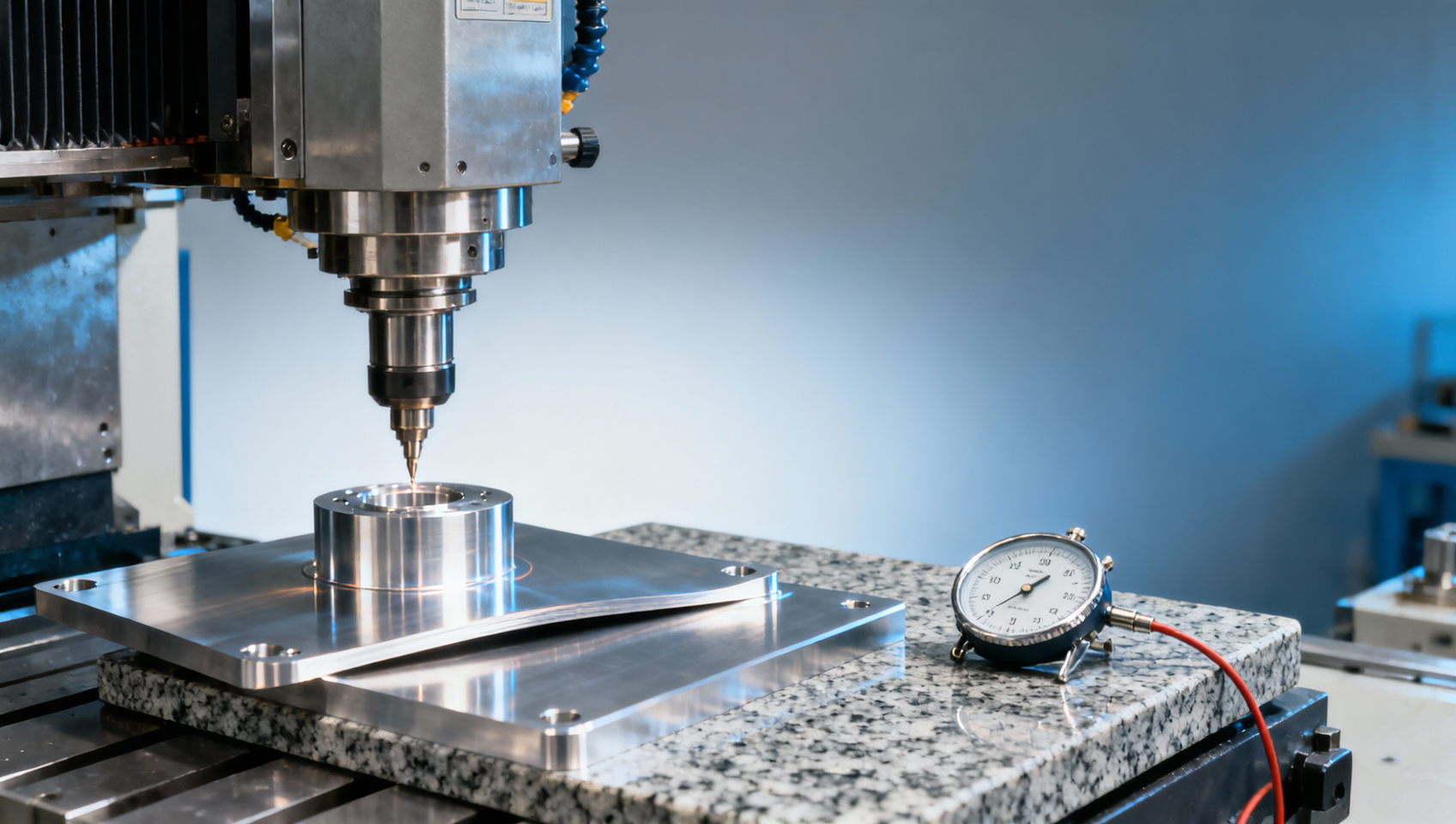
In CNC metalworking, warping can quietly undermine part accuracy, surface quality, and delivery schedules long before final inspection. For teams involved in metal machining, industrial CNC operations, and automated production, early quality checks are critical to stabilizing the production process, reduce scrap, and protect performance in today’s Global Manufacturing and Manufacturing Industry environment.
For researchers, machine operators, buyers, and manufacturing leaders, the practical question is not whether warping happens, but how early it can be detected and controlled. In CNC machining, even a distortion of 0.05 mm to 0.20 mm can push a precision part outside tolerance, especially in aerospace brackets, electronics housings, energy equipment components, and automotive structural parts.
The most effective quality strategy is to move checks upstream. Instead of relying on one final dimensional report, manufacturers can use staged inspection, in-process monitoring, fixture verification, and thermal control to catch deformation when corrective action is still fast and affordable. This article explains which CNC metalworking quality checks identify warping earlier, how to deploy them, and what buyers should evaluate when comparing machining suppliers or internal process capabilities.
Why warping appears early in CNC metalworking processes
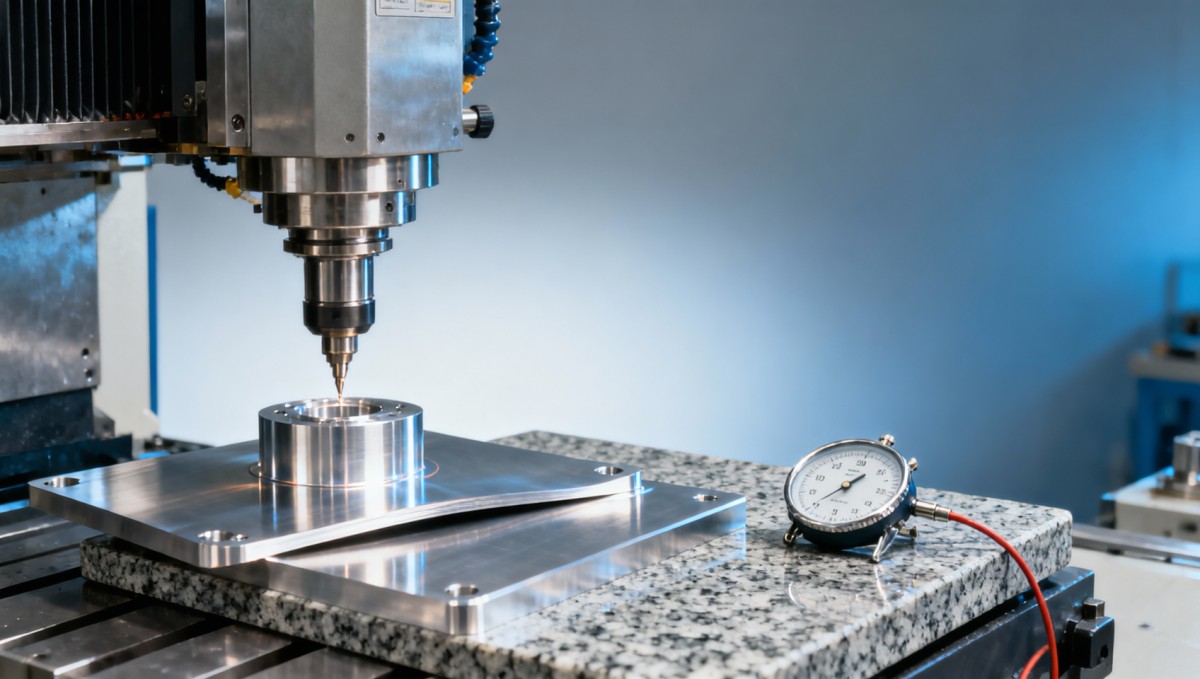
Warping in CNC metalworking is rarely caused by a single issue. It usually develops from a combination of residual material stress, uneven stock removal, clamping pressure, heat buildup, and insufficient process sequencing. In shops producing aluminum plates, stainless steel frames, or thin-wall steel parts, distortion may start after roughing and continue through finishing if the process plan does not release stress in a controlled way.
A common example is a plate component machined from rolled aluminum. After 40% to 60% of material is removed on one side, internal stress redistributes and the part may bow by 0.10 mm or more. If the shop waits until final inspection, the part may already require rework, manual straightening, or complete scrap. Early checks after roughing, semi-finishing, and unclamping reduce that risk significantly.
Thermal conditions are another major factor. During long CNC cycles, local cutting temperatures and spindle heat can create temporary dimensional changes. A part measured immediately after machining may look flat, then move out of tolerance after cooling for 15 to 30 minutes. For this reason, timing of inspection matters almost as much as the inspection method itself.
For operations managers and decision-makers, the cost impact is substantial. A warped part does not only affect one component. It can delay assembly fit, trigger downstream rejects, increase fixture adjustments, and slow line balancing. In high-mix, low-volume production, a single distorted setup can disrupt 3 to 5 orders in the same shift if inspection feedback is delayed.
Early warning conditions operators should watch
Operators often see the first warning signs before the quality department does. These signals include changing tool load, inconsistent chip shape, shifting zero references, unstable vacuum or clamp behavior, and visible spring-back when the part is released. Recording these changes during the first 2 to 3 production pieces helps establish a realistic distortion baseline.
- Tool pressure rises unexpectedly during the same toolpath on similar material batches.
- A flatness check after roughing shows deviation beyond 30% to 50% of final tolerance.
- The part moves after unclamping, even when machine-side probing looked acceptable.
- Surface finish varies across thin walls, pockets, or ribs with identical cutting parameters.
The quality checks that catch warping before final inspection
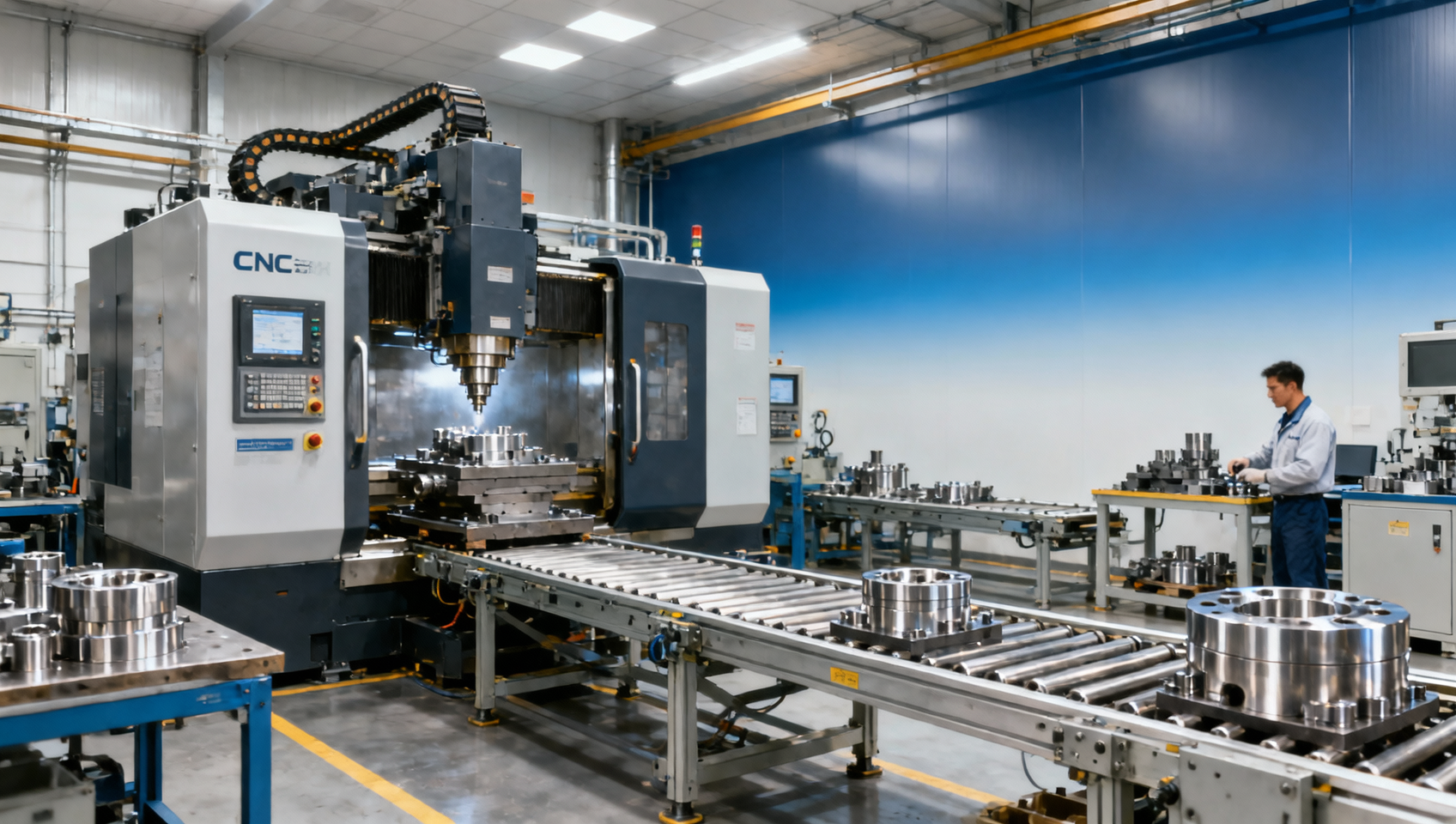
Early detection depends on layered inspection rather than one single device. The best CNC metalworking quality checks are positioned at critical transition points: before machining, after roughing, after reclamping, after semi-finishing, and after thermal stabilization. This staged approach works in both standalone machine shops and automated production lines.
Pre-machining material checks are often overlooked. Flatness of incoming stock, hardness variation, and prior stress from rolling, forging, or welding should be checked before the first cut. For medium-precision work, a simple reference check on a granite surface plate may be enough. For tighter tolerances, shops may use a height gauge, dial indicator, or CMM to confirm initial condition and prevent false assumptions later in the process.
In-process probing is one of the fastest ways to detect movement. A touch probe can compare reference points before and after major stock removal. If the shift exceeds a preset threshold such as 0.03 mm, 0.05 mm, or a customer-defined control limit, the machine can trigger an alert or pause for intermediate correction. This is particularly useful for multi-axis machining centers handling thin-wall or asymmetrical parts.
Post-unclamp checks are equally important. Some parts look stable in the fixture but deform immediately when clamping force is removed. A practical routine is to inspect flatness or key datum relationships within 5 minutes of release, then repeat after a 20-minute cooling and rest period. The difference between the two readings reveals whether the issue is fixture-induced, thermal, or stress-related.
Most useful checkpoints by production stage
The table below shows how different checks fit into the CNC metalworking workflow and what each one can reveal about early warping risk.
The key takeaway is that warping should be measured as a process event, not just a final defect. Shops that place inspection at 4 or 5 control points usually identify the cause faster than shops that rely only on end-of-line metrology.
High-value tools for different shop sizes
- For small and medium shops: dial indicators, straight edges, granite plates, and repeatable fixture checks provide low-cost control.
- For higher-volume cells: in-machine probing, SPC records, and digital offset tracking reduce reaction time.
- For high-precision or export work: CMM verification, thermal compensation procedures, and batch-level trend analysis offer stronger consistency.
Process settings and fixture controls that reduce deformation risk
Quality checks work best when paired with process controls. If a part repeatedly warps after roughing, the inspection result should trigger a change in cutting strategy, fixturing, or sequence planning. Otherwise, the shop only measures distortion without reducing it. For B2B buyers, this is an important distinction when evaluating CNC suppliers: the right partner should explain both detection and corrective action.
Balanced material removal is one of the most effective controls. On parts with large pockets or thin ribs, removing stock from one side only can generate uneven stress release. A more stable method is to split roughing into 2 or 3 passes, alternate sides when possible, and leave a semi-finish allowance such as 0.2 mm to 0.8 mm for final stabilization. This approach may add cycle time, but often cuts scrap rates and rework hours.
Fixture force also deserves close attention. Excessive clamping can temporarily flatten a part, hiding movement until release. Insufficient clamping can cause chatter and local deflection. Shops should validate clamp points, support spacing, and torque consistency. On thin-wall aluminum or stainless parts, support locations may need adjustment within 10 mm to 30 mm to control spring-back effectively.
Temperature management matters in long cycles and dense production schedules. Coolant condition, spindle warm-up, room temperature stability, and part rest time all influence measurement reliability. Even a 2°C to 5°C difference between machine and inspection area can distort flatness or position readings on larger components. For tighter work, shops often define a standard stabilization window before final sign-off.
Recommended process controls by part type
Different part geometries respond differently to machining stress. The following comparison helps operators, engineers, and buyers match controls to the actual workpiece profile.
The most reliable suppliers usually combine these process controls with documented inspection gates. Buyers should ask whether corrective action starts when a trend appears at 50% of tolerance, not only when the part is already nonconforming.
Common mistakes that delay detection
- Measuring the part while it is still hot and assuming the value will remain stable.
- Using fixture-held dimensions only, without checking part behavior after release.
- Applying the same clamping strategy to 5 mm walls and 25 mm sections.
- Skipping incoming material verification for repeat orders, even when batch origin changes.
How buyers and decision-makers should evaluate anti-warping capability
For procurement teams and business leaders, a CNC supplier’s ability to catch warping early is a practical quality indicator. It affects delivery reliability, PPAP or first article performance, assembly fit, and total landed cost. A low quoted price can become expensive if distortion causes 2 extra setup cycles, delayed shipments, or inconsistent repeat orders.
When comparing suppliers, ask how they control warping across the full process. The answer should cover incoming material checks, fixture validation, in-process probing, intermediate inspection, and final verification after part stabilization. If the supplier can only discuss final CMM reports, the quality system may be reactive rather than preventive.
It is also useful to review response speed. In many industrial CNC environments, the value of a quality system depends on how quickly it converts a measurement into action. A shop that flags deviation within the first 3 pieces and adjusts the process in the same shift often performs better than one with sophisticated equipment but slow feedback loops.
For strategic sourcing, buyer evaluation should include process transparency. Can the supplier provide control plans, inspection frequency, sample reports, and escalation rules? Can it explain acceptable variation ranges, such as flatness checkpoints at 50%, 75%, and 100% of finished condition? That level of clarity is especially important in automotive, aerospace support chains, electronics enclosures, and energy equipment manufacturing.
Procurement checklist for early warping control
The table below can be used in RFQ reviews, supplier audits, or internal process assessments when warping risk is a known concern.
This checklist helps buyers compare actual process discipline, not just machine count or quoted lead time. In many cases, disciplined inspection gates provide more long-term value than a lower initial unit price.
Questions worth asking during supplier review
- What is your standard inspection frequency for first-off, in-process, and final verification?
- How do you measure parts after unclamping and after thermal stabilization?
- What threshold triggers process adjustment: 25%, 50%, or 80% of tolerance?
- Can you support repeatable reporting for global manufacturing programs and multi-site supply chains?
Implementation roadmap and practical FAQ for stable CNC quality control
A practical rollout does not need to be complex. Most manufacturers can improve early warping detection in 3 stages. First, identify the top 5 part families with the highest distortion risk. Second, add one intermediate inspection gate after major material removal. Third, define a reaction plan with measurable thresholds, operator responsibility, and engineering escalation rules.
For automated production environments, digital records are especially useful. Capturing probe data, fixture settings, temperature notes, and post-release inspection values allows teams to compare shifts, machines, and material batches. Over time, this reduces variation and supports better quoting, process planning, and capacity decisions.
For users and operators, the priority is consistency. A simple, repeatable check performed every batch is more effective than an advanced method used only occasionally. For managers and buyers, the priority is traceability. If a quality event occurs, the records should show when the distortion appeared, what changed, and how the issue was contained within hours rather than days.
The broader manufacturing trend is clear: as CNC machining becomes more precise, more automated, and more globally integrated, quality systems must detect problems earlier. Warping control is no longer just a metrology issue. It is a process capability issue that directly influences lead time, cost, and customer confidence.
FAQ: practical answers for CNC warping control
How early should a shop check for warping?
A good minimum is 3 checkpoints: before machining, after roughing, and after unclamping. For thin-wall or high-precision parts, 4 to 5 checkpoints are safer, including a post-cooling verification after 15 to 30 minutes.
Which parts are most likely to deform?
Large plates, thin-wall housings, welded structures, and asymmetrical multi-axis components are common high-risk categories. Parts with high stock removal ratios, often above 50%, also deserve closer in-process inspection.
Is in-machine probing enough on its own?
No. Probing is excellent for detecting datum shift during machining, but it cannot fully reveal spring-back after release. A complete strategy combines in-machine checks with off-machine flatness or position verification.
What is a reasonable control threshold?
Many shops react when in-process deviation reaches 30% to 50% of the final tolerance. The exact threshold depends on geometry, material, and customer requirements, but waiting until 90% usually leaves too little room for correction.
Catching warping earlier in CNC metalworking requires a combination of material awareness, staged inspection, fixture discipline, thermal control, and fast corrective action. For information researchers, operators, procurement teams, and enterprise decision-makers, the value is clear: fewer surprises at final inspection, lower scrap exposure, and more dependable production performance across modern manufacturing environments.
If you are evaluating CNC machining capability, improving an internal quality plan, or comparing suppliers for precision metal parts, a well-designed early-check system should be a core requirement. Contact us to discuss your application, get a tailored process review, or learn more solutions for stable CNC machining quality and global manufacturing supply support.
Recommended for You
 What causes chatter in metal machining and how to stop itCNC Machining Technology Center
 Industrial CNC lead times are shifting in 2026Manufacturing Market Research Center
 When CNC industrial upgrades cut output instead of raising itMachine Tool Industry Editorial Team
 Automated lathe errors that often start with bar feedingMachine Tool Industry Editorial Team
 Why CNC metalworking scrap rates rise on thin wall partsCNC Machining Technology Center
 CNC cutting speed or finish quality: where losses beginCNC Machining Technology Center

Aris Katos
Future of Carbide Coatings
15+ years in precision manufacturing systems. Specialized in high-speed milling and aerospace grade alloy processing.
▶
Why CNC metalworking scrap rates rise on thin wall partsCNC Machining Technology Center▶
CNC milling burrs at pocket edges usually point to this mismatchCNC Machining Technology Center▶
Shaft Parts runout problems are not always caused by the spindleCNC Machining Technology Center▶
CNC metalworking quality checks that catch warping earlierCNC Machining Technology Center▶
How CNC milling accuracy shifts when cutting hardened alloy steelsCNC Machining Technology Center
Mastering 5-Axis Workholding Strategies
Join our technical panel on Nov 15th to learn about reducing vibrations in thin-wall components.

Providing you with integrated sanding solutions
Before-sales and after-sales services
Comprehensive technical support