• Global CNC market projected to reach $128B by 2028 • New EU trade regulations for precision tooling components • Aerospace deman
NYSE: CNC +1.2%LME: STEEL -0.4%

Can metal machining stay competitive with rising energy costs?
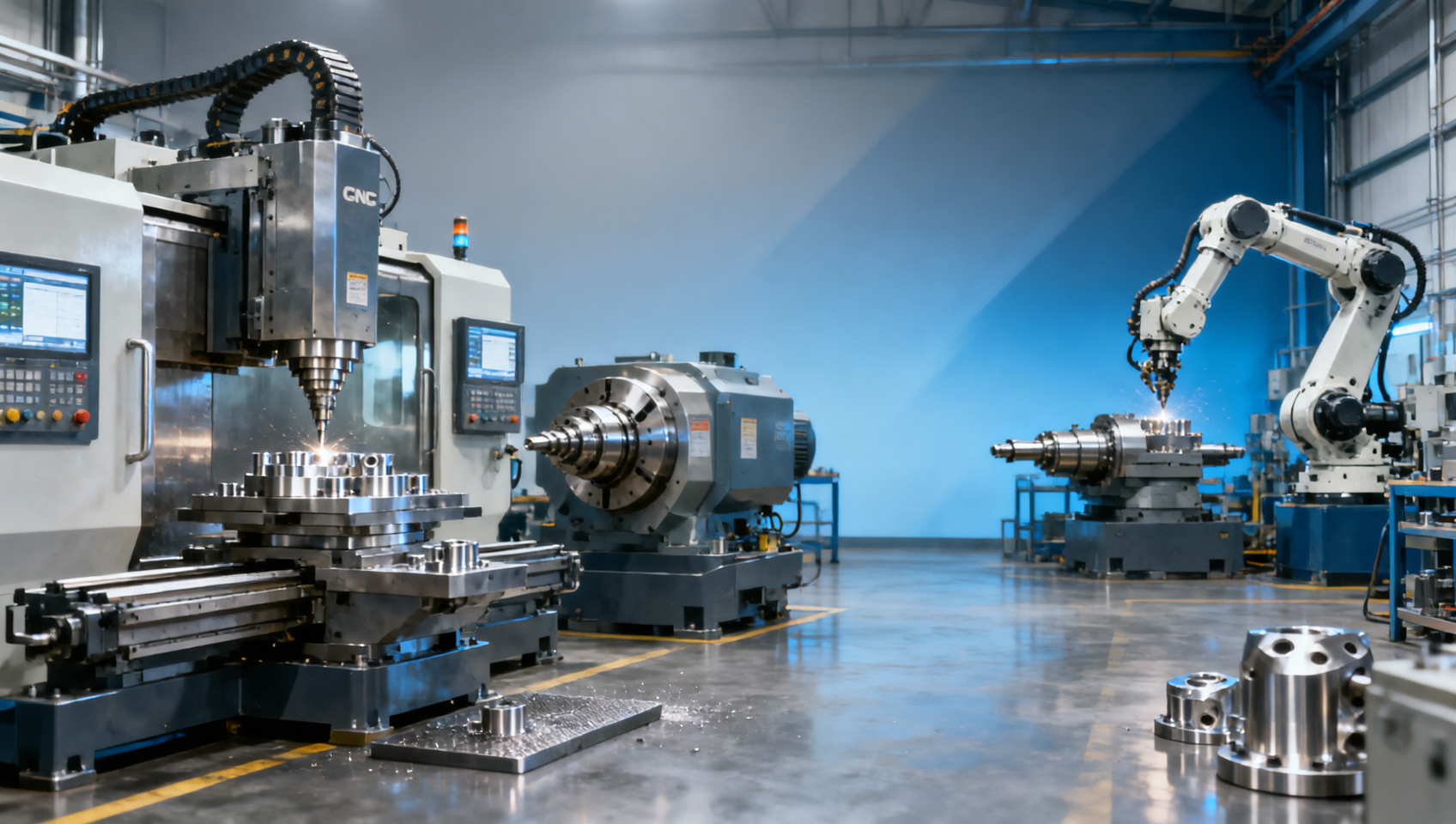
As energy prices climb, metal machining faces a critical test: can industrial CNC, CNC milling, and automated production remain cost-effective without sacrificing precision or output? For manufacturers, buyers, and operators across the Global Manufacturing landscape, the answer depends on smarter CNC production, optimized production process control, and deeper Industrial Automation adoption.
In the CNC machine tool industry, energy is no longer a background utility cost. It directly affects part pricing, machine utilization, delivery schedules, and investment decisions. For factories running CNC lathes, machining centers, multi-axis systems, and automated production lines, even a 10% to 20% increase in electricity tariffs can reshape operating margins on high-volume contracts.
This matters to several groups at once. Operators need stable machining conditions and practical energy-saving routines. Procurement teams need to compare machines not only by purchase price but also by kWh consumption, maintenance intervals, and automation compatibility. Business decision-makers need to know whether upgrading equipment, rebalancing shifts, or improving production process control will deliver measurable returns within 12 to 36 months.
The good news is that metal machining can remain competitive. The challenge is that competitiveness now depends less on isolated machine performance and more on system-level efficiency: spindle load management, cutting parameter optimization, compressed air control, predictive maintenance, digital monitoring, and the wider use of Industrial Automation across the shop floor.
Why rising energy costs hit metal machining so hard
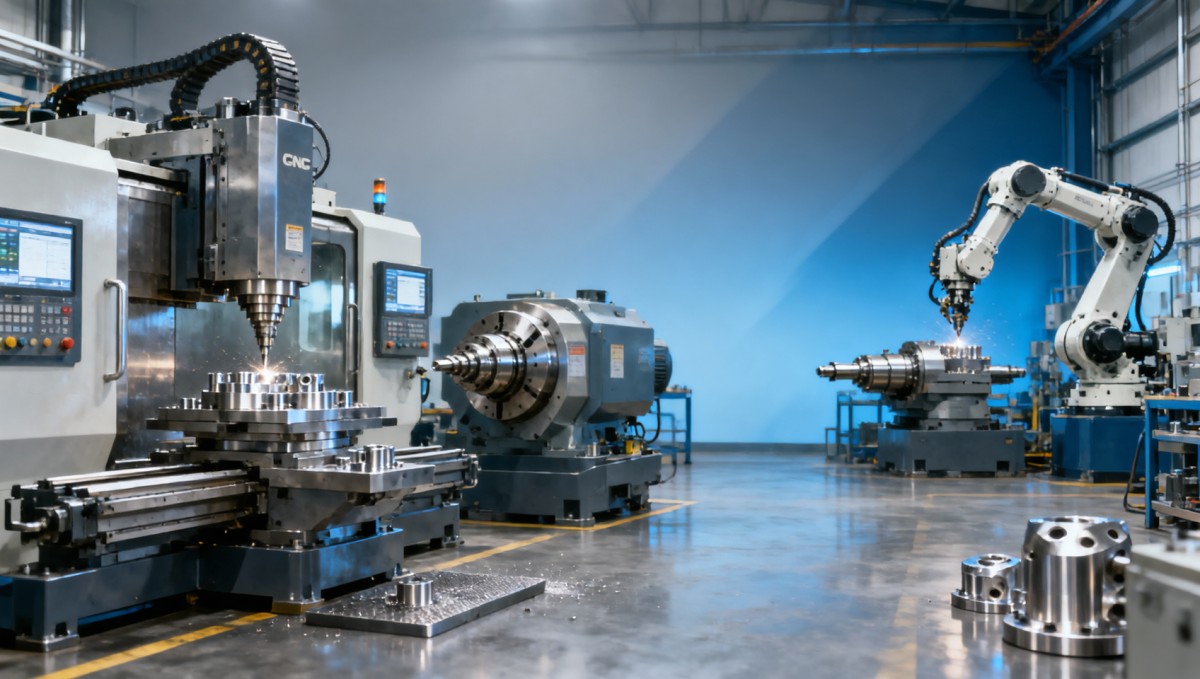
Metal machining is energy-intensive because power is consumed at several stages at once. A single machining center may draw electricity for spindle rotation, axis movement, coolant circulation, chip evacuation, control systems, lighting, and standby functions. In many workshops, the machine does not stop consuming power when cutting stops. Idle power draw of 20% to 40% of peak demand is common in older setups.
The cost pressure becomes more severe when production includes hard materials, tight tolerances, or multi-step processing. Aerospace parts, automotive transmission components, precision shafts, and structural parts often require longer cycle times, additional finishing, and strict thermal stability. That means energy costs are tied not only to machine hours but also to quality requirements such as tolerances within ±0.01 mm to ±0.05 mm.
Another hidden factor is utility dependency outside the machine itself. Compressed air systems, oil mist extraction, coolant chillers, metrology rooms, and industrial robots all add load. In automated production environments, indirect energy use can represent 15% to 30% of total shop-floor consumption, especially in facilities operating 2 shifts to 3 shifts per day.
Where the energy burden usually accumulates
For many factories, the issue is not one major source but several moderate losses. Standby waste, poorly tuned cutting parameters, oversized motors, and long warm-up periods gradually erode competitiveness. This is why two plants making similar parts can show a cost gap of 8% to 18% per unit even when labor rates are comparable.
- Idle and standby power during setup, tool change delays, or waiting for material flow.
- Excessive spindle load caused by conservative toolpaths or worn cutting tools.
- Compressed air leakage and overuse in chip clearing and pneumatic clamping systems.
- Coolant systems running continuously instead of demand-based operation.
- Repeated rework due to unstable process control, which doubles machine time and energy use.
The following comparison shows how energy cost pressure typically differs by machining setup and production organization.
The key takeaway is that energy inflation does not automatically make CNC production uncompetitive. It mainly punishes poor utilization, fragmented workflow, and outdated support systems. Plants that monitor actual consumption by machine, shift, and part family are usually better positioned to protect margins.
How CNC production can stay cost-competitive
The first step is to stop treating energy as a fixed overhead. Competitive manufacturers now calculate cost per part using machine time, tool wear, scrap rate, setup duration, and energy intensity together. In practical terms, that means measuring kWh per spindle hour, per batch, or per finished component. Even simple monitoring can reveal whether one product family consumes 25% more energy than expected.
Second, process engineering matters as much as equipment age. A newer machine is not always the only answer. In many cases, optimized feed rates, adaptive toolpaths, better workholding, and reduced air-cutting time cut cycle time by 5% to 12%. That directly lowers electricity use while preserving precision. For shops processing aluminum, alloy steel, stainless steel, or cast iron, parameter optimization often produces faster payback than full machine replacement.
High-impact measures that usually deliver results first
Energy competitiveness improves when the factory focuses on the highest-return actions before making large capital decisions. Shops that act in 3 phases usually see clearer results: quick operational fixes in 30 days, process tuning in 60 to 90 days, and automation or retrofit decisions after performance data is validated.
- Measure base load, idle load, and active cutting load for at least 2 weeks.
- Reduce non-cutting time through tool presetting, fixture standardization, and smarter scheduling.
- Optimize spindle utilization and tool life through tested cutting data rather than conservative assumptions.
- Set automatic sleep or shutdown logic for machines inactive beyond 10 to 20 minutes where production allows.
- Inspect coolant pumps, air systems, and extraction units for unnecessary continuous operation.
The role of production process control
Production process control is often the difference between a factory that absorbs higher utility prices and one that loses bids. Stable scheduling reduces repeated warm-up cycles. Controlled tool management avoids over-cutting with worn tools. In-line inspection reduces scrap, which is especially important when each rejected precision part may represent 20 to 90 minutes of machine energy already consumed.
The following table outlines practical actions by investment level and expected business effect.
For buyers and managers, the lesson is clear: competitiveness comes from matching the right solution to the production profile. A job shop with 30 part numbers per week may benefit most from setup reduction and monitoring, while a mass-production line making 5,000 units per month may justify deeper automation and machine upgrades.
Where Industrial Automation creates the strongest energy advantage
Industrial Automation does not automatically reduce energy use in every scenario, but it often reduces energy per finished part. The reason is simple: automated production raises consistency, shortens waiting time, and improves spindle utilization. When robots, pallet systems, automatic tool management, and digital scheduling are correctly integrated, machines spend more time cutting and less time sitting energized but inactive.
This is especially valuable in operations with medium to high volume, repeatable geometries, and multi-shift demand. In such cases, unattended or lightly attended production can stretch useful machine hours from 10 to 14 hours per day up to 18 to 22 hours, depending on part complexity and maintenance discipline. That spreads fixed energy and equipment costs across more output without lowering quality.
Best-fit automation scenarios
Automation tends to show the strongest payback when production bottlenecks are already known. If the main issue is random scheduling, poor fixturing, or unstable tooling, automation alone may only increase complexity. But where the process is stable, the gains can be substantial in throughput, consistency, and utility efficiency.
- Automotive components with predictable batch sizes and repetitive machining cycles.
- Aerospace subcontracting where probing, traceability, and repeatability are critical.
- Energy equipment manufacturing with heavy parts and long setup times that benefit from palletization.
- Electronics and precision metal parts where small dimensional drift can cause high scrap costs.
What operators and engineers should watch
Automation must be supported by maintenance and training. A robot cell with poorly maintained grippers, misaligned feeders, or unstable probes can create stoppages that erase energy savings. Operators should track at least 4 indicators every week: machine utilization, alarm frequency, setup loss, and scrap or rework rate. Even a 3% drop in utilization can materially affect the economics of an automated line.
For procurement teams, the right question is not “Is automation cheaper?” but “Under what production conditions does automation lower energy cost per acceptable part?” That framing leads to better investment choices and more realistic ROI planning.
What buyers and decision-makers should evaluate before investing
A competitive response to rising energy prices starts with disciplined evaluation. Buyers should compare machine tools and production solutions using total operating logic, not only list price. A lower-cost machine may become more expensive over 3 to 5 years if it has poor standby management, weak automation readiness, or short maintenance intervals. For many companies, the buying mistake is underestimating secondary utility loads and downtime risks.
Decision-makers should request clear data from suppliers and integrators. That does not mean demanding unrealistic guarantees. It means asking practical questions: What is the typical spindle power range? How does energy use change during idle, warm-up, and active cutting? What preventive maintenance tasks are needed every 250, 500, or 1,000 operating hours? Can the system connect to production monitoring software or factory MES tools?
Core procurement criteria
A structured evaluation matrix helps teams balance operational goals, budget limits, and long-term competitiveness. It is useful for job shops, OEM suppliers, and multinational plants comparing sites in different energy markets.
The strongest buyers usually score suppliers across 4 to 6 dimensions, then compare likely payback periods. In regions with volatile electricity pricing, a solution with a 15% lower operating load may justify a moderately higher capital cost if utilization stays above 65% and demand is stable for at least 24 months.
Common buying mistakes
- Choosing high-capacity equipment for low-volume work, which increases idle and support-system energy use.
- Ignoring compressed air, coolant, and extraction energy in operating cost comparisons.
- Overestimating automation benefits without checking actual staffing, shift patterns, and part variability.
- Focusing on machine speed while overlooking repeatability, rework risk, and software integration.
For strategic leaders, the most resilient approach is phased investment. Start with measurement, process control, and bottleneck removal. Then scale into retrofits or automation once the production case is proven.
Implementation roadmap, risk control, and practical FAQ
Factories do not need to solve the energy problem in one step. A practical roadmap usually includes 3 stages. Stage 1 covers energy mapping and process observation over 2 to 4 weeks. Stage 2 applies low-cost corrections such as scheduling changes, tool management, and idle reduction over 1 to 3 months. Stage 3 addresses retrofits, digital monitoring, or automation projects over 6 to 18 months depending on budget and production complexity.
Risk control is essential during implementation. If a plant changes cutting data too aggressively, tool life may collapse and offset all energy gains. If automatic shutdown settings are too strict, warm-up delays may hurt precision on critical parts. If automation is added without fixture standardization, stoppages may increase. That is why pilot validation on 1 to 3 representative part families is usually safer than a full-plant rollout.
Recommended rollout sequence
- Select high-energy or high-volume parts with stable routings.
- Record cycle time, scrap rate, machine utilization, and utility consumption baseline.
- Apply one change at a time, such as toolpath optimization or standby management.
- Verify dimensional stability, surface finish, and output after 2 to 4 weeks.
- Expand to additional lines only after measurable results are confirmed.
FAQ: Can older CNC machines still stay competitive?
Yes, in many cases they can. If the structure is mechanically sound and repeatability remains acceptable, older machines often regain competitiveness through control upgrades, pump optimization, metering, and better scheduling. For low to medium volume work, a retrofit may be more realistic than full replacement, especially if payback is achievable within 12 to 24 months.
FAQ: Which shops benefit most from automation under high energy prices?
Shops with repeatable demand, stable process windows, and machine utilization targets above roughly 70% benefit the most. High-mix, low-volume factories can still automate, but they need strong fixture strategy, programming discipline, and digital planning to avoid complexity-driven losses.
FAQ: What metric should management watch first?
A useful starting metric is energy cost per acceptable part, supported by machine utilization and scrap rate. That metric links operations, finance, and quality in one view. It also helps teams see whether a 6% reduction in cycle time or a 2% drop in scrap delivers more value.
Metal machining can stay competitive despite rising energy costs, but only when efficiency is managed as a production strategy rather than a utility problem. Smarter CNC production, disciplined production process control, targeted Industrial Automation, and careful procurement all contribute to lower cost per part without sacrificing precision or throughput.
For operators, that means better daily control of machine behavior and process stability. For buyers, it means evaluating total operating performance, not just initial price. For decision-makers, it means phased investment backed by measurable data and realistic implementation timelines. If you are reviewing CNC machine tools, automation options, or energy-focused production upgrades, now is the right time to get a tailored plan. Contact us to discuss your application, compare solution paths, and explore more practical manufacturing strategies.
PREVIOUS ARTICLE
Recommended for You
 Heavy-duty Machining Center for mold making: Why coolant filtration standards evolve faster than OEM manualsMachine Tool Industry Editorial Team
 Quick-change Fixture Design for CNC turning: Why clamping force consistency drops after 200 cyclesCNC Machining Technology Center
 5 Axis Machining for impeller manufacturing: Why toolpath smoothing affects surface fatigue lifeCNC Machining Technology Center
 Lean Production Process implementation: Where value stream mapping fails to expose hidden machine downtimeManufacturing Market Research Center
 Modular Tooling System for flexible manufacturing: Why interface repeatability degrades faster than expectedMachine Tool Industry Editorial Team
 Industrial Automation control system for CNC machines: When cybersecurity updates disrupt scheduled maintenanceMachine Tool Industry Editorial Team

Aris Katos
Future of Carbide Coatings
15+ years in precision manufacturing systems. Specialized in high-speed milling and aerospace grade alloy processing.
▶
Energy-saving machine tool: Are IE4 motors enough — or is system-level optimization needed?Manufacturing Policy Research Center▶
Manufacturing Industry Energy Rules Are Changing Cost ModelsManufacturing Policy Research Center▶
Can metal machining stay competitive with rising energy costs?Manufacturing Policy Research Center▶
What is changing in CNC cutting under new environmental rules?Manufacturing Policy Research Center▶
2026 Hangzhou Refrigeration Expo Focuses on 'Green Innovation & Smart Cold Chain'Manufacturing Policy Research Center
Mastering 5-Axis Workholding Strategies
Join our technical panel on Nov 15th to learn about reducing vibrations in thin-wall components.

Providing you with integrated sanding solutions
Before-sales and after-sales services
Comprehensive technical support