• Global CNC market projected to reach $128B by 2028 • New EU trade regulations for precision tooling components • Aerospace deman
NYSE: CNC +1.2%LME: STEEL -0.4%

How to Evaluate a Machine Tool Distributor for Service, Parts Support, and Lead Time
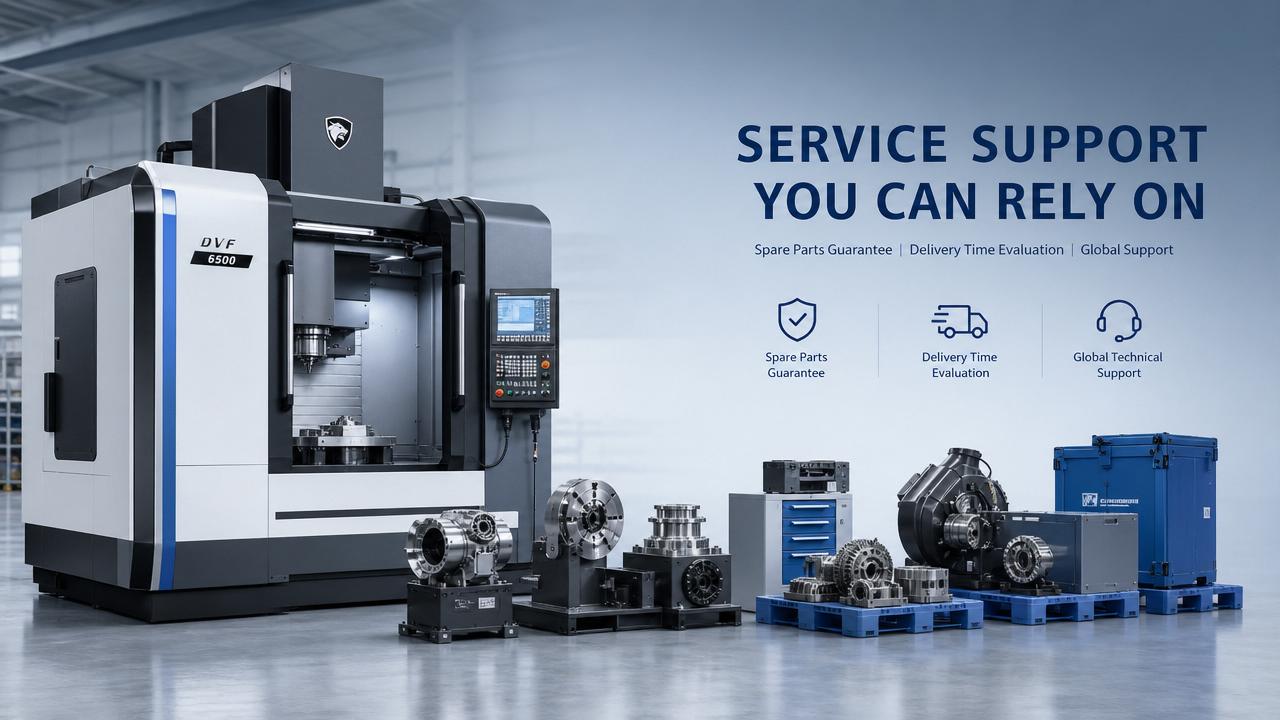
How to Evaluate a Machine Tool Distributor for Service, Parts Support, and Lead Time
Choosing the right machine tool distributor can directly affect uptime, production efficiency, and long-term operating costs.
For procurement decisions, price alone rarely tells the full story.
A low quote can look attractive at first, yet become expensive after installation.
Service delays, weak spare parts support, and unrealistic delivery promises usually create the biggest problems.
That is why evaluating a machine tool distributor should be treated as a risk assessment, not only a sourcing exercise.
In practical terms, the best distributor helps protect output, improve planning, and reduce hidden costs across the equipment lifecycle.
Start With Service Capability, Not Just Sales Promises
A reliable machine tool distributor should be able to support the machine after the purchase order is signed.
This sounds obvious, but many buying mistakes begin when service is assumed rather than verified.
Ask how many field service engineers the distributor employs in your region.
Also ask whether those engineers are factory-trained on the exact CNC machine models under consideration.
A broad service map looks good on paper, but local response time matters more than national coverage.
From recent market changes, this has become even more important.
Manufacturers are pushing higher automation, tighter tolerances, and more connected equipment.
That also means troubleshooting often requires stronger technical depth than before.
- Request guaranteed response times for phone, remote, and on-site support.
- Check whether startup, alignment, calibration, and operator training are included.
- Confirm weekend and holiday support for critical production schedules.
- Ask for escalation procedures when a machine stays down beyond one shift.
A strong machine tool distributor can explain these points clearly and without hesitation.
If the answers stay vague, service risk is probably being pushed back onto the buyer.
Evaluate Spare Parts Support as a Cost Control Issue
Spare parts support is often discussed after the machine arrives.
That is usually too late.
A machine tool distributor with weak parts coverage can turn a minor fault into days of lost production.
In procurement terms, spare parts availability is part of total ownership cost.
The practical question is simple: what happens when a spindle sensor, servo drive, tool changer component, or control board fails?
A serious machine tool distributor should be able to share stocking policy, local inventory, and emergency ordering options.
More importantly, it should identify which parts are standard, which are imported, and which have long replenishment cycles.
That level of transparency is a strong signal.
In real operations, parts support also affects budgeting.
If the machine tool distributor can recommend a starter spare parts kit, that usually adds value.
It shows the distributor understands failure patterns, not just product catalogs.
Check Lead Time Claims Against the Full Delivery Process
Lead time is one of the most misunderstood points in machine purchases.
Some quotes mention only factory release dates.
Others combine shipping, customs, installation, and commissioning into one estimate without detail.
A dependable machine tool distributor separates every stage clearly.
This is especially relevant when sourcing CNC lathes, machining centers, or multi-axis systems from overseas manufacturing hubs.
Production slots, electrical options, tooling packages, and automation interfaces can all extend the actual schedule.
A realistic machine tool distributor will talk about these constraints early.
- Ask for a written timeline from order confirmation to production handover.
- Break out manufacturing, inspection, shipping, customs, installation, and acceptance.
- Confirm which milestones depend on buyer-side readiness.
- Review penalties, change-order effects, and communication frequency.
A short quoted lead time is not always an advantage.
If the machine tool distributor cannot defend the schedule with specifics, the number may only be a sales tool.
A slightly longer but reliable schedule often supports production planning far better.
Review Technical Fit and Application Understanding
Another clear sign of a good machine tool distributor is application knowledge.
The distributor should understand materials, tolerances, batch sizes, cycle time targets, and downstream quality requirements.
This matters because technical mismatch creates hidden delays and extra spending.
For example, an attractive machine price may still fail if chip control, fixture integration, or tool magazine capacity is wrong.
In advanced sectors such as automotive, aerospace, energy equipment, and electronics production, these details shape actual output.
A capable machine tool distributor asks precise questions before recommending a model.
- Part drawings, tolerances, and material type.
- Expected daily output and future capacity growth.
- Automation plans, robot loading, or pallet systems.
- Utility requirements, floor layout, and software compatibility.
This also connects back to service and lead time.
The more accurately the application is defined, the fewer commissioning surprises appear later.
Use Reference Checks to Validate Real Performance
Reference checks are still one of the most useful procurement tools.
Yet they are often handled too lightly.
Instead of asking only whether a customer is satisfied, ask what happened when problems appeared.
That is where the real quality of a machine tool distributor becomes visible.
Useful references should reflect similar machine type, production complexity, and service region.
If possible, speak with users running comparable CNC machines in a similar workload environment.
- Was the quoted lead time accurate?
- How fast did the machine tool distributor respond to breakdowns?
- Were spare parts delivered as promised?
- Did training and commissioning meet expectations?
- Were unexpected costs added after installation?
The stronger signal is consistency.
When multiple references describe the same strengths or weak points, the buying picture becomes much clearer.
Build a Simple Evaluation Framework Before Final Selection
To compare options fairly, use a simple scoring structure.
This helps prevent low price from dominating the decision.
A practical model can assign weight to service support, spare parts support, lead time credibility, technical fit, and total cost.
In many cases, the best machine tool distributor is not the cheapest.
It is the one that reduces production risk while keeping ownership cost predictable.
That matters even more as global manufacturing shifts toward higher precision, automation, and digital integration.
- Score service readiness with measurable response commitments.
- Score parts support by local inventory and replenishment visibility.
- Score lead time by documented milestones, not verbal estimates.
- Score technical fit by process understanding and application support.
- Score total cost across installation, maintenance, downtime, and upgrades.
A disciplined review process makes negotiations stronger as well.
It gives clear reasons for requesting better terms, added support, or clarified timelines.
When evaluating a machine tool distributor, the goal is not simply to buy equipment.
The goal is to secure stable production, faster problem resolution, and fewer costly surprises after delivery.
If service capability, spare parts support, and lead time discipline are verified early, the final decision becomes far more confident and commercially sound.
Recommended for You
![]() 33rd JIMTOF 2026 Set to Open in Tokyo as Taiwanese Exhibitors Seek OrdersGlobal Machine Tool Trade Research Center
33rd JIMTOF 2026 Set to Open in Tokyo as Taiwanese Exhibitors Seek OrdersGlobal Machine Tool Trade Research Center Which Fixture Type Cuts Changeover Time Most in High-Mix CNC Machining?CNC Machining Technology Center
![]() FANUC Invests $18 Million in Largest U.S. Corporate Automation Training CenterMachine Tool Industry Editorial Team
FANUC Invests $18 Million in Largest U.S. Corporate Automation Training CenterMachine Tool Industry Editorial Team Southeast Asia Machine Tool Market: Comparing Automotive Demand by CountryManufacturing Market Research Center
![]() Zhongshan Xiaolan Machinery Exhibition Opens With Global Product DebutsMachine Tool Industry Editorial Team
Zhongshan Xiaolan Machinery Exhibition Opens With Global Product DebutsMachine Tool Industry Editorial Team Automated Production Machining: Which Parts and Batch Sizes Are a Good Fit?Machine Tool Industry Editorial Team


Aris Katos
Future of Carbide Coatings
15+ years in precision manufacturing systems. Specialized in high-speed milling and aerospace grade alloy processing.
▶
What proves a precision tool factory in China can hold tolerances?Global Machine Tool Trade Research Center▶
How to Evaluate a Machine Tool Factory Before Sourcing CNC EquipmentGlobal Machine Tool Trade Research Center▶
How to Evaluate a CNC Machine Tool Manufacturer for Precision and Service SupportGlobal Machine Tool Trade Research Center▶
What Affects Cost-Effective CNC Manufacturing? Key Drivers Behind Part Price and Lead TimeGlobal Machine Tool Trade Research Center▶
How to Evaluate a CNC Tooling System Supplier in Germany for Quality, Lead Time, and CostGlobal Machine Tool Trade Research Center
▶
Mastering 5-Axis Workholding Strategies
Join our technical panel on Nov 15th to learn about reducing vibrations in thin-wall components.

Providing you with integrated sanding solutions
Before-sales and after-sales services
Comprehensive technical support