• Global CNC market projected to reach $128B by 2028 • New EU trade regulations for precision tooling components • Aerospace deman
NYSE: CNC +1.2%LME: STEEL -0.4%

Industrial Robotics Supplier in USA: 7 Criteria Buyers Should Check Before Requesting a Quote
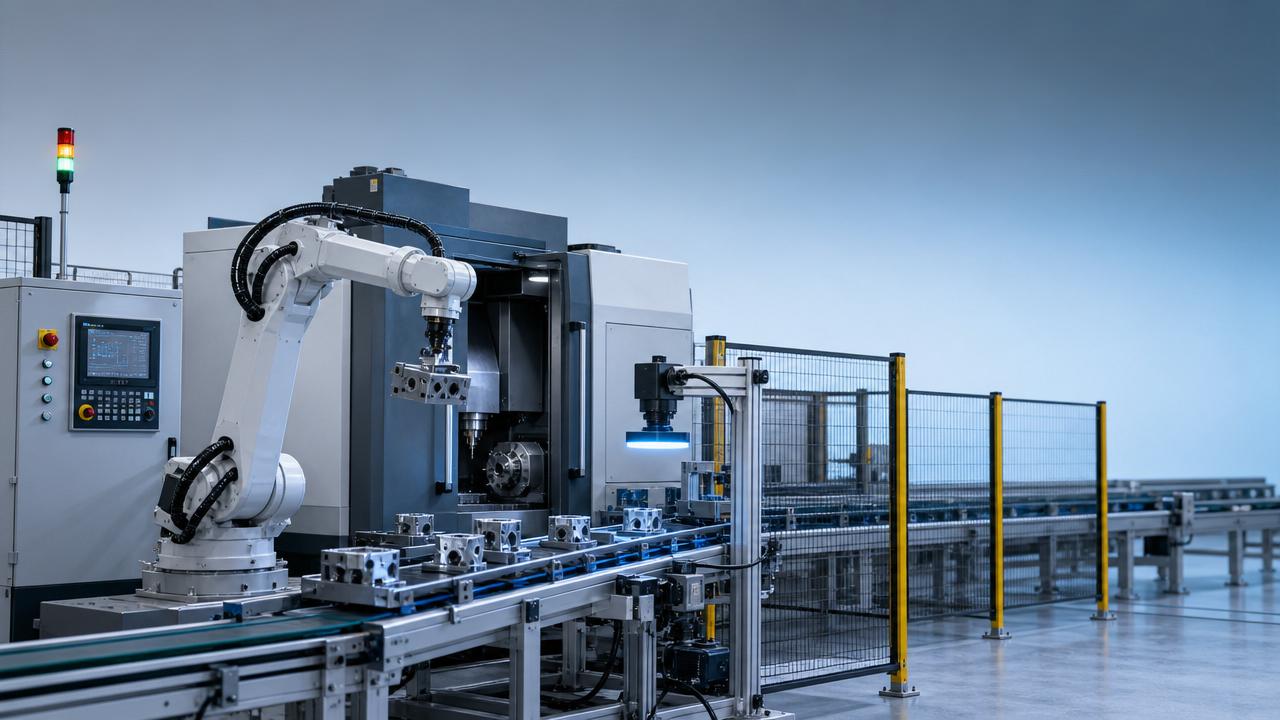
Why does choosing an Industrial Robotics Supplier in USA require more than a fast quote?
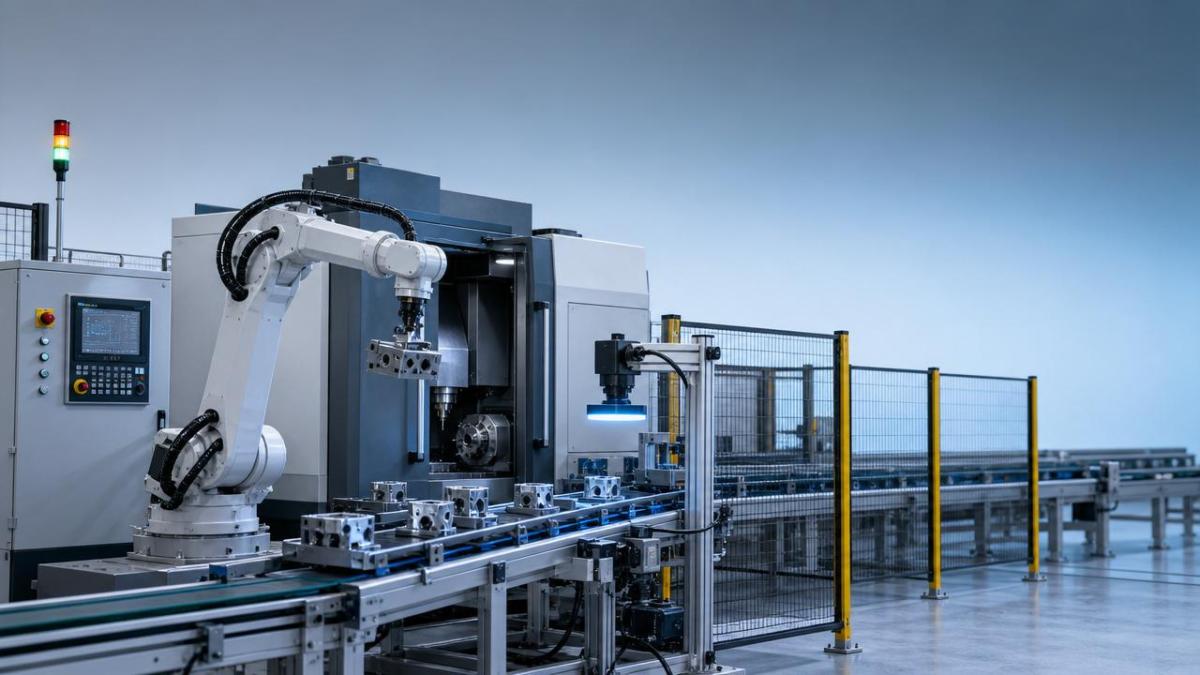
In precision manufacturing, robotics decisions shape uptime, scrap rates, and future automation options.
That is especially true in CNC machining, machine tools, and automated production lines, where every integration detail affects output quality.
A quote may show robot price, but it rarely shows programming complexity, tooling changes, or support delays.
When reviewing an Industrial Robotics Supplier in USA, the better question is not only cost.
It is whether the supplier can match the process, the cycle target, and the expansion plan.
In real projects, robotics often connects with CNC lathes, machining centers, conveyors, fixtures, vision systems, and safety controls.
That means supplier evaluation should happen before RFQ discussions become too narrow.
The seven criteria below help reduce selection risk and make quote comparisons more useful.
What should be clarified before contacting an Industrial Robotics Supplier in USA?
Many sourcing problems start with incomplete internal requirements rather than weak suppliers.
Before discussing brands or budgets, define the production task in practical terms.
- Part type, size variation, weight, and surface sensitivity
- Target cycle time and acceptable takt fluctuations
- Machine interface requirements for CNC, PLC, or MES connection
- Shift pattern, expected uptime, and operator involvement
- Future line expansion, product mix change, and reprogramming frequency
An Industrial Robotics Supplier in USA can only size the right system when these details are available.
For example, tending a machining center with stable aluminum parts differs from loading mixed steel components into a multi-axis cell.
The first may need speed and simple grippers.
The second may need vision, adaptive fixturing, and more robust end-of-arm tooling.
This early definition step improves quoting accuracy and exposes hidden integration costs.
Which technical capabilities separate a reliable supplier from a catalog reseller?
Not every Industrial Robotics Supplier in USA operates at the same technical level.
Some mainly distribute equipment, while others engineer complete cells for complex manufacturing environments.
A practical way to judge capability is to look at engineering depth, not just robot brand availability.
In the global machine tool sector, digital integration keeps gaining importance.
So an Industrial Robotics Supplier in USA should also understand data collection, remote diagnostics, and production traceability.
That capability matters more when robotics must fit into smart factory planning.
How do lead time, support, and spare parts affect the real cost?
Quoted price is visible.
Downtime exposure is usually not.
This is why support structure should be one of the main evaluation points.
A low-cost offer may become expensive if installation slips by eight weeks or a failed servo waits for imported parts.
For CNC and high-mix production cells, response time can be as important as robot specification.
Questions worth raising early
- What is the typical project lead time from PO to FAT and installation?
- Which components are stocked domestically?
- Is phone support enough, or is onsite service available?
- Who handles programming updates after part changes?
- What training is included for maintenance and operation?
A strong Industrial Robotics Supplier in USA should answer these points clearly, without vague promises.
If support depends heavily on overseas engineering teams, recovery time may stretch longer than expected.
This becomes critical in aerospace, automotive, electronics, and energy equipment production, where schedule penalties are costly.
Can one supplier really fit both current production and future expansion?
This is where many buyers become too focused on today's part only.
A capable Industrial Robotics Supplier in USA should not just solve a single task.
They should show how the cell can adapt when volume, SKUs, or line layout changes.
In actual use, production often shifts faster than capital plans.
That is common in precision machining, where part programs, fixtures, and handling methods evolve over time.
More flexible systems may cost more upfront, but they can avoid a second integration project later.
Signs of future-ready system design
- Modular end-of-arm tooling for different part families
- Expandable safety zones and controller capacity
- Open communication with CNC machines and factory software
- Programming methods that simplify recipe changes
- Floor layout planning that allows extra stations later
The best Industrial Robotics Supplier in USA usually explains these tradeoffs with examples, not slogans.
That makes comparison easier when two quotes look similar on paper.
What mistakes are most common when comparing Industrial Robotics Supplier in USA options?
The biggest mistake is treating all quotes as if they cover the same scope.
Often they do not.
One proposal may include tooling, guarding, programming, FAT, and training.
Another may include only the robot and controller.
That difference can distort the buying decision.
Another common issue is overlooking process ownership.
If the line misses cycle targets, who adjusts software, grippers, or machine interface logic?
Needless disputes often begin here.
When comparing an Industrial Robotics Supplier in USA, normalize scope first, then compare commercial terms.
That simple step prevents false savings.
So what are the seven criteria buyers should check before requesting a quote?
A useful shortlist usually comes down to seven practical checks.
- Process fit for the exact application, not generic automation claims
- Documented experience in machine tool, CNC, or comparable precision environments
- Integration strength across controls, tooling, safety, and data systems
- Clear scope definition covering hardware, software, testing, and training
- Domestic support, parts access, and realistic lead time commitments
- Flexibility for product changes, added stations, or future digital upgrades
- Total cost visibility, including maintenance, changeover, and downtime risk
These checks are relevant whether the project involves simple loading robots or full smart factory automation.
They also help when reviewing suppliers with global sourcing links from China, Germany, Japan, or South Korea.
Strong international manufacturing connections can be valuable, but local execution still matters.
Before requesting a quote, prepare a requirement sheet, define success metrics, and align internal expectations around uptime, cycle, and support.
That approach makes every discussion with an Industrial Robotics Supplier in USA more productive.
It also turns pricing into a decision tool, rather than the starting point of avoidable project risk.
Recommended for You
 How Automated Precision Machining Maintains Tolerance in High-Mix ProductionCNC Machining Technology Center
 How to Evaluate a Machine Tool Factory Before Sourcing CNC EquipmentGlobal Machine Tool Trade Research Center
 CNC Programming Explained: From CAD Models to Reliable Shop-Floor ToolpathsCNC Machining Technology Center
 How Multi-Axis Machining Produces Complex Components With Fewer SetupsCNC Machining Technology Center
 What Production Volume Justifies a CNC Turning Investment?Manufacturing Market Research Center
 How Much Does CNC Programming Software Cost in 2026?CNC Machining Technology Center




Aris Katos
Future of Carbide Coatings
15+ years in precision manufacturing systems. Specialized in high-speed milling and aerospace grade alloy processing.
▶
How to Evaluate a Machine Tool Factory Before Sourcing CNC EquipmentGlobal Machine Tool Trade Research Center▶
How to Evaluate a CNC Machine Tool Manufacturer for Precision and Service SupportGlobal Machine Tool Trade Research Center▶
What Affects Cost-Effective CNC Manufacturing? Key Drivers Behind Part Price and Lead TimeGlobal Machine Tool Trade Research Center▶
How to Evaluate a CNC Tooling System Supplier in Germany for Quality, Lead Time, and CostGlobal Machine Tool Trade Research Center▶
How to Evaluate a CNC Tooling System Supplier in Germany for Quality, Lead Time, and SupportGlobal Machine Tool Trade Research Center
Mastering 5-Axis Workholding Strategies
Join our technical panel on Nov 15th to learn about reducing vibrations in thin-wall components.

Providing you with integrated sanding solutions
Before-sales and after-sales services
Comprehensive technical support