• Global CNC market projected to reach $128B by 2028 • New EU trade regulations for precision tooling components • Aerospace deman
NYSE: CNC +1.2%LME: STEEL -0.4%

What to Check Before Choosing a CNC Manufacturing Wholesaler
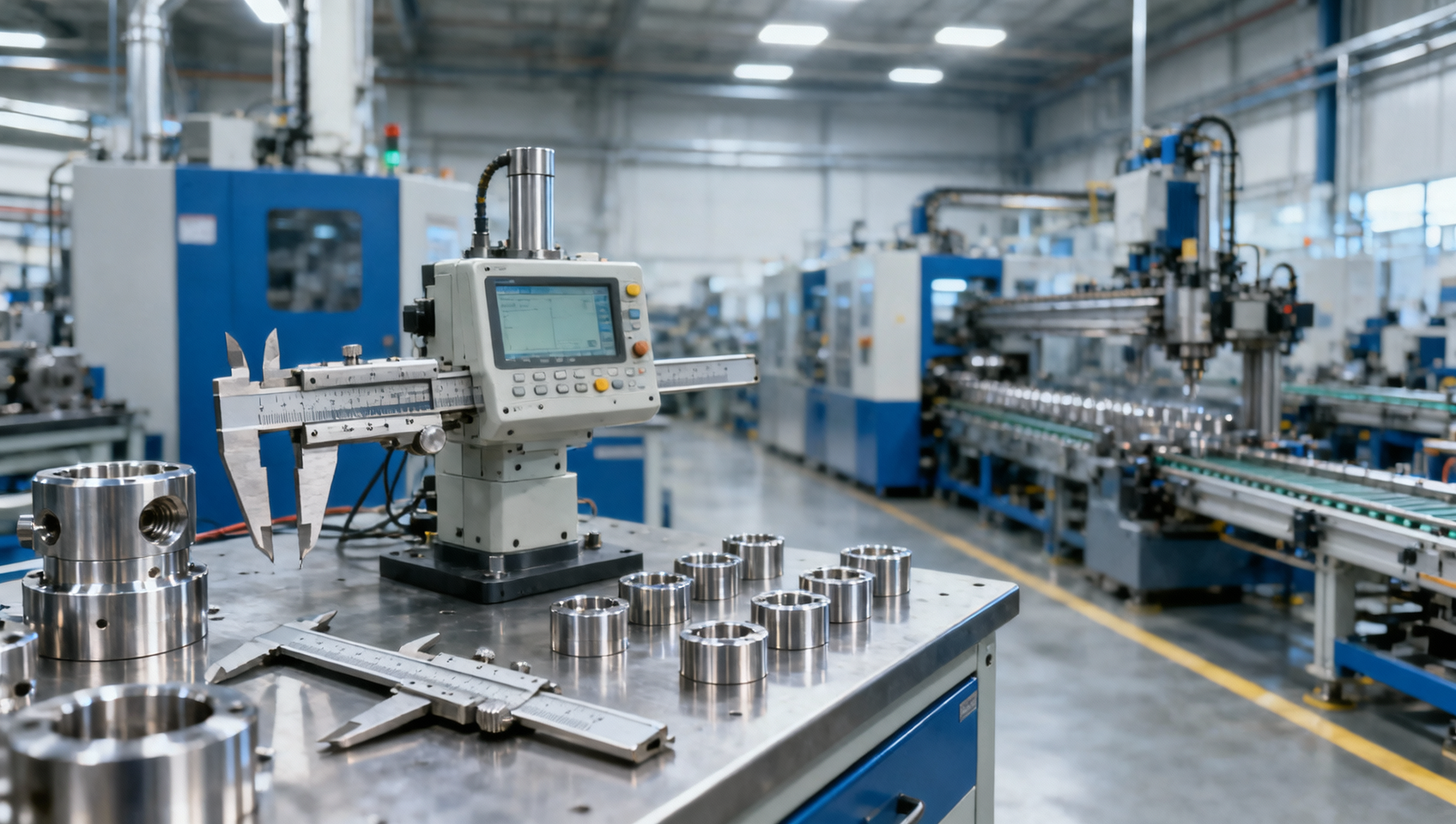
Choosing the right CNC manufacturing wholesaler can directly affect product quality, delivery speed, and long-term costs. Whether you need high precision CNC manufacturing for aerospace, CNC manufacturing for automotive industry, or cost-effective machine tool solutions, it is essential to evaluate factory capability, automation level, export experience, and supplier reliability before making a decision.
In practice, the best wholesaler is not simply the one with the lowest quote or the broadest catalog. It is the supplier that can repeatedly deliver the required tolerances, material consistency, documentation, communication speed, and production stability your business actually depends on. For buyers, engineers, operators, and decision-makers, the key is to verify capability before committing volume.
Start With the Most Important Question: Can the Wholesaler Actually Meet Your Technical Requirements?
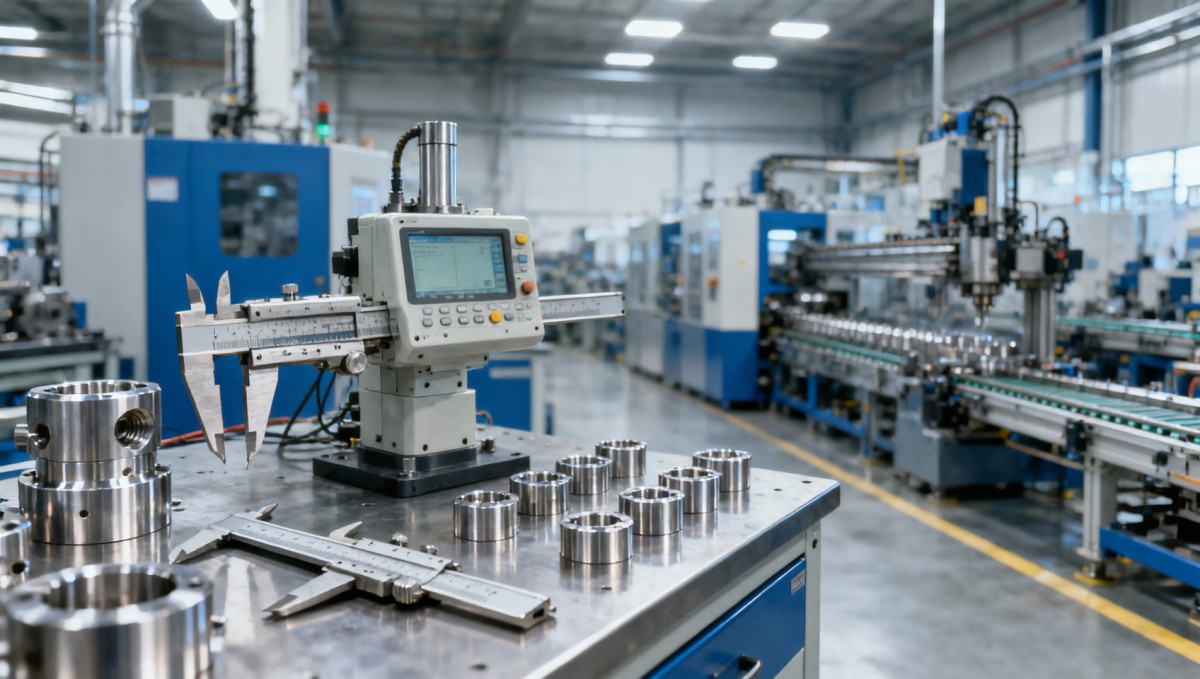
Before comparing prices, confirm whether the CNC manufacturing wholesaler can produce your parts, components, or machine-related products to the standards you need. Many sourcing failures happen because buyers focus on cost too early and only later discover issues with tolerance control, surface finish, material traceability, or process consistency.
Ask for evidence of real manufacturing capability, including:
- Machine list and processing range, such as CNC lathes, vertical machining centers, 5-axis machines, grinding equipment, or automated production lines
- Achievable tolerances for different materials and part geometries
- Experience with aluminum, stainless steel, tool steel, brass, titanium, engineering plastics, or other required materials
- Inspection equipment such as CMM, height gauges, vision systems, roughness testers, and hardness testers
- Process controls for repeat orders and batch consistency
If you source for aerospace, automotive, electronics, or energy equipment, this step is even more important. A wholesaler may offer CNC manufacturing services broadly, but that does not mean they can handle your specific precision level, compliance needs, or production complexity.
Check Whether the Supplier Is a True Manufacturer or Just a Trading Layer
One of the most practical checks is understanding who is actually producing the parts. Some wholesalers own factories, some manage qualified subcontractors, and some are mainly trading companies. None of these models is automatically bad, but you need transparency.
A true manufacturing wholesaler should clearly explain:
- Which processes are done in-house
- Which processes are outsourced, such as heat treatment, coating, or special finishing
- How supplier quality is controlled if subcontracting is involved
- Who is responsible for nonconforming parts, delays, or technical changes
If the answer is vague, that is a warning sign. For procurement teams and company leaders, unclear supply-chain ownership often leads to quality disputes, unstable lead times, and limited accountability.
Evaluate Production Capacity, Automation Level, and Delivery Reliability
A good CNC manufacturing wholesaler must do more than make samples well. They must also maintain delivery performance when order volume increases or schedules become tight. This is where factory scale and automation matter.
Review factors such as:
- Number of machines and shifts
- Use of robotic loading, pallet systems, or automated production cells
- Scheduling and ERP or MES systems
- Current production load and realistic lead times
- Capacity for urgent orders or repeat orders
Automation does not only improve speed. It often improves repeatability, reduces dependence on manual intervention, and supports stable quality in medium- to high-volume production. This is especially relevant for CNC manufacturing for automotive industry and other sectors where consistency matters as much as precision.
Review Quality Control Systems, Not Just Quality Promises
Almost every supplier claims to deliver high quality CNC manufacturing. What matters is how quality is controlled, documented, and improved.
Useful questions include:
- Do they have ISO 9001 or industry-specific certifications?
- Is there incoming material inspection and material certificate management?
- Do they perform first article inspection, in-process inspection, and final inspection?
- Can they provide dimensional reports, PPAP documentation, FAI reports, or SPC records if needed?
- How do they manage corrective and preventive actions when issues occur?
For operators and technical users, this information helps predict whether the parts will work smoothly in assembly, machining, or final application. For managers, it reduces the risk of hidden quality costs such as rework, returns, downtime, and customer complaints.
Look at Industry Experience and Application Match
Not all CNC projects carry the same requirements. A supplier that performs well for simple commercial hardware may not be suitable for precision medical, aerospace, or complex machine tool components.
Ask for case examples related to your application:
- Precision shaft components
- Complex structural parts
- Disc-type precision components
- Fixtures and tooling
- Machine tool parts or assemblies
- Components for automated production systems
Relevant experience usually means the wholesaler already understands common process risks, recommended materials, critical dimensions, and packaging requirements for that sector. This reduces onboarding friction and shortens the path from RFQ to stable production.
Do Not Judge by Price Alone—Compare Total Cost and Risk
A low unit price can be attractive, but it may hide larger costs later. A better buying decision considers total cost of ownership.
Compare suppliers using a broader lens:
- Unit price and tooling cost
- Expected scrap or defect risk
- Packaging quality and transit protection
- Communication efficiency and engineering support
- Lead time reliability
- Change management capability
- Warranty, replacement, or claim response process
For example, a wholesaler with a slightly higher quote but stronger process control may save far more over time by reducing defects, delays, and internal troubleshooting. This is often the smarter option for enterprise decision-makers managing margin, customer commitments, and supply continuity.
Verify Export Experience, Communication, and Documentation Standards
If you source internationally, export readiness is a major checkpoint. Even strong factories can become difficult suppliers if they lack global communication discipline or documentation accuracy.
Check whether the wholesaler can reliably handle:
- Commercial invoices, packing lists, HS codes, and certificates of origin
- Technical drawings in international formats
- English-language communication with engineering clarity
- Sampling approval processes
- Incoterms, freight coordination, and shipping documentation
Fast, precise communication is especially important during quotation review, design revisions, and nonconformance handling. A supplier that answers quickly and technically is often easier to work with over the long term.
Request Samples, Audit Data, or a Factory Visit Before Scaling Up
If the project is important, do not move directly from quotation to full production. Use a validation step first. This could be a sample order, pilot batch, video audit, third-party inspection, or on-site factory visit.
This stage helps you verify:
- Actual machining quality versus quoted capability
- Packaging and shipping condition
- Responsiveness during issue resolution
- Dimensional consistency across multiple parts
- Whether the supplier follows agreed specifications in practice
For buyers and technical teams, a pilot run often reveals more than a polished sales presentation ever will.
Watch for Common Red Flags Before Signing a Long-Term Deal
Some warning signs appear early if you know what to look for. Be cautious when a CNC manufacturing wholesaler:
- Provides unusually low pricing without process explanation
- Cannot clearly define tolerances or inspection methods
- Avoids sharing factory photos, machine lists, or quality records
- Changes lead times frequently during quotation
- Responds slowly to technical questions
- Offers broad capability claims with little proof
- Has no structured complaint or corrective action process
These issues do not always mean the supplier is unsuitable, but they should trigger deeper review before placing strategic orders.
A Simple Checklist for Choosing the Right CNC Manufacturing Wholesaler
To make your evaluation easier, use this shortlist before final selection:
- Confirm the wholesaler can meet your required tolerances, materials, and processes
- Verify whether production is in-house or outsourced
- Review equipment, automation, and volume capacity
- Check inspection systems, certifications, and reporting ability
- Match their industry experience to your actual application
- Compare total cost, not just unit price
- Assess export experience and communication quality
- Run a sample order, audit, or pilot batch before scale-up
This approach gives procurement teams clearer comparison standards, helps engineers reduce technical risk, and supports management in making decisions that protect quality and delivery performance.
Conclusion
Before choosing a CNC manufacturing wholesaler, focus on evidence rather than marketing claims. The right supplier should demonstrate technical fit, stable production capability, strong quality control, clear communication, and dependable delivery. For companies in precision manufacturing, machine tools, automated production, and industrial components, these factors matter far more than a low initial quote alone.
When you evaluate wholesalers through capability, process discipline, and long-term reliability, you are far more likely to secure a supply partner that supports both operational performance and business growth.
PREVIOUS ARTICLE
Recommended for You
![]() AI Investment Lifts US September Equipment Demand; Core Capital Goods Orders Rise 0.5%Manufacturing Market Research Center
 Why Heavy Machinery Shafts Fail Under Cyclic Loads and How to Prevent ItCNC Machining Technology Center
![]() JTEKT Introduces G5 Series Large CNC Cylindrical Grinder, Sales Begin October 26, 2026Machine Tool Industry Editorial Team
 Shaft Parts for Heavy Machinery: Selecting Materials for High Shock LoadsCNC Machining Technology Center
![]() 33rd JIMTOF 2026 Set to Open in Tokyo as Taiwanese Exhibitors Seek OrdersGlobal Machine Tool Trade Research Center
 Which Fixture Type Cuts Changeover Time Most in High-Mix CNC Machining?CNC Machining Technology Center


Aris Katos
Future of Carbide Coatings
15+ years in precision manufacturing systems. Specialized in high-speed milling and aerospace grade alloy processing.
▶
What proves a precision tool factory in China can hold tolerances?Global Machine Tool Trade Research Center▶
How to Evaluate a Machine Tool Factory Before Sourcing CNC EquipmentGlobal Machine Tool Trade Research Center▶
How to Evaluate a CNC Machine Tool Manufacturer for Precision and Service SupportGlobal Machine Tool Trade Research Center▶
What Affects Cost-Effective CNC Manufacturing? Key Drivers Behind Part Price and Lead TimeGlobal Machine Tool Trade Research Center▶
How to Evaluate a CNC Tooling System Supplier in Germany for Quality, Lead Time, and CostGlobal Machine Tool Trade Research Center
▶
Mastering 5-Axis Workholding Strategies
Join our technical panel on Nov 15th to learn about reducing vibrations in thin-wall components.

Providing you with integrated sanding solutions
Before-sales and after-sales services
Comprehensive technical support