• Global CNC market projected to reach $128B by 2028 • New EU trade regulations for precision tooling components • Aerospace deman
NYSE: CNC +1.2%LME: STEEL -0.4%

Automated Production Line Quotation: What Costs Should Buyers Check?
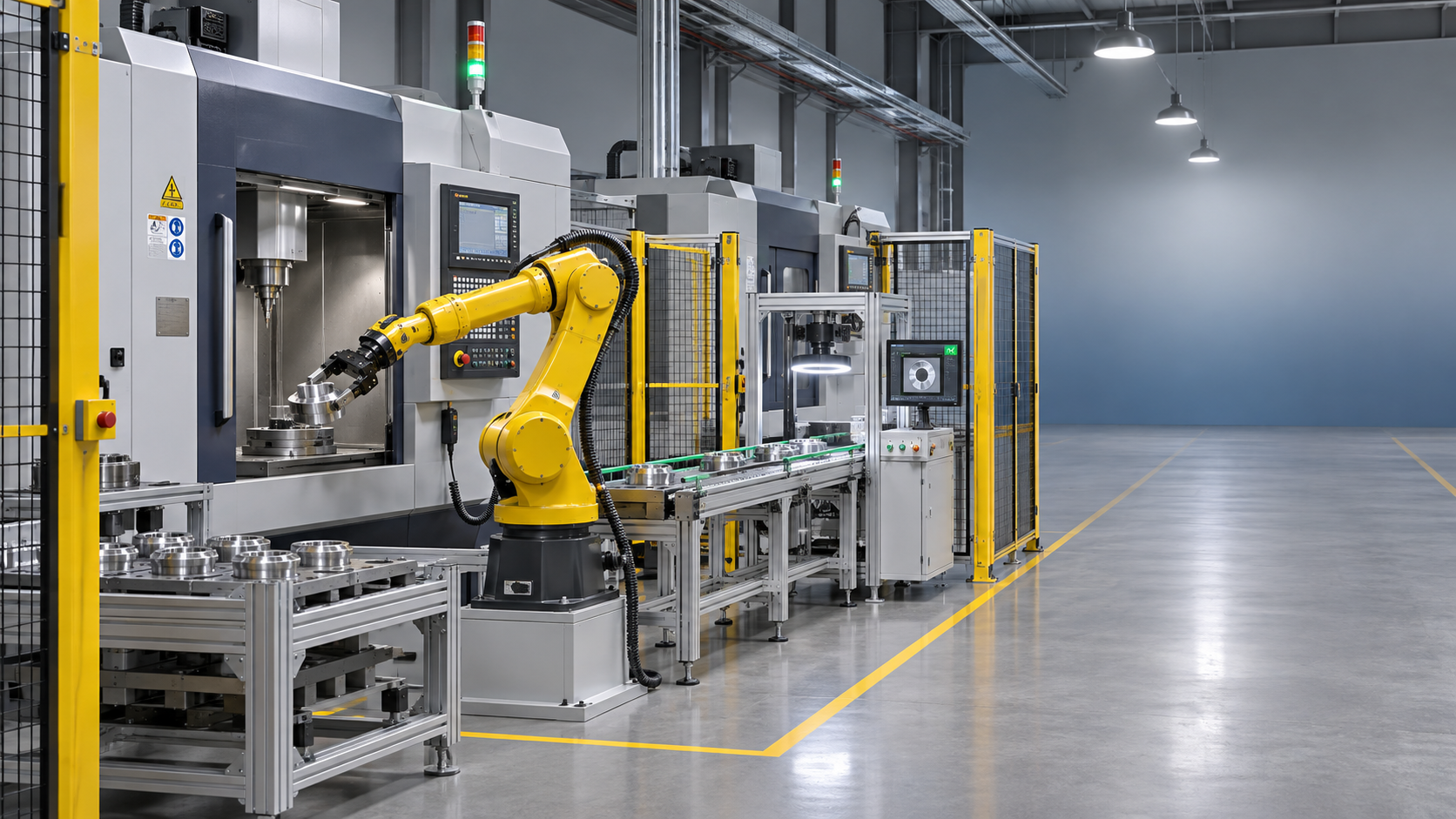
An Automated Production Line quotation should be judged by the cost of delivering an accepted, working process, not just the price of machines and robots. A lower equipment price can become the more expensive option if tooling, integration, site preparation, or commissioning sits outside the quoted scope. Before comparing totals, buyers need to establish what each supplier will deliver, under which production conditions, and who pays for the work between equipment delivery and stable operation.
The most useful comparison separates three questions: What is included in the supplier’s price? What must the buyer or another contractor provide? And what recurring costs will continue after acceptance? The answers are especially important for CNC-based lines, where machine tools, part handling, inspection, and plant systems must work together.
Start with the production scope, not the equipment list
A quotation can list the same types of equipment as a competing offer and still cover a different production task. One proposal may include a machining center and a robot, while another also includes part orientation, in-process measurement, chip handling, and recovery from a rejected part. Comparing their totals without adjusting for those differences is misleading.
Give suppliers a common description of the parts, materials, production volume, operating schedule, quality requirements, and expected product mix. Include drawings and tolerances where appropriate, along with upstream and downstream process details. State whether the line must handle one established component or accommodate families of parts with frequent changeovers.
Ask each supplier to describe the process flow and identify the included stations, interfaces, and buyer-supplied items. A quote based on assumptions should make those assumptions visible. For example, if a supplier expects parts to arrive clean, consistently oriented, and within a specified dimensional range, the buyer must know whether the existing upstream process can provide them.
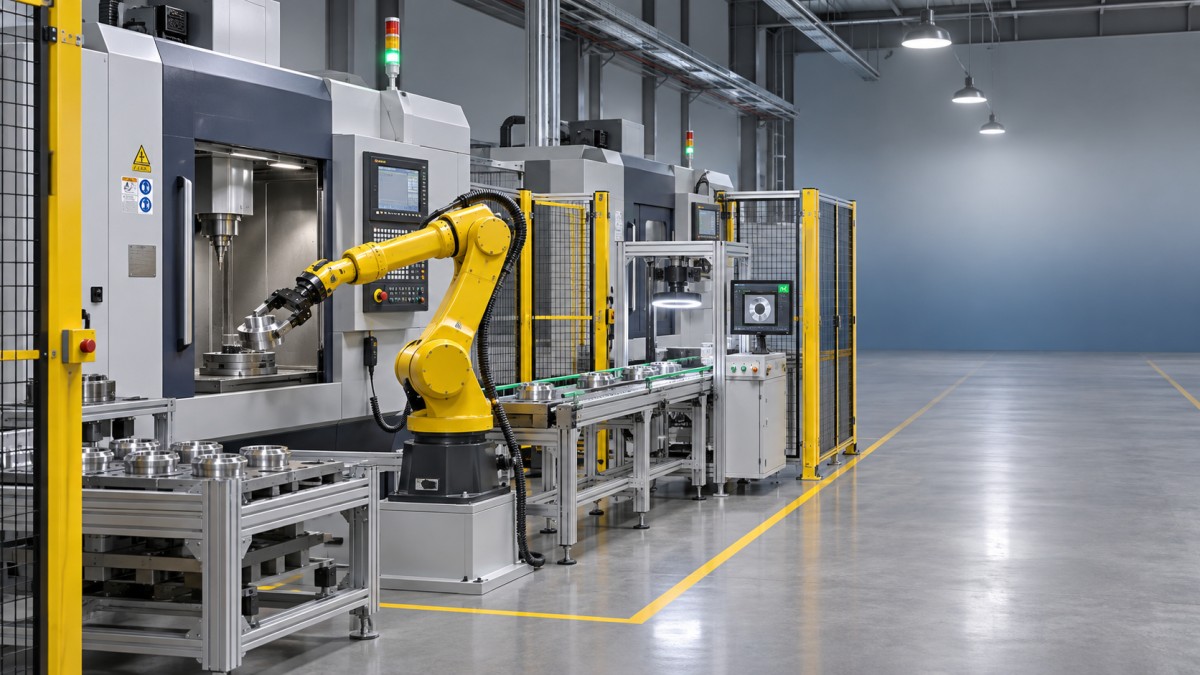
Separate machine prices from the cost of a complete line
The main equipment is often the most visible line item: CNC lathes, machining centers, robots, conveyors, washing systems, or inspection equipment. Check the model or configuration, quantities, and included options. A machine advertised with a capability is not necessarily quoted with every accessory needed to use it in the proposed process.
For CNC equipment, review workholding, tool magazines, probing, coolant delivery, chip removal, enclosures, and interfaces for automated loading. For robots, check the payload and reach against the complete handling task, including the gripper and part. Safety guarding, access doors, sensors, and operator stations should also be assigned to a defined scope.
Ask whether each price covers new equipment, modifications to existing assets, or both. Retrofitting an existing machine can reduce the amount of new equipment required, but its condition, available interfaces, and remaining capacity can change the integration work. A supplier may need an inspection before committing to the retrofit price and performance.
Tooling and fixtures are part of the process
A machining line cannot produce accepted parts with a machine tool alone. The quotation should distinguish between cutting tools, toolholders, workholding fixtures, robot grippers, gauges, and setup aids. It should also say how many sets are included and whether they cover all quoted part variants.
Look beyond the initial set. A second fixture or gripper may be needed for changeover, maintenance, or a different component. Cutting tools and wear parts must be replaced during production. These costs are not necessarily supplier exclusions to eliminate, but they should be visible in the investment and operating budgets.
For a line producing several shaft or disc variants, a flexible fixture may reduce changeover work, while dedicated fixtures may be simpler for a stable, high-volume part. Compare the quoted changeover method and included hardware against the actual production mix before assigning value to either approach.
Integration is a deliverable, not a vague allowance
Integration covers the engineering needed to make individual machines operate as one production system. It can include electrical design, controls, robot programming, machine communication, safety functions, sequencing, and testing. The cost depends on the number and complexity of interfaces, particularly when equipment comes from different suppliers.
Ask for an interface list that names the parties responsible for each connection. For example, if a robot must signal a CNC machine to open its door, confirm whether the machine supplier provides the required interface, who programs the exchange, and who resolves faults during commissioning. A gap between suppliers can otherwise become an additional purchase order or a schedule delay.
Software scope deserves the same attention. Identify included licenses, programming, backups, source files, documentation, and access rights. If the line must exchange production data with a plant system, define the data, connection method, and responsibility for changes on both sides. A general statement that equipment is “ready for integration” does not establish that the connection is included.
Account for delivery, installation, and site readiness
A supplier’s price may end at its factory, at the destination port, or at the buyer’s facility. The delivery terms affect who arranges and pays for freight, insurance, unloading, customs clearance, duties, and onward transport. Put those responsibilities beside the quoted price so that offers with different delivery terms can be compared on a consistent basis.
Installation can involve rigging, positioning, anchoring, electrical connection, compressed air, coolant systems, extraction, and network access. The line may also require floor work, foundations, additional power capacity, or changes to material routes. A supplier may specify what the site must provide without including the work to provide it.
Ask for a site-requirements document early enough for facilities and maintenance teams to price their work. Include travel and living expenses for installation personnel, expected working hours, and the treatment of delays caused by an unready site. If installation spans several contractors, identify who coordinates the schedule and controls access to the work area.
Define commissioning and acceptance before negotiating the final price
Commissioning is where equipment is connected, adjusted, and brought into operation. Acceptance is the agreed demonstration that it meets the contract requirements. A quotation should show what the supplier will test at its facility, what will be tested at the buyer’s site, and what support is included if issues arise.
For a CNC production line, acceptance criteria may cover part quality, output, changeover, reject handling, and operation of safety functions. Each criterion needs a test method and agreed conditions. A cycle time measured for a single machine, for example, does not automatically establish finished-part output for a complete line with loading, inspection, and stoppages.
Specify the parts, material condition, tools, gauges, operators, utilities, and production schedule used for the test. State who supplies test material and who pays for consumed tools or additional trials. If a performance target depends on a particular part mix or upstream supply rate, record that dependency alongside the target.
The contract should also explain how deficiencies are recorded, how retesting works, and what happens when a criterion cannot be demonstrated because a buyer-supplied item is unavailable. Linking an agreed payment milestone to acceptance can give both parties a clear reason to close outstanding issues.
Training, documentation, and support affect the first year of operation
Training should cover the people who will actually run and maintain the line, not just a demonstration at handover. Ask how many sessions are included, where they take place, which roles they cover, and whether instruction addresses normal operation, changeover, fault recovery, preventive maintenance, and basic programming where relevant.
Documentation should include operating and maintenance information, electrical and pneumatic schematics, spare-parts lists, parameter backups, and the version of software delivered. Agree on the language and format, and establish what files the buyer may use for maintenance or future modifications.
Examine the warranty together with the support offer. Determine when coverage starts, which components and work are included, and whether travel, freight, consumables, or damage caused by specific operating conditions are excluded. For a multi-vendor line, identify the first point of contact and how responsibility for a fault will be coordinated. A long warranty is less useful if the buyer must manage every supplier interface independently.
Estimate operating cost against the intended production plan
The purchase price is only one part of the cost of ownership. Build an operating estimate using the proposed shifts, part mix, and maintenance approach. Request the assumptions behind supplier estimates so that competing lines are evaluated on the same basis.
- Labor: operators, material replenishment, quality checks, supervision, and maintenance. Automation may change these tasks rather than remove them.
- Consumables: cutting tools, inserts, coolant, filters, cleaning media, and components subject to wear.
- Utilities: electricity, compressed air, cooling, and extraction under the expected operating conditions.
- Maintenance: preventive service, spare parts, calibration, software support, and planned downtime.
- Production losses: setup time, scrap, rework, and interruptions associated with the actual part mix.
A highly automated line may justify its added integration and maintenance cost when volumes are stable and material supply is reliable. For frequent design changes or uncertain demand, a simpler cell may offer a better balance because fixtures, programs, and workflows can be changed with less disruption. Compare the options over a common planning period and state assumptions about volume, labor, and downtime rather than relying on a supplier’s payback figure alone.
Turn competing quotations into a comparable cost picture
Build a side-by-side schedule with a separate row for each major scope item. Record the supplier’s price, any buyer-side estimate, exclusions, assumptions, and the party responsible for delivery. Do not treat an unpriced item as free: obtain a price or carry it as an explicit open budget item before selecting a supplier.
Also compare payment schedules, currency, quotation validity, lead time, and the treatment of scope changes. A low initial payment is not the same as a low total cost, and a short equipment lead time is not a complete project schedule if installation or acceptance resources are unavailable.
Before placing the order, resolve the items that can materially change cost or prevent acceptance. Attach the agreed scope, interface responsibilities, site assumptions, and test plan to the purchase agreement. That gives procurement, engineering, and the supplier the same basis for managing the project after the quotation becomes a commitment.
PREVIOUS ARTICLE
NEXT ARTICLE
Recommended for You
 Automated Production Line Quotation: What Costs Should Buyers Check?Machine Tool Industry Editorial Team
![]() Commerce Ministry: China-Switzerland FTA Upgrade to Expand Market for Swiss Machine ToolsGlobal Machine Tool Trade Research Center
 What Is a Turning Center? Capabilities, Components, and ApplicationsCNC Machining Technology Center
 CNC Milling Spindle Speed for Titanium: How to Calculate RPMCNC Machining Technology Center
 How Precise Are Modern CNC Shops? Tolerances and Their LimitsCNC Machining Technology Center
![]() Report: 56% of China's Key Steelmakers Lost Money in SeptemberManufacturing Market Research Center



Aris Katos
Future of Carbide Coatings
15+ years in precision manufacturing systems. Specialized in high-speed milling and aerospace grade alloy processing.
▶
Automated Production Line Quotation: What Costs Should Buyers Check?Machine Tool Industry Editorial Team▶
How to Integrate Warehouse Palletizing Robots with Minimal DowntimeMachine Tool Industry Editorial Team▶
FANUC Invests $18 Million in Largest U.S. Corporate Automation Training CenterMachine Tool Industry Editorial Team▶
Automated Production Machining: Which Parts and Batch Sizes Are a Good Fit?Machine Tool Industry Editorial Team▶
Choosing Automated Machine Tools for High-Mix, Low-Volume ProductionMachine Tool Industry Editorial Team
▶
Mastering 5-Axis Workholding Strategies
Join our technical panel on Nov 15th to learn about reducing vibrations in thin-wall components.

Providing you with integrated sanding solutions
Before-sales and after-sales services
Comprehensive technical support