• Global CNC market projected to reach $128B by 2028 • New EU trade regulations for precision tooling components • Aerospace deman
NYSE: CNC +1.2%LME: STEEL -0.4%

Automated Production vs Manual Processes: How to Compare ROI and Risk
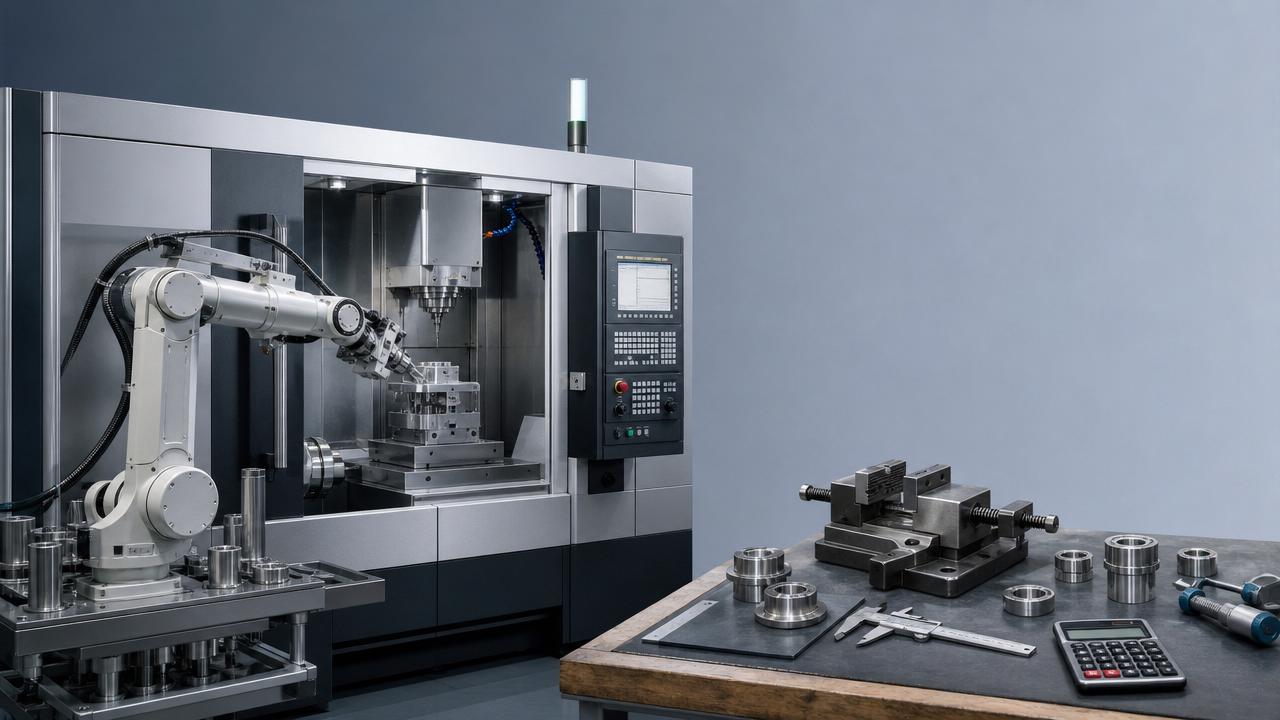
For financial approvers, the decision between automated production and manual processes is rarely about equipment cost alone. It requires a clear view of capital expenditure, labor savings, utilization rates, quality stability, downtime risk, and long-term scalability. In CNC machining and precision manufacturing, automation can improve throughput and consistency, but it also introduces integration, training, and maintenance considerations. This article outlines how to compare ROI and risk in a practical, finance-driven way before approving automation investments.
Why Automated Production Decisions Need a Finance-Led Framework
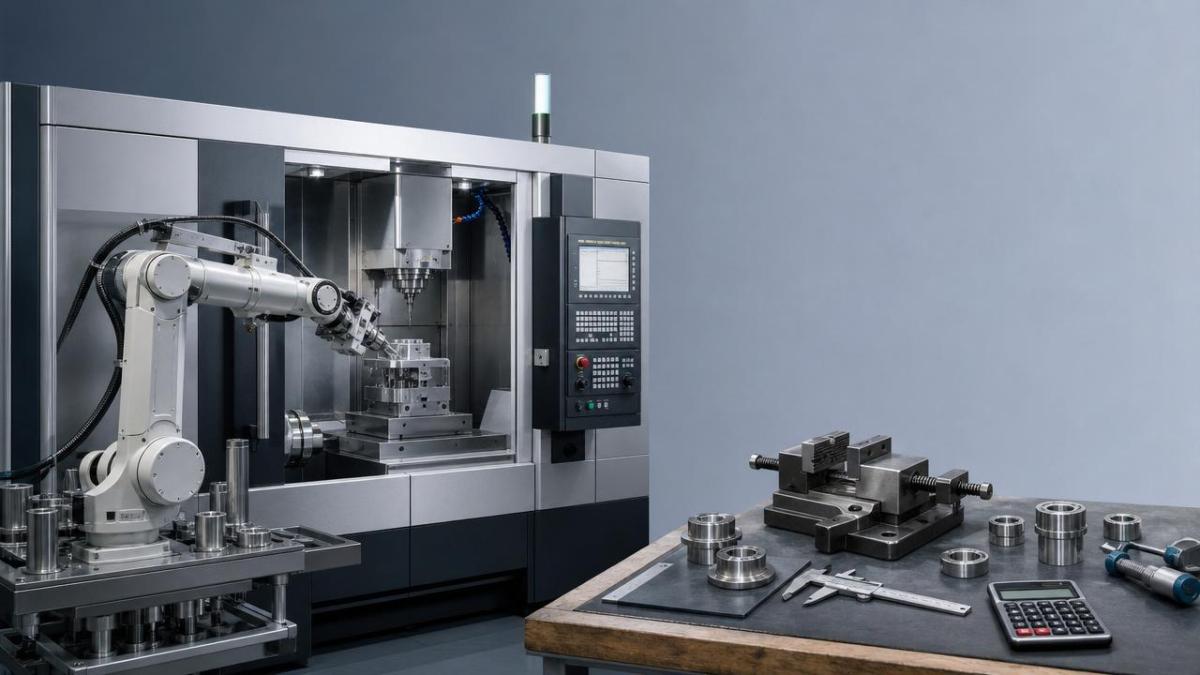
In CNC machining, automated production is not just a technical upgrade. It changes how labor, machine time, quality control, inventory, and delivery commitments are managed.
A finance-led framework helps separate attractive engineering concepts from investments that support margin stability, customer delivery targets, and predictable cash flow.
What financial approvers should measure first
- Capacity impact: whether automated production increases spindle utilization, extends unattended machining hours, or reduces bottlenecks in inspection and handling.
- Cost structure shift: how spending moves from direct labor toward depreciation, maintenance contracts, tooling, software, and energy consumption.
- Quality economics: whether scrap, rework, tolerance variation, and customer returns decline enough to offset capital and integration costs.
- Operational risk: whether the plant has the skills, spare parts access, fixture discipline, and data visibility needed to sustain performance.
The strongest business cases do not claim that automated production is always cheaper. They show where automation produces measurable gains under realistic operating conditions.
Manual Processes vs Automated Production: What Actually Changes?
Manual processes can remain effective for low-volume work, prototype runs, urgent repair jobs, or parts with frequent design changes. They usually require less upfront spending.
Automated production becomes more compelling when part geometry, batch frequency, tolerance requirements, and delivery pressure justify repeatable machine-driven workflows.
The table below summarizes practical differences that matter when reviewing CNC lathes, machining centers, robotic loading systems, and flexible production lines.
For financial approval, the key question is not whether automation is modern. The question is whether automated production reduces total cost per qualified part.
How to Calculate ROI Without Overlooking Hidden Costs
A credible ROI model should include both visible and indirect costs. CNC automation often involves more than buying a machining center or robot.
Financial approvers should request a full investment map before comparing automated production with an existing manual workflow.
Core ROI formula for manufacturing automation
A practical formula is: annual net benefit divided by total project investment. Annual net benefit should include labor reduction, output gains, scrap reduction, and avoided overtime.
Total project investment should include equipment, tooling, fixturing, installation, software, training, floor modifications, validation, and expected ramp-up loss.
Use this cost structure as a review checklist when an automation proposal appears financially attractive at first glance.
The most common ROI error is assuming immediate full utilization. Automated production only delivers strong returns when demand, scheduling, maintenance, and process data are aligned.
Which CNC Manufacturing Scenarios Favor Automation?
Not every workshop needs a fully automated line. Some need semi-automation, better fixtures, digital inspection, or improved production planning first.
Automated production is usually easier to justify when repeatability, takt time, and part flow can be standardized across several months of demand.
Good-fit applications
- Automotive components with stable volume, strict delivery windows, and repetitive turning, milling, drilling, or grinding operations.
- Aerospace structural parts where tolerance control, traceability, and documented process repeatability support quality assurance.
- Energy equipment parts such as precision discs, shafts, housings, and threaded components requiring consistent machining cycles.
- Electronics manufacturing fixtures and precision parts where short cycle time and dimensional consistency affect assembly performance.
Poor-fit or phased-fit applications
If order quantities are unpredictable, engineering changes are frequent, or part handling varies widely, a phased approach may reduce financial exposure.
Examples include adding automatic bar feeders, probing systems, pallet changers, or digital scheduling before committing to a complete automated production cell.
Risk Comparison: What Can Damage the Business Case?
Risk does not disappear when manual work is replaced. It changes form. Financial approvers should compare both operational and commercial risk.
The following risk matrix helps identify whether automated production risk can be controlled before the investment is approved.
A balanced approval process should require mitigation plans, not just optimistic payback calculations. Risk control protects both cash flow and customer commitments.
Procurement Checklist for Financial Approval
When reviewing suppliers, financial teams should look beyond quoted machine prices. The best quotation clarifies scope, assumptions, responsibilities, and acceptance criteria.
Questions to ask before approving automated production
- Which part numbers, annual volumes, tolerances, and cycle times are used in the ROI calculation?
- What is included in the quotation: CNC machine, robot, fixture, tooling, guarding, software, installation, and training?
- How will acceptance be measured: sample parts, cycle time, dimensional results, uptime trial, or production run validation?
- What support is available for spare parts, troubleshooting, programming changes, and preventive maintenance after commissioning?
- Does the project require compliance with internal safety policies, ISO 9001 quality systems, CE marking, or local machinery regulations?
These questions reduce ambiguity. They also make supplier comparison more objective when several automated production options appear technically similar.
Implementation Plan: How to Reduce Payback Uncertainty
ROI improves when implementation is managed in stages. A phased plan allows finance, production, engineering, and quality teams to validate assumptions early.
A practical approval-to-ramp workflow
- Define the baseline: current labor hours, scrap rate, machine utilization, overtime, inspection time, and delivery performance.
- Select representative parts: include high-volume parts, difficult tolerances, and changeover cases that reflect real production pressure.
- Confirm technical feasibility: review clamping, tool access, chip control, coolant strategy, robot reach, and measurement requirements.
- Set acceptance criteria: specify cycle time, dimensional stability, uptime trial duration, operator training, and documentation requirements.
- Track post-launch results: compare actual output, downtime, tooling cost, and quality performance against the approved ROI model.
Automated production should be treated as a business process change, not only an equipment installation. That mindset improves accountability after purchase.
Common Misconceptions and FAQ for Finance Teams
Financial approvers often receive automation proposals from technical teams under time pressure. The following questions help test the strength of the business case.
Is automated production always better than manual machining?
No. Manual machining may be more suitable for prototypes, unstable part demand, and repair work. Automated production is stronger when volume, repeatability, and utilization are clear.
What payback period is reasonable for CNC automation?
There is no universal payback period. Finance teams should compare payback with asset life, contract stability, customer demand visibility, and the company’s capital policy.
Which data is most important before approval?
The most important data includes current cost per part, utilization, defect rate, operator hours, changeover time, tooling consumption, and realistic demand forecasts.
Can automation reduce quality risk?
Yes, when supported by stable fixtures, verified CNC programs, tool monitoring, inspection planning, and operator training. Automation alone does not guarantee quality improvement.
How should we compare suppliers?
Compare total project scope, commissioning support, documentation, spare parts planning, process knowledge, and willingness to validate assumptions before quoting final specifications.
Why Choose Us for Automation Investment Evaluation?
Our platform focuses on CNC machining, precision manufacturing, machine tools, automated production lines, industrial robots, and global manufacturing technology trends.
We help financial approvers understand the technical and commercial logic behind automation proposals before capital is committed.
What you can consult with us
- Parameter confirmation for CNC lathes, machining centers, multi-axis systems, fixtures, cutting tools, and robotic loading solutions.
- Product selection support based on part geometry, tolerance requirements, batch size, utilization targets, and available floor space.
- ROI discussion covering capital expenditure, operating cost, labor savings, scrap reduction, downtime exposure, and scalability.
- Delivery cycle and implementation planning, including commissioning stages, acceptance criteria, training needs, and ramp-up expectations.
- Quotation communication and sample support guidance for buyers comparing automated production equipment across international suppliers.
If you are reviewing an automation budget, share your part type, volume range, target tolerance, current bottleneck, and approval timeline.
We can help clarify whether automated production, semi-automation, or process improvement offers the strongest balance of ROI, risk control, and long-term manufacturing flexibility.
PREVIOUS ARTICLE
Recommended for You
![]() Mitsubishi Electric Announces Physical AI System Linking Humanoid Robots and CNC MachinesMachine Tool Industry Editorial Team
Mitsubishi Electric Announces Physical AI System Linking Humanoid Robots and CNC MachinesMachine Tool Industry Editorial Team Precision Machining for Defense: Supplier Quality and Traceability ChecksManufacturing Market Research Center
![]() Nidec Machine Tool Launches MVR-5X Five-Axis Gantry MachineMachine Tool Industry Editorial Team
Nidec Machine Tool Launches MVR-5X Five-Axis Gantry MachineMachine Tool Industry Editorial Team Choosing a Precision Disc Parts Manufacturer in China: Tolerances and Quality ChecksManufacturing Market Research Center
![]() Siemens Executive Says AI Could Raise Factory Automation to 80%Manufacturing Market Research Center
Siemens Executive Says AI Could Raise Factory Automation to 80%Manufacturing Market Research Center Choosing Automated Machine Tools for High-Mix, Low-Volume ProductionMachine Tool Industry Editorial Team


Aris Katos
Future of Carbide Coatings
15+ years in precision manufacturing systems. Specialized in high-speed milling and aerospace grade alloy processing.
▶
Choosing Automated Machine Tools for High-Mix, Low-Volume ProductionMachine Tool Industry Editorial Team▶
Choosing Industrial Robots for Warehouse Picking and PalletizingMachine Tool Industry Editorial Team▶
Digital Manufacturing for Smart Factories: Connecting Legacy Machines to MESMachine Tool Industry Editorial Team▶
Selecting Machine Tools for Automotive Parts: Accuracy, Throughput, and AutomationMachine Tool Industry Editorial Team▶
Smart Manufacturing for Small Businesses: Where Automation Delivers the Fastest ROIMachine Tool Industry Editorial Team
▶
Mastering 5-Axis Workholding Strategies
Join our technical panel on Nov 15th to learn about reducing vibrations in thin-wall components.

Providing you with integrated sanding solutions
Before-sales and after-sales services
Comprehensive technical support