• Global CNC market projected to reach $128B by 2028 • New EU trade regulations for precision tooling components • Aerospace deman
NYSE: CNC +1.2%LME: STEEL -0.4%

What Automated Industrial Systems Fit High-Mix, Low-Volume Production Best?
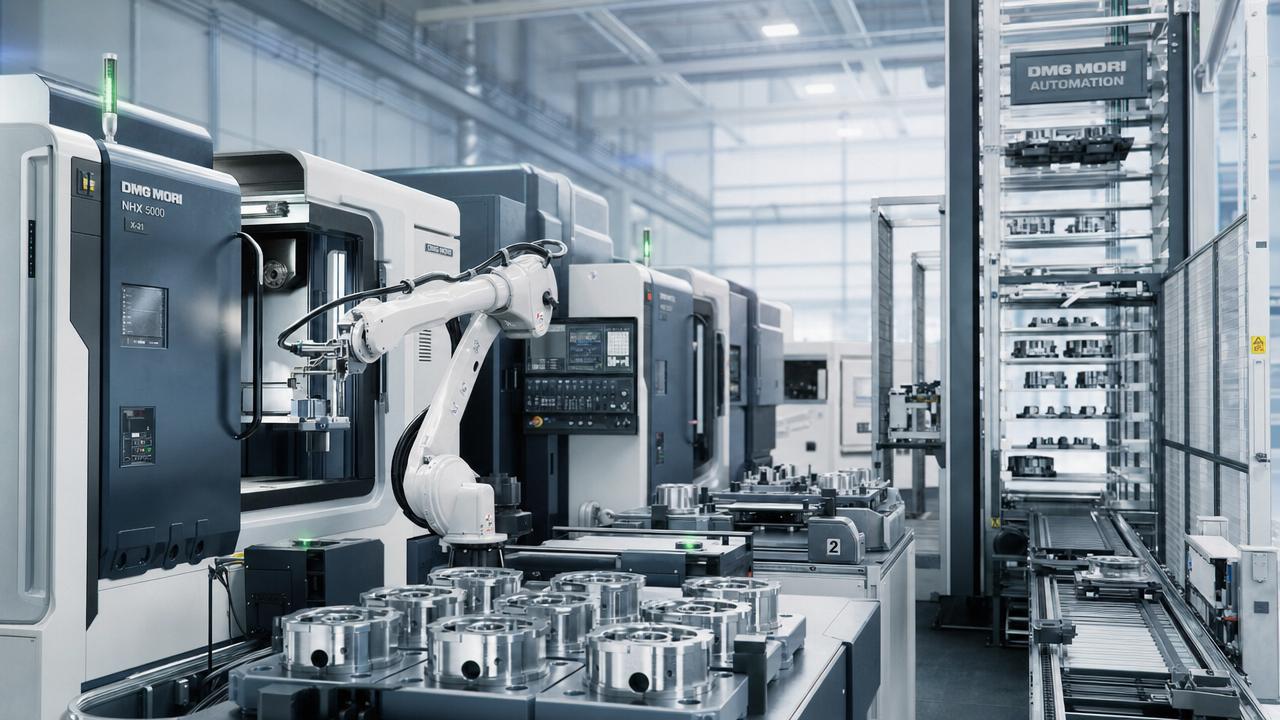
High-mix, low-volume production puts unusual pressure on automation strategy. Parts change often, batch sizes stay small, and delivery windows keep shrinking. In that setting, the best automated industrial systems are not always the biggest or most rigid. They are the systems that protect precision, shorten changeovers, and keep capacity usable across many product variants.
This matters across CNC machining, precision components, electronics, energy equipment, and aerospace programs, where product complexity is rising faster than order predictability. As machine tools, robotics, and digital controls become more connected, automation decisions now shape responsiveness as much as output.
Why high-mix, low-volume production needs a different automation logic
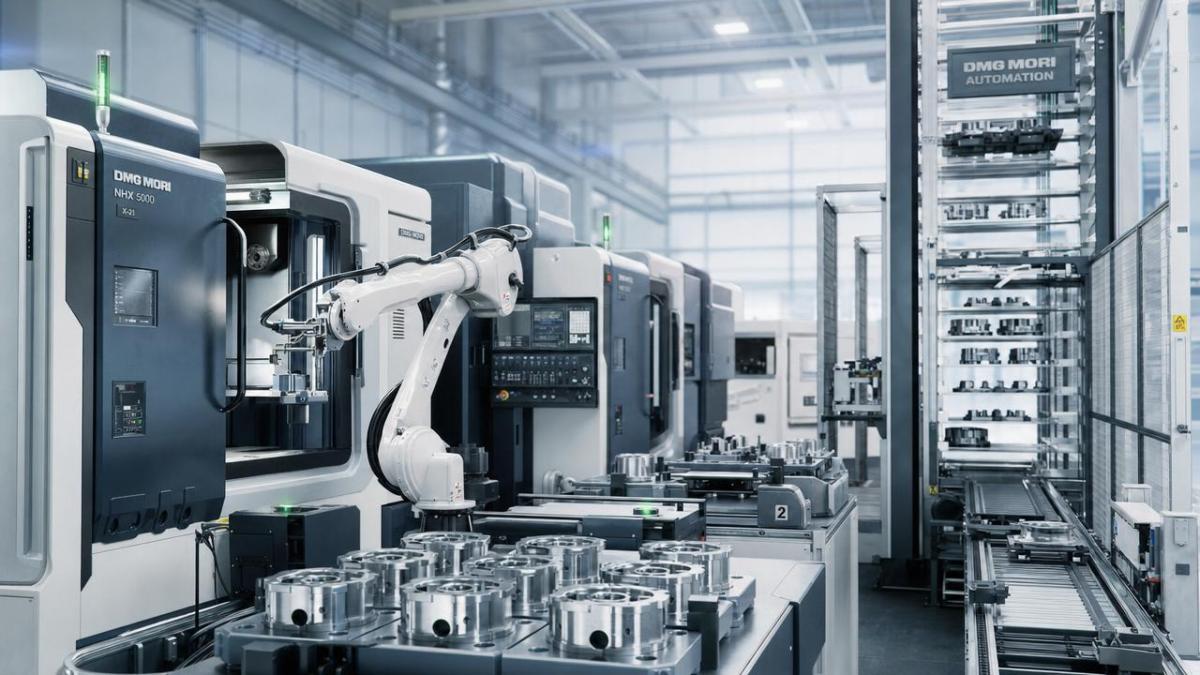
In mass production, automation is built around repetition. In high-mix, low-volume work, the challenge is variation. Different materials, tolerances, tools, fixtures, and programs can appear in the same shift.
That changes the economics of automated industrial investment. A fast machine means little if setup consumes most of the day. A robot adds little value if it only supports one part family.
The stronger approach is flexible automation. In practical terms, that means systems designed for frequent switching, low manual intervention, and stable quality across mixed workflows.
This is one reason CNC machine tools remain central. Modern lathes, machining centers, and multi-axis systems already provide the precision backbone. The question is how to automate around them without reducing flexibility.
What usually fits best in this environment
No single architecture fits every plant. Still, several automated industrial system types consistently perform well when product mix is broad and volumes stay uneven.
Flexible CNC cells
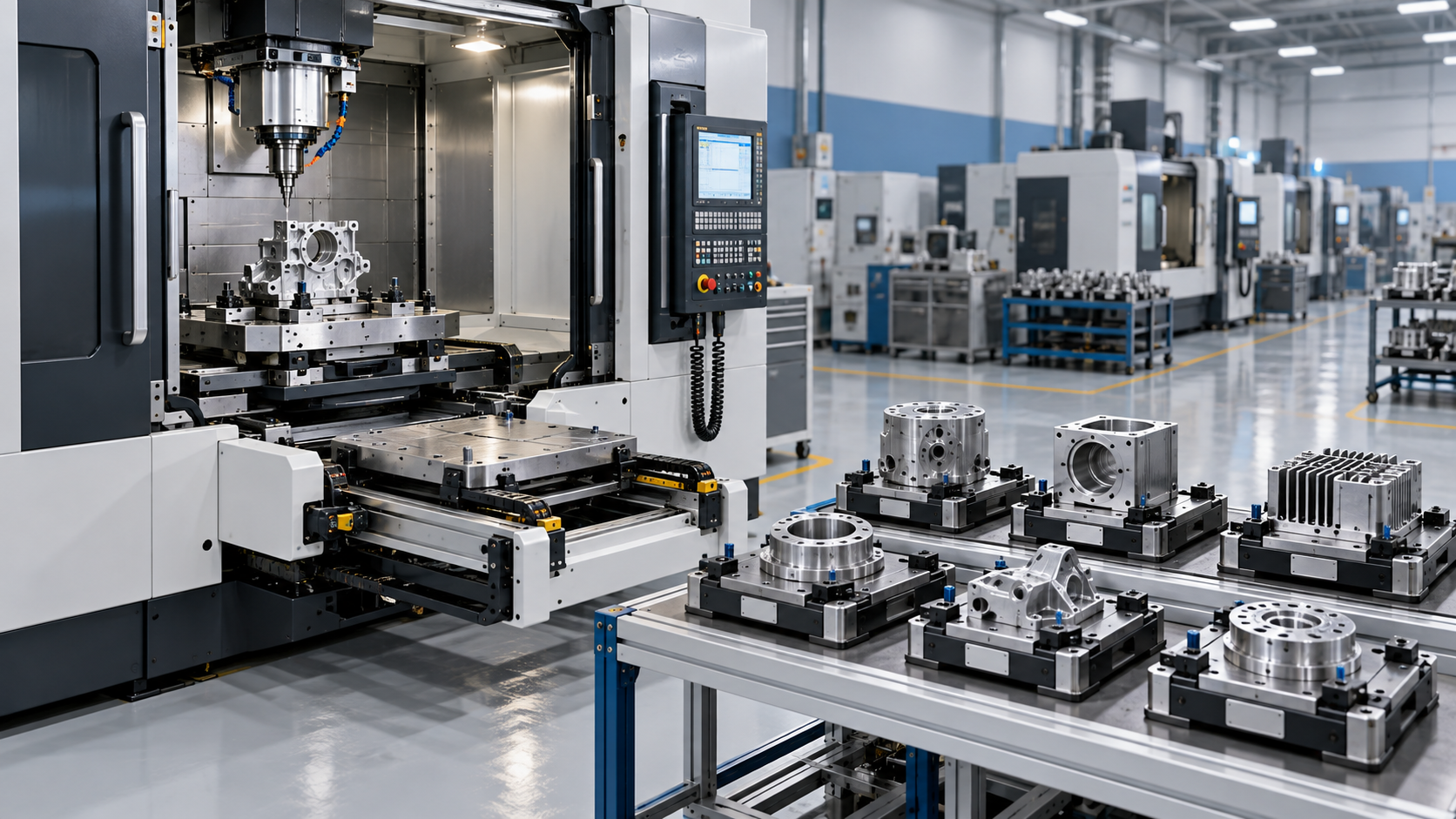
A flexible CNC cell combines one or more machines with tool management, pallet handling, probing, and basic part logistics. It is often the most practical starting point.
This setup works well for precision parts that require repeatability but change frequently. Automotive prototypes, aerospace brackets, electronics housings, and energy equipment components often fit this model.
Robot-assisted machine tending
Robots become effective when loading and unloading are standardized enough to automate, even if the machined parts themselves vary. End-of-arm tooling must be easy to swap or adaptive.
In this case, automated industrial value comes from extending spindle uptime and reducing labor bottlenecks during mixed schedules, not from chasing fully lights-out production immediately.
Pallet pools and modular fixturing
For many shops, pallet systems produce faster returns than more visible robotics. Pre-staged pallets reduce machine idle time and make short-run work far easier to sequence.
Modular fixtures support the same objective. They reduce custom setup effort and help standardize repeat jobs without locking production into a single part type.
Smart scheduling and MES integration
Software is often the missing layer in automated industrial deployment. If scheduling, tooling status, machine availability, and inspection data are disconnected, flexibility remains limited.
A practical MES or production scheduling layer helps sequence jobs by setup similarity, material availability, due date, and machine capability. That can unlock major gains without adding many machines.
Automated inspection and in-process measurement
High-mix production creates more opportunities for quality drift. Probing systems, vision inspection, and connected metrology reduce the risk of discovering errors after a small batch is complete.
This is especially relevant in industries where traceability and tolerance control matter more than raw output, such as aerospace, medical-related precision work, and advanced electronics.
Which systems match which production realities
Selection becomes easier when automation is tied to operational conditions rather than generic promises. The table below shows where different automated industrial options usually fit best.
What the market is paying attention to now
Across global machine tool centers such as China, Germany, Japan, and South Korea, the direction is clear. Precision remains essential, but automation is shifting toward digital coordination and flexible deployment.
That trend matters because high-mix operations rarely fail for lack of machine power alone. They struggle with changeover loss, fragmented data, inconsistent setups, and unstable workflow between machining, handling, and inspection.
As a result, automated industrial decisions increasingly focus on interoperability. Can the machine tool exchange data with scheduling software? Can a robot adapt to multiple fixtures? Can inspection results feed back into process control?
The more connected the system, the easier it becomes to scale from one automated cell to a broader smart factory model without rebuilding everything later.
How to judge fit before investing
The strongest automated industrial choice usually comes from process analysis, not equipment preference. Before comparing suppliers or architectures, a few operational questions need clear answers.
- How many part families share similar handling, tooling, and machine requirements?
- Where is the real bottleneck: setup, loading, programming, inspection, or scheduling?
- How often do jobs repeat, even if volumes remain small?
- Which operations require human judgment that cannot yet be standardized?
- What level of digital data is already available from machines and planning systems?
These questions often show that partial automation beats full-line automation. One flexible cell with strong scheduling and modular fixturing can outperform a more expensive, rigid system.
Look at total changeover time, not only cycle time
For low-volume production, utilization is shaped by everything between jobs. Tool presetting, fixture exchange, program verification, first-piece inspection, and material delivery all matter.
A useful automated industrial investment is one that shortens this non-cutting time while keeping quality stable. That is often where the real return appears.
Standardization creates automation readiness
High variation does not mean everything must stay custom. Standard tool libraries, common pallets, repeatable workholding, and unified data naming improve flexibility without reducing product diversity.
Many automated industrial projects underperform because process variation is unmanaged before automation starts. Technology cannot compensate for unstable basic methods.
A practical path forward
For most operations, the best path is incremental. Start where repetition exists inside the variation. That may be machine tending, palletized setups, connected scheduling, or in-process measurement.
Then evaluate performance through a small set of business indicators: setup reduction, spindle uptime, first-pass yield, schedule adherence, and labor redeployment. Those measures reveal whether the automated industrial system truly fits the production model.
In a market shaped by precision manufacturing, smart factories, and global machine tool competition, flexibility is becoming a strategic asset. The systems that fit high-mix, low-volume production best are the ones built to adapt, connect, and scale without sacrificing control.
A sensible next step is to map part families, setup patterns, and data flow before comparing technologies. That creates a clearer basis for choosing automation that supports growth instead of limiting it.
Recommended for You
![]() Mitsubishi Electric Announces Physical AI System Linking Humanoid Robots and CNC MachinesMachine Tool Industry Editorial Team
Mitsubishi Electric Announces Physical AI System Linking Humanoid Robots and CNC MachinesMachine Tool Industry Editorial Team Precision Machining for Defense: Supplier Quality and Traceability ChecksManufacturing Market Research Center
![]() Nidec Machine Tool Launches MVR-5X Five-Axis Gantry MachineMachine Tool Industry Editorial Team
Nidec Machine Tool Launches MVR-5X Five-Axis Gantry MachineMachine Tool Industry Editorial Team Choosing a Precision Disc Parts Manufacturer in China: Tolerances and Quality ChecksManufacturing Market Research Center
![]() Siemens Executive Says AI Could Raise Factory Automation to 80%Manufacturing Market Research Center
Siemens Executive Says AI Could Raise Factory Automation to 80%Manufacturing Market Research Center Choosing Automated Machine Tools for High-Mix, Low-Volume ProductionMachine Tool Industry Editorial Team


Aris Katos
Future of Carbide Coatings
15+ years in precision manufacturing systems. Specialized in high-speed milling and aerospace grade alloy processing.
▶
Choosing Automated Machine Tools for High-Mix, Low-Volume ProductionMachine Tool Industry Editorial Team▶
Choosing Industrial Robots for Warehouse Picking and PalletizingMachine Tool Industry Editorial Team▶
Digital Manufacturing for Smart Factories: Connecting Legacy Machines to MESMachine Tool Industry Editorial Team▶
Selecting Machine Tools for Automotive Parts: Accuracy, Throughput, and AutomationMachine Tool Industry Editorial Team▶
Smart Manufacturing for Small Businesses: Where Automation Delivers the Fastest ROIMachine Tool Industry Editorial Team
▶
Mastering 5-Axis Workholding Strategies
Join our technical panel on Nov 15th to learn about reducing vibrations in thin-wall components.

Providing you with integrated sanding solutions
Before-sales and after-sales services
Comprehensive technical support