• Global CNC market projected to reach $128B by 2028 • New EU trade regulations for precision tooling components • Aerospace deman
NYSE: CNC +1.2%LME: STEEL -0.4%

When Industrial Automation Integration Pays Off
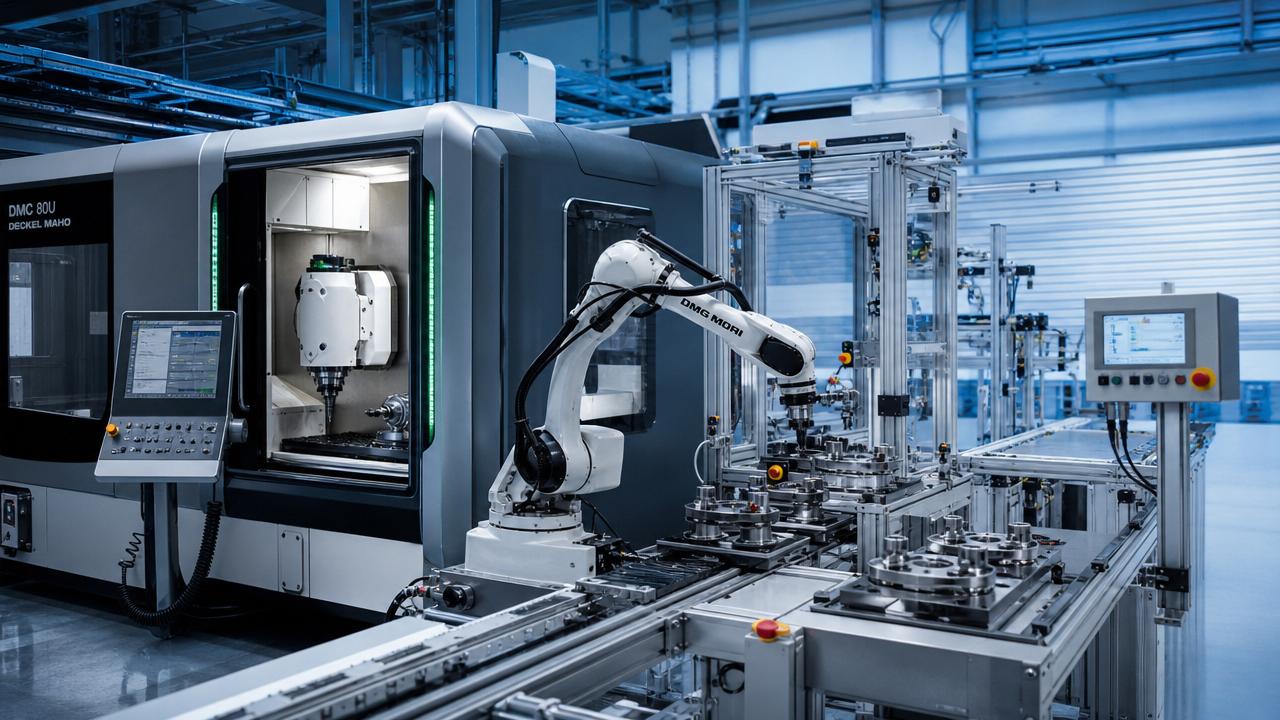
Industrial Automation integration for production line operations pays off when technology improves output, quality, flexibility, and cost control in measurable ways.
In CNC machining and precision manufacturing, the payoff is strongest when automation connects machines, robots, tooling, inspection, and production data.
The result is not only faster production. It is a more stable operating model for complex, high-precision industrial environments.
When Industrial Automation Integration Pays Off
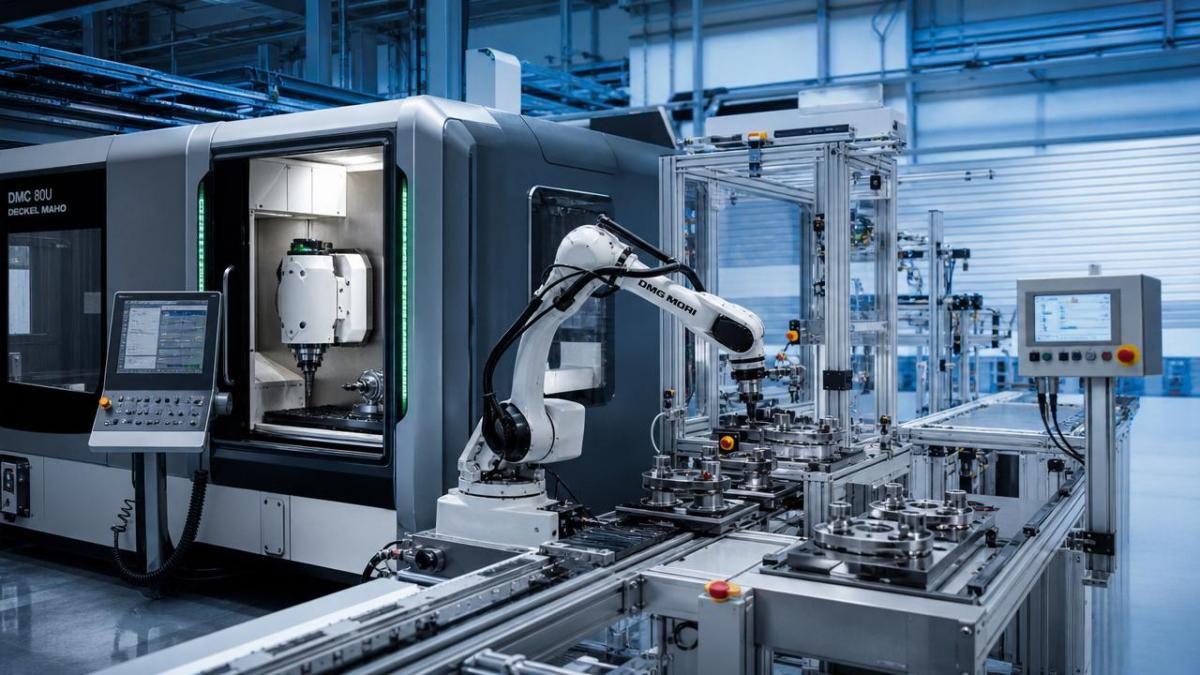
Industrial Automation integration for production line planning should begin with a clear business case, not with equipment selection alone.
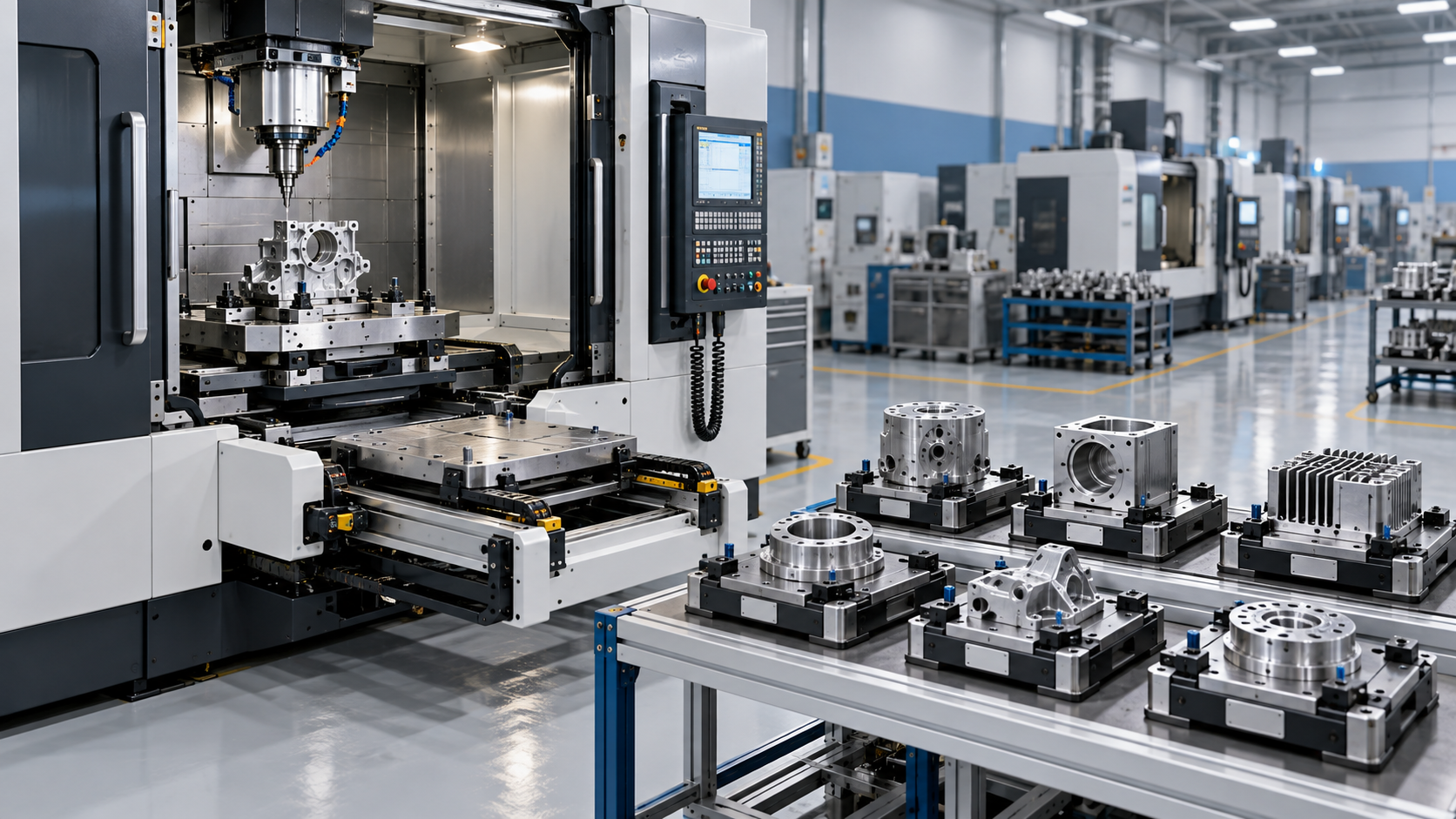
A CNC workshop may add robots, automatic loading systems, tool monitoring, sensors, and manufacturing execution software.
However, value appears only when these systems work as one coordinated production environment.
Integration means machines exchange data, workflows become visible, and production decisions rely less on manual judgment.
For precision manufacturing, this matters because small deviations can create scrap, rework, delayed delivery, and unstable capacity.
A connected line can detect abnormal load, tool wear, dimensional drift, and bottlenecks before losses expand.
Core Definition in CNC and Precision Manufacturing
Industrial Automation integration for production line systems combines physical equipment, control logic, software platforms, and operating standards.
In machine tool operations, it may include CNC lathes, machining centers, multi-axis machines, robots, conveyors, fixtures, and inspection units.
The integration layer connects these assets through PLCs, industrial networks, MES, ERP interfaces, and real-time monitoring tools.
A basic automation project reduces repetitive handling. A mature integration project improves the entire production rhythm.
This distinction is important. Buying automated equipment does not automatically create an integrated production line.
The payback depends on process consistency, data reliability, maintenance readiness, and the ability to standardize best practices.
Industry Signals That Support Investment
Global manufacturing is moving toward higher precision, shorter delivery cycles, and more product variation.
These pressures are especially visible in automotive parts, aerospace components, energy equipment, electronics, medical devices, and industrial machinery.
Industrial Automation integration for production line upgrades becomes attractive when these pressures create measurable operational pain.
China, Germany, Japan, and South Korea have built strong machine tool and automation ecosystems.
Their development shows a common direction: precision equipment must be supported by intelligent production systems.
This trend strengthens the case for integration across global supply chains and export-oriented manufacturing plants.
Business Value Beyond Equipment Efficiency
The most visible benefit is higher throughput. Machines can operate longer, with fewer idle periods and less manual waiting time.
Yet Industrial Automation integration for production line value is broader than machine utilization alone.
A connected production line improves quality consistency because process variables are monitored and corrected more quickly.
It also reduces hidden costs from searching for information, repeating measurements, and responding late to equipment problems.
For CNC machining, tool life management is a practical example. Integrated monitoring helps prevent sudden tool failure.
For precision assembly, automated verification can reduce missed steps and improve documentation for downstream quality review.
- Higher spindle utilization through synchronized loading and scheduling.
- Lower scrap rates through real-time measurement feedback.
- Improved delivery reliability through visible work-in-process data.
- Reduced training burden through standardized digital workflows.
- Better scalability when production volume increases.
These gains create a stronger foundation for smart factory development and long-term competitiveness.
Typical Scenarios Where Payback Becomes Clear
Industrial Automation integration for production line projects pay off fastest when a clear constraint blocks growth or quality stability.
The following scenarios often justify deeper automation and digital integration.
A mature line does not need to automate every activity immediately.
It should automate the points where delays, variation, or quality risks produce the greatest financial impact.
Key Metrics for Evaluating Return
The business case should use both financial and operational indicators.
Industrial Automation integration for production line return becomes easier to defend when baseline data is reliable.
- Overall equipment effectiveness, including availability, performance, and quality.
- Cycle time stability across shifts, machines, and product families.
- Scrap, rework, and inspection failure rates.
- Labor hours per qualified part.
- Unplanned downtime and mean time to repair.
- Changeover duration and first-piece approval time.
- Energy consumption per production unit.
Payback calculations should also include integration engineering, training, maintenance, spare parts, and cybersecurity protection.
Ignoring these factors can make an automation project look attractive on paper but difficult in daily operation.
Practical Implementation Considerations
A staged approach reduces risk. Start with the production area where process stability and data quality are already strong.
Industrial Automation integration for production line success depends on equipment compatibility and disciplined process design.
Before installation, define how machines, robots, inspection devices, and software will exchange signals and records.
Data standards are equally important. Part numbers, tool IDs, machine states, and quality results must be consistent.
- Map the current process and identify the main constraint.
- Measure baseline performance before choosing equipment.
- Select automation modules that support future expansion.
- Validate safety, guarding, access, and maintenance workflows.
- Train teams on both machine operation and data interpretation.
- Review performance after commissioning and adjust parameters.
Cybersecurity should not be treated as a late-stage issue.
Connected machine tools and factory software require access control, network segmentation, backups, and update procedures.
Common Reasons Projects Underperform
Some automation projects miss expectations because they solve isolated tasks without improving the complete production flow.
For example, a robot may load parts quickly while inspection, deburring, or tool changes still create waiting time.
Industrial Automation integration for production line planning must consider upstream material supply and downstream quality release.
Another common issue is poor master data. Inaccurate routings, tool lists, or cycle times weaken scheduling accuracy.
Maintenance readiness also determines performance. Automated cells need preventive routines, diagnostic skills, and spare part planning.
When these foundations are missing, downtime may simply become more technical and harder to troubleshoot.
Action Steps for a Stronger Integration Roadmap
A useful next step is to build a short integration roadmap based on production facts.
List the most valuable product families, the most constrained machines, and the quality issues with the highest recurring cost.
Then compare several improvement paths, including robotic handling, automated inspection, digital scheduling, and machine data collection.
Industrial Automation integration for production line decisions should prioritize scalable modules, open interfaces, and measurable milestones.
The best projects start with a focused cell, prove measurable value, and expand into a connected manufacturing system.
When integration improves throughput, consistency, traceability, and adaptability, the investment moves beyond modernization.
It becomes a practical foundation for competitive CNC machining, precision manufacturing, and smart factory transformation.
PREVIOUS ARTICLE
Recommended for You
![]() Mitsubishi Electric Announces Physical AI System Linking Humanoid Robots and CNC MachinesMachine Tool Industry Editorial Team
Mitsubishi Electric Announces Physical AI System Linking Humanoid Robots and CNC MachinesMachine Tool Industry Editorial Team Precision Machining for Defense: Supplier Quality and Traceability ChecksManufacturing Market Research Center
![]() Nidec Machine Tool Launches MVR-5X Five-Axis Gantry MachineMachine Tool Industry Editorial Team
Nidec Machine Tool Launches MVR-5X Five-Axis Gantry MachineMachine Tool Industry Editorial Team Choosing a Precision Disc Parts Manufacturer in China: Tolerances and Quality ChecksManufacturing Market Research Center
![]() Siemens Executive Says AI Could Raise Factory Automation to 80%Manufacturing Market Research Center
Siemens Executive Says AI Could Raise Factory Automation to 80%Manufacturing Market Research Center Choosing Automated Machine Tools for High-Mix, Low-Volume ProductionMachine Tool Industry Editorial Team


Aris Katos
Future of Carbide Coatings
15+ years in precision manufacturing systems. Specialized in high-speed milling and aerospace grade alloy processing.
▶
Choosing Automated Machine Tools for High-Mix, Low-Volume ProductionMachine Tool Industry Editorial Team▶
Choosing Industrial Robots for Warehouse Picking and PalletizingMachine Tool Industry Editorial Team▶
Digital Manufacturing for Smart Factories: Connecting Legacy Machines to MESMachine Tool Industry Editorial Team▶
Selecting Machine Tools for Automotive Parts: Accuracy, Throughput, and AutomationMachine Tool Industry Editorial Team▶
Smart Manufacturing for Small Businesses: Where Automation Delivers the Fastest ROIMachine Tool Industry Editorial Team
▶
Mastering 5-Axis Workholding Strategies
Join our technical panel on Nov 15th to learn about reducing vibrations in thin-wall components.

Providing you with integrated sanding solutions
Before-sales and after-sales services
Comprehensive technical support