• Global CNC market projected to reach $128B by 2028 • New EU trade regulations for precision tooling components • Aerospace deman
NYSE: CNC +1.2%LME: STEEL -0.4%

Automation Line Selection Guide: How to Match Layout, Throughput, and Labor Goals
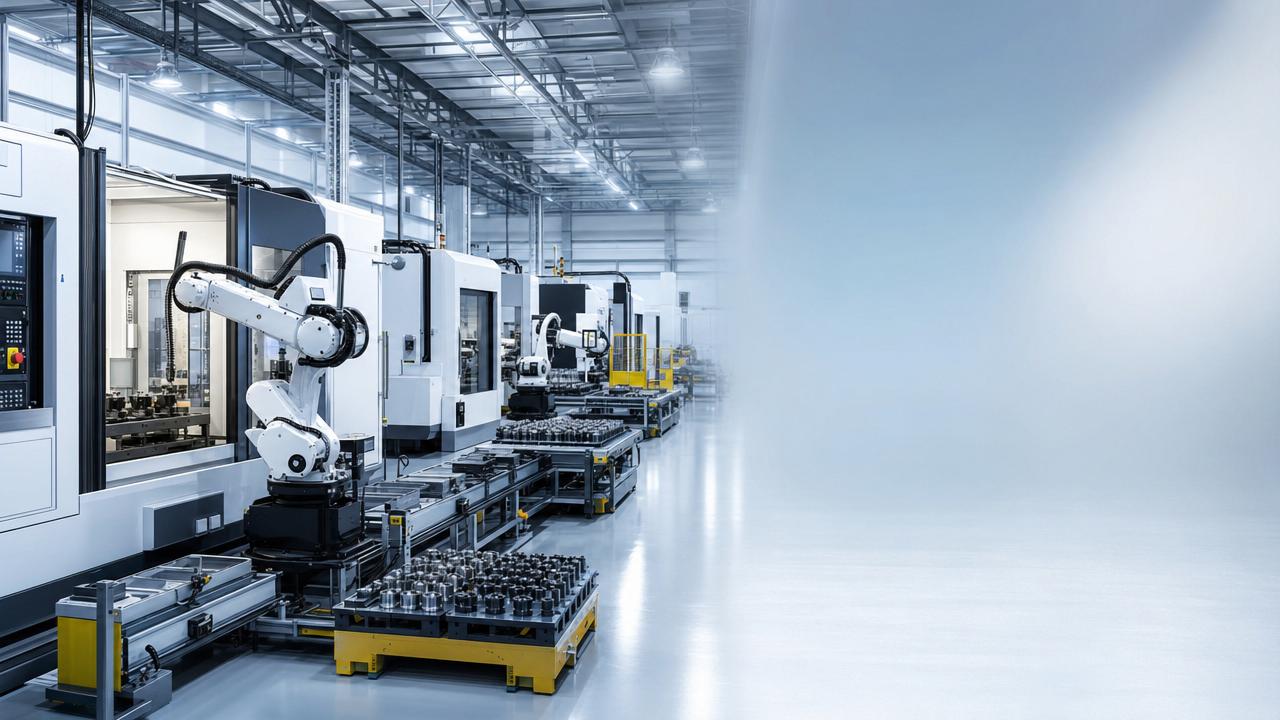
Choosing the right Automation Line is not only about machine count or robot speed. It is really about making layout, throughput, labor use, and future expansion work together.
In CNC machining, precision manufacturing, and flexible production, one weak decision can create years of rework. A line that looks efficient on paper may fail once material flow, tool changes, quality checks, and operator movement enter the picture.
That is why early selection matters. A practical Automation Line should match current demand, support stable output, and leave enough room for product mix changes without forcing a full redesign later.
Start with layout reality, not equipment catalogs
Before comparing suppliers, map the real factory constraints. Ceiling height, column spacing, aisle width, chip handling, coolant routing, and loading direction all shape the right Automation Line.
A machining line for shafts, discs, or structural parts behaves differently from a mixed-model line. The more variation in part size and cycle time, the more layout flexibility matters.
[Image 01: Automation Line layout comparison for CNC machining cells, transfer lines, and flexible production flow]
- Measure actual usable floor space, not only drawing dimensions. Include maintenance clearance, forklift paths, buffer zones, and safety fencing before locking the Automation Line footprint.
- Check material entry and finished-part exit first. If flow crosses itself, the Automation Line will lose efficiency even when machine utilization appears high.
- Review utility points early. Power, air, coolant, data lines, and chip collection often decide whether an Automation Line remains simple or becomes expensive to install.
- Leave room for offline stations such as gauging, tool presetting, and fixture preparation. These support areas protect Automation Line stability during peak production periods.
- Validate maintenance access around robots, conveyors, and CNC enclosures. Tight service areas can turn a compact Automation Line into a long-term downtime risk.
Match throughput targets to real cycle behavior
Target output should be based on true cycle behavior, not ideal machine data. In real production, loading, tool wear, in-process inspection, and minor stoppages reduce nameplate capacity.
For CNC lathes, machining centers, and multi-axis systems, bottlenecks often come from part transfer and changeover, not only cutting time. That is where many Automation Line plans become too optimistic.
Key output checks before freezing the line
- Use takt time, actual spindle cycle, loading time, inspection time, and expected stoppage rate together. A balanced Automation Line depends on combined time, not one machine metric.
- Identify the slowest process under normal production conditions. That station defines Automation Line output more accurately than average cycle estimates across all equipment.
- Set buffer size between critical machines based on variation, not guesswork. Small buffers can make an Automation Line fragile during tool changes or quality checks.
- Test mixed-part scheduling if the factory runs several SKUs. A flexible Automation Line may need sequencing rules to prevent queue buildup and robot waiting time.
- Separate peak demand from normal demand. Oversizing the Automation Line for short seasonal spikes can increase capital cost without improving annual equipment efficiency.
In automotive parts, high volume usually favors repeatable flow and fixed interfaces. In aerospace or energy equipment, lower volume and higher complexity often favor a more flexible Automation Line design.
Electronics-related precision parts can add another challenge. Cycle times may be short, but inspection frequency is high, so quality stations can quietly become the real constraint.
Look at labor goals beyond headcount reduction
Labor planning should not stop at asking how many operators can be removed. A strong Automation Line also improves task consistency, training speed, safety, and response time when something goes wrong.
In many plants, labor savings are overestimated because support tasks stay manual. Tool replacement, fixture cleaning, part confirmation, and pallet handling still need attention.
Questions that keep labor plans realistic
- Define which tasks stay manual after launch. A good Automation Line reduces repetitive work, but support activities still need clear ownership and standard response rules.
- Check operator walking distance and station visibility. Labor efficiency improves faster when one person can monitor the Automation Line without blind spots or excessive movement.
- Plan skill levels by role, including setup, maintenance, quality, and troubleshooting. The Automation Line should fit available talent, not depend on a few hard-to-replace experts.
- Estimate recovery time after alarms or tool breakage. If only one specialist can restart the Automation Line, actual labor efficiency will be much lower than expected.
- Include ergonomics in the selection process. Better loading height, access, and interface design make the Automation Line easier to sustain across long production shifts.
Choose the line structure that fits production volatility
Not every plant needs the same structure. Some need a linear transfer flow. Others benefit from robot-linked cells, pallet pools, or modular stations that can be expanded in stages.
The best Automation Line is often the one that absorbs change with the least disruption. That matters in global manufacturing, where product revisions and volume shifts happen fast.
A line serving global trade programs or export contracts should also consider supply chain resilience. Spare parts, controls support, and regional service coverage matter as much as machine capability.
Do not overlook quality, changeover, and data flow
Some of the biggest selection mistakes happen outside cutting performance. A capable Automation Line should support measurement, traceability, and fast changeover without repeated manual workarounds.
This is especially important in precision sectors where tolerance control, tool life tracking, and process data directly affect scrap rate and delivery reliability.
- Confirm how quality data moves from gauges to the control system. A connected Automation Line supports faster corrections and more stable dimensional performance.
- Review fixture and program changeover time carefully. If product switching is frequent, Automation Line flexibility should be measured in minutes, not promises.
- Check traceability requirements for batches, serial numbers, and process parameters. Export-oriented Automation Line projects often need stronger digital records from the start.
- Ask how tool wear compensation is handled. Stable Automation Line output depends on predictable correction logic, especially in unattended or lights-out production periods.
- Validate software openness and integration limits. A closed Automation Line can become difficult to connect with MES, ERP, or smart factory dashboards later.
Use a phased decision process before final approval
A smart decision rarely comes from one meeting. The strongest Automation Line choices usually pass through layout review, cycle simulation, staffing review, risk check, and expansion planning.
It helps to compare two or three realistic concepts instead of jumping straight to one preferred supplier. That creates better trade-off discussions around cost, output, and implementation risk.
A practical decision path
- Build a requirement sheet covering parts, tolerances, takt, labor, utilities, data needs, and expansion plans before discussing final Automation Line configuration.
- Score each concept using the same factors. This keeps Automation Line selection focused on plant goals instead of presentation quality or brand familiarity.
- Run a failure review for stoppages, quality escapes, and maintenance delays. A robust Automation Line should recover quickly, not just run quickly.
- Request layout, throughput, and staffing assumptions in writing. Clear assumptions make Automation Line proposals easier to compare and much easier to challenge.
- Reserve budget for commissioning, ramp-up scrap, and training. These hidden costs often shape Automation Line success more than headline equipment pricing.
If the decision still feels unclear, go back to three basics: how parts move, where time is lost, and who responds when flow breaks. Those answers usually reveal the right direction.
The right Automation Line is the one that fits the plant as it really operates, not as the proposal slides describe it. When layout, throughput, and labor goals align, the line becomes easier to scale, easier to manage, and far more competitive over time.
As a next step, compare current constraints against one fixed and one flexible line concept. That simple exercise usually makes the better Automation Line choice much easier to see.
Recommended for You
![]() Mitsubishi Electric Announces Physical AI System Linking Humanoid Robots and CNC MachinesMachine Tool Industry Editorial Team
Mitsubishi Electric Announces Physical AI System Linking Humanoid Robots and CNC MachinesMachine Tool Industry Editorial Team Precision Machining for Defense: Supplier Quality and Traceability ChecksManufacturing Market Research Center
![]() Nidec Machine Tool Launches MVR-5X Five-Axis Gantry MachineMachine Tool Industry Editorial Team
Nidec Machine Tool Launches MVR-5X Five-Axis Gantry MachineMachine Tool Industry Editorial Team Choosing a Precision Disc Parts Manufacturer in China: Tolerances and Quality ChecksManufacturing Market Research Center
![]() Siemens Executive Says AI Could Raise Factory Automation to 80%Manufacturing Market Research Center
Siemens Executive Says AI Could Raise Factory Automation to 80%Manufacturing Market Research Center Choosing Automated Machine Tools for High-Mix, Low-Volume ProductionMachine Tool Industry Editorial Team


Aris Katos
Future of Carbide Coatings
15+ years in precision manufacturing systems. Specialized in high-speed milling and aerospace grade alloy processing.
▶
Choosing Automated Machine Tools for High-Mix, Low-Volume ProductionMachine Tool Industry Editorial Team▶
Choosing Industrial Robots for Warehouse Picking and PalletizingMachine Tool Industry Editorial Team▶
Digital Manufacturing for Smart Factories: Connecting Legacy Machines to MESMachine Tool Industry Editorial Team▶
Selecting Machine Tools for Automotive Parts: Accuracy, Throughput, and AutomationMachine Tool Industry Editorial Team▶
Smart Manufacturing for Small Businesses: Where Automation Delivers the Fastest ROIMachine Tool Industry Editorial Team
▶
Mastering 5-Axis Workholding Strategies
Join our technical panel on Nov 15th to learn about reducing vibrations in thin-wall components.

Providing you with integrated sanding solutions
Before-sales and after-sales services
Comprehensive technical support