• Global CNC market projected to reach $128B by 2028 • New EU trade regulations for precision tooling components • Aerospace deman
NYSE: CNC +1.2%LME: STEEL -0.4%

Smart Manufacturing for Energy Sector: How to Improve Uptime and Traceability
Why Smart Manufacturing for Energy Sector Matters Now
Smart Manufacturing for Energy Sector is no longer a nice upgrade. It is becoming the practical way to keep production stable, compliant, and profitable.
Energy equipment production often involves complex shafts, precision discs, heavy structural parts, and strict documentation. That mix makes downtime expensive and traceability non-negotiable.
In CNC-driven production, one weak link can slow an entire line. A missing tool record, an unplanned spindle stop, or a disconnected inspection result can create delays that spread fast.
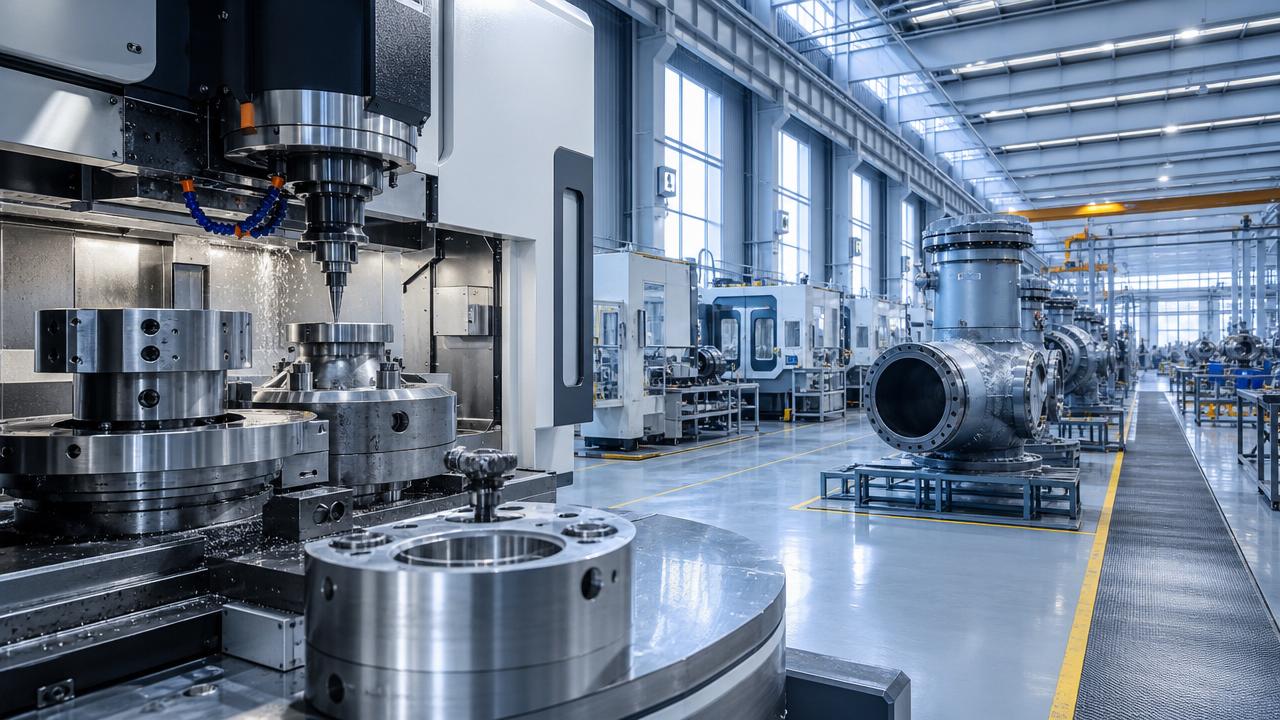
That is why Smart Manufacturing for Energy Sector works best when it connects CNC machines, tooling, operators, quality systems, and planning data into one visible workflow.
[Image 01: Connected CNC machining, traceability dashboard, and energy equipment production line]
The goal is simple. Improve uptime, prove part history, reduce risk, and make decisions faster without adding unnecessary complexity to the shop floor.
Where to Focus First
A practical rollout starts with a few high-impact moves. The best results usually come from fixing visibility gaps before expanding automation everywhere.
- Connect CNC machines to a central dashboard so machine status, alarms, cycle time, and idle causes become visible in real time across critical energy part production.
- Build digital traceability from raw material to final inspection, including program version, tool data, operator actions, and quality records for every serialized component.
- Standardize setup instructions and tooling libraries to reduce variation between shifts, shorten changeovers, and prevent hidden quality drift in repeat or low-volume jobs.
- Use predictive maintenance signals from spindles, coolant systems, and axes to catch early wear before it turns into expensive downtime or scrap.
- Link in-process measurement with machining data so deviations trigger action quickly, instead of being discovered only after a batch reaches final inspection.
- Start with one bottleneck line or one family of energy components, then scale after uptime gains and traceability accuracy are clearly proven.
A common starting point
Many operations already own capable CNC lathes, machining centers, and multi-axis systems. The real issue is that data stays trapped inside separate machines and departments.
Smart Manufacturing for Energy Sector becomes effective when machine data, tooling history, and inspection outcomes can be read together, not as isolated reports.
How to Improve Uptime Without Overcomplicating Operations
Uptime does not improve just because software is installed. It improves when teams can see why machines stop and act before the next interruption happens.
- Track the top downtime reasons by machine and shift, then solve the few repeat causes first, such as tool breakage, waiting material, or manual program correction.
- Set alarm response rules so recurring faults trigger defined actions, spare part checks, and maintenance follow-up instead of staying as informal tribal knowledge.
- Monitor tool life automatically and replace tools based on actual load and wear trends, not rough estimates that either waste tools or risk unstable machining.
- Use digital setup verification for fixtures, offsets, and NC programs to reduce startup mistakes that often create long stoppages on high-value energy parts.
- Balance automation with operator usability, because overly complicated screens or approval steps often slow reaction time during urgent production events.
A realistic shop-floor example
Consider a line machining valve bodies or turbine-related parts. A spindle alarm may look like a maintenance issue, but the root cause could be unstable tooling data.
With Smart Manufacturing for Energy Sector, that alarm can be linked to the exact tool batch, NC revision, setup operator, and quality trend. That shortens diagnosis time dramatically.
How to Make Traceability Useful, Not Just Compliant
Traceability often fails when it is treated as paperwork. In energy equipment production, it should help explain what happened, why it happened, and what to correct next.
- Assign a digital identity to each part or batch so material certificates, machining parameters, inspections, and rework history stay linked through the full process.
- Record NC program versions automatically, because manual tracking often misses last-minute edits that later become hard-to-find sources of dimensional variation.
- Capture fixture, gauge, and tool identification alongside machine data so traceability shows not only who ran the job, but also which production assets were involved.
- Connect final quality reports with in-process readings to identify exactly when drift started, instead of rechecking every process step after a customer complaint.
- Keep records accessible across plants and suppliers when international production is involved, especially for energy projects requiring strict audit readiness and delivery transparency.
What gets overlooked most often
A common gap is tool and fixture traceability. Part records may exist, but supporting production assets remain invisible. That weakens root-cause analysis when defects appear.
Another issue is fragmented data ownership. If engineering, production, and quality store records separately, Smart Manufacturing for Energy Sector loses much of its real value.
What to Prioritize by Production Situation
Not every facility should start in the same place. The right priorities depend on product mix, batch size, risk level, and current digital maturity.
For high-value, low-volume work
When each part carries significant value, even one avoidable stop can hurt delivery and margin. In this case, digital setup control and live machine monitoring matter most.
For repeat production, the bigger win may come from standardizing tooling, automating inspection feedback, and reducing small losses that quietly erode capacity every week.
Mistakes That Slow Results
The biggest problem is usually not technology. It is choosing too broad a scope, too many dashboards, or too little discipline around data quality.
- Do not digitize broken processes first, because poor routing, unclear ownership, and inconsistent setup methods will simply become faster ways to repeat mistakes.
- Avoid collecting every available machine signal at once; focus first on data that explains downtime, quality shifts, and traceability gaps clearly.
- Do not separate IT goals from production goals, or Smart Manufacturing for Energy Sector will look modern on paper but weak in daily execution.
- Do not underestimate training on data use, because visible information only helps when people know which action should follow each alert or trend.
A Practical Next Step
The most effective next step is usually a focused pilot. Choose one production line, one part family, or one recurring uptime problem with clear business impact.
Then connect machine data, tooling records, and quality checkpoints around that scope. Measure downtime reduction, response speed, and traceability completeness from day one.
Smart Manufacturing for Energy Sector delivers the strongest value when it is practical, connected, and tied to daily decisions. Start where losses are visible, prove the gain, and scale with confidence.
Recommended for You
![]() Mitsubishi Electric Announces Physical AI System Linking Humanoid Robots and CNC MachinesMachine Tool Industry Editorial Team
Mitsubishi Electric Announces Physical AI System Linking Humanoid Robots and CNC MachinesMachine Tool Industry Editorial Team Precision Machining for Defense: Supplier Quality and Traceability ChecksManufacturing Market Research Center
![]() Nidec Machine Tool Launches MVR-5X Five-Axis Gantry MachineMachine Tool Industry Editorial Team
Nidec Machine Tool Launches MVR-5X Five-Axis Gantry MachineMachine Tool Industry Editorial Team Choosing a Precision Disc Parts Manufacturer in China: Tolerances and Quality ChecksManufacturing Market Research Center
![]() Siemens Executive Says AI Could Raise Factory Automation to 80%Manufacturing Market Research Center
Siemens Executive Says AI Could Raise Factory Automation to 80%Manufacturing Market Research Center Choosing Automated Machine Tools for High-Mix, Low-Volume ProductionMachine Tool Industry Editorial Team


Aris Katos
Future of Carbide Coatings
15+ years in precision manufacturing systems. Specialized in high-speed milling and aerospace grade alloy processing.
▶
Choosing Automated Machine Tools for High-Mix, Low-Volume ProductionMachine Tool Industry Editorial Team▶
Choosing Industrial Robots for Warehouse Picking and PalletizingMachine Tool Industry Editorial Team▶
Digital Manufacturing for Smart Factories: Connecting Legacy Machines to MESMachine Tool Industry Editorial Team▶
Selecting Machine Tools for Automotive Parts: Accuracy, Throughput, and AutomationMachine Tool Industry Editorial Team▶
Smart Manufacturing for Small Businesses: Where Automation Delivers the Fastest ROIMachine Tool Industry Editorial Team
▶
Mastering 5-Axis Workholding Strategies
Join our technical panel on Nov 15th to learn about reducing vibrations in thin-wall components.

Providing you with integrated sanding solutions
Before-sales and after-sales services
Comprehensive technical support