• Global CNC market projected to reach $128B by 2028 • New EU trade regulations for precision tooling components • Aerospace deman
NYSE: CNC +1.2%LME: STEEL -0.4%

How to Choose a Machine Tool for Energy Equipment Parts with Tight Tolerance Needs
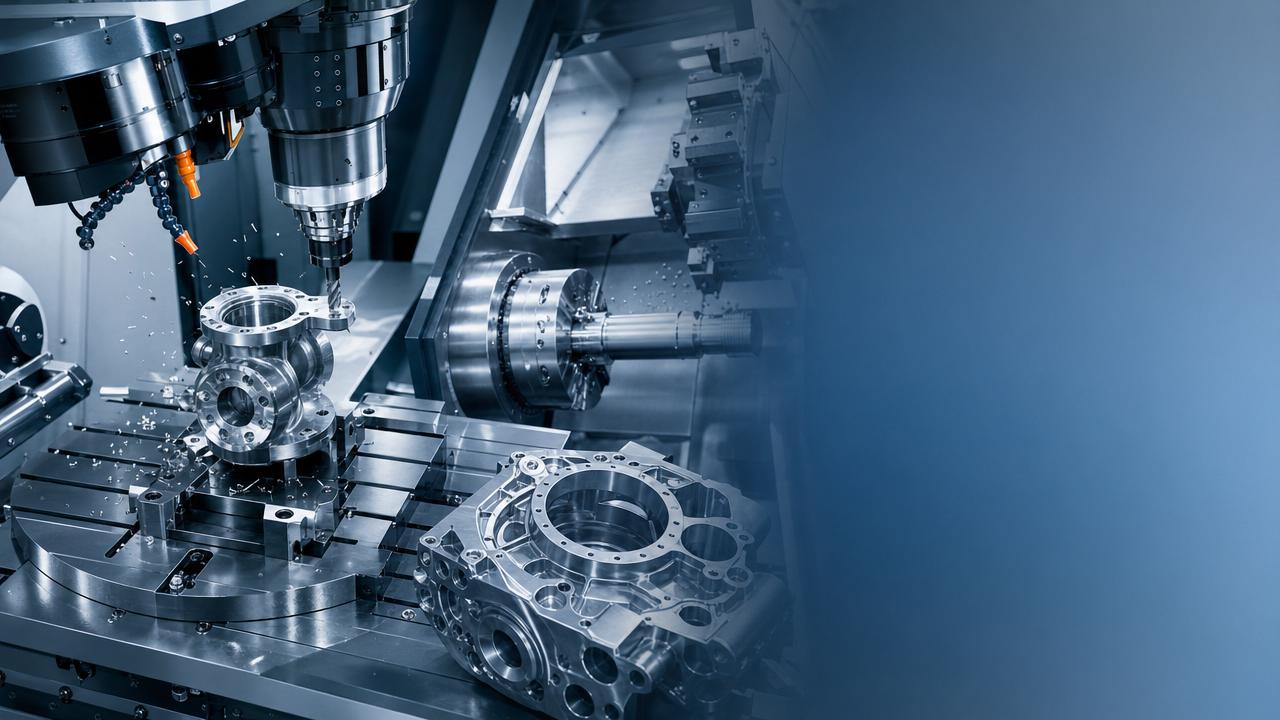
Selecting a machine tool for energy equipment is rarely a simple capacity decision. When parts must hold tight tolerances, the choice affects delivery risk, operating safety, maintenance cycles, and the long-term reliability of turbines, valves, shafts, housings, and pressure-related components.
That is why a machine tool for energy equipment should be judged as part of a wider production system. Accuracy on paper matters, but so do thermal stability, repeatability, automation, tooling strategy, and the ability to process demanding materials without drift.
Why this decision matters more now
Energy equipment manufacturing is under pressure from several directions at once. Components are becoming more complex, documentation requirements are stricter, and project schedules leave less room for rework.
At the same time, the global CNC machine tool sector is moving toward higher precision, stronger automation, and deeper digital integration. That trend is visible across machining centers, CNC lathes, multi-axis systems, and flexible production cells.
For energy projects, this shift changes how equipment should be evaluated. A machine may look competitive on spindle power or travel range, yet still fall short when traceability, unattended running, or micron-level consistency become daily requirements.
This is especially relevant in global supply chains, where production may involve suppliers, subcontractors, and service partners across China, Germany, Japan, South Korea, and other manufacturing hubs.
What tight tolerance really means in energy parts
Tight tolerance is not only about hitting a dimension once. In practice, it means producing the same result repeatedly across batches, shifts, materials, and ambient conditions.
For a machine tool for energy equipment, the critical issue is controlled variation. Roundness, concentricity, surface finish, flatness, and geometric stability often matter as much as nominal size.
In valves and sealing parts, poor surface integrity can lead to leakage or premature wear. In shafts and rotating parts, minor errors can create vibration, heat, and shorter service life.
Large structural parts bring another challenge. Their dimensions may be manageable, yet heat buildup, clamping distortion, and long machining cycles make stable accuracy harder to sustain.
Core machine factors that deserve close attention
A practical evaluation starts with the machine structure. Bed design, guideway quality, spindle rigidity, axis feedback, and vibration control directly influence the consistency of a machine tool for energy equipment.
Thermal behavior is another major filter. If a machine warms up unevenly during long cycles, nominal accuracy can shift enough to affect critical fits and sealing zones.
Control capability also matters. High-end CNC systems support fine interpolation, compensation, process monitoring, and data collection, which become valuable when parts require documented process stability.
Key questions during comparison
- What is the proven repeatability under real production conditions, not only test conditions?
- How does the machine manage thermal compensation over extended machining time?
- Can it maintain accuracy with hard alloys, stainless steels, and heat-resistant materials?
- How stable is performance after fixture changes, tool wear, or operator shifts?
- What in-process measurement or monitoring options are available?
Matching machine type to part profile
Not every energy component needs the same equipment architecture. The right machine tool for energy equipment depends on part geometry, material behavior, tolerance chain, and expected production volume.
A mismatch here creates downstream cost. An oversized machine adds overhead, while an underspecified platform can turn inspection failure into a recurring production problem.
Materials, tooling, and fixtures shape the outcome
A machine tool for energy equipment cannot be separated from the process around it. Material hardness, chip control, cutting forces, and fixture repeatability all affect whether the machine can deliver tight results consistently.
Energy components often use alloy steels, stainless steels, duplex grades, superalloys, and wear-resistant materials. These materials may deform under heat, work-harden, or accelerate tool wear.
That makes tooling strategy essential. Stable holders, predictable insert life, coolant delivery, and fixture design should be reviewed together with the machine specification.
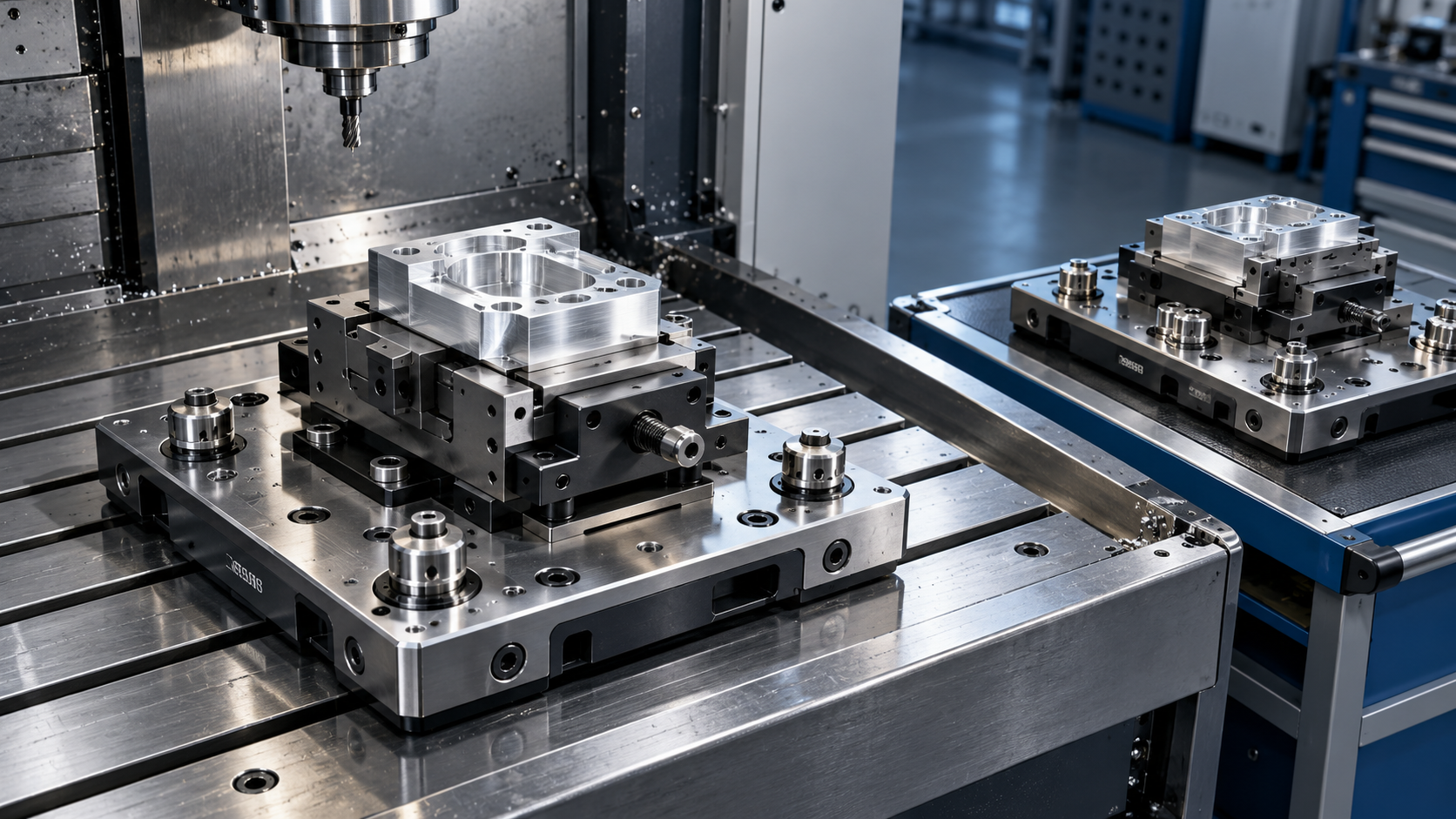
In actual production, fixture repeatability is often underestimated. A highly capable machine will not rescue a weak setup that introduces distortion or inconsistent datum positioning.
Automation and digital visibility are no longer optional extras
For short runs, complex families, or high-mix production, automation helps more than labor reduction alone. It supports process consistency, reduces setup variation, and improves machine utilization.
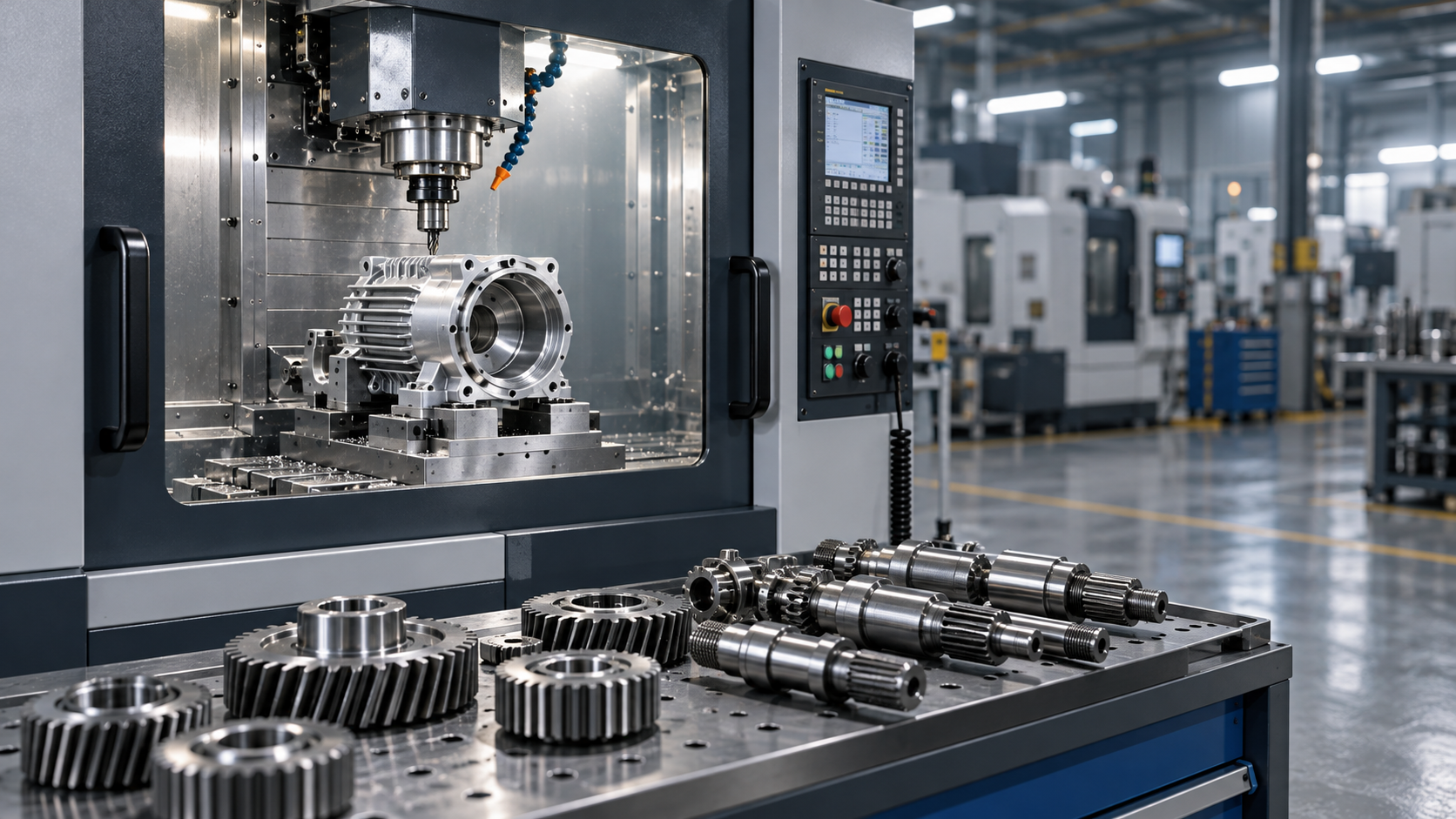
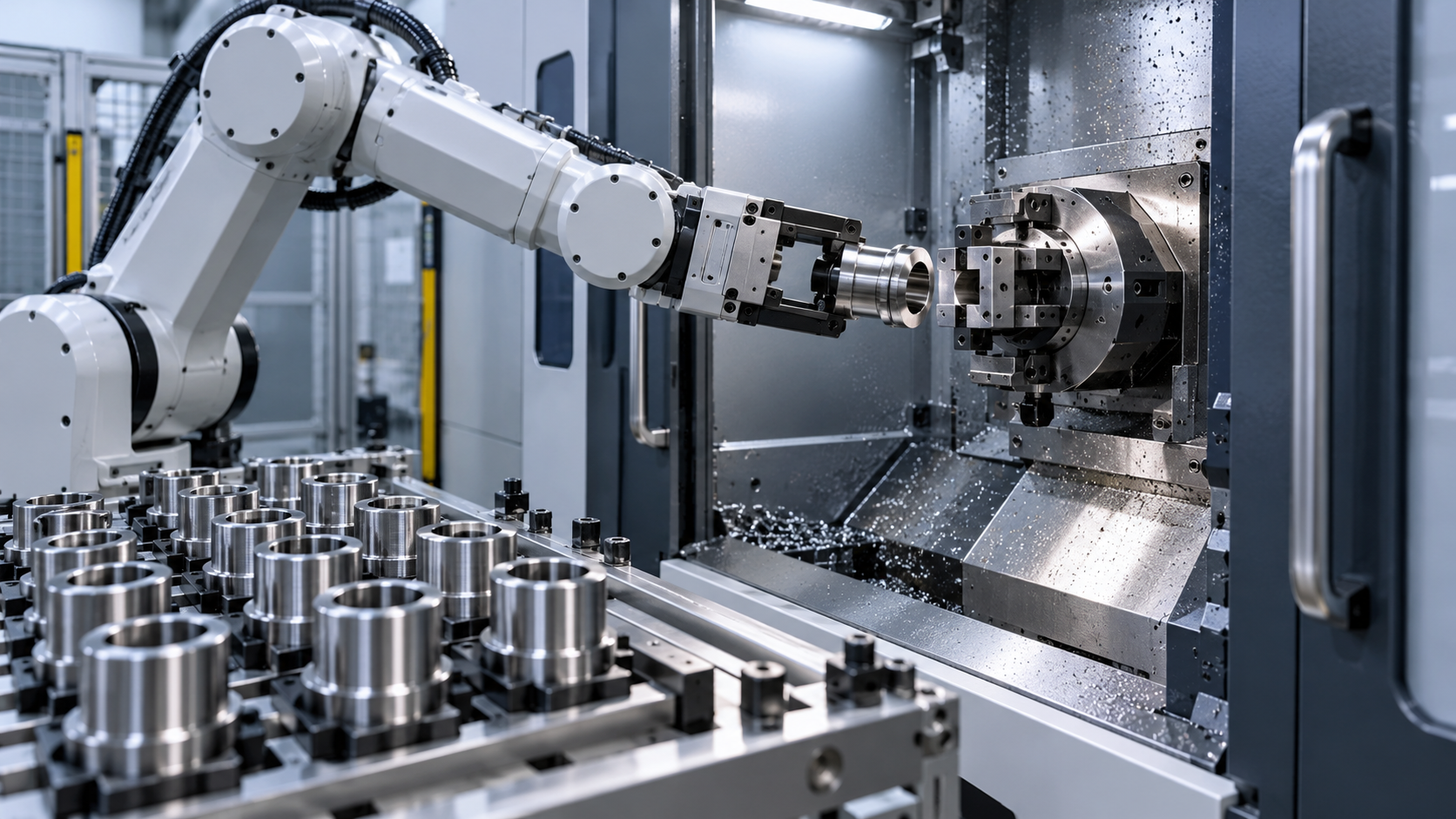
Pallet systems, tool management, automatic probing, and load monitoring can make a machine tool for energy equipment more dependable in real project conditions. The goal is fewer unknowns between first article approval and batch delivery.
Digital integration adds another layer of value. Data from machine controls, probes, and inspection systems can reveal drift before scrap rates rise. That is useful when schedules are tight and replacement parts are expensive.
A machine that fits a smart factory environment also supports broader decisions around capacity planning, preventive maintenance, and supplier reporting.
How to compare options without focusing only on purchase price
Initial cost is visible, but the larger cost often sits in process instability. Scrap, rework, extended setup, missed milestones, and warranty exposure can quickly outweigh a lower equipment price.
A better comparison framework looks at total manufacturing value.
- Expected tolerance capability across the full production cycle
- Setup time and changeover efficiency
- Tool consumption and process stability
- Service response, spare parts access, and training support
- Compatibility with inspection, automation, and future line expansion
This is where supplier credibility becomes important. Strong machine builders and component partners usually offer application support, process validation, and technical documentation that reduce launch risk.
A practical path for the final decision
The most reliable choice begins with the part, not the brochure. Map critical dimensions, material characteristics, expected annual volume, inspection rules, and bottlenecks already seen in similar projects.
Then compare each machine tool for energy equipment against those conditions. Ask for sample process data, tolerance evidence, cycle assumptions, tooling recommendations, and examples from comparable applications.
Where possible, review not only the machine itself, but the surrounding ecosystem. Tooling, fixtures, probing, software, and after-sales support usually decide whether precision stays stable after installation.
A clear decision matrix helps. Rank options by precision stability, process flexibility, digital readiness, service strength, and total operating impact. That approach creates a more defensible investment case and a smoother production start.
For the next step, it is worth building a shortlist around real part families, not generic machine categories. Once those benchmarks are clear, the right machine tool for energy equipment becomes easier to identify and justify.
Recommended for You
![]() 33rd JIMTOF 2026 Set to Open in Tokyo as Taiwanese Exhibitors Seek OrdersGlobal Machine Tool Trade Research Center
33rd JIMTOF 2026 Set to Open in Tokyo as Taiwanese Exhibitors Seek OrdersGlobal Machine Tool Trade Research Center Which Fixture Type Cuts Changeover Time Most in High-Mix CNC Machining?CNC Machining Technology Center
![]() FANUC Invests $18 Million in Largest U.S. Corporate Automation Training CenterMachine Tool Industry Editorial Team
FANUC Invests $18 Million in Largest U.S. Corporate Automation Training CenterMachine Tool Industry Editorial Team Southeast Asia Machine Tool Market: Comparing Automotive Demand by CountryManufacturing Market Research Center
![]() Zhongshan Xiaolan Machinery Exhibition Opens With Global Product DebutsMachine Tool Industry Editorial Team
Zhongshan Xiaolan Machinery Exhibition Opens With Global Product DebutsMachine Tool Industry Editorial Team Automated Production Machining: Which Parts and Batch Sizes Are a Good Fit?Machine Tool Industry Editorial Team


Aris Katos
Future of Carbide Coatings
15+ years in precision manufacturing systems. Specialized in high-speed milling and aerospace grade alloy processing.
▶
Nidec Machine Tool Launches MVR-5X Five-Axis Gantry MachineMachine Tool Industry Editorial Team▶
How to Select a Machine Tool for Aerospace Parts with Tight Tolerances?Machine Tool Industry Editorial Team▶
How to Compare Machine Tools for Small-Batch vs Mass Production JobsMachine Tool Industry Editorial Team▶
Multi-Axis Machine Tool Selection Guide: Travel, Spindle, Accuracy, and Control SystemMachine Tool Industry Editorial Team▶
How to Evaluate Precision Equipment for Tight-Tolerance Parts and Stable OutputMachine Tool Industry Editorial Team
▶
Mastering 5-Axis Workholding Strategies
Join our technical panel on Nov 15th to learn about reducing vibrations in thin-wall components.

Providing you with integrated sanding solutions
Before-sales and after-sales services
Comprehensive technical support