• Global CNC market projected to reach $128B by 2028 • New EU trade regulations for precision tooling components • Aerospace deman
NYSE: CNC +1.2%LME: STEEL -0.4%

How to Choose a Multi-axis Machine Tool: Axis Configuration, Travel, and Accuracy
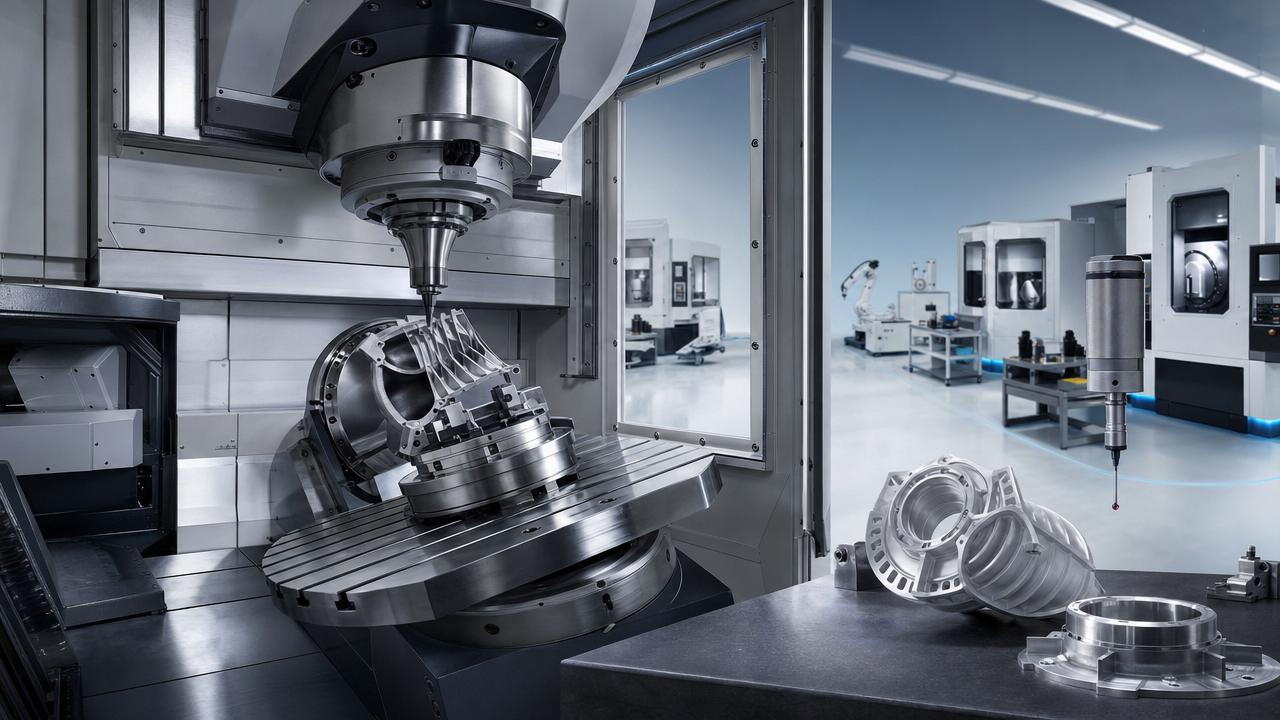
Choosing a multi-axis machine tool is rarely a simple comparison of brochure data. Axis count, usable travel, and achievable accuracy only create value when they fit the parts, materials, cycle targets, and process stability required on the shop floor.
That matters more today because global manufacturing is moving toward tighter tolerances, shorter lead times, and greater automation. In sectors such as automotive, aerospace, energy equipment, and electronics, the wrong platform can limit throughput for years.
A well-chosen multi-axis machine tool reduces setups, improves consistency, and supports digital production strategies. A poor match may look capable on paper while creating avoidable fixture changes, thermal drift concerns, and underused capacity.
Why machine selection has become more demanding
Modern CNC investment decisions sit inside a broader manufacturing shift. Machine tools are no longer isolated assets. They connect with tooling systems, probing, automation cells, quality control, and production planning.
As a result, the best multi-axis machine tool is not always the most complex machine. It is the one that supports repeatable machining of real parts with acceptable cost, uptime, and expansion potential.
This is especially relevant in regions with strong machine tool clusters, including China, Germany, Japan, and South Korea. Competition has improved technology access, but it has also made technical comparison more nuanced.
Start with the part, not the machine
Selection should begin with part geometry and process routing. A multi-axis machine tool for turbine housings, for example, should not be judged by the same priorities as one used for aluminum electronics enclosures.
The most useful starting questions are practical:
- How many faces must be machined in one clamping?
- Which features demand simultaneous motion rather than indexed positioning?
- What is the largest workpiece envelope, including fixture space?
- Which tolerances are critical, and where are they located?
- How often will part families change over the machine life?
These questions often reveal whether a 4-axis, 5-axis, or mill-turn configuration is justified. They also show whether high-end accuracy is truly needed across the full work envelope or only on selected features.
Axis configuration should match process complexity
Axis configuration influences access, rigidity, cycle time, and programming difficulty. More axes improve flexibility, but they also increase kinematic complexity, maintenance demands, and sensitivity to calibration quality.
When fewer axes are enough
A 3-axis machine with a rotary table can still be the better answer for many prismatic parts. If features are reachable through indexed positioning, full simultaneous machining may add cost without meaningful benefit.
Where 5-axis capability pays off
A 5-axis multi-axis machine tool becomes valuable when parts require deep cavity access, compound angles, smoother surface generation, or fewer refixturing steps. Aerospace brackets, impellers, and medical-style contour parts are common examples.
Mill-turn and hybrid needs
For shaft components, precision discs, and mixed rotational parts, mill-turn systems may outperform separate machines. They reduce transfer errors and help maintain datum integrity across turning, drilling, milling, and finishing operations.
Travel range is about usable space, not nominal numbers
Travel specifications are often misread. X, Y, and Z values describe machine movement, but they do not automatically equal practical machining capacity. Fixtures, spindle nose clearance, rotary axes, and tool length all consume space.
For that reason, a travel check should be based on the full machining envelope. The part model, fixture height, required tool projection, and tilt interference should be reviewed together.
In a trunnion-style multi-axis machine tool, rotary motion can dramatically reduce effective workspace. A machine that appears large enough in static dimensions may lose access once the table tilts.
It is also worth considering future part growth. If new programs may include larger castings or denser fixtures, selecting the minimum possible travel can create a capacity ceiling too early.
A practical travel review should include
- Part size in machining orientation, not shipping orientation
- Fixture footprint and clamping overhang
- Tool length needed for deep features
- Collision risk during rotary motion
- Chip evacuation space for long cycle operations
Accuracy must be judged in production conditions
Accuracy is one of the most misunderstood buying criteria. Catalog values may describe positioning, repeatability, circular interpolation, or volumetric compensation, but finished part quality depends on the full machining system.
A multi-axis machine tool can show excellent test results and still struggle in production if thermal control, spindle behavior, workholding, or cutting dynamics are not aligned with the application.
More attention should go to stable accuracy over time. Repeatability across shifts often matters more than peak laboratory precision. This is especially true in automated lines and lights-out machining environments.
Key accuracy dimensions to verify
- Positioning accuracy across the full axis stroke
- Repeatability after thermal soak and long cycles
- Rotary axis accuracy under cutting load
- Surface finish consistency on contoured features
- Probing and compensation effectiveness
Requesting sample cuts on representative materials is often more useful than reviewing specification sheets alone. Process capability data, ball bar results, and volumetric reports become meaningful when linked to actual part requirements.
The surrounding system often decides real performance
The machine itself is only one part of the decision. Tooling strategy, fixture design, software, chip management, spindle options, and automation compatibility can determine whether a multi-axis machine tool reaches expected productivity.
In high-mix production, setup reduction may deliver more value than raw cutting speed. In steady-volume manufacturing, pallet systems, tool magazine capacity, and unattended recovery features may carry greater weight.
Digital integration is increasingly relevant as smart factory adoption expands. Machine monitoring, tool life tracking, remote diagnostics, and interface compatibility can protect long-term utilization better than isolated mechanical upgrades.
A useful evaluation framework
A disciplined comparison helps separate essential capability from attractive extras. The following framework keeps the review grounded in business reality.
What to do before making the final choice
Before approving a machine, map three to five representative parts against the candidate platform. Include current jobs and likely future programs. This reveals whether the multi-axis machine tool is versatile or only optimized for one case.
Then review cycle simulations, interference points, and measurement strategy. A strong selection process also checks post-processing support, spare parts access, and the supplier’s ability to support commissioning in real production conditions.
The most reliable decision usually comes from combining specification analysis with process evidence. When axis configuration, travel, and accuracy are judged in the context of actual parts, the investment becomes easier to defend and easier to scale.
A practical next step is to build a comparison sheet based on part family, fixture envelope, tolerance map, and automation plans. That approach turns machine selection from a catalog exercise into a manufacturing strategy decision.
Recommended for You
![]() JTEKT Introduces G5 Series Large CNC Cylindrical Grinder, Sales Begin October 26, 2026Machine Tool Industry Editorial Team
JTEKT Introduces G5 Series Large CNC Cylindrical Grinder, Sales Begin October 26, 2026Machine Tool Industry Editorial Team Shaft Parts for Heavy Machinery: Selecting Materials for High Shock LoadsCNC Machining Technology Center
![]() 33rd JIMTOF 2026 Set to Open in Tokyo as Taiwanese Exhibitors Seek OrdersGlobal Machine Tool Trade Research Center
33rd JIMTOF 2026 Set to Open in Tokyo as Taiwanese Exhibitors Seek OrdersGlobal Machine Tool Trade Research Center Which Fixture Type Cuts Changeover Time Most in High-Mix CNC Machining?CNC Machining Technology Center
![]() FANUC Invests $18 Million in Largest U.S. Corporate Automation Training CenterMachine Tool Industry Editorial Team
FANUC Invests $18 Million in Largest U.S. Corporate Automation Training CenterMachine Tool Industry Editorial Team Southeast Asia Machine Tool Market: Comparing Automotive Demand by CountryManufacturing Market Research Center


Aris Katos
Future of Carbide Coatings
15+ years in precision manufacturing systems. Specialized in high-speed milling and aerospace grade alloy processing.
▶
JTEKT Introduces G5 Series Large CNC Cylindrical Grinder, Sales Begin October 26, 2026Machine Tool Industry Editorial Team▶
Nidec Machine Tool Launches MVR-5X Five-Axis Gantry MachineMachine Tool Industry Editorial Team▶
How to Select a Machine Tool for Aerospace Parts with Tight Tolerances?Machine Tool Industry Editorial Team▶
How to Compare Machine Tools for Small-Batch vs Mass Production JobsMachine Tool Industry Editorial Team▶
Multi-Axis Machine Tool Selection Guide: Travel, Spindle, Accuracy, and Control SystemMachine Tool Industry Editorial Team
▶
Mastering 5-Axis Workholding Strategies
Join our technical panel on Nov 15th to learn about reducing vibrations in thin-wall components.

Providing you with integrated sanding solutions
Before-sales and after-sales services
Comprehensive technical support