• Global CNC market projected to reach $128B by 2028 • New EU trade regulations for precision tooling components • Aerospace deman
NYSE: CNC +1.2%LME: STEEL -0.4%

How to Evaluate Precision Equipment for Tight-Tolerance Parts and Stable Output

How to Evaluate Precision Equipment for Tight-Tolerance Parts and Stable Output
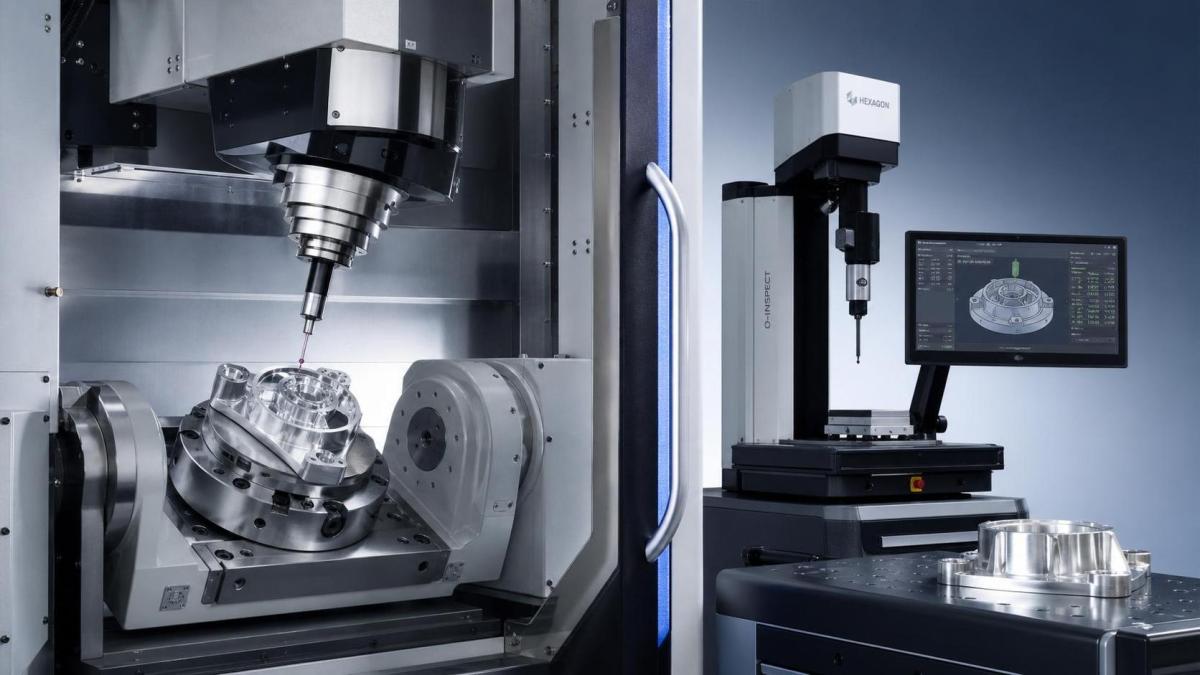
Choosing precision equipment for tight-tolerance parts is not only about comparing catalog data. It affects scrap rate, process capability, delivery confidence, and long-term production stability.
That matters even more in automotive, aerospace, electronics, and energy equipment, where small variation can quickly become a costly production problem.
A sound evaluation method helps separate impressive specifications from real manufacturing performance. In practice, the best precision equipment supports both part accuracy and stable output under daily operating conditions.
This article focuses on how to evaluate precision equipment with a decision framework that connects machine capability, production risk, and return on investment.
Start with the Tolerance Reality, Not the Machine Brochure
The first mistake in equipment selection is starting from machine size, spindle speed, or brand reputation alone. Precision equipment should be matched to the actual tolerance stack of the target parts.
Begin by reviewing the part family. Look at dimensional tolerances, geometric tolerances, surface finish, material behavior, and critical process steps.
A machine that holds tolerance on aluminum prototypes may struggle with hardened steel, thin-wall parts, or long shafts in continuous production.
This is where evaluation becomes more practical. Ask whether the precision equipment can maintain repeatability across shifts, operators, temperatures, and batch changes.
For tight-tolerance parts, the goal is not one perfect sample. The goal is predictable, repeatable output over time.
Key questions at this stage
- Which dimensions are truly critical to function and assembly?
- What Cp and Cpk targets are required in mass production?
- How sensitive is the part to vibration, heat, or tool wear?
- Will future products require even tighter tolerance control?
Evaluate Core Precision Equipment Performance Beyond Static Specs
Static machine specs are useful, but they rarely tell the full story. Real precision equipment performance depends on dynamic behavior during cutting.
A machine may advertise positioning accuracy, yet deliver inconsistent results when thermal load rises or cycle time pressure increases.
Focus on the factors that directly influence stable output:
Structural rigidity
Rigidity affects chatter resistance, surface finish, and dimensional consistency. This is especially important for hard materials and deep cutting paths.
Thermal stability
Thermal drift is a common source of hidden error. Good precision equipment includes compensation logic, balanced heat design, and stable spindle behavior.
Servo response and interpolation quality
For complex contours and multi-axis work, smooth motion control matters as much as nominal accuracy. Poor servo tuning can create variation that inspection catches later.
Spindle and tool interface stability
Runout, spindle growth, and weak tool clamping can reduce process reliability. That risk increases when tolerances tighten and unattended operation expands.
From a selection standpoint, request cutting test data, long-run consistency reports, and customer references with similar applications.
Check the Whole Process Chain, Not Just the Machine
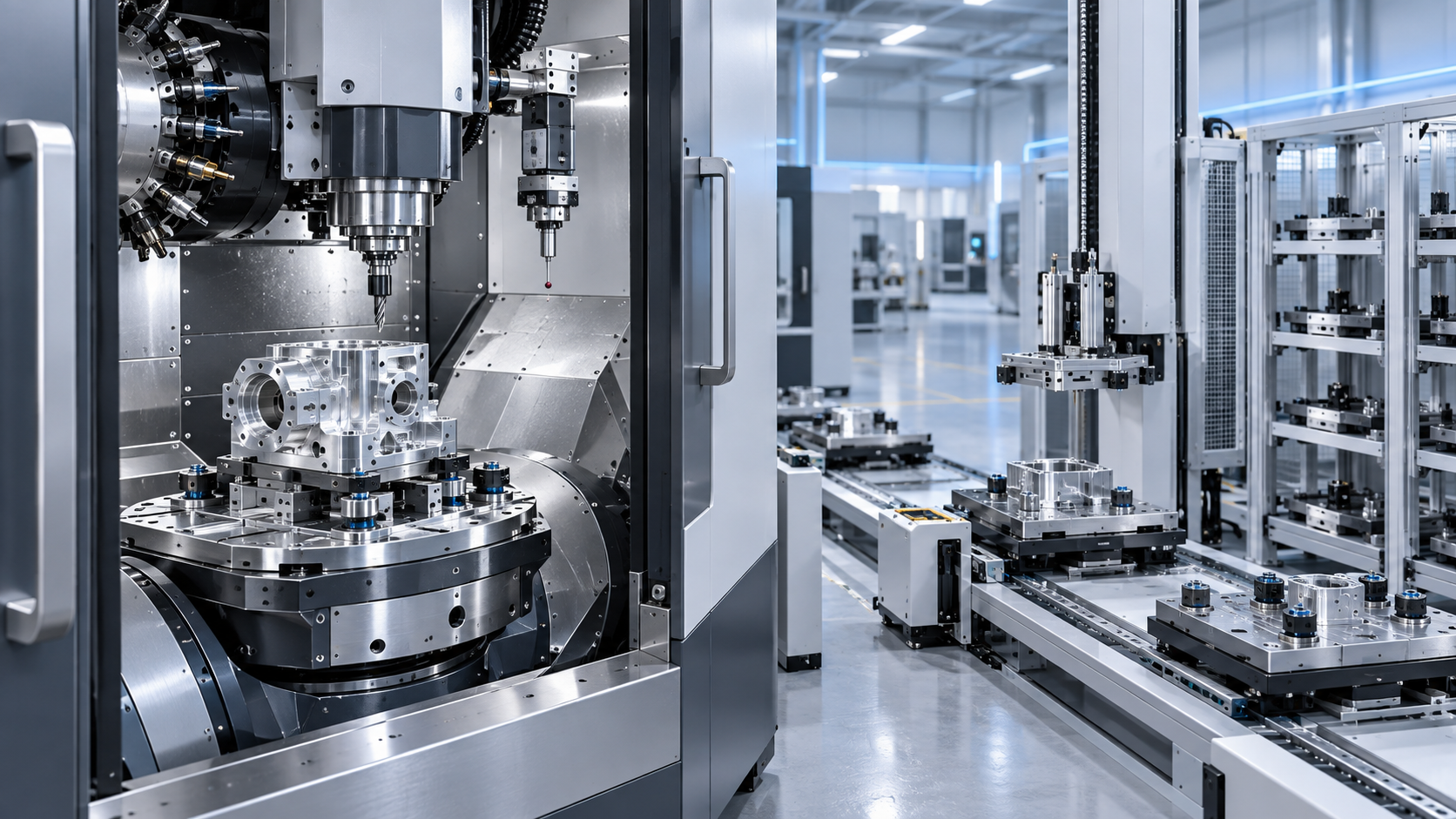
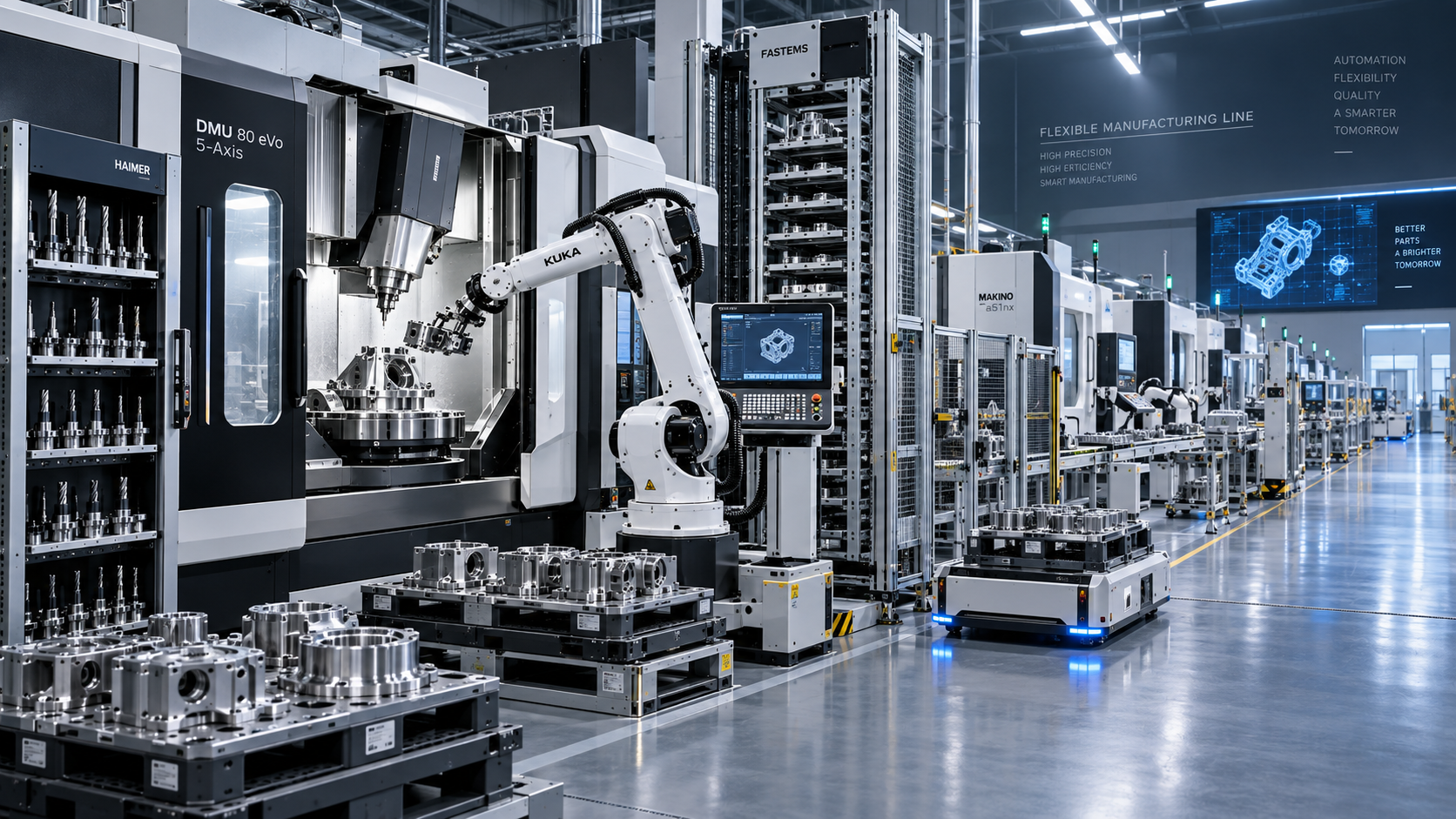
Precision equipment does not perform in isolation. Tight-tolerance parts depend on the full process chain, including tooling, fixturing, measurement, coolant control, and automation.
In many factories, output instability comes from the system around the machine rather than the base machine itself.
That is why precision equipment evaluation should include these linked areas:
- Tool life consistency and approved tool suppliers
- Fixture repeatability and changeover accuracy
- In-process probing and offset correction capability
- Coolant temperature and contamination control
- Robot loading stability for automated cells
- Measurement system compatibility with SPC and traceability
This broader view reflects a clear market shift. Modern manufacturing no longer buys isolated machine tools. It invests in precision equipment that fits digital, automated, and quality-driven production.
Use a Practical Scoring Model for Precision Equipment Decisions
When several suppliers look similar, decisions often become subjective. A weighted scoring model helps compare precision equipment with less bias and better internal alignment.
The model should reflect real production priorities, not only purchase price.
This kind of structure helps keep discussions grounded. It also makes it easier to explain why one precision equipment option creates lower long-term risk than another.
Look Closely at Output Stability in Real Production Conditions
Stable output is where many investments succeed or fail. A machine can pass a demo and still underperform during continuous operation.
So the right precision equipment evaluation should simulate real factory pressure as closely as possible.
What to verify during trials
- Run multiple parts in sequence, not just one sample.
- Measure drift from the first part to the last part.
- Track cycle time consistency and tool wear effects.
- Check setup repeatability after changeover.
- Review alarm frequency and recovery logic.
- Confirm whether the process remains stable in unattended periods.
This is especially relevant as more manufacturers move toward lights-out machining, flexible cells, and smart factory workflows.
The stronger signal in recent years is clear. Buyers increasingly value precision equipment that protects uptime and process control, not just peak cutting speed.
Assess Supplier Strength, Service Depth, and Upgrade Path
Equipment selection is also a supplier decision. Even strong precision equipment can become a weak investment if support is slow, local parts are limited, or application engineering is thin.
In actual operations, response time often matters more than brochure promises. Downtime costs accumulate fast, especially in high-mix or high-volume environments.
Supplier checkpoints
- Local service coverage and spare parts availability
- Application engineering support for target materials and parts
- Training for operators, programmers, and maintenance teams
- Software updates and digital connectivity roadmap
- Proven references in comparable industries
This is also where global manufacturing trends matter. Suppliers from China, Germany, Japan, and South Korea continue expanding their international reach, but service capability can vary widely by region.
The best precision equipment choice usually combines machine performance with dependable lifecycle support.
Calculate Total Value, Not Just Purchase Price
Price still matters, but it should be viewed in context. Low-cost precision equipment can become expensive if it causes unstable yield, frequent maintenance, or heavy operator dependence.
A better approach is to compare total value over the expected life of the machine.
Include the following cost areas:
- Scrap and rework risk
- Tool consumption and setup loss
- Maintenance labor and spare parts
- Energy usage and coolant management
- Training time and operator dependency
- Downtime impact on delivery performance
This also supports a more strategic decision. Precision equipment should strengthen capacity, quality confidence, and future manufacturing flexibility.
A Clear Evaluation Path for Better Equipment Decisions
The most effective precision equipment decisions follow a simple logic. Start from part requirements, validate dynamic process capability, review the full production chain, and compare total value.
That approach reduces the risk of buying on image, speed, or isolated specs. It also creates a stronger basis for stable output in demanding manufacturing environments.
As precision manufacturing keeps moving toward automation and digital integration, the right precision equipment will be the one that performs reliably every day, not only on paper.
Use this evaluation framework during supplier discussions, trial planning, and investment review. It will help turn a complex purchase into a more controlled and defensible decision.
Recommended for You
 Is Learning CNC Programming Worth It for Shop Owners Seeking Higher Margins?CNC Machining Technology Center
 CNC Machine Arrival Inspection: Check Shipping Damage, Accuracy, Safety, and DocumentsCNC Machining Technology Center
 How to Select a Machine Tool for Aerospace Parts with Tight Tolerances?Machine Tool Industry Editorial Team
 How to Select CNC Equipment for High-Mix, Low-Volume ProductionCNC Machining Technology Center
 Can CNC Machining Inconel Control Tool Wear in High-Temperature Aerospace Parts?CNC Machining Technology Center
 Machine Tool Market Outlook: Demand Drivers, Capacity Shifts, and Investment RisksManufacturing Market Research Center

Aris Katos
Future of Carbide Coatings
15+ years in precision manufacturing systems. Specialized in high-speed milling and aerospace grade alloy processing.
▶
How to Select a Machine Tool for Aerospace Parts with Tight Tolerances?Machine Tool Industry Editorial Team▶
How to Compare Machine Tools for Small-Batch vs Mass Production JobsMachine Tool Industry Editorial Team▶
Multi-Axis Machine Tool Selection Guide: Travel, Spindle, Accuracy, and Control SystemMachine Tool Industry Editorial Team▶
How to Evaluate Precision Equipment for Tight-Tolerance Parts and Stable OutputMachine Tool Industry Editorial Team▶
KATS Tightens CNC Grinder Import Test RulesMachine Tool Industry Editorial Team
Mastering 5-Axis Workholding Strategies
Join our technical panel on Nov 15th to learn about reducing vibrations in thin-wall components.

Providing you with integrated sanding solutions
Before-sales and after-sales services
Comprehensive technical support