• Global CNC market projected to reach $128B by 2028 • New EU trade regulations for precision tooling components • Aerospace deman
NYSE: CNC +1.2%LME: STEEL -0.4%

Precision Lathe Types Compared: Swiss-Type, Slant Bed, and Flat Bed Differences
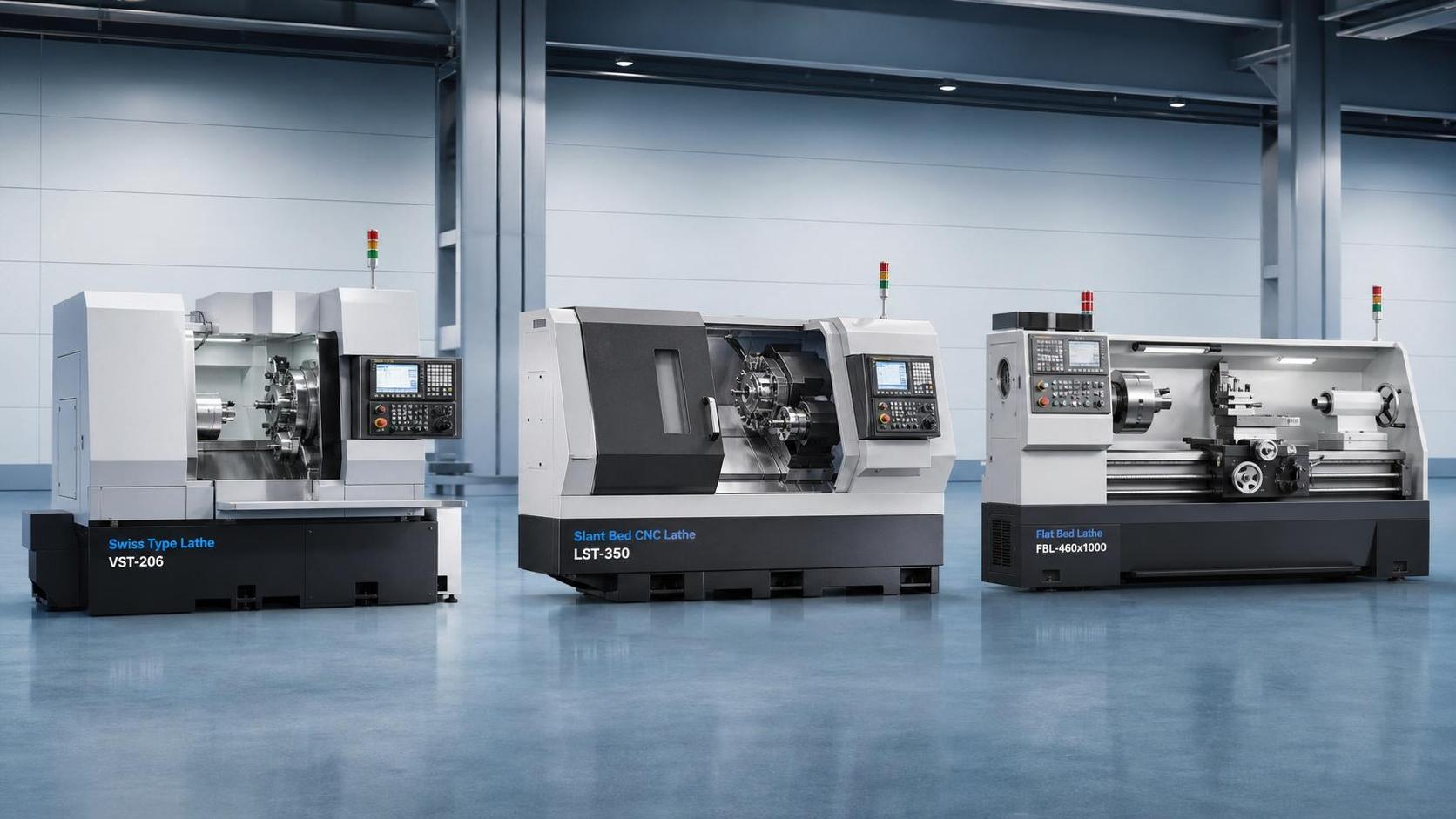
A precision lathe is rarely a simple capital purchase. Its structure influences part stability, tool access, spindle behavior, automation fit, and scrap risk. When Swiss-type, slant bed, and flat bed machines are compared side by side, the real question is not which design is best overall, but which one matches the parts, tolerances, and production pattern in front of the factory.
That matters more now because CNC machining is moving toward tighter tolerances, shorter lead times, and more connected production lines. In automotive, aerospace, electronics, and energy equipment, the wrong machine choice can lock in avoidable cost for years. A clear view of precision lathe differences helps turn a broad equipment search into a practical decision.
Three machine layouts, three different production logics
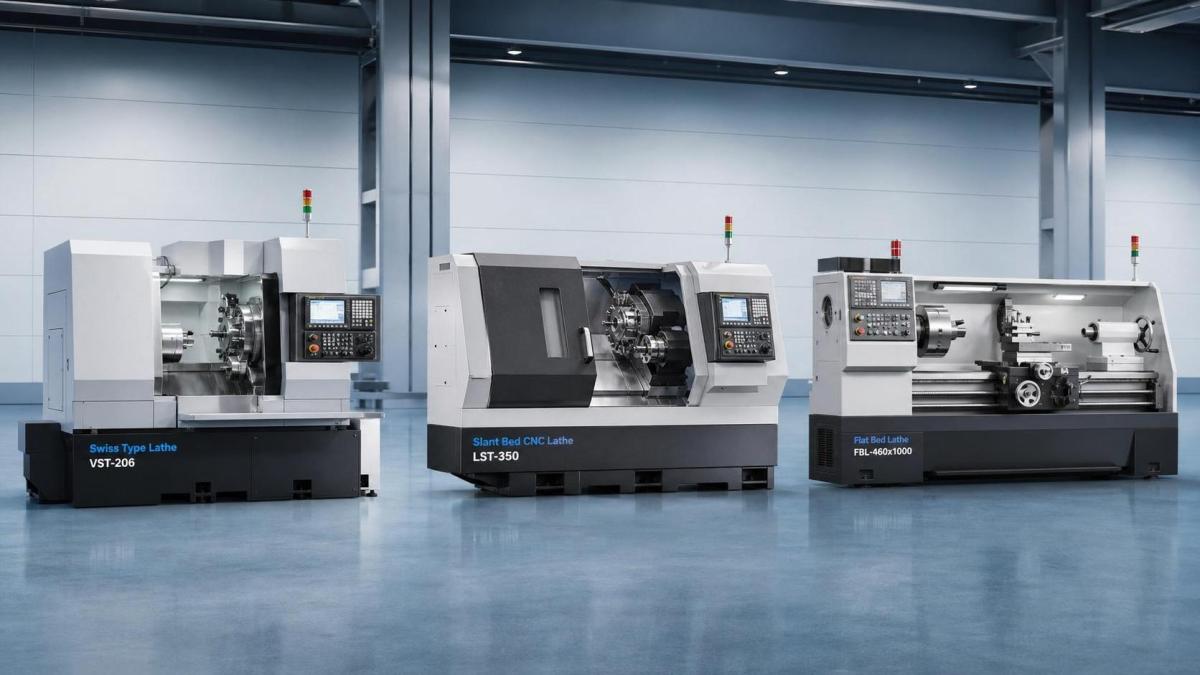
At a glance, all three machines perform turning operations. In practice, each layout handles material support, chip flow, rigidity, and operator access differently. Those differences shape where each precision lathe performs well and where it starts to lose efficiency.
Swiss-type machines
A Swiss-type precision lathe guides bar stock very close to the cutting zone. The sliding headstock moves material through a guide bushing, reducing deflection on small, long, and slender parts.
This design is closely associated with medical, electronics, connector, watch, and miniature automotive components. It is often chosen when diameter is small, geometry is complex, and concentricity must stay tightly controlled.
Slant bed machines
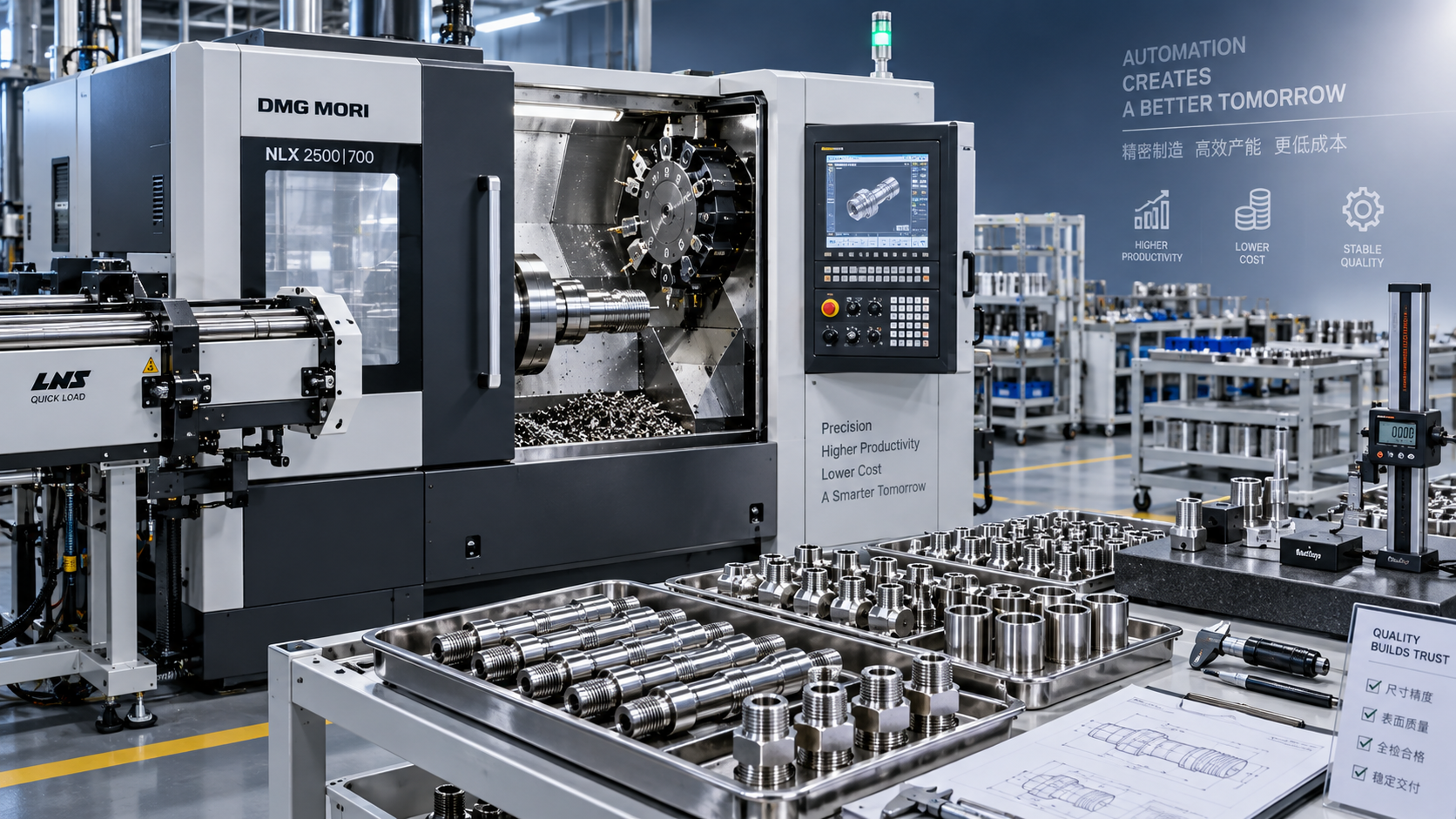
A slant bed precision lathe places the guideways and carriage at an angle. That sounds like a minor design detail, yet it improves chip evacuation, supports a more rigid casting layout, and usually helps tool changes and automation integration.
This is the common choice for modern CNC turning cells producing shafts, flanges, valve parts, fittings, and general industrial components. It balances precision, productivity, and shop-floor practicality.
Flat bed machines
A flat bed precision lathe uses a horizontal bed layout. It is the more traditional form and remains relevant for repair work, low-volume machining, larger swing requirements, and applications where setup flexibility matters more than speed.
Flat bed models can still deliver good accuracy, especially on stable parts and straightforward turning tasks. The tradeoff is that they often lag behind slant bed machines in chip control, automation readiness, and cycle efficiency.
Why the distinction matters in today’s manufacturing environment
Machine tool buying has changed. The conversation is no longer limited to spindle speed and travel. Global suppliers now compete on process integration, unattended running, digital monitoring, and consistency across multi-site production.
In that setting, a precision lathe must fit a broader manufacturing system. It may need to connect with bar feeders, robots, tool life monitoring, in-process measurement, and traceability requirements.
That is why type selection has become a strategic issue. A machine that appears cheaper on paper may create hidden cost through low uptime, excessive secondary operations, or unstable tolerance performance over long runs.
A practical comparison of Swiss-type, slant bed, and flat bed designs
The table below captures the most useful distinctions for an early-stage equipment review.
Simple comparisons can be misleading, though. A slant bed precision lathe may outperform a flat bed machine in one plant, while a flat bed model remains more economical in another because part mix, batch size, and setup frequency are different.
How each precision lathe type maps to real production scenarios
When Swiss-type makes sense
Swiss-type equipment is strongest when parts have a high length-to-diameter ratio. It also suits multi-operation parts that would otherwise require several handoffs between turning, drilling, and light milling.
In high-value sectors, reduced handling can matter as much as speed. Fewer transfers often mean lower concentricity error and less chance of cosmetic damage on tiny components.
Where slant bed stands out
A slant bed precision lathe is usually the strongest all-around option for modern production. It suits medium to high volume work, supports turret-based tooling well, and generally fits robotic loading more easily.
It is often the practical answer for component families in automotive supply chains, hydraulic systems, pump parts, and general engineered metal products.
Where flat bed still has value
Flat bed machines remain useful where production is varied and setup changes are frequent. They are also relevant when operators need open access for unusual workholding or manual intervention.
That can include maintenance workshops, energy equipment repair, low-batch industrial parts, and some educational or prototype environments. In those settings, simplicity can be an advantage.
Key buying factors beyond machine type
Machine category is only the first filter. A sound comparison of any precision lathe should include the surrounding process conditions.
- Part family: diameter range, length, material, wall thickness, and complexity.
- Tolerance profile: roundness, runout, surface finish, and repeatability targets.
- Volume pattern: prototype, mixed batch, steady repeat production, or lights-out operation.
- Tooling ecosystem: live tools, sub-spindle needs, bar feeding, and quick-change fixtures.
- Plant integration: robot loading, MES connectivity, inspection loops, and maintenance support.
- Supplier footprint: local service response, spare parts access, training, and upgrade path.
These factors often reshape the result. A lower-priced precision lathe may become more expensive once tooling packages, downtime exposure, and support limitations are included.
Common mistakes during equipment comparison
One common mistake is evaluating machines only by quoted accuracy. Catalog values are useful, but production stability depends on thermal control, material behavior, fixturing, chip management, and programming quality.
Another mistake is buying for today’s sample part rather than the expected part mix over three to five years. In flexible manufacturing, future workload matters almost as much as current demand.
It is also risky to ignore operator learning curve. A Swiss-type precision lathe can unlock remarkable capability, yet it may require stronger programming discipline and more specialized setup knowledge than expected.
Service assumptions should be tested as well. Global machine tool markets are active across China, Germany, Japan, South Korea, and other industrial regions, but support quality varies widely by local network strength.
A clearer way to move from comparison to decision
The most effective next step is to compare each precision lathe option against a defined part sample set. That sample should include current jobs, likely future jobs, and at least one difficult tolerance case.
Then review more than cycle time. Look at setup hours, scrap sensitivity, automation fit, preventive maintenance intervals, and supplier responsiveness. Those points usually separate a workable purchase from a durable one.
Swiss-type, slant bed, and flat bed machines each remain relevant because manufacturing demand is not uniform. The right precision lathe is the one that fits the process window, not the one with the broadest claims. A structured comparison grounded in parts, tolerance risk, and long-term production goals gives the clearest basis for a sound decision.
PREVIOUS ARTICLE
NEXT ARTICLE
Recommended for You
 How to Select CNC Equipment for High-Mix, Low-Volume ProductionCNC Machining Technology Center
 Can CNC Machining Inconel Control Tool Wear in High-Temperature Aerospace Parts?CNC Machining Technology Center
 Machine Tool Market Outlook: Demand Drivers, Capacity Shifts, and Investment RisksManufacturing Market Research Center
 Zero-Point Clamping or Modular Fixtures? Choosing a Faster CNC Changeover SystemCNC Machining Technology Center
 How to Cut CNC Fixture Changeover Time Without Sacrificing Part AccuracyCNC Machining Technology Center
 When Does CNC Turning Pay Off? A Break-Even Guide by Annual Part VolumeMachine Tool Industry Editorial Team

Aris Katos
Future of Carbide Coatings
15+ years in precision manufacturing systems. Specialized in high-speed milling and aerospace grade alloy processing.
▶
How to Compare Machine Tools for Small-Batch vs Mass Production JobsMachine Tool Industry Editorial Team▶
Multi-Axis Machine Tool Selection Guide: Travel, Spindle, Accuracy, and Control SystemMachine Tool Industry Editorial Team▶
How to Evaluate Precision Equipment for Tight-Tolerance Parts and Stable OutputMachine Tool Industry Editorial Team▶
KATS Tightens CNC Grinder Import Test RulesMachine Tool Industry Editorial Team▶
Precision Lathe Types Compared: Swiss-Type, Slant Bed, and Flat Bed DifferencesMachine Tool Industry Editorial Team
Mastering 5-Axis Workholding Strategies
Join our technical panel on Nov 15th to learn about reducing vibrations in thin-wall components.

Providing you with integrated sanding solutions
Before-sales and after-sales services
Comprehensive technical support