• Global CNC market projected to reach $128B by 2028 • New EU trade regulations for precision tooling components • Aerospace deman
NYSE: CNC +1.2%LME: STEEL -0.4%

Machine Tool Standards by Country: What Importers Must Verify Before Purchase
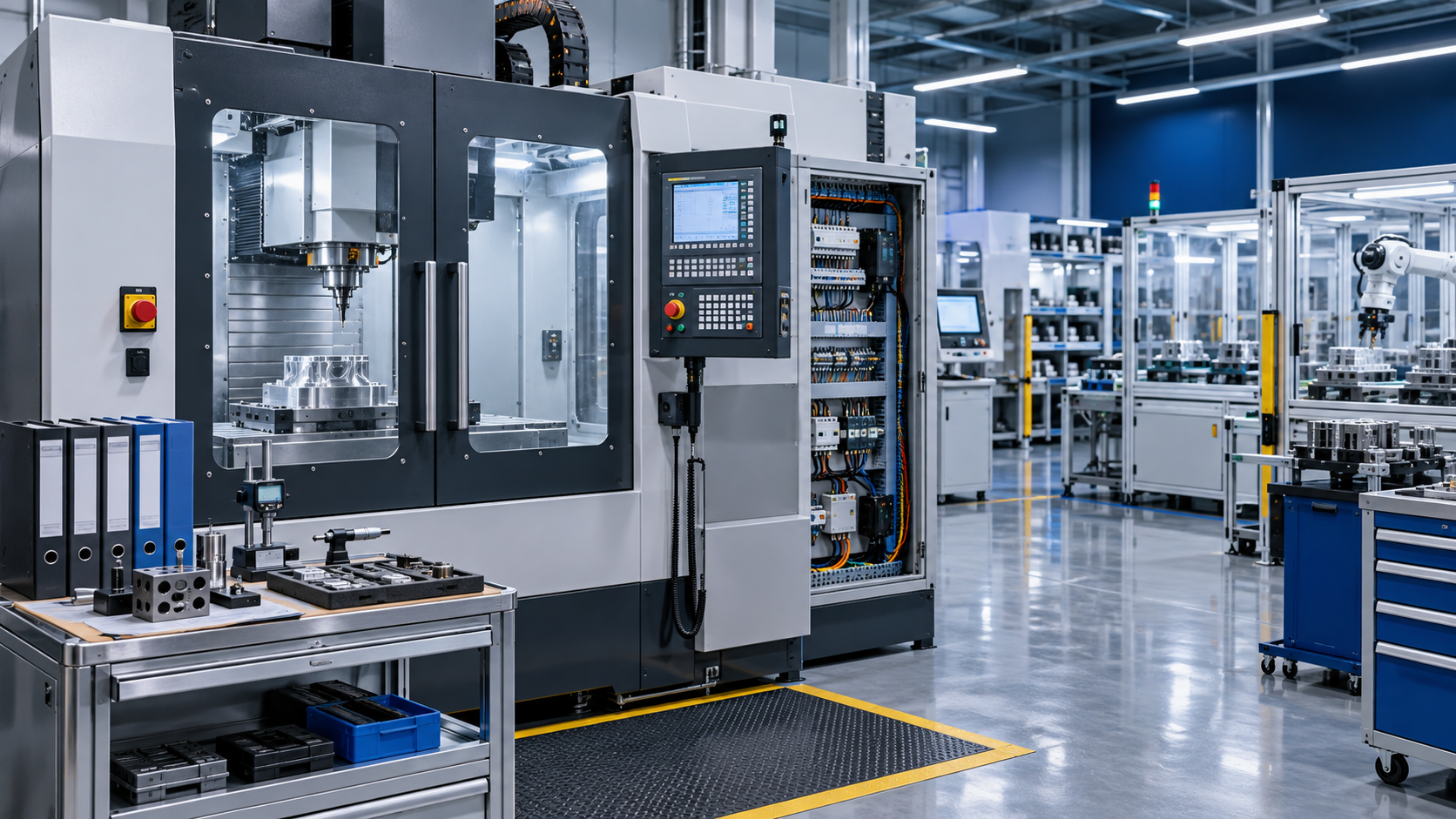
Machine tool standards do differ between countries, but the practical issue is not simply whether one country uses ISO, CE, UL, or another label. A CNC lathe or machining center can be mechanically capable of making the required parts and still be unsuitable for import because its electrical system, guarding, documentation, control architecture, safety functions, or market-access marking does not satisfy the destination country’s rules.
For an overseas purchase, compliance must be treated as part of the technical specification—not as a document requested shortly before shipment. The most costly errors tend to appear after the machine has been built: a control panel cannot be certified, emergency-stop circuits do not meet the expected safety category, a manual is incomplete, a voltage mismatch requires redesign, or customs and local inspectors question the declaration supplied with the equipment.
Standards are layered, not national labels
A machine tool may be governed by several overlapping requirements. The applicable set depends on the destination market, machine configuration, intended use, electrical supply, whether it includes automation, and whether it will be sold as a stand-alone machine or as part of a production cell.
Importers should separate the following layers before comparing supplier quotations:
- Market-access legislation: legal requirements for placing machinery on a national or regional market, including marking, declarations, and technical files.
- Machine safety standards: requirements concerning guards, interlocks, emergency stops, safety-related control systems, stability, moving axes, chip containment, and access to hazardous areas.
- Electrical standards: wiring methods, conductor identification, control-panel construction, short-circuit ratings, disconnecting means, grounding, and component approvals.
- Electromagnetic compatibility and radio rules: particularly relevant where machines contain variable-frequency drives, servo systems, industrial PCs, wireless probes, remote diagnostics, or radio-enabled controls.
- Process-specific requirements: laser systems, robots, lifting devices, coolant mist extraction, pressure equipment, hydraulic systems, and integrated conveyors can trigger additional obligations.
- Documentation and language: manuals, safety instructions, wiring diagrams, declarations, risk assessments, and labels may need to be supplied in specified local languages.
ISO and IEC standards provide an important technical foundation, but they do not automatically create legal market access. A supplier’s statement that a machine is “built to ISO standards” is useful only when it identifies the exact standards, the machine configuration covered, and how those standards connect to the destination market’s legal requirements.
The European Union: CE marking is a compliance system, not a certificate
For machinery placed on the EU market, CE marking is central. For many machine tools, the manufacturer is responsible for completing the conformity assessment, preparing the technical documentation, issuing an EU Declaration of Conformity, and affixing CE marking before the machine is placed on the market or put into service.
The Machinery Directive 2006/42/EC remains the principal framework during its transition period. Regulation (EU) 2023/1230 on machinery will apply from 20 January 2027, replacing the Directive for most machinery. Purchase specifications for deliveries extending into that period should identify which legal framework applies at the planned date of placing the equipment on the EU market.
For CNC machine tools, the technical route commonly involves harmonised standards supporting the essential health and safety requirements. Relevant standards may include ISO 12100 for risk assessment and risk reduction, ISO 13849-1 for safety-related parts of control systems, IEC 60204-1 for electrical equipment of machines, and machine-family standards such as the ISO 23125 series for turning machines or the ISO 16090 series for machining centres. The applicable standards depend on the specific machine type and hazards; listing them without evidence of implementation is not sufficient.
CE compliance also extends beyond the machinery legislation where relevant. Electrical and electronic equipment may need assessment under electromagnetic compatibility requirements. Radio-equipped devices can raise obligations under radio equipment rules. A machine assembled from CE-marked components is not automatically a compliant CE-marked machine: the final manufacturer must assess the completed machine and its integrated safety functions.
A frequent procurement mistake is accepting a generic CE certificate from a third party. For many ordinary machine tools, CE marking does not depend on a universal government-issued certificate. The documents that matter are the correct Declaration of Conformity, the manufacturer’s identification, the technical file available to authorities, the risk assessment, and evidence that the delivered configuration matches the declared configuration.
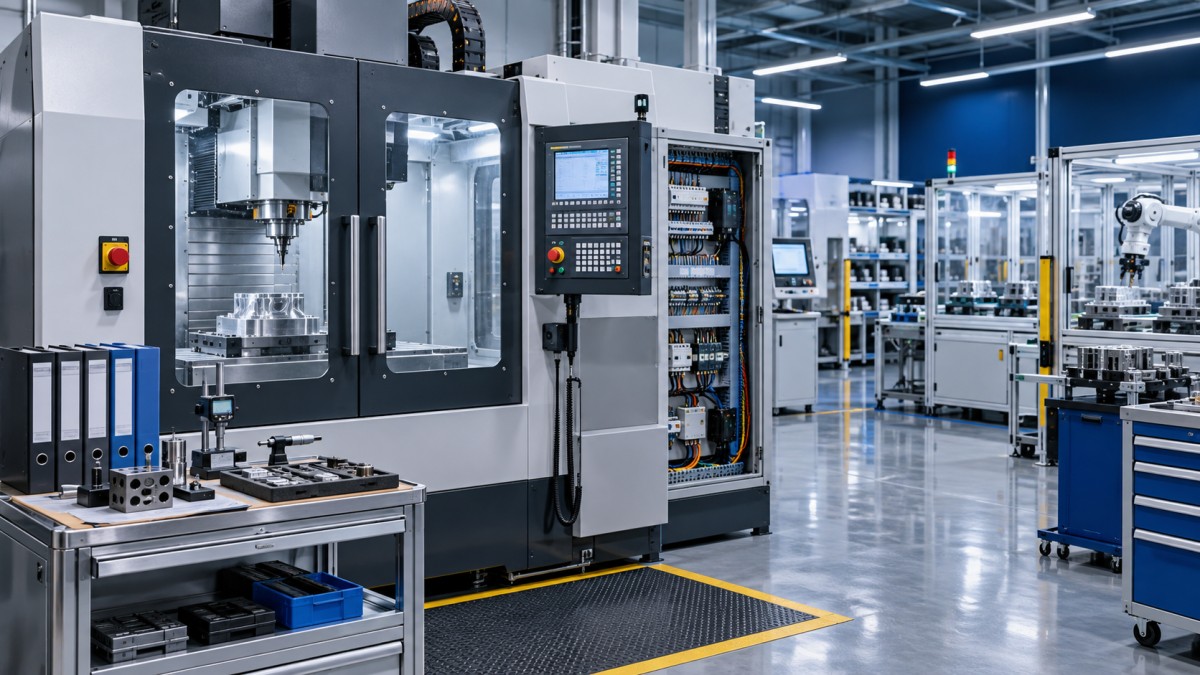
United States: local electrical acceptance can decide whether a machine is installed
The United States does not use CE marking as a substitute for domestic compliance. OSHA regulates workplace safety, while state and local authorities, insurers, and facility standards can impose practical conditions for installation and operation. Electrical acceptance is often determined by the authority having jurisdiction (AHJ), which may inspect the machine before it is energized.
NFPA 79, Electrical Standard for Industrial Machinery, is a key reference for industrial machine electrical equipment in the United States. It works alongside the National Electrical Code (NFPA 70), site electrical rules, and the requirements of the AHJ. A European-style control cabinet can require substantial rework if its wiring practices, component ratings, disconnecting arrangements, short-circuit current rating, or panel construction are not acceptable for the installation.
Importers should not assume that “UL components” mean that the complete machine will be accepted. Component recognition, panel certification, and field acceptance are different matters. Depending on the project and local requirements, the buyer may need a machine with an appropriate Nationally Recognized Testing Laboratory listing, a listed industrial control panel, or a field evaluation after arrival. The expected route should be confirmed before the purchase order is issued, particularly for custom-built cells and high-power equipment.
Machine safety is also not reduced to electrical compliance. Guarding, point-of-operation protection, lockout/tagout provisions, hydraulic and pneumatic isolation, control reliability, and robot-cell safeguarding should be reviewed against the intended U.S. operating environment. Where the machine will be combined with automation by a local integrator, responsibility for the final system must be clearly allocated in the contract.
Canada: provincial enforcement and certification planning matter
Canada shares many North American electrical and machinery safety concepts, but it is not simply the U.S. market with a different plug. Electrical installation and enforcement are influenced by provincial or territorial rules. The Canadian Electrical Code and applicable CSA standards are important references, while the local inspection authority may require approval of the electrical equipment before connection.
CSA Z432, Safeguarding of Machinery, is widely relevant to machinery risk control. For electrical equipment, certification by a recognized certification body or a special inspection route may be required, depending on the jurisdiction and equipment. A supplier should not merely promise “CSA-compatible” construction. The quotation needs to specify whether the complete machine, the control panel, or only selected components are certified, and which authority or inspection arrangement is expected to accept it.
French-language requirements should also be reviewed for machines destined for Québec, including operational and safety documentation where applicable. Documentation requirements are easy to overlook because they rarely affect the machine’s initial performance test, yet they can affect commissioning, training, and regulatory acceptance.
United Kingdom, Japan, South Korea, and other destination markets
The United Kingdom has its own product compliance framework following its departure from the EU. Machinery supplied into Great Britain must be assessed under the applicable UK machinery safety rules, and the status of CE marking and UKCA marking should be confirmed against the current official guidance at the time of import. A declaration prepared solely for the EU should not be presumed adequate for a UK shipment without checking the legal and documentation requirements for that transaction.
Japan uses the Industrial Safety and Health framework alongside Japanese Industrial Standards (JIS) and other product-specific rules. IEC-based concepts are often recognizable in the technical requirements, but voltage, frequency, electrical practices, Japanese documentation, and local safety expectations must be addressed in the machine specification. Japan’s PSE regime applies to specified electrical products; it should not be treated as a blanket certification for every industrial machine. The importer needs to identify which supplied electrical items fall within scope rather than request a broad and potentially meaningless “PSE certificate for the machine.”
South Korea may involve KC-related requirements for relevant electrical or electronic equipment, while machinery safety and workplace requirements can involve separate regulatory considerations. Australia and New Zealand likewise require attention to local electrical safety arrangements, supply voltage, and, where relevant, the Regulatory Compliance Mark framework for in-scope electrical equipment. In all of these markets, a country name on the quotation is not a compliance plan. The exact machine, components, installation conditions, and importer role determine what must be verified.
Electrical compatibility is often the first hidden cost
Machine tools are particularly exposed to electrical mismatches because they combine motors, drives, transformers, control circuits, pumps, chip conveyors, coolant systems, and sometimes automation equipment. Nominal supply voltage alone is not enough. The procurement specification should identify:
- incoming supply voltage, phase arrangement, frequency, and permissible tolerance;
- maximum connected load, full-load current, and inrush characteristics;
- short-circuit current rating and the assumed available fault current at the installation point;
- main disconnect type, lockability, overcurrent protection, grounding method, and terminal requirements;
- control voltage and transformer arrangements;
- approved makes or certification status of critical electrical components;
- EMC measures associated with drives, filters, shielding, and cable routing.
A 50 Hz machine cannot always be converted economically for a 60 Hz market simply by changing a few settings. Spindle motors, hydraulic power units, coolant pumps, transformers, fans, and drive parameters may all be affected. If a frequency converter is proposed as a solution, the buyer should determine which loads it will serve, whether it alters warranty coverage, and whether it creates additional harmonics, EMC, or maintenance issues.
Safety functions must be verified at system level
Machine tool safety cannot be judged from the presence of a red emergency-stop button or interlocked doors alone. The relevant question is whether the safety function performs reliably in the delivered machine and under the anticipated operating modes.
For example, door interlocks on a high-speed machining centre may need to prevent hazardous motion until the spindle and axes reach a safe state. A turning centre with a bar feeder introduces additional hazards outside the main enclosure. A robot loading cell requires safeguarding at the cell boundary, safe access for recovery and maintenance, and coordinated safety logic across the robot, machine, conveyor, and peripheral equipment.
Request the supplier’s risk assessment and safety-circuit documentation early enough to identify gaps. Review the declared performance level or safety integrity approach where applicable, the safety PLC or relay architecture, reset behavior, access modes, protective devices, and procedures for maintenance or fault recovery. A machine that is safe as a stand-alone unit may require a new risk assessment once it is connected to automation.
Documents should be contractual deliverables, not shipment attachments
Documentation problems often emerge when the equipment is already on the water. The purchase order should define the documents required before factory acceptance, at shipment, and at commissioning. At minimum, the package should be tailored to the destination market and machine configuration.
Useful deliverables include the applicable declaration of conformity or compliance documentation; machine identification and serial-number records; electrical schematics; pneumatic and hydraulic diagrams; safety circuit diagrams; operating, maintenance, and installation manuals; a foundation and utility layout; lists of safety-critical components; software and parameter backup arrangements; and records from functional and safety tests.
Language should be specified rather than assumed. A technically correct manual in the supplier’s domestic language may not satisfy local legal requirements or provide usable instructions for operators and maintenance teams. Where translation is supplied, responsibility for technical accuracy should be addressed, especially for warnings, lockout instructions, wiring information, and safety procedures.
Factory acceptance testing should test compliance claims, not only cutting performance
A factory acceptance test is often focused on geometry, machining samples, spindle behavior, axis positioning, and cycle time. Those checks are important, but they do not establish destination-market compliance. The test protocol should also verify the actual electrical cabinet build, safety device operation, labels, manuals, nameplate data, included options, and declared software version.
Changes made after the compliance documents are prepared can invalidate assumptions. An added fourth axis, bar feeder, mist collector, robot interface, higher-power spindle, or remote-monitoring module can alter the applicable requirements. The final document set must correspond to the as-built machine, not to an earlier standard configuration.
The most effective pre-purchase question
Rather than asking a supplier, “Is this machine certified for our country?”, ask for a destination-specific compliance matrix. It should identify the legal requirements, technical standards, markings, electrical assumptions, documents, responsible party, and verification method for the exact machine being purchased.
That matrix exposes vague claims quickly. It also distinguishes responsibilities that are frequently blurred in cross-border transactions: the machine manufacturer’s responsibility for the supplied equipment, the importer’s obligations when placing it on the market, the installer’s responsibility for site connection, and the system integrator’s responsibility when combining separate machines into a production line.
Machine tool standards differ between countries because legal systems, electrical codes, enforcement practices, and documentation rules differ. The sound procurement decision is therefore not to select the machine first and “solve certification later.” It is to define the destination compliance route before design release, price the required configuration accurately, and require evidence that the delivered machine matches the compliance commitment.
PREVIOUS ARTICLE
NEXT ARTICLE
Recommended for You
 Machine Tool Standards by Country: What Importers Must Verify Before PurchaseManufacturing Policy Research Center
 CNC Lathe Quick Installation Guide: Alignment Checks Before First Production RunCNC Machining Technology Center
 How to Select a CNC Lathe for Small Parts Without Sacrificing Accuracy or Cycle TimeCNC Machining Technology Center
 How to Select a Slant Bed Lathe for High-Precision Shaft and Chuck WorkCNC Machining Technology Center
 Smart Manufacturing for Small Businesses: Where Automation Delivers the Fastest ROIMachine Tool Industry Editorial Team
 How to Specify a CNC Lathe for High-Volume Automotive Shaft ProductionCNC Machining Technology Center

Aris Katos
Future of Carbide Coatings
15+ years in precision manufacturing systems. Specialized in high-speed milling and aerospace grade alloy processing.
▶
Machine Tool Standards by Country: What Importers Must Verify Before PurchaseManufacturing Policy Research Center▶
EU Sets CE-EMC+AI Certification Rule for CNC ExportsManufacturing Policy Research Center▶
EU Rule Update Raises CNC Safety Certification BarManufacturing Policy Research Center▶
U.S. Tightens Reviews for China CNC ExportsManufacturing Policy Research Center▶
EU Tightens CNC Export Compliance from October 2026Manufacturing Policy Research Center
Mastering 5-Axis Workholding Strategies
Join our technical panel on Nov 15th to learn about reducing vibrations in thin-wall components.

Providing you with integrated sanding solutions
Before-sales and after-sales services
Comprehensive technical support