• Global CNC market projected to reach $128B by 2028 • New EU trade regulations for precision tooling components • Aerospace deman
NYSE: CNC +1.2%LME: STEEL -0.4%

When does space-saving CNC manufacturing really cut costs?

When does space-saving CNC manufacturing really cut costs? The answer depends on how production space affects output, labor, uptime, and expansion plans.
In many facilities, floor area is not just real estate. It shapes material flow, staffing efficiency, machine density, utility load, and future flexibility.
That is why space-saving CNC manufacturing can create strong savings in one setting, yet disappoint in another with different volumes, part complexity, or scheduling demands.
For CNC machining, precision manufacturing, and automated production, the right question is not whether compact equipment is cheaper. It is when compact layouts improve total economics.
Why space-saving CNC manufacturing pays off in some production environments

Space-saving CNC manufacturing reduces cost when each square meter supports more productive spindle time, smoother handling, and lower indirect overhead.
A compact CNC footprint matters most where rent is high, utility routing is tight, or expansion space is limited. In these cases, density becomes a financial lever.
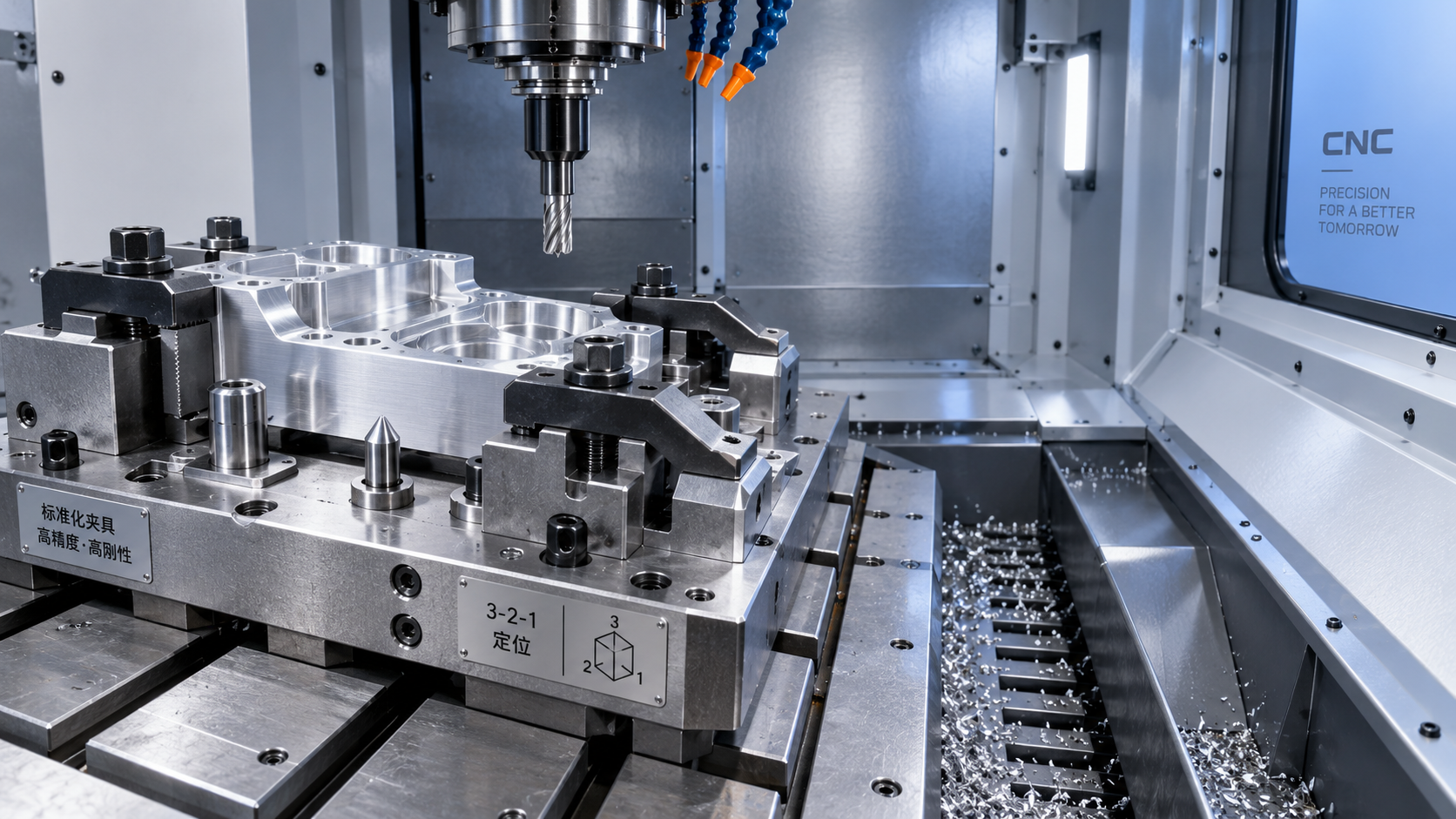
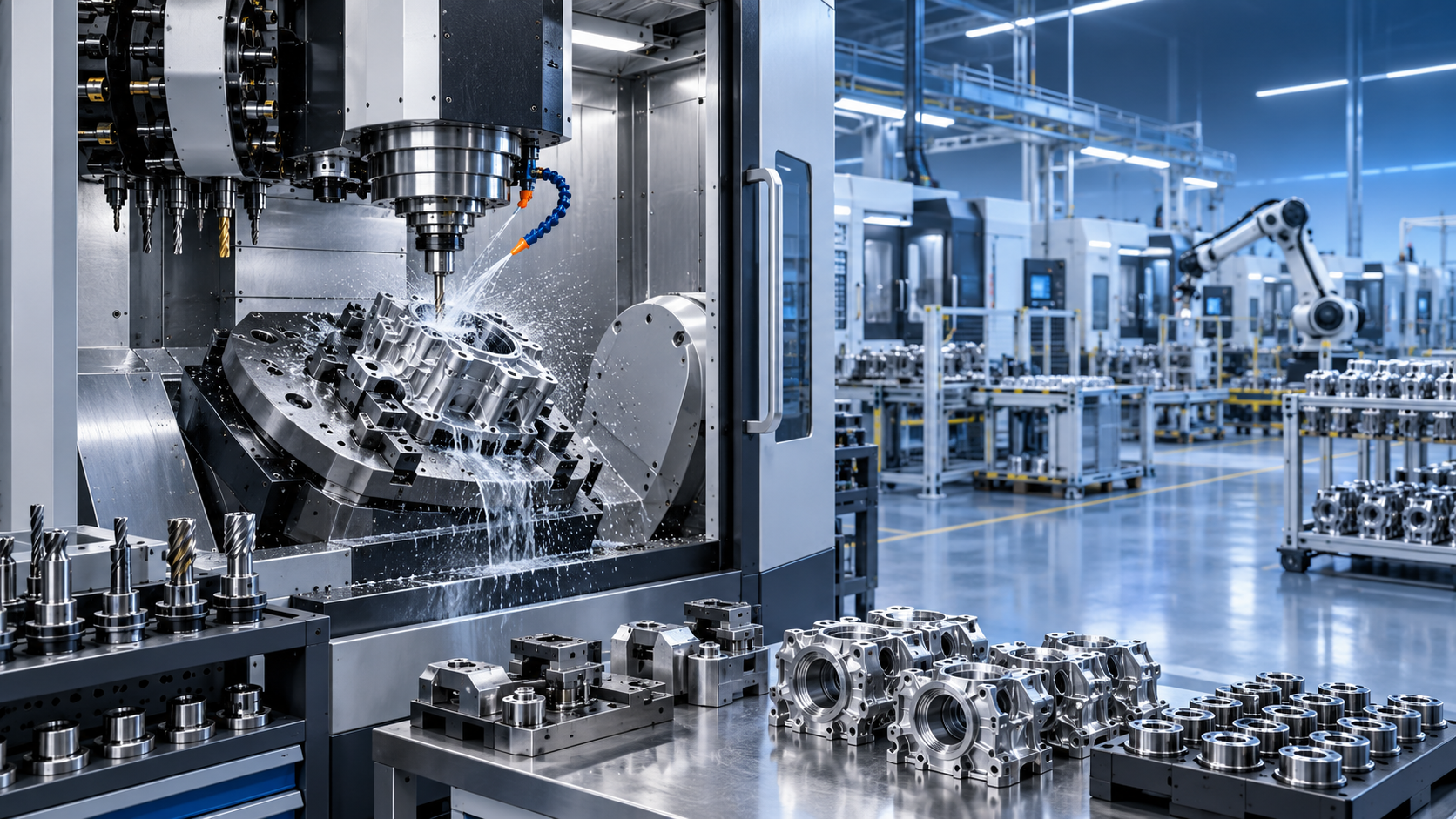
It also works well when automation is integrated. Compact machine cells, bar feeders, pallet systems, and robotic loading can increase output without adding a new bay.
However, smaller equipment alone does not guarantee savings. If setup time rises, chip evacuation worsens, or maintenance access becomes harder, expected gains may disappear.
Which production scenarios make space-saving CNC manufacturing cost effective?
High-rent industrial zones with stable throughput
This is one of the strongest cases for space-saving CNC manufacturing. Facility cost per square meter directly affects total operating expense.
If a compact machining cell allows one more CNC lathe or machining center inside the same building, cost absorption usually improves quickly.
The key judgment point is stable utilization. If demand is inconsistent, extra machine density may sit idle and weaken returns.
Mixed-part production with frequent changeovers
Compact layouts can support faster movement between stations, especially where operators manage multiple machines and short-cycle jobs.
Space-saving CNC manufacturing cuts cost here only if fixture storage, tool access, and program management remain organized. Otherwise, compactness turns into congestion.
The best results come from standardized tooling, digital work instructions, and well-planned staging zones near each machine cell.
Automation upgrades inside existing factories
Many facilities want automation but cannot justify a building expansion. In that situation, space-saving CNC manufacturing can unlock robotic loading and pallet handling.
This scenario is attractive because the cost advantage comes from avoided construction, reduced handling, and higher unattended runtime.
The core judgment point is integration quality. If automation creates bottlenecks around part queues or inspection, the footprint benefit alone is not enough.
Precision parts with high value per machine hour
For aerospace components, electronics parts, medical hardware, or precision shafts, downtime is expensive. Compact systems can still work if service access stays practical.
Here, space-saving CNC manufacturing reduces cost when compact equipment preserves accuracy, thermal stability, and maintenance intervals while lifting output density.
If a smaller machine sacrifices rigidity or causes vibration, scrap and rework can erase every floor-space saving.
Large-part machining or heavy chip loads
This is usually a weaker fit. Bigger work envelopes, crane clearance, coolant management, and chip removal often require more physical separation.
In these cases, aggressive compaction may reduce safety, slow maintenance, and restrict future tooling options. Total cost can rise rather than fall.
How cost drivers change from one CNC scenario to another
The same compact equipment can perform very differently depending on production conditions. This comparison helps clarify where savings usually come from.
What to check before investing in space-saving CNC manufacturing
A compact layout should be tested as a business case, not just a machine purchase. Several checkpoints reveal whether savings are real.
- Measure current output per square meter, not only machine count.
- Compare operator walking distance before and after the new cell design.
- Review service clearance, chip disposal, coolant access, and electrical routing.
- Model shift utilization, not theoretical maximum spindle hours.
- Include fixture carts, tool cabinets, inspection benches, and WIP storage in the footprint calculation.
- Estimate whether compact equipment supports future automation modules.
Space-saving CNC manufacturing works best when the hidden space users are counted. Ignoring support areas leads to overestimated savings.
Common misjudgments that make compact CNC layouts more expensive
Confusing small footprint with low total cost
A smaller machine may cost less to place, yet more to maintain, program, or feed with material. Total cost depends on system performance.
Ignoring maintenance access
If technicians cannot reach pumps, panels, spindles, or lubrication points efficiently, downtime increases. Lost production quickly offsets floor-space gains.
Underestimating material flow complexity
Compact cells can become traffic bottlenecks when raw material, finished parts, inspection items, and scrap all move through the same narrow path.
Forgetting thermal and power effects
Higher machine density can concentrate heat and electrical load. That may affect dimensional stability, HVAC demand, and energy cost.
Using the wrong ROI horizon
Space-saving CNC manufacturing may deliver moderate first-year savings but strong three-year returns through expansion avoidance and labor efficiency.
Practical recommendations for matching compact CNC strategy to the right scenario
- Prioritize compact CNC cells where facility costs are high and demand is stable.
- Use modular automation when expanding output inside an existing plant matters more than buying more floor area.
- Choose compact layouts for high-mix work only with disciplined tooling and staging systems.
- Protect service access and chip flow even if that reduces machine density slightly.
- Validate compact equipment with trial data on cycle time, scrap, uptime, and operator movement.
For the global CNC machining and precision manufacturing sector, the strongest cost results come from aligning compact design with workflow reality.
Space-saving CNC manufacturing is most effective when it raises usable capacity, supports automation, and avoids facility expansion without harming quality or uptime.
The next step is simple: map actual floor use, test one compact cell, and compare cost per part, output per square meter, and payback under real production conditions.
PREVIOUS ARTICLE
NEXT ARTICLE
Recommended for You
 How to Select an Industrial Lathe for High-Volume Shaft ProductionMachine Tool Industry Editorial Team
 Selecting Machine Tools for Automotive Parts: Accuracy, Throughput, and AutomationMachine Tool Industry Editorial Team
 Industrial Machining: Selecting Processes for Tight-Tolerance Metal PartsCNC Machining Technology Center
 Manufacturing Technology Trends That Improve Throughput and Quality ControlManufacturing Market Research Center
 How to Design Cost-Effective Fixtures That Maintain Cycle Time in Mass ProductionCNC Machining Technology Center
 Is Learning CNC Programming Worth It for Shop Owners Seeking Higher Margins?CNC Machining Technology Center

Aris Katos
Future of Carbide Coatings
15+ years in precision manufacturing systems. Specialized in high-speed milling and aerospace grade alloy processing.
▶
Machine Tool Market Outlook: Demand Drivers, Capacity Shifts, and Investment RisksManufacturing Market Research Center▶
Global Machine Tool Backlog Falls 12% as Automation Shifts DemandManufacturing Market Research Center▶
What Drives Machine Tool Price: 7 Cost Factors Buyers Should Compare Before OrderingManufacturing Market Research Center▶
Manufacturing Industry Cost Drivers in 2025: Labor, Energy, Freight, and Sourcing RisksManufacturing Market Research Center▶
CCMT2026 Ends With 40.2% Rise in Five-Axis Export PricesManufacturing Market Research Center
Mastering 5-Axis Workholding Strategies
Join our technical panel on Nov 15th to learn about reducing vibrations in thin-wall components.

Providing you with integrated sanding solutions
Before-sales and after-sales services
Comprehensive technical support