• Global CNC market projected to reach $128B by 2028 • New EU trade regulations for precision tooling components • Aerospace deman
NYSE: CNC +1.2%LME: STEEL -0.4%

Smart Manufacturing Technology for Industry 4.0: Key Systems and Factory Use Cases
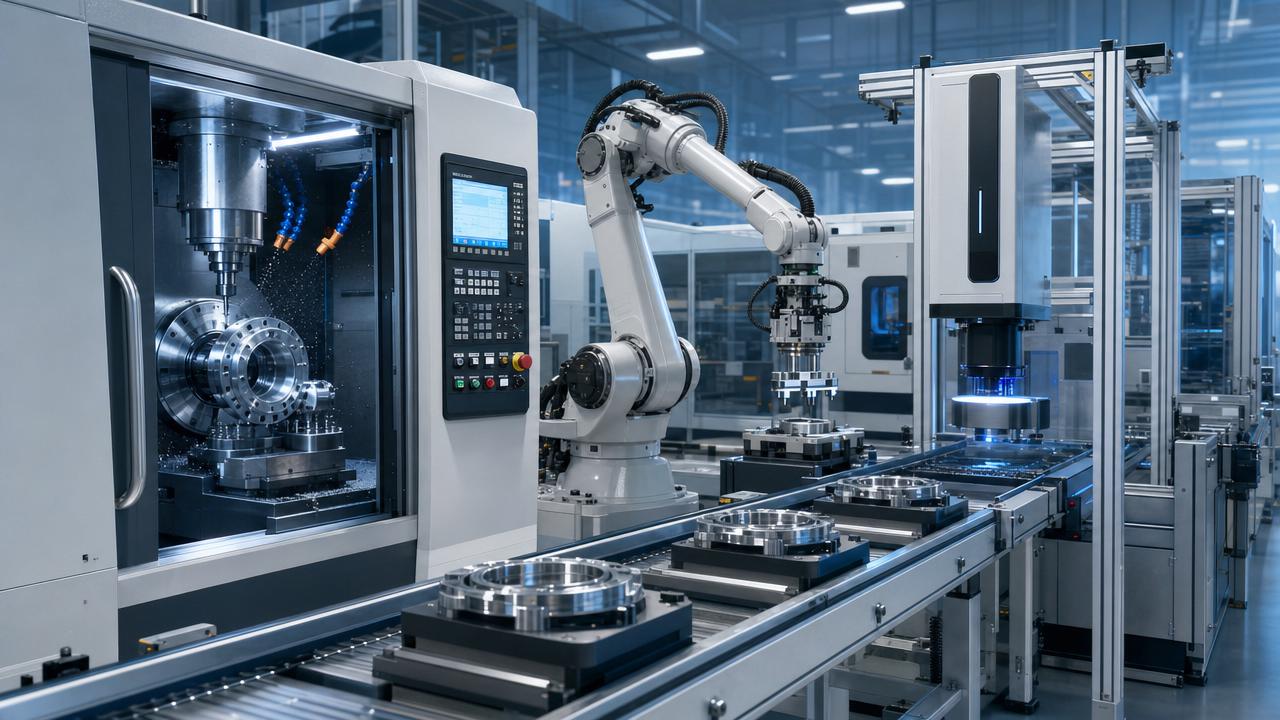
Why is Smart Manufacturing Technology for Industry 4.0 getting so much attention?
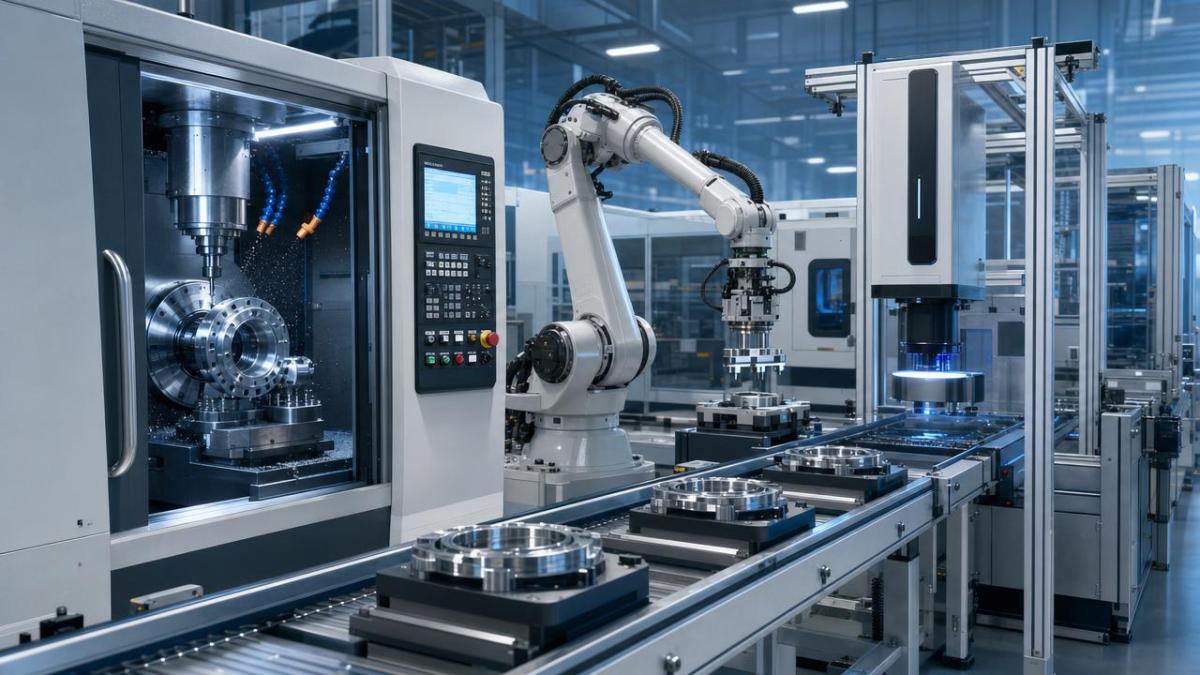
Smart Manufacturing Technology for Industry 4.0 matters because factories now compete on speed, accuracy, traceability, and changeover flexibility at the same time.
That pressure is especially visible in CNC machining, precision machine tools, and automated production lines.
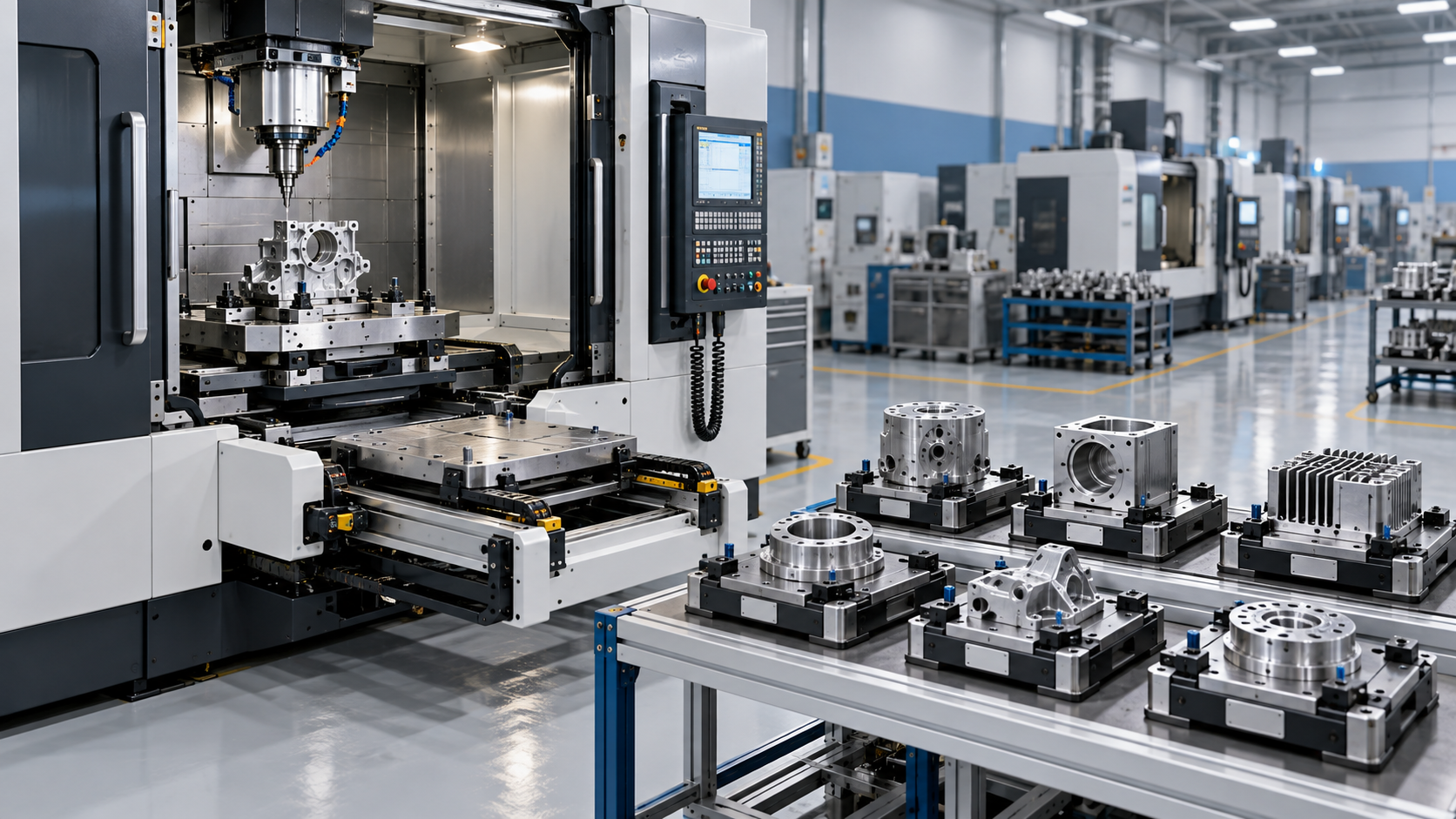
A modern shop may run CNC lathes, machining centers, robots, measurement systems, and assembly cells across several product families.
If those systems operate separately, delays appear quickly. Machine utilization drops. Quality data stays fragmented. Scheduling becomes reactive instead of controlled.
Smart Manufacturing Technology for Industry 4.0 connects these layers into one working environment, where machines, software, operators, and production data support faster decisions.
In practical terms, this is not only about buying advanced hardware. It is about building a digital production flow that reduces waste and improves consistency.
That is why automotive, aerospace, electronics, and energy equipment plants are moving toward connected machining, in-line inspection, and flexible automation.
What actually sits behind Smart Manufacturing Technology for Industry 4.0?
The phrase sounds broad, so a clearer way to read it is as a stack of systems working together across the factory.
At machine level, the foundation includes CNC controls, servo systems, sensors, tool monitoring, and automated loading or unloading devices.
At line level, it often includes robots, conveyors, pallet systems, AGVs, machine tending, and automated assembly or inspection stations.
At software level, the common building blocks are MES, SCADA, ERP integration, digital work instructions, and production analytics platforms.
Then comes the data layer. This is where machine status, spindle load, cycle time, scrap rate, tool life, and energy use become visible.
A useful way to judge maturity is not by brand count, but by how smoothly data moves from planning to machining, inspection, and shipment.
In many precision manufacturing environments, the most valuable result is closed-loop control.
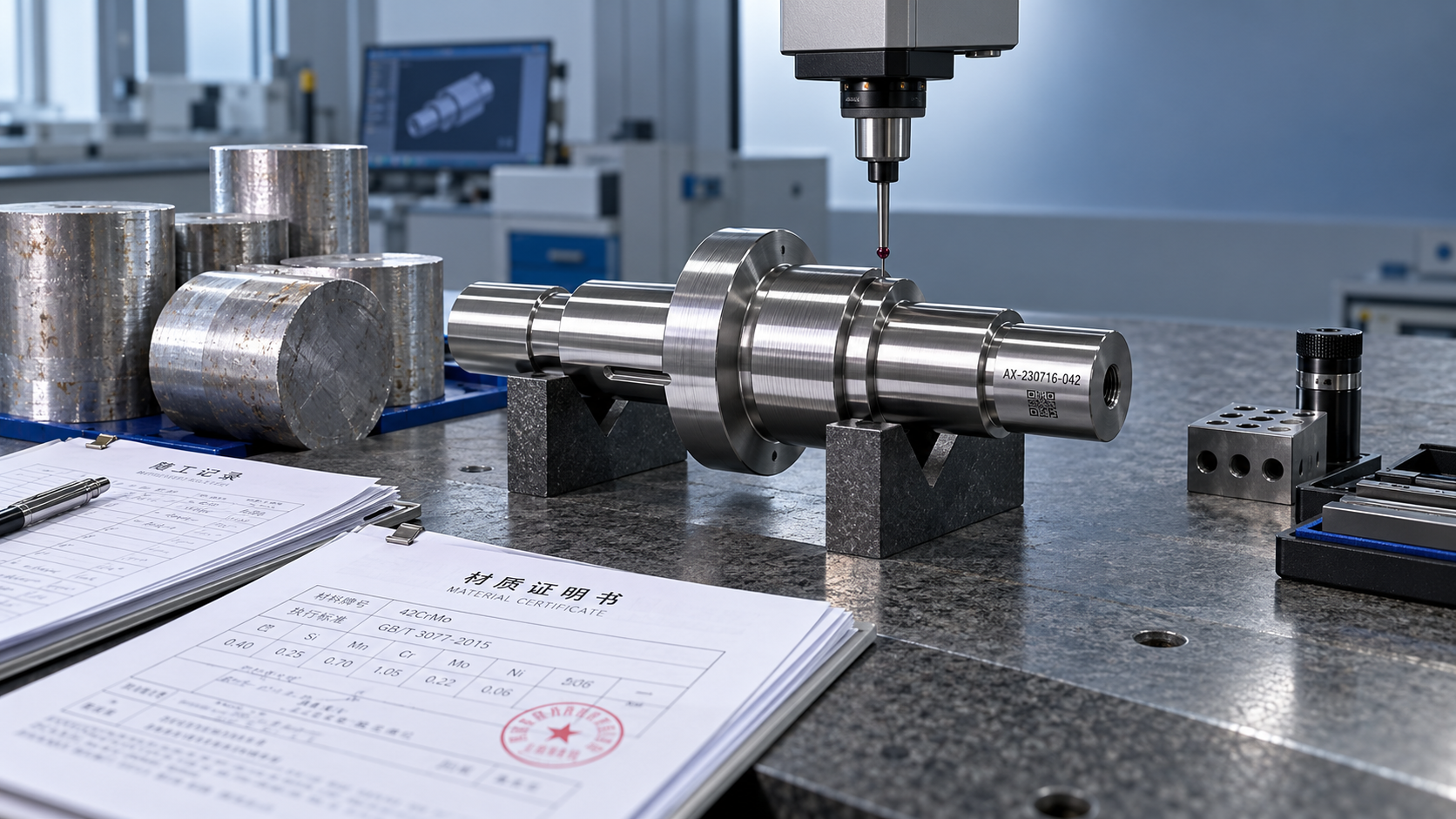
For example, machining data can be linked with CMM results, tool wear records, and offset adjustments, helping maintain tight tolerances without repeated manual correction.
Core systems usually include
- Connected CNC equipment with real-time monitoring
- MES software for work order control and traceability
- Industrial robots for loading, transfer, welding, or assembly
- Digital quality systems with SPC and in-process inspection
- Predictive maintenance tools based on vibration, load, and temperature signals
Which factory use cases show the strongest value first?
The best use cases are usually not the most complex ones. They are the areas where delay, variability, or manual intervention already costs too much.
In CNC-heavy environments, machine tending is often one of the earliest wins.
A robot can load raw parts, remove finished parts, and keep spindle uptime higher during multi-shift production.
Another strong case is tool life management. If tools fail unexpectedly, part quality and machine availability both suffer.
With connected monitoring, the system can flag abnormal wear patterns before scrap rises.
Mixed-model production is also a major driver. This matters where batches are smaller and changeovers happen more often.
Smart Manufacturing Technology for Industry 4.0 helps by linking scheduling, part programs, fixtures, and quality checks into one coordinated workflow.
A quick way to compare typical use cases
Where precision parts and high-value materials are involved, in-process quality feedback often delivers faster returns than broader digital programs.
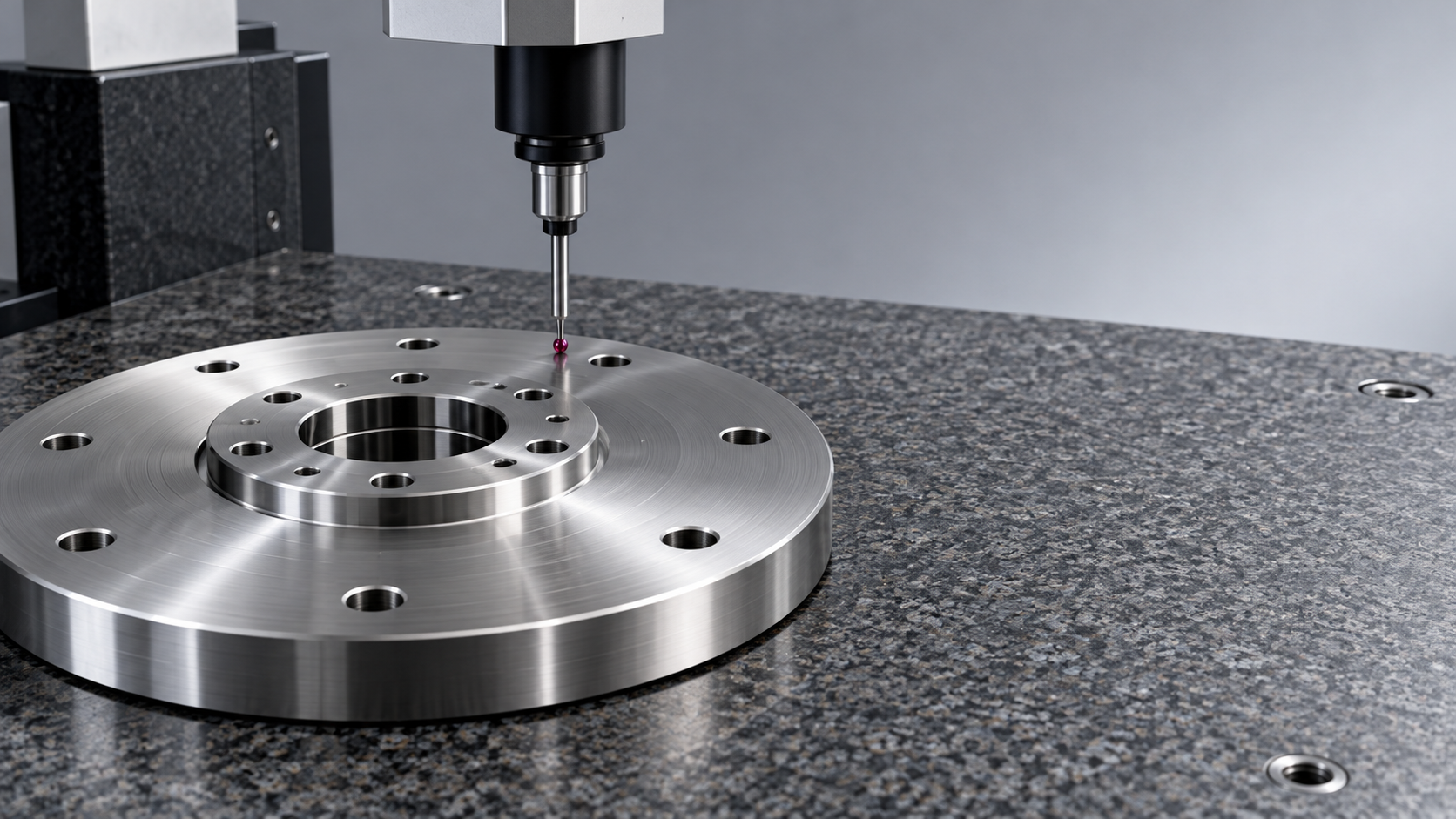
That is especially true for aerospace structures, automotive shafts, precision discs, and electronics housings.
How do you know whether a factory is ready for implementation?
Readiness is less about having the newest machines and more about having a stable process foundation.
If routing, tooling, fixturing, and quality criteria change constantly without control, digital integration will only expose disorder faster.
A practical assessment usually starts with three questions.
- Are machine data and production data captured consistently?
- Can repeat jobs run with stable cycle time and quality output?
- Is there a clear bottleneck that automation or connectivity can remove?
In real factories, one connected cell often makes more sense than a full-scale rollout.
This allows teams to test data collection, system compatibility, operator response, and maintenance routines with manageable risk.
It also reveals whether older CNC equipment can be retrofitted or whether replacement is the more realistic path.
That matters in global manufacturing clusters, where legacy assets and advanced lines often operate side by side.
What are the common mistakes when choosing Smart Manufacturing Technology for Industry 4.0?
The most common mistake is treating Smart Manufacturing Technology for Industry 4.0 as a single purchase instead of a staged capability.
Another mistake is focusing on dashboards before fixing data accuracy.
If machine states are mislabeled or manual entries are inconsistent, reports may look advanced but still support poor decisions.
There is also a tendency to over-automate unstable processes.
For example, adding robots to a machining cell with frequent fixture errors can move bad parts faster instead of solving the source issue.
Cybersecurity is another weak point that gets underestimated.
When CNC machines, SCADA systems, and remote diagnostics are connected, access control and network segmentation become operational requirements, not optional extras.
Warning signs worth catching early
- No agreed KPI definitions across production and quality teams
- Integration plans that ignore tooling, fixtures, and inspection workflows
- Pilot projects without baseline OEE, scrap, or changeover data
- Expectations of immediate ROI from every connected asset
A stronger approach is to choose one measurable problem, one line, and one implementation sequence.
That keeps Smart Manufacturing Technology for Industry 4.0 grounded in production reality rather than presentation language.
How should cost, timeline, and ROI be judged without oversimplifying?
Cost should not be measured only by equipment price.
Integration work, software licensing, training, fixture changes, validation, and downtime during commissioning often shape the real budget.
The timeline also depends on process maturity.
A repeatable CNC cell with stable programs may connect quickly. A mixed legacy line with poor data discipline usually takes much longer.
ROI is strongest when value is tied to specific losses.
Examples include unplanned spindle downtime, high scrap on precision parts, long setup changes, delayed traceability records, or underused night shifts.
In many factories, the most credible business case combines several effects instead of promising one dramatic gain.
A moderate increase in utilization, fewer quality escapes, lower rework, and better planning accuracy can justify the investment more reliably.
For globally active machine tool ecosystems, that balanced view matters because labor cost, energy pricing, and equipment age vary widely by region.
What is the sensible next step if smarter production is the goal?
Start by mapping one production flow from order release to final inspection.
Look closely at where CNC machining, tooling, robot handling, measurement, and reporting disconnect from each other.
Then rank problems by business impact, not by how attractive the technology appears.
The most effective Smart Manufacturing Technology for Industry 4.0 programs usually begin with a narrow scope and clear evidence targets.
That may mean validating machine monitoring on a machining center group, adding traceability to a precision assembly line, or linking inspection results to tool offset control.
From there, compare system compatibility, data ownership, retrofit needs, and maintenance workload before expanding.
Smart manufacturing is not simply a trend label. In CNC and precision manufacturing, it is a practical method for improving visibility, control, and resilience.
A careful next step is to define the target process, the expected operational gain, the implementation boundary, and the risks that must be managed early.
Recommended for You
![]() Mitsubishi Electric Announces Physical AI System Linking Humanoid Robots and CNC MachinesMachine Tool Industry Editorial Team
Mitsubishi Electric Announces Physical AI System Linking Humanoid Robots and CNC MachinesMachine Tool Industry Editorial Team Precision Machining for Defense: Supplier Quality and Traceability ChecksManufacturing Market Research Center
![]() Nidec Machine Tool Launches MVR-5X Five-Axis Gantry MachineMachine Tool Industry Editorial Team
Nidec Machine Tool Launches MVR-5X Five-Axis Gantry MachineMachine Tool Industry Editorial Team Choosing a Precision Disc Parts Manufacturer in China: Tolerances and Quality ChecksManufacturing Market Research Center
![]() Siemens Executive Says AI Could Raise Factory Automation to 80%Manufacturing Market Research Center
Siemens Executive Says AI Could Raise Factory Automation to 80%Manufacturing Market Research Center Choosing Automated Machine Tools for High-Mix, Low-Volume ProductionMachine Tool Industry Editorial Team


Aris Katos
Future of Carbide Coatings
15+ years in precision manufacturing systems. Specialized in high-speed milling and aerospace grade alloy processing.
▶
Siemens Executive Says AI Could Raise Factory Automation to 80%Manufacturing Market Research Center▶
Manufacturing Technology Trends That Improve Throughput and Quality ControlManufacturing Market Research Center▶
Global Manufacturing Trends: How Supply Chains and Regional Shifts Affect SourcingManufacturing Market Research Center▶
Small-Batch Production and Smart Manufacturing for Small Businesses: Where to Start FirstManufacturing Market Research Center▶
What Smart Manufacturing Technology for Industry 4.0 Means for Mid-Sized FactoriesManufacturing Market Research Center
▶
Mastering 5-Axis Workholding Strategies
Join our technical panel on Nov 15th to learn about reducing vibrations in thin-wall components.

Providing you with integrated sanding solutions
Before-sales and after-sales services
Comprehensive technical support