• Global CNC market projected to reach $128B by 2028 • New EU trade regulations for precision tooling components • Aerospace deman
NYSE: CNC +1.2%LME: STEEL -0.4%

Why is the Manufacturing Industry still struggling to hire?
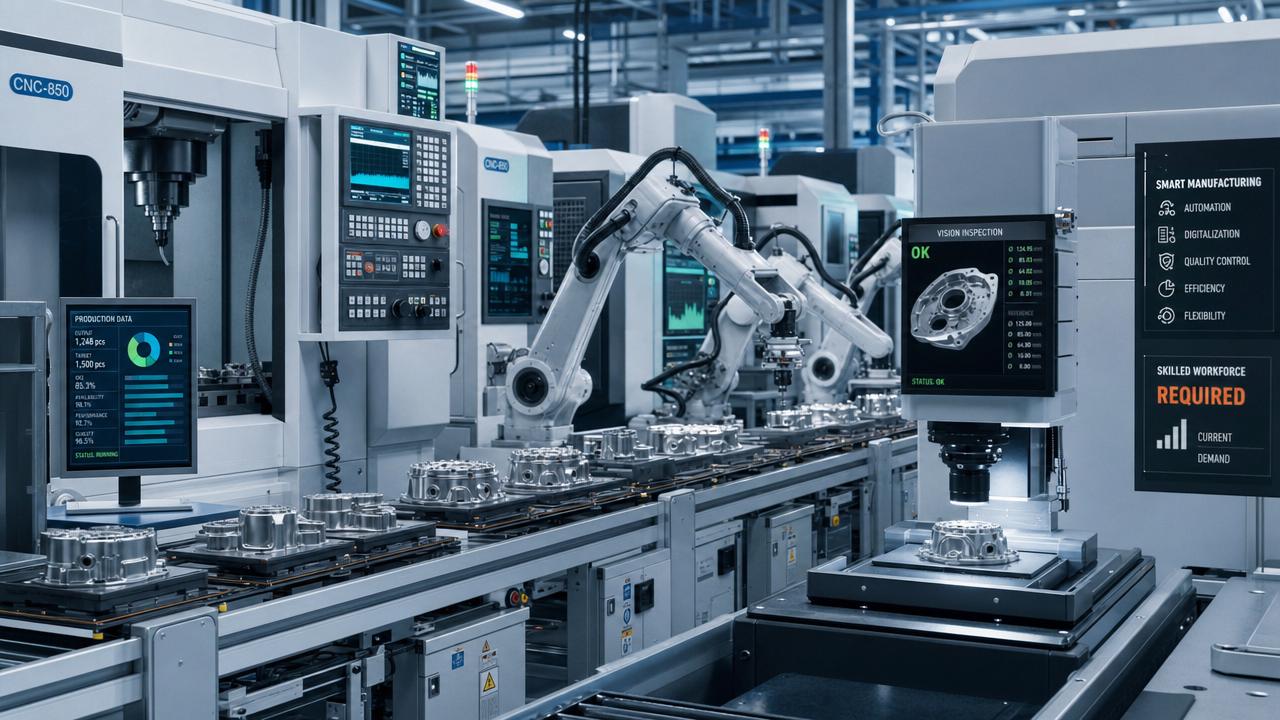
Despite new robotics, advanced CNC systems, and digital planning tools, the Manufacturing Industry still struggles to hire at scale. The issue is no longer explained by one single labor shortage.
It is driven by aging talent, outdated career perceptions, skills mismatches, wage pressure, and faster technology change. These forces affect machining, assembly, tooling, maintenance, quality, and automation roles.
For companies linked to CNC machining, precision manufacturing, and smart production lines, hiring problems can slow output, weaken quality control, and delay digital transformation. Understanding the causes helps create practical responses.
Why is the Manufacturing Industry hiring problem still so severe?
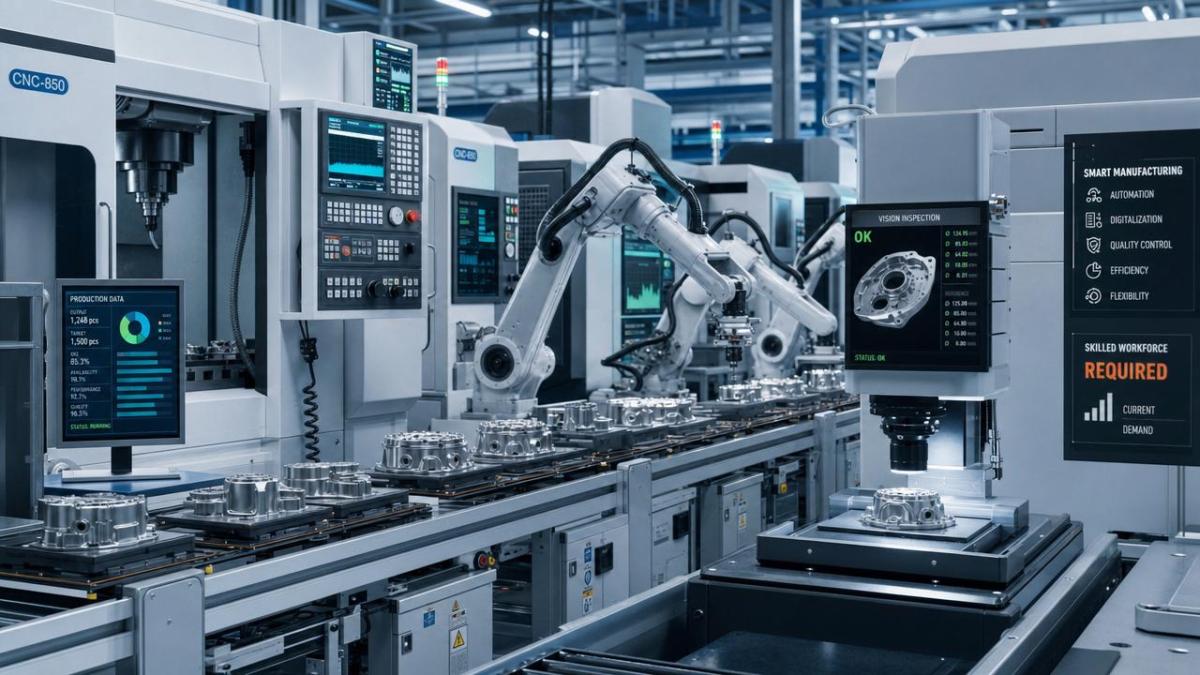
The Manufacturing Industry faces a structural problem, not a temporary one. Demand for skilled labor rose as production became more precise, automated, and data-driven.
Many factories need people who can read prints, run CNC equipment, monitor tolerances, understand software, and solve process issues quickly. That combination is difficult to find.
At the same time, older workers continue to retire. Years of practical knowledge leave with them, especially in machining, tool setup, inspection, and maintenance.
The pipeline of replacements remains thin. Fewer young people enter technical trades, and many schools reduced hands-on industrial training over the last two decades.
This is why the Manufacturing Industry keeps hiring aggressively while still failing to close open positions. Vacancies stay open longer, and turnover increases operational risk.
What changed in the skills required across modern manufacturing?
Traditional production roles were once narrower. A worker might focus on one machine, one operation, or one repeated task for years.
Today, the Manufacturing Industry needs broader technical versatility. CNC lathes, machining centers, automated cells, vision systems, and ERP-linked workflows all demand hybrid capabilities.
A skilled candidate may now need to understand several areas:
- Machine operation and safe setup
- Tooling selection and wear control
- CAD/CAM or digital work instructions
- Measurement, SPC, and inspection logic
- Basic automation and troubleshooting
- Continuous improvement and documentation
This shift makes the Manufacturing Industry more productive, but also more demanding. Training systems often lag behind the speed of equipment upgrades and process complexity.
As a result, companies are not simply competing for labor. They are competing for proven capability, adaptability, and learning speed.
Why do fewer people see the Manufacturing Industry as an attractive career?
Public perception remains one of the biggest barriers. Many still imagine manufacturing as dirty, repetitive, low-growth work, even when modern facilities are clean, digital, and highly technical.
That perception hurts entry-level recruitment. Students and career changers may overlook stable roles in CNC machining, automation support, industrial maintenance, and precision inspection.
The Manufacturing Industry also competes with logistics, technology, construction, and service sectors. Some alternatives appear more flexible or easier to enter.
Work schedule design matters too. Rotating shifts, night work, and overtime can discourage applicants, especially when competing sectors offer simpler schedules.
Another challenge is communication. Some employers still describe roles in outdated language, focusing on labor demand instead of technical growth, digital tools, and long-term advancement.
When job descriptions fail to reflect the reality of smart manufacturing, the Manufacturing Industry loses attention from capable people who would otherwise consider it.
Is the issue mainly wages, or are other factors equally important?
Compensation matters, but it is only one part of the hiring equation. The Manufacturing Industry often loses candidates because total job value feels unclear.
A candidate may compare pay, commute, schedule, safety, training support, and career progression. If one or two factors feel weak, higher wages may not be enough.
Common decision factors include:
- Base wage versus local cost of living
- Predictability of shifts and overtime
- Health, safety, and equipment quality
- Training during onboarding
- Clear path to lead, programmer, or technician roles
- Management quality and workplace culture
The Manufacturing Industry often underestimates how strongly culture influences retention. People stay where they feel respected, coached, and included in improvement efforts.
Poor onboarding creates another hidden cost. New hires may leave within months if expectations are unclear or if supervisors assume skills that were never taught.
How do automation and smart factories affect hiring demand?
Automation does not eliminate the hiring challenge. In many cases, it changes the kind of talent the Manufacturing Industry must attract.
A robot cell still needs setup support, maintenance logic, quality verification, tooling management, and process optimization. Smart factories reduce some manual tasks, but raise technical expectations.
This creates a paradox. Investment in advanced equipment increases efficiency, yet it also increases dependence on people who can keep systems stable and productive.
In CNC and precision manufacturing, one skilled technician can influence spindle utilization, scrap rates, delivery timing, and machine uptime. That impact makes hiring even more strategic.
Automation can support retention when used correctly. It may reduce fatigue, improve safety, and make jobs more interesting. But it cannot replace workforce development.
The strongest organizations align technology investment with internal training, apprenticeships, and cross-functional skill building. Without that link, the Manufacturing Industry keeps facing talent bottlenecks.
What hiring mistakes keep the Manufacturing Industry stuck?
Some hiring problems are external, but many are self-created. Companies often search for perfect candidates instead of building trainable teams.
Frequent mistakes include requiring too many years of experience, using vague job titles, delaying interview decisions, and offering little practical training after hiring.
Another mistake is ignoring adjacent talent pools. Workers from maintenance, military technical backgrounds, automotive repair, or industrial trades may transition successfully with targeted support.
The Manufacturing Industry also struggles when leadership treats labor shortages as short-term disruptions. That mindset delays investment in training systems and employer branding.
A more effective approach is to redesign hiring around capability potential. Screening for mechanical reasoning, problem solving, attendance reliability, and learning agility can widen the pipeline.
Quick comparison: common problem versus practical response
What can the Manufacturing Industry do now to improve hiring outcomes?
The best results usually come from combined action, not one isolated fix. The Manufacturing Industry needs a workforce strategy tied to technology, production planning, and retention.
Useful actions include:
- Simplify job descriptions and define must-have skills clearly.
- Build training tracks for CNC, quality, automation, and maintenance roles.
- Create visible advancement steps with pay progression.
- Capture senior knowledge before retirement accelerates further.
- Strengthen safety, scheduling fairness, and supervisor capability.
- Promote the modern reality of the Manufacturing Industry through real examples.
For CNC machining and precision manufacturing, skill development should mirror actual production needs. Training must connect directly to setup reduction, quality stability, maintenance response, and process repeatability.
Global competition makes this even more important. Regions with strong machine tool ecosystems, supplier networks, and technical education often recover faster from labor shortages.
The Manufacturing Industry will continue evolving toward higher precision, more automation, and tighter digital integration. Hiring systems must evolve with equal speed.
FAQ snapshot
The Manufacturing Industry is still struggling to hire because technology changed faster than talent systems, while perceptions and training pipelines failed to keep pace.
Closing the gap requires better workforce planning, stronger technical training, clearer career pathways, and a more accurate public picture of modern industrial work.
The next step is practical: review open roles, identify critical skill gaps, map retirement risk, and align hiring strategy with production technology. Sustainable growth depends on it.
PREVIOUS ARTICLE
Recommended for You
 How to Select CNC Equipment for High-Mix, Low-Volume ProductionCNC Machining Technology Center
 Can CNC Machining Inconel Control Tool Wear in High-Temperature Aerospace Parts?CNC Machining Technology Center
 Machine Tool Market Outlook: Demand Drivers, Capacity Shifts, and Investment RisksManufacturing Market Research Center
 Zero-Point Clamping or Modular Fixtures? Choosing a Faster CNC Changeover SystemCNC Machining Technology Center
 How to Cut CNC Fixture Changeover Time Without Sacrificing Part AccuracyCNC Machining Technology Center
 When Does CNC Turning Pay Off? A Break-Even Guide by Annual Part VolumeMachine Tool Industry Editorial Team

Aris Katos
Future of Carbide Coatings
15+ years in precision manufacturing systems. Specialized in high-speed milling and aerospace grade alloy processing.
▶
Global Manufacturing Trends: How Supply Chains and Regional Shifts Affect SourcingManufacturing Market Research Center▶
Small-Batch Production and Smart Manufacturing for Small Businesses: Where to Start FirstManufacturing Market Research Center▶
What Smart Manufacturing Technology for Industry 4.0 Means for Mid-Sized FactoriesManufacturing Market Research Center▶
How Smart Manufacturing Benefits Reduce Downtime and Scrap in Metal Parts ProductionManufacturing Market Research Center▶
Advanced Manufacturing Technology for Energy Equipment: Key Processes and Use CasesManufacturing Market Research Center
Mastering 5-Axis Workholding Strategies
Join our technical panel on Nov 15th to learn about reducing vibrations in thin-wall components.

Providing you with integrated sanding solutions
Before-sales and after-sales services
Comprehensive technical support