• Global CNC market projected to reach $128B by 2028 • New EU trade regulations for precision tooling components • Aerospace deman
NYSE: CNC +1.2%LME: STEEL -0.4%

What Makes a CNC Manufacturing Supplier Easier to Work With

Choosing a CNC manufacturing supplier should not mean managing delays, unclear communication, or inconsistent quality. Whether you source from a CNC manufacturing factory, CNC manufacturing wholesaler, or machine tool supplier, the easiest partners to work with combine high precision CNC manufacturing, quick setup CNC manufacturing, and responsive support. This article explores what makes a precision CNC manufacturing partner more efficient, reliable, and valuable for automotive, aerospace, electronics, and energy equipment applications.
For buyers, operators, engineers, and decision-makers, ease of cooperation is not a soft factor. It directly affects lead time, scrap risk, machine uptime, documentation flow, and total project cost. A supplier that is difficult to communicate with can add 2–4 weeks to a production schedule, while a well-organized CNC manufacturing partner can reduce trial cycles, improve first-pass yield, and support smoother scaling from prototype to batch production.
In the global CNC machine tool sector, where tolerances may reach ±0.005 mm and delivery expectations are often measured in days instead of months, practical collaboration matters as much as machining capability. The best suppliers make technical discussions clear, production status visible, and quality outcomes repeatable.
Clear communication and fast technical alignment
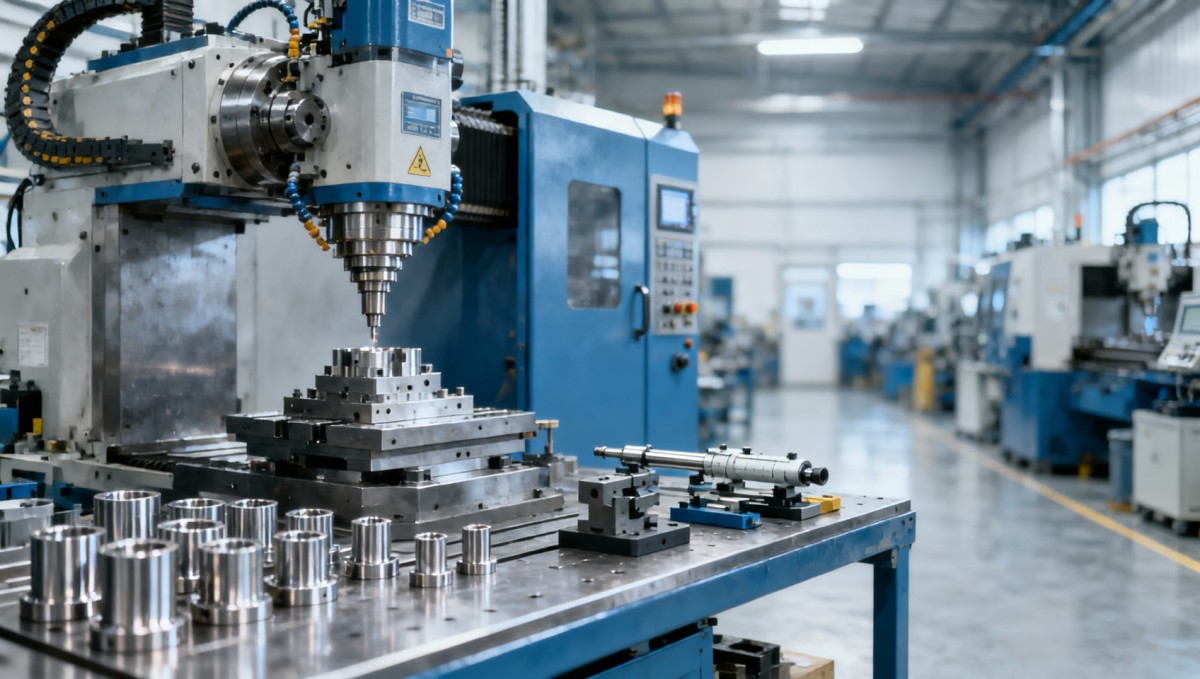
A CNC manufacturing supplier becomes easier to work with when communication is structured from the first inquiry. That means clear quotation templates, prompt feedback on drawings, and defined response times. In many industrial sourcing projects, the difference between a 24-hour and 72-hour reply can determine whether a pilot run stays on schedule.
Technical alignment is especially important for complex parts used in automotive drivetrains, aerospace brackets, electronics housings, or energy equipment assemblies. A capable supplier should quickly confirm material grade, tolerance stack-up, surface finish, datum references, inspection method, and packaging requirements before machining starts.
What good communication looks like in practice
Suppliers that are easy to work with usually standardize communication into 4 stages: RFQ review, process confirmation, pilot approval, and production follow-up. This reduces misunderstandings when drawings include multiple revisions, GD&T notes, or mixed tolerances such as ±0.01 mm on one feature and ±0.05 mm on another.
They also assign a clear point of contact. For the buyer, this means fewer email loops. For the operator or quality team, it means faster decisions on tooling, fixture design, and in-process checks. In many cases, one trained project engineer can shorten clarification time by 30%–50% compared with fragmented communication across sales, production, and QC teams.
Questions a responsive supplier should answer early
- What is the expected lead time for sample parts, such as 5–10 working days for standard milled components?
- Which dimensions are critical and require 100% inspection rather than sampling?
- Can the supplier support DFM feedback within 24–48 hours after receiving drawings?
- What file formats are accepted, such as STEP, IGES, DWG, or PDF with revision control?
When these basics are answered early, procurement teams gain pricing clarity, operators gain process stability, and management gains better control over risk. Ease of cooperation starts long before the first chip is cut.
Consistent quality systems matter more than one good sample
A supplier may produce an excellent first sample, but long-term cooperation depends on repeatability. In CNC manufacturing, repeatability is built through process planning, machine condition, tooling control, fixture stability, and inspection discipline. A supplier that is easy to work with can explain how quality is maintained from part 1 to part 500 or part 5,000.
This is crucial for industries where dimensional drift, burrs, or surface inconsistency create assembly problems. For example, an electronics enclosure may require flatness and cosmetic control, while a shaft for industrial equipment may require concentricity, hardness verification, and controlled edge breaks. The supplier should understand these differences without needing repeated correction from the customer.
Key quality factors buyers should compare
The table below shows practical quality control dimensions that help determine whether a precision CNC manufacturing supplier will be easy to manage during real production, not just during quotation.
The strongest signal is not perfection but control. If a supplier can explain its inspection frequency, gauge method, and nonconformance workflow in specific terms, it is usually easier to manage than a supplier that only promises “high quality” without process detail.
Common quality warning signs
- No clear answer on tolerance capability, such as whether stable production can hold ±0.01 mm or only ±0.05 mm.
- No revision control on drawings or inspection reports.
- Visual defects accepted as normal on parts with cosmetic or sealing requirements.
- Corrective actions based on opinions rather than measurement records.
For procurement and leadership teams, these details reduce hidden cost. A slightly higher unit price often becomes more economical when rework, line stoppage, freight claims, and repeated vendor management are considered.
Flexible production planning and realistic lead times
Ease of cooperation also depends on scheduling discipline. A CNC manufacturing supplier should not simply promise the shortest lead time. It should offer a realistic production plan based on machine availability, fixture preparation, raw material procurement, and post-processing steps such as anodizing, heat treatment, or grinding.
In practical sourcing, standard turned or milled parts may move from drawing approval to sample shipment in 7–15 working days. More complex multi-axis parts, hardened materials, or parts requiring outsourced surface treatment may need 2–4 weeks. A reliable supplier states these ranges clearly and updates the customer when conditions change.
How supplier flexibility affects different order types
Not every buyer needs the same production model. The table below outlines how supplier capability should align with prototype, pilot, and batch manufacturing needs across industrial applications.
This comparison shows why the best CNC manufacturing partner is not just a machine owner. It is a planning partner that can adapt process flow to order type, urgency, and downstream assembly needs.
Signs of strong planning capability
- Production milestones are defined, such as material in, setup complete, first article passed, machining complete, finishing complete, and shipment booked.
- Bottlenecks are explained early, especially for 4-axis or 5-axis capacity, special tooling, or outside processing.
- Schedule changes are communicated before delay becomes a crisis.
For machine tool users and plant managers, this type of transparency reduces line interruption. For enterprise decision-makers, it strengthens forecasting and supplier confidence across international sourcing networks.
Engineering support, documentation, and problem-solving discipline
A CNC manufacturing supplier is easier to work with when it solves problems before they become production loss. That requires engineering support, not just order taking. Good suppliers review geometry for manufacturability, identify sharp internal corners that may need tool radius changes, and recommend process adjustments when cost and precision are out of balance.
For example, a part initially designed with multiple tight tolerances may only need two critical features held to ±0.01 mm, while other features can remain at ±0.05 mm. That change can shorten setup time, reduce tool changes, and lower inspection burden without affecting function. A supplier that can explain such trade-offs adds value beyond price.
Documentation that improves cooperation
Documentation often determines whether cross-border CNC sourcing runs smoothly. Operators, buyers, and quality inspectors all rely on the same technical language. The supplier should maintain revision-controlled drawings, process sheets, inspection records, and shipping documents that are easy to match to each order lot.
In many industrial projects, 3 documentation layers are especially useful: commercial documents for purchasing, technical documents for engineering, and quality documents for acceptance. Missing one of these layers can create delays even when machining itself is completed on time.
Practical support capabilities to look for
- DFM feedback covering tool access, clamping logic, feature sequencing, and recommended tolerance relaxation where possible.
- Inspection planning for critical dimensions, with first article data available before full production release.
- Issue escalation rules, such as response within 24 hours for dimensional nonconformance or shipping discrepancy.
- Support for mixed projects involving CNC turning, milling, grinding, tapping, and secondary finishing.
Problem-solving discipline is especially important in sectors like aerospace components, electric vehicle parts, and power equipment, where one small deviation can affect assembly fit, sealing, or performance. The easiest suppliers to work with do not hide issues. They isolate them, report them, and propose corrective paths with measurable actions.
This level of discipline also supports scaling. Once a part moves from 10-piece validation to 1,000-piece repeat orders, documented process knowledge becomes a major advantage. It reduces dependence on individual operators and creates a more stable supply chain relationship.
How to evaluate a CNC supplier before placing a larger order
Before expanding from a trial order to long-term sourcing, buyers should use a practical evaluation method. Ease of cooperation can be tested early through response speed, technical accuracy, sample quality, and process transparency. A structured review is often more useful than comparing price alone.
This is particularly relevant in global machine tool and precision manufacturing markets, where suppliers may differ widely in communication habits, process maturity, and export readiness. A low initial quote may not reflect costs tied to packaging errors, missing reports, or delayed revisions.
A simple supplier evaluation checklist
The following checklist helps procurement teams and manufacturing managers compare suppliers using operational criteria that directly affect delivery and quality outcomes.
A supplier that performs well across these four areas is usually much easier to work with over time than a supplier selected only for the lowest unit cost. The management savings can be significant, especially for multi-part programs or repeat monthly orders.
Common selection mistakes
- Approving a supplier based only on one urgent sample without checking repeat-order capability.
- Ignoring documentation quality because the first shipment appears acceptable.
- Assuming all CNC manufacturing factories can handle the same tolerance class, material family, or finishing route.
- Failing to confirm who owns communication when engineering changes happen mid-project.
The most efficient procurement decisions combine technical review, operational testing, and supplier responsiveness. This method supports both immediate production goals and long-term sourcing resilience.
FAQ: practical questions buyers and operators often ask
How quickly should a CNC manufacturing supplier respond to an RFQ?
For standard machined parts with complete drawings, a useful initial reply should come within 24 hours, even if the full quotation takes 1–3 working days. Complex assemblies, multi-process parts, or jobs requiring subcontracted finishing may need longer, but a professional supplier should still confirm feasibility, missing information, and expected quote timing early.
What lead time is typical for samples and repeat orders?
Simple sample parts often take 7–15 working days. More complex 4-axis or 5-axis parts, hardened steel components, or parts needing heat treatment and coating may need 2–4 weeks. Repeat orders can be faster if fixtures, programs, and inspection plans are already validated.
Which documents are most useful during CNC sourcing?
At minimum, buyers should expect a clear quotation, revision-controlled drawing reference, packing list, and dimensional report for critical parts. Depending on the application, material certificates, first article records, or process notes may also be important. These documents reduce receiving delays and improve traceability.
Is the lowest-priced CNC manufacturing wholesaler always the best option?
Not necessarily. If the lower price comes with weak communication, unstable tolerances, or frequent delivery changes, the total cost can rise quickly through rework, expediting, and internal follow-up time. In many B2B manufacturing programs, predictable execution brings more value than small savings on unit price alone.
The easiest CNC manufacturing supplier to work with is usually the one that combines technical clarity, repeatable quality, realistic lead times, and disciplined support after the order is placed. In modern precision manufacturing, these strengths matter across the full chain, from prototype validation to serial production in automotive, aerospace, electronics, and energy equipment applications.
If you are evaluating a CNC manufacturing factory, wholesaler, or machine tool supplier, focus on how they communicate, how they control quality, how they plan capacity, and how they solve problems under pressure. Those factors often determine whether a supplier becomes a long-term production asset or a recurring management burden.
To discuss your project requirements, compare machining approaches, or request a more tailored sourcing recommendation, contact us today to get a customized solution and learn more about practical CNC manufacturing options for your application.
PREVIOUS ARTICLE
Recommended for You
![]() Mitsubishi Electric Announces Physical AI System Linking Humanoid Robots and CNC MachinesMachine Tool Industry Editorial Team
 Precision Machining for Defense: Supplier Quality and Traceability ChecksManufacturing Market Research Center
![]() Nidec Machine Tool Launches MVR-5X Five-Axis Gantry MachineMachine Tool Industry Editorial Team
 Choosing a Precision Disc Parts Manufacturer in China: Tolerances and Quality ChecksManufacturing Market Research Center
![]() Siemens Executive Says AI Could Raise Factory Automation to 80%Manufacturing Market Research Center
 Choosing Automated Machine Tools for High-Mix, Low-Volume ProductionMachine Tool Industry Editorial Team


Aris Katos
Future of Carbide Coatings
15+ years in precision manufacturing systems. Specialized in high-speed milling and aerospace grade alloy processing.
▶
Precision Machining for Defense: Supplier Quality and Traceability ChecksManufacturing Market Research Center▶
Choosing a Precision Disc Parts Manufacturer in China: Tolerances and Quality ChecksManufacturing Market Research Center▶
How to confirm short lead times for in-stock CNC milling machinesManufacturing Market Research Center▶
How to Choose a CNC Manufacturing Wholesaler for Quality, Lead Time, and CostManufacturing Market Research Center▶
China Temporarily Bans Helium ExportsManufacturing Market Research Center
▶
Mastering 5-Axis Workholding Strategies
Join our technical panel on Nov 15th to learn about reducing vibrations in thin-wall components.

Providing you with integrated sanding solutions
Before-sales and after-sales services
Comprehensive technical support