• Global CNC market projected to reach $128B by 2028 • New EU trade regulations for precision tooling components • Aerospace deman
NYSE: CNC +1.2%LME: STEEL -0.4%

Can a CNC Lathe Quick Installation Guide Cut Setup Time?
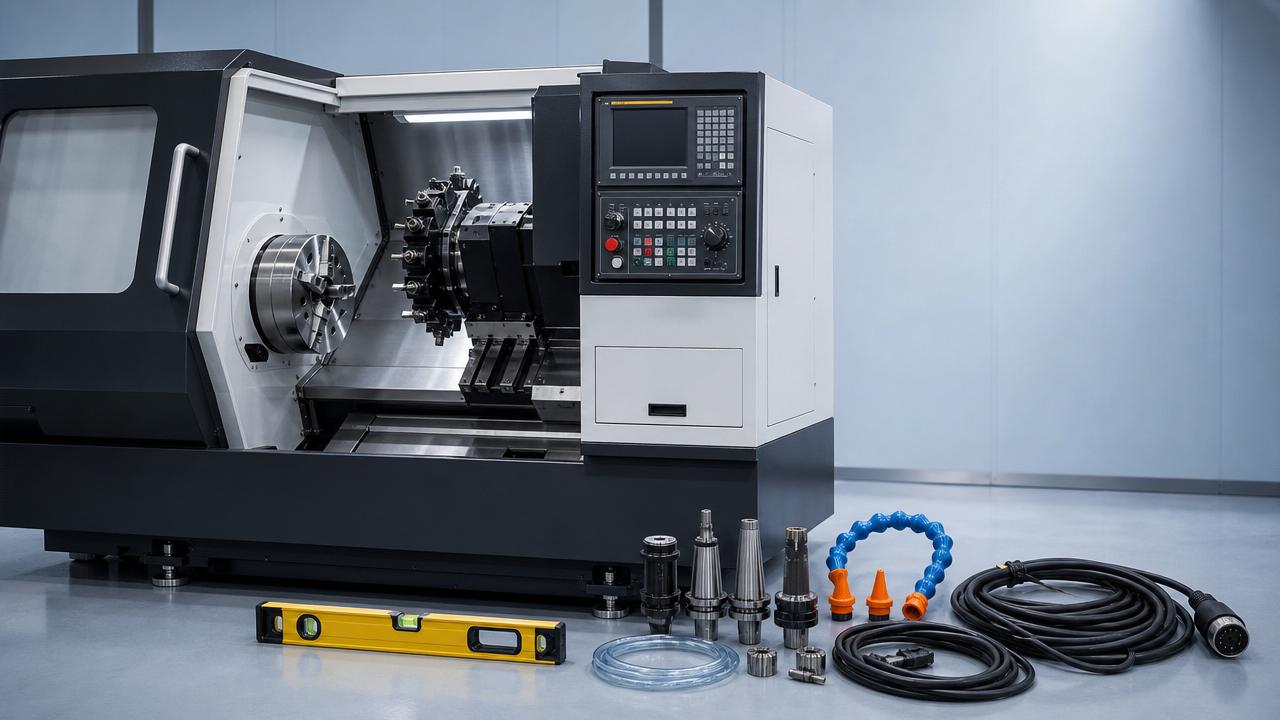
A well-structured CNC Lathe Quick Installation Guide can make a real difference for operators who need faster, safer, and more consistent machine setup.
In modern workshops, every minute spent aligning components, checking tooling, and verifying parameters affects productivity and delivery schedules.
By following clear installation steps, teams can reduce avoidable errors, shorten downtime, and prepare CNC lathes for stable precision machining.
Foundation of a CNC Lathe Quick Installation Guide
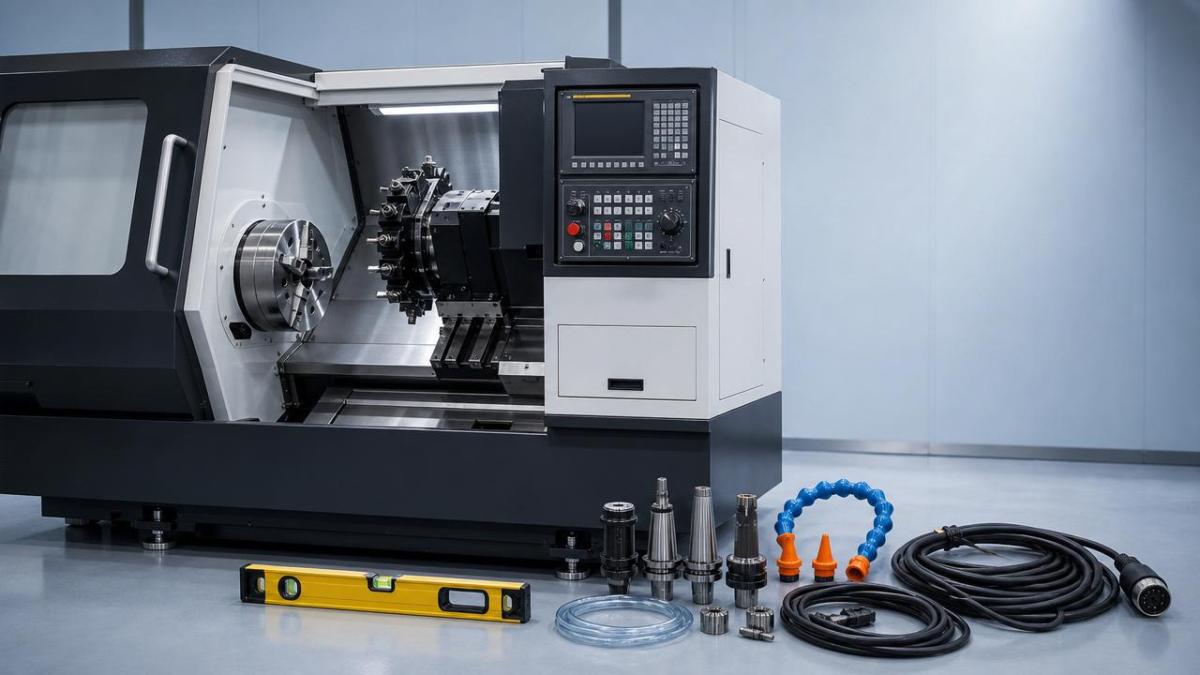
A CNC Lathe Quick Installation Guide is a practical setup reference for placing, connecting, inspecting, and preparing a lathe for operation.
It does not replace the machine manual, safety documentation, or commissioning procedure supplied with the equipment.
Instead, it organizes essential steps into a repeatable sequence that reduces missed checks and inconsistent decisions.
The guide usually covers machine placement, leveling, power connection, lubrication, coolant preparation, chuck inspection, tooling setup, and controller verification.
It also records baseline conditions, including air pressure, spindle runout, axis movement, alarm status, and initial cutting validation.
For precision manufacturing, these details matter because small installation deviations can become dimensional errors during repeated production.
Industry Background and Setup Pressure
CNC lathes are widely used in automotive parts, aerospace components, energy equipment, electronics hardware, and general industrial machining.
Production schedules are becoming tighter, while part complexity and tolerance requirements continue to rise.
This environment makes machine readiness a strategic issue, not only a maintenance activity.
A CNC Lathe Quick Installation Guide supports faster startup when new machines arrive, lines expand, or equipment is relocated.
These signals explain why a CNC Lathe Quick Installation Guide is useful beyond a single machine purchase.
It helps standardize knowledge across workshops, shifts, production sites, and maintenance schedules.
How the Guide Reduces Setup Time
Setup time is often lost through searching, rechecking, waiting for confirmation, or correcting avoidable installation mistakes.
A CNC Lathe Quick Installation Guide cuts these delays by turning scattered tasks into a controlled workflow.
The greatest time savings usually come from preparation before power-on and structured verification after connection.
- Pre-checking foundation strength, lifting access, and service space before equipment arrives.
- Confirming electrical capacity, grounding, air supply, coolant type, and lubrication requirements early.
- Using a checklist for leveling, anchor condition, chip conveyor fit, and guarding position.
- Recording controller settings, axis home positions, tool offsets, and alarm history after startup.
When these items are arranged in sequence, setup becomes measurable instead of dependent on memory.
A practical CNC Lathe Quick Installation Guide also reduces repeated communication between installation, maintenance, programming, and production teams.
Core Sections to Include
The best guide is concise enough to use on the shop floor, yet detailed enough to prevent risky shortcuts.
It should match the machine configuration, including turning diameter, turret type, spindle structure, bar feeder, and automation interface.
Site and foundation readiness
This section confirms floor flatness, load capacity, anchor plan, vibration sources, drainage, lighting, and access for maintenance.
It should also define safe lifting points and space for chip handling and material movement.
Utilities and machine connection
Power supply, grounding, compressed air, hydraulic pressure, coolant preparation, and lubrication must be checked before startup.
A CNC Lathe Quick Installation Guide should specify acceptable ranges and inspection tools where possible.
Mechanical alignment and safety inspection
Leveling, chuck mounting, tailstock alignment, turret indexing, guideway protection, doors, interlocks, and emergency stops need systematic confirmation.
These steps protect both machining accuracy and safe operation during early trials.
Control system and trial machining
After power-on, reference return, spindle rotation, axis movement, lubrication cycle, and alarm status should be verified.
A simple test part can confirm tool offsets, cutting stability, coolant delivery, and dimensional repeatability.
Application Value Across Manufacturing Operations
A CNC Lathe Quick Installation Guide delivers value in more than the first installation stage.
It can support equipment relocation, line balancing, preventive maintenance, operator training, and production recovery after downtime.
In high-mix production, repeatable setup procedures help maintain stable quality between different batches and component families.
For automated cells, the guide can also coordinate signals between the lathe, robot, bar feeder, measuring device, and safety fence.
The business meaning is clear: less uncertainty, faster readiness, better traceability, and fewer quality risks during startup.
Typical Machine and Process Categories
Different CNC lathe configurations require different installation priorities.
A CNC Lathe Quick Installation Guide should be adapted to the machine structure and intended process.
- Flat-bed CNC lathes: focus on foundation, leveling, chip removal, and easy access for manual loading.
- Slant-bed CNC lathes: prioritize coolant management, turret clearance, enclosure sealing, and chip conveyor alignment.
- Turning centers: include driven tools, sub-spindle checks, C-axis accuracy, and synchronization tests.
- Automated lathe cells: verify robot reach, safety signals, workholding repeatability, and loading cycle timing.
The same principle applies to part types, such as shafts, discs, bushings, threaded parts, and precision sleeves.
Each product family may require different chuck jaws, tool holders, coolant nozzles, and inspection routines.
Practical Recommendations and Common Risks
A guide saves time only when it is accurate, visible, and updated after real installation experience.
Using an outdated checklist can create false confidence and hide machine-specific risks.
The following practices improve the reliability of a CNC Lathe Quick Installation Guide.
- Separate mandatory safety checks from optimization steps to prevent unsafe acceleration.
- Use measurable acceptance criteria instead of vague wording such as “check carefully.”
- Record actual values for leveling, air pressure, spindle test results, and trial part dimensions.
- Include photos or diagrams for lifting points, cable routing, and lubrication positions.
- Review the guide after first production to capture lessons from actual machining conditions.
Common risks include poor grounding, insufficient floor stability, incorrect chuck installation, weak coolant flow, and neglected thermal warm-up.
Another frequent issue is starting trial cutting before confirming tool interference and door interlock function.
A disciplined CNC Lathe Quick Installation Guide helps avoid these mistakes without slowing the whole project.
Digital Records and Continuous Improvement
Modern CNC workshops increasingly connect installation data with maintenance systems, production dashboards, and quality records.
This trend makes the guide more valuable when it includes traceable data, not only task descriptions.
Digital forms can store timestamps, responsible persons, measured values, photos, alarms, and approval status.
Over time, this information helps identify recurring installation issues across similar CNC lathe models.
It also supports faster troubleshooting when vibration, dimensional drift, or spindle load abnormalities appear later.
A CNC Lathe Quick Installation Guide becomes a living reference when updates are based on verified shop-floor evidence.
Next Steps for Implementation
Start by collecting the official machine manual, foundation drawing, electrical specifications, tooling plan, and production requirements.
Then convert them into a short sequence covering preparation, installation, verification, trial cutting, and documentation.
The first version should be tested on one machine before being standardized across similar equipment.
After testing, refine the CNC Lathe Quick Installation Guide with actual measurements, photos, notes, and approval checkpoints.
This approach keeps the document practical, prevents unnecessary complexity, and supports stable precision machining from the first setup.
A clear CNC Lathe Quick Installation Guide can cut setup time when it is specific, measurable, and consistently followed.
Recommended for You
![]() Mitsubishi Electric Announces Physical AI System Linking Humanoid Robots and CNC MachinesMachine Tool Industry Editorial Team
Mitsubishi Electric Announces Physical AI System Linking Humanoid Robots and CNC MachinesMachine Tool Industry Editorial Team Precision Machining for Defense: Supplier Quality and Traceability ChecksManufacturing Market Research Center
![]() Nidec Machine Tool Launches MVR-5X Five-Axis Gantry MachineMachine Tool Industry Editorial Team
Nidec Machine Tool Launches MVR-5X Five-Axis Gantry MachineMachine Tool Industry Editorial Team Choosing a Precision Disc Parts Manufacturer in China: Tolerances and Quality ChecksManufacturing Market Research Center
![]() Siemens Executive Says AI Could Raise Factory Automation to 80%Manufacturing Market Research Center
Siemens Executive Says AI Could Raise Factory Automation to 80%Manufacturing Market Research Center Choosing Automated Machine Tools for High-Mix, Low-Volume ProductionMachine Tool Industry Editorial Team



Aris Katos
Future of Carbide Coatings
15+ years in precision manufacturing systems. Specialized in high-speed milling and aerospace grade alloy processing.
▶
Manual vs. CNC Lathe for Simple Parts: How Batch Size Affects the ChoiceCNC Machining Technology Center▶
How to Select a CNC Metal Lathe for Tight-Tolerance Shaft and Sleeve PartsCNC Machining Technology Center▶
CNC Lathe Quick Installation Guide: Alignment Checks Before First Production RunCNC Machining Technology Center▶
How to Select a CNC Lathe for Small Parts Without Sacrificing Accuracy or Cycle TimeCNC Machining Technology Center▶
How to Select a Slant Bed Lathe for High-Precision Shaft and Chuck WorkCNC Machining Technology Center
▶
Mastering 5-Axis Workholding Strategies
Join our technical panel on Nov 15th to learn about reducing vibrations in thin-wall components.

Providing you with integrated sanding solutions
Before-sales and after-sales services
Comprehensive technical support