• Global CNC market projected to reach $128B by 2028 • New EU trade regulations for precision tooling components • Aerospace deman
NYSE: CNC +1.2%LME: STEEL -0.4%

CNC Cutting for Thick vs Thin Materials: How to Choose the Right Process
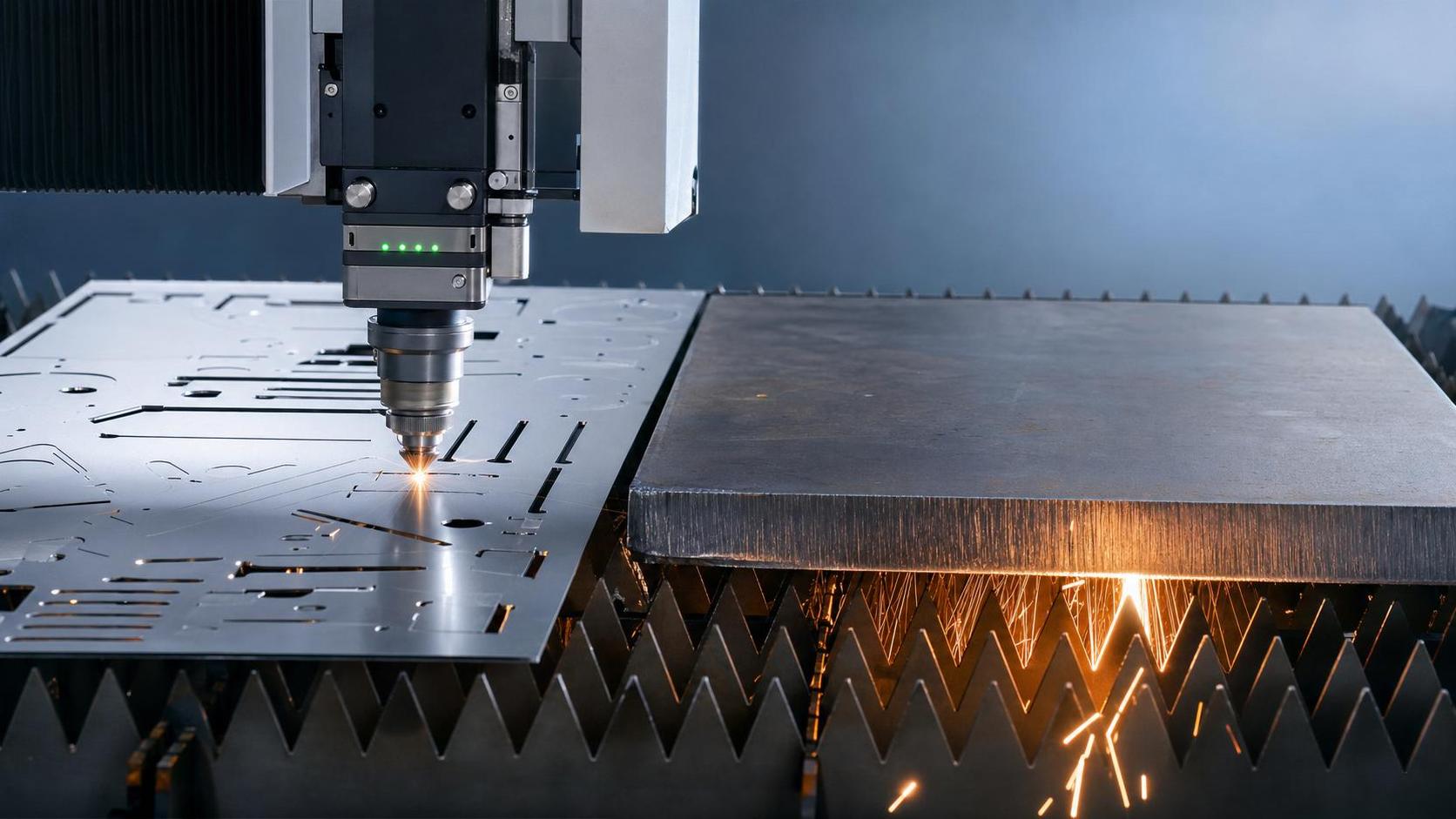
CNC cutting decisions rarely start with the machine alone. Material thickness changes heat input, kerf behavior, edge condition, cycle time, and downstream finishing. In automated manufacturing, that difference directly affects yield, scheduling, and cost control.
For thin sheets, the wrong process may cause warping, burrs, or wasted nesting efficiency. For thick plate, the same process may struggle with taper, slow throughput, or poor dimensional stability. Choosing well means matching process physics to production goals.
This matters across automotive, aerospace, energy equipment, electronics, and precision fabrication, where smart factories increasingly depend on predictable CNC cutting results. Thickness is not a minor parameter. It is often the first filter in process selection.
Why Thickness Changes the Cutting Strategy
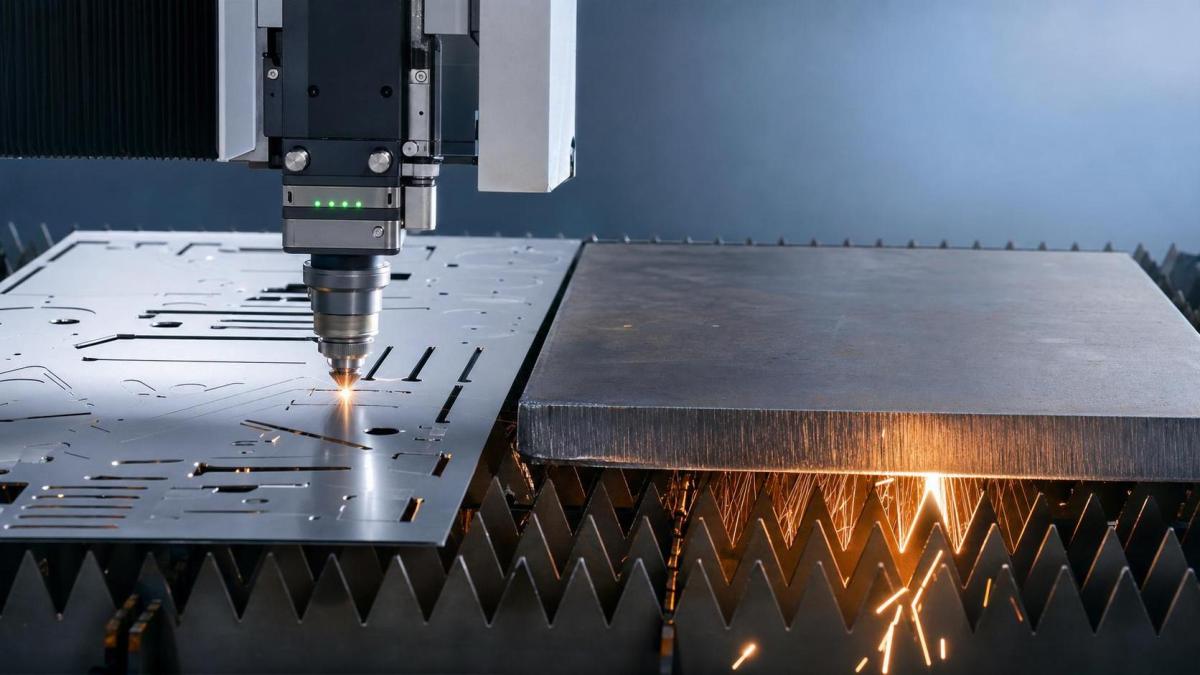
The image fits the core comparison: process behavior shifts once material thickness moves beyond a machine’s most efficient range.
Thin materials respond quickly to energy. That improves speed, but also increases the risk of distortion, surface burning, or edge instability. Sheet flatness and clamping become more important than many buyers first expect.
Thick materials absorb and disperse energy differently. More power is needed, but power alone does not solve everything. Gas flow, tool path, pierce method, and heat-affected zone control become central to stable CNC cutting.
In practice, material thickness influences five linked variables: achievable tolerance, cut quality, processing speed, consumable life, and total part cost. A strong evaluation compares all five rather than focusing only on machine rating.
The Main CNC Cutting Options in Real Production
Most thickness-based decisions involve laser cutting, plasma cutting, waterjet cutting, or mechanical methods such as milling and routing. Each process has a useful operating window, not a universal advantage.
Laser cutting
Laser-based CNC cutting is often preferred for thin to medium sheet where precision, narrow kerf, and clean edges matter. It performs well in stainless steel, carbon steel, and aluminum when thickness remains within an efficient range.
Its value is strongest when production needs fast nesting, low secondary finishing, and digital integration with automated loading systems. That is one reason laser platforms fit modern flexible manufacturing lines.
Plasma cutting
Plasma CNC cutting is widely used for thicker conductive metals. It offers strong productivity and lower operating cost than many high-power alternatives, especially for structural parts where ultra-fine edge quality is not the main target.
The tradeoff is wider kerf, more heat impact, and generally lower precision than laser. For heavy fabrication, that can still be the right balance.
Waterjet cutting
Waterjet CNC cutting handles thick materials, reflective metals, composites, and heat-sensitive materials without a heat-affected zone. That makes it useful where metallurgical change or delamination is unacceptable.
Its limitations usually involve slower speed, abrasive cost, and more complex maintenance planning. Even so, it remains a strong option for difficult materials and mixed-material environments.
Mechanical cutting and machining
Routing, sawing, and milling remain relevant when geometry, edge profile, or material type makes thermal cutting less suitable. For non-metals, thick plastics, and some precision contours, mechanical CNC cutting can outperform thermal methods.
Thin Materials: Speed Helps, but Control Matters More
Thin material cutting looks easy until quality escapes process control. At low thickness, even small parameter errors can produce visible defects.
Laser CNC cutting usually leads here because it supports high speed and fine detail. Small holes, tight radii, and dense nesting patterns are easier to maintain when the beam remains stable and the sheet stays flat.
However, thin sheets can vibrate, lift, or distort during cutting. That affects pierce consistency and dimensional repeatability. Support tables, hold-down strategy, and nesting sequence deserve close review.
For electronics housings, light brackets, covers, and decorative panels, edge appearance may matter almost as much as dimensional accuracy. In those cases, the best CNC cutting process is often the one that minimizes rework after the first pass.
Thick Materials: Stability, Energy, and Edge Geometry
When thickness increases, the evaluation shifts. Speed remains important, but process stability becomes the bigger issue.
Plasma and waterjet often gain ground in heavy sections. High-power laser systems can also perform well, but only when thickness, material grade, and required finish stay inside a realistic operating envelope.
The main concerns include edge taper, dross, bevel angle, top-edge rounding, and pierce delay. These directly influence weld preparation, fit-up quality, and machining allowance in later operations.
For structural steel, pressure vessel parts, energy equipment, and large machine frames, a slightly rougher edge may be acceptable if throughput and cost per part improve. That is where plasma CNC cutting often becomes commercially attractive.
For thick titanium, composites, or hardened alloys, waterjet may justify its slower cycle because it avoids thermal damage that would create larger process risk downstream.
A Practical Comparison Framework
The most useful comparison is not thin versus thick in isolation. It is thickness plus tolerance, edge requirement, volume, and downstream process.
This kind of matrix is especially useful in global sourcing and multi-site production. Equipment may differ by region, but the decision logic should remain consistent.
What the Industry Is Watching Now
CNC cutting is no longer evaluated as a stand-alone step. It is part of a digital manufacturing chain that includes quoting, nesting software, robotics, part tracking, and post-process inspection.
That shift matters because process choice now affects automation compatibility. A method that cuts well but interrupts unmanned flow may lose value in a high-mix environment.
Machine tool clusters in China, Germany, Japan, and South Korea continue to push improvements in control systems, motion accuracy, and integrated automation. As a result, the performance gap between competing CNC cutting platforms is becoming more application-specific.
More buyers are also asking for data, not only samples. They want evidence on edge condition, cycle time, consumable rate, and repeatability over long production runs. That is a healthy change.
Questions That Lead to Better Selection
A reliable process review usually starts with a short set of hard questions.
- What is the true thickness range, not just the maximum thickness?
- Which parts require cosmetic edges, and which only need functional edges?
- How much secondary deburring, grinding, or machining is acceptable?
- Will the material mix include reflective alloys, composites, or coated stock?
- Does the line need unattended operation or robotic material handling?
- Which metric matters most: part accuracy, throughput, or total cost per usable part?
These questions keep CNC cutting decisions tied to actual production outcomes instead of headline machine specifications.
From Evaluation to Action
The right process is usually the one that performs best across the whole workflow, not the one that looks strongest in a single demo. Thin materials often reward precision and nesting speed. Thick materials demand stable energy delivery and usable edges.
A practical next step is to group parts by thickness band, material family, and edge requirement, then compare CNC cutting options against those groups. Sample testing should include downstream inspection, not only cut appearance.
Where automation, smart factory integration, and international sourcing are part of the strategy, process selection should also consider software compatibility, maintenance support, and long-run consistency. That broader view usually leads to better decisions than a simple thin-versus-thick comparison.
Recommended for You
 CNC Machine Arrival Inspection: Check Shipping Damage, Accuracy, Safety, and DocumentsCNC Machining Technology Center
 How to Select a Machine Tool for Aerospace Parts with Tight Tolerances?Machine Tool Industry Editorial Team
 How to Select CNC Equipment for High-Mix, Low-Volume ProductionCNC Machining Technology Center
 Can CNC Machining Inconel Control Tool Wear in High-Temperature Aerospace Parts?CNC Machining Technology Center
 Machine Tool Market Outlook: Demand Drivers, Capacity Shifts, and Investment RisksManufacturing Market Research Center
 Zero-Point Clamping or Modular Fixtures? Choosing a Faster CNC Changeover SystemCNC Machining Technology Center

Aris Katos
Future of Carbide Coatings
15+ years in precision manufacturing systems. Specialized in high-speed milling and aerospace grade alloy processing.
▶
How to Select CNC Equipment for High-Mix, Low-Volume ProductionCNC Machining Technology Center▶
Can CNC Machining Inconel Control Tool Wear in High-Temperature Aerospace Parts?CNC Machining Technology Center▶
How Automated Precision Machining Maintains Tolerance in High-Mix ProductionCNC Machining Technology Center▶
CNC Programming Explained: From CAD Models to Reliable Shop-Floor ToolpathsCNC Machining Technology Center▶
How Multi-Axis Machining Produces Complex Components With Fewer SetupsCNC Machining Technology Center
Mastering 5-Axis Workholding Strategies
Join our technical panel on Nov 15th to learn about reducing vibrations in thin-wall components.

Providing you with integrated sanding solutions
Before-sales and after-sales services
Comprehensive technical support